Published: 06 March 2026. The English Chronicle Desk. The English Chronicle Online.
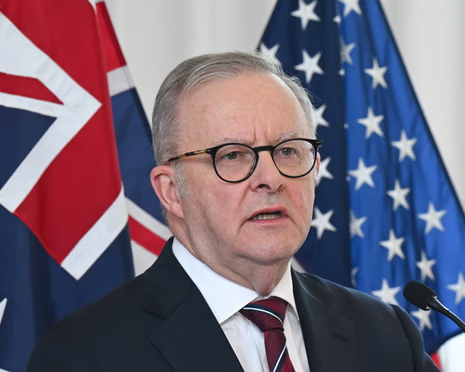
Australia’s prime minister has confirmed that Australians on US submarine vessels were present during a deadly naval strike involving Iran. The revelation follows days of political pressure and growing debate about Australia’s involvement in rising international tensions. Prime Minister Anthony Albanese said three Australian defence personnel were onboard a United States submarine that sank an Iranian warship earlier this week.
The incident has triggered intense discussion about military alliances, international law, and the future of defence cooperation. Officials in Canberra insist the Australians on US submarine duties did not take part in any offensive action. However, critics argue the disclosure raises serious questions about Australia’s role within the wider conflict.
The strike occurred in international waters in the Indian Ocean on Wednesday, according to defence officials. A United States submarine fired a torpedo that sank the Iranian warship known as IRIS Dena. At least 87 Iranian sailors died after the vessel went down during the sudden attack.
Albanese confirmed the presence of Australians on US submarine operations during an interview on Friday morning. He said the personnel were serving as part of training arrangements linked to the Aukus defence partnership. The programme allows Australian sailors to gain experience on advanced nuclear-powered submarines operated by allied forces.
Speaking to Sky News Australia, Albanese said the government rarely discusses such operational details publicly. However, he explained that recent national security meetings made it appropriate to confirm the presence of the Australians on US submarine platforms.

He emphasised repeatedly that no Australian service member took part in the offensive strike. According to the prime minister, all personnel embedded with foreign forces operate strictly under Australian law and policy. These arrangements ensure Australian defence members follow national guidelines while gaining experience with allied militaries.
The Australians on US submarine training placements are part of a broader effort to prepare the country’s future submarine fleet. The Aukus agreement between Australia, the United Kingdom, and the United States aims to develop nuclear-powered submarines for Australia. Under this partnership, Australian officers and sailors spend extended periods embedded with allied submarine crews.
Defence officials say more than 50 Australian naval personnel are currently serving within the United States submarine fleet. Some reports suggest Australians now make up around one in ten crew members aboard certain American attack submarines. The programme is considered essential for training crews ahead of Australia’s future nuclear submarine capability.
Despite these assurances, the announcement has sparked criticism from several political figures and defence observers. Critics argue the presence of Australians on US submarine missions effectively links the country to American military operations. They warn that such involvement risks drawing Australia into conflicts without clear parliamentary approval.
Australian Greens senator David Shoebridge strongly criticised the government’s explanation following the revelation. He described the claim that Australians played no role in the strike as extraordinary and difficult to accept. According to Shoebridge, embedded personnel inevitably contribute to the functioning of a military vessel during combat.
He argued that Australia had effectively become part of an illegal conflict involving the United States and Israel. Shoebridge said the war threatened global stability and weakened international legal standards. In his view, the government had allowed Australia to become entangled in a dangerous confrontation.
The senator also criticised the structure of the Aukus partnership itself. He suggested Australia risked losing independence by tying its defence strategy too closely to Washington. According to Shoebridge, the nation was being drawn into conflicts decided far beyond its own cabinet discussions.
Meanwhile, senior figures within Australia’s defence community defended the legality of the naval attack. International law experts noted that armed conflict between the United States and Iran had already begun. In that context, a military vessel such as the Iranian warship would be considered a lawful target.
Professor Donald Rothwell, an international law specialist at the Australian National University, shared that view. He said that once armed conflict begins, naval vessels become legitimate military objectives. Rothwell explained that the presence of Australians on US submarine operations did not necessarily make Australia a party to the conflict.
Another legal scholar, Juliette McIntyre of Adelaide University, also discussed the legal implications of the incident. She said the initial strike itself did not appear to breach international laws governing warfare. Military ships involved in hostilities are typically treated as valid targets during conflict.
However, debate continues over what happened after the warship sank beneath the ocean. Reports indicate that dozens of Iranian sailors were left in the water after the attack. Thirty-two survivors were eventually rescued by the Sri Lankan navy operating nearby.
Some critics argue the submarine should have provided immediate assistance to the survivors. They point to the Second Geneva Convention, which requires aid for shipwrecked personnel whenever possible. Yet legal experts note that submarines face unique operational limitations when attempting rescue missions.
Submarines must surface to assist survivors, potentially exposing themselves to danger from enemy forces. McIntyre explained that this requirement complicates rescue obligations during submarine warfare. Nevertheless, she acknowledged that the situation raises difficult ethical questions given the location of the attack.
The Iranian government has reacted strongly to the loss of the warship and its sailors. Iran’s foreign minister described the strike as an atrocity carried out far from Iranian territory. He warned that the United States would eventually regret establishing such a dangerous precedent.
According to Iranian officials, the warship had been returning from an international naval exercise organised by India. The event took place earlier in the Bay of Bengal and involved several participating nations. At the time of the attack, the vessel was sailing through international waters thousands of miles from Iran.
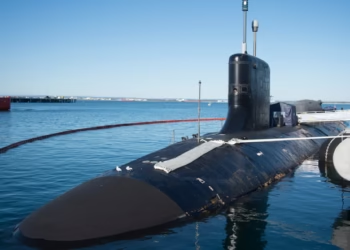
The United States defence department has not officially confirmed which submarine carried out the strike. However, defence industry publications have suggested the vessel may have been the USS Minnesota. This Virginia-class submarine visited HMAS Stirling naval base in Western Australia last year.
During a Pentagon briefing, US defence secretary Pete Hegseth described the attack in stark terms. He said an American submarine had delivered what he called a quiet but decisive blow. Hegseth also warned that further action against Iran could involve overwhelming military force.

His comments have intensified concerns among analysts about the potential expansion of the conflict. Tensions between the United States and Iran have been escalating rapidly in recent weeks. Military experts fear additional confrontations at sea could further destabilise the region.
Within Australia, the incident has reopened debate about the long-term consequences of the Aukus alliance. Supporters argue the partnership strengthens security and provides vital technological advantages. Critics worry it risks entangling Australia in distant wars beyond its direct national interests.
Former Australian senator Doug Cameron, now associated with the advocacy group Labor Against War, expressed deep concern. He said the presence of Australians on US submarine missions confirmed fears held by many within the Labor movement. According to Cameron, the Aukus agreement could draw Australia into future conflicts initiated by allies.
Cameron described the developments as deeply troubling for a government traditionally committed to peace and diplomatic independence. He warned that Australia may have sacrificed part of its strategic autonomy. Such concerns reflect wider debates unfolding across the country about defence priorities and global responsibilities.
For now, the government maintains that the Australians on US submarine duties acted entirely within legal and operational boundaries. Officials insist the training programme remains vital for Australia’s future submarine capabilities. Yet the sinking of the Iranian warship has ensured that these questions will not disappear quickly.
The incident has become a powerful reminder of the complex realities of modern military alliances. Training arrangements designed for preparation can suddenly intersect with real conflict situations. As tensions continue to rise internationally, the role of Australians on US submarine missions will likely remain under intense public scrutiny.
Related News:
 BBC to Apologise Over Edited Trump Speech Amid Backlash
 Britain deploys RAF specialists to assist Belgium with drone threats
 Palace May Restore Hyphen to Andrew Mountbatten-Windsor’s Name
 Greene Pushes Epstein Files Amid Trump Fallout
 December Run-Off in Chile as Election Produces No Winner
 Zelenskyy Signs Fighter Jet Deal Amid Russian Drone Attacks
 Canada Passes Carney’s First Budget in Tight Parliamentary Vote
 Shadow Fleet at Sea: Europe’s Battle Against Illicit Oil Shipping
 Tiny Curacao Makes History as Smallest Nation to Reach World Cup
 Deadly Russian Strikes Hit Western Ukraine, 20 Killed in Ternopil
 Ukraine Peace Plan: Zelensky Ready for Dialogue
 US Suspends Afghan Immigration After White House Shooting
 Georgians Defy Government Crackdown After Year of Protests
 ‘Extinct’ Antelope Returns to Sahara, Bringing Hope
 American Mother Extradited From UK to U.S. on Murder Charges
 Irish Beach Tragedy: Irish Drown at Whitehaven Beach in Australia
 Sanctioned oil tankers sail Channel amid Russia scrutiny
 US and UK Withdraw Personnel as Middle East Tensions Rise
 Half the World’s Largest Cities Face Rising Water Stress
 Pentagon Signals Reduced Role in Deterring North Korea
 UK and US Drop in Global Corruption Index Rankings
 SA Police Intensify Search in Gus Lamont Case
 Canberra Poster Seizure Sparks Free Speech Row
 Evo Morales Returns After Mysterious Absence
 El Mencho Killed as Mexico Faces Violence
 Australian children in Syria deserve safe return
 Greenpeace $345m Ruling Sparks Appeal Battle
 Jacinda Ardern Moves To Australia Following Her US Fellowships
 Jacinda Ardern Move Sparks Kiwi Reflection
 Middle East Airspace Crisis Strands Thousands
 Nick Greiner Warns Over Election Review Fallout
 Kelly Wilkinson Inquest Reveals Bail Failure
 Seventh US Service Member Killed in Iran Conflict Identified
 Iran Defiance Grows Amid US-Israel War Pressure
 US Missile Strike on Iran School Sparks Global Shock
 Canada Plasma Deaths Raise Safety Concerns After Two Donors Die
 US Attack on IRIS Dena Shocks Indian Ocean Security
 Australian Petrol Crisis Deepens as Local Stations Run Dry
 Gulf Tensions Rise as Iran Alleges Covert Support
 Oil Slides, Stocks Jump on Trump Peace Signals
 Danish Election Deadlock Shakes Frederiksen’s Grip
 Bondi terror attack linked to global rise in IS plots
 Pope Rebukes Leaders for War as Middle East Tensions Rise
 Army Probes Apache Flyover at Kid Rock’s Nashville Estate
 Iran Drone Strike Hits Kuwaiti Oil Tanker in Dubai Port
 Artemis II: Humanity Returns to the Moon After Decades
 Nuns of Schloss Goldenstein Move Closer to Staying Home
 Italian Town Buys Mussolini Villa to Keep Away Fascist Fans
 Report Says Pezzullo Acted ‘Recklessly’ in Dealings
 Trump and Tehran Find Common Ground in Landmark Ceasefire
 Trump Employs Nixon’s Madman Theory Amid Iran Crisis
 Singapore Pledges Stable Fuel Supply for Australia
 Suspected Plot Targets Pipeline Before Hungary Vote
 Reeves Slams Trump Over Iran War Lack Of Exit Plan
 Learner Driver Charged After Expo Tragedy
 Coalition pushes fossil fuel phaseout plan
 Trump approval plunges amid Iran war fears
 Ohio’s Battle for Trust: Democrats Vying to Flip the Buckeye State
 US ‘Narco Boat’ Strikes Draw Global Outcry
 FIFA Confirms Global Ban for Benfica Star Prestianni
 US Awaits Iran Reply on New Ceasefire Proposal
 US and Mexico Face Heatwave as Floods Batter South Africa
 Putin Signals War End as Russian Momentum Stalls
 Australia Welcomes the Iconic Michelin Guide
 Scepticism and tight security as Beijing braces for Trump
 Philippine Senator Flees After Days Under Senate Siege
 Tensions Flare as Israeli Nationalists March in Jerusalem
 High Street Crisis: Fears Grow Over Post Office Closures
 Xi Hosts Putin for Talks Right After Trump Visit
 Oil Markets Face ‘Red Zone’ Threat Amid Iran Crisis
 Pope Meets Families in Italy Toxic Waste Zone
 Discontent grows around Putin amid war strain
 US Strikes Iranian Sites Amid Shaky Ceasefire Talks
 Starmer Leadership Under Pressure After Setbacks
 Papal Visit Offers Political Lifeline to Spanish Premier
 Aukus Deal Facing Fierce Backing and Historic Criticism
 Thai Princess Bajrakitiyabha Passes Away at 47
 Le Pen to Run for President Despite Embezzlement Conviction
 Ukraine Creates Long-Range Strike Command
 Houthis Strike Saudi Arabia as Middle East Tensions Rise