Published: 09 March 2026. The English Chronicle Desk. The English Chronicle Online.
The quiet shores of Kasasa Island rarely attract global attention, yet recent developments have changed that reality dramatically. The remote island, located in Japan’s scenic Seto Inland Sea, has become a surprising focal point in rising tensions between Japan and China. What was once known for its peaceful fishing culture and warm climate is now being discussed in political circles and security debates across the region.
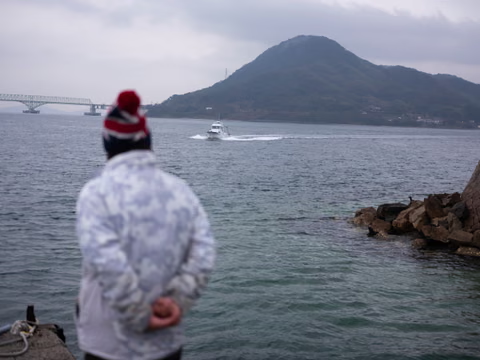
Kasasa Island is home to only a handful of residents, most of whom live quietly and rely on fishing and small-scale farming. Among them is eighty-year-old Hideya Yagi, a retired construction company president who moved there twenty-five years ago. Wearing a distinctive woolly hat decorated with the British Union Jack, he often greets the ferry that brings visitors and supplies. His life on Kasasa Island revolves around fishing, gardening, and enjoying the peaceful rhythm of nature.
The island’s small population currently includes just seven registered residents. Yagi and his wife Mihoko live alongside another elderly couple and one older woman. Two additional residents are rarely present, leaving the island largely empty for most of the year. For many visitors, the quiet environment and stunning coastline feel like a hidden paradise.
Kasasa Island is sometimes referred to as the “Hawaii” of Japan’s inland sea because of its warm weather and fertile soil. During the warmer months, the island becomes vibrant with agricultural activity. Farmers grow watermelons, mikan oranges, blueberries, and tomatoes using the naturally rich soil and fresh water sources. The surrounding waters also provide abundant seafood, including sea bream, yellowtail, and octopus.

Despite its peaceful appearance, Kasasa Island sits in a strategically important location. The island lies approximately twenty kilometres from the Iwakuni United States Marine Corps airbase. It is also around fifty kilometres from a major Japanese Maritime Self-Defence Force base located in the city of Kure. Because of this proximity to important military installations, any unusual development on Kasasa Island quickly draws national attention.
The current controversy began when two plots of land on Kasasa Island were purchased nearly a decade ago. At the time, residents assumed the buyers planned to build holiday homes or small tourist facilities. However, years passed without any visible construction or development, and the land remained quiet.
That situation changed dramatically late last year when construction equipment suddenly arrived by boat. A mechanical digger and cement mixer began clearing land on the island’s south-east coast. Soon after, steel telegraph poles and high-voltage power lines appeared near the construction area. Visitors unfamiliar to residents were also seen travelling around the island.
Local campaign groups later reported that the land had been purchased by Chinese investors through a Japanese real estate company. The purchases were entirely legal and approved by Japanese authorities. However, the lack of clear information about the investors’ intentions quickly sparked concern among residents and local officials.
For residents like Yagi, the uncertainty is troubling. He says the island’s small population makes it difficult to monitor new developments or understand what outsiders plan to build. Yagi explained that new arrivals could potentially do almost anything on Kasasa Island without residents noticing immediately.
Local politicians have also voiced concerns about the potential security implications of foreign investment in sensitive areas. Takashi Ishikawa, a conservative councillor from nearby Yamaguchi city, warned that Kasasa Island could eventually become a base for surveillance activities. His comments have intensified debate within Japan about foreign land ownership near military sites.
These concerns reflect broader anxieties about national security and Japan’s relationship with China. In recent years, tensions between the two countries have grown steadily. Disputes over territory, economic competition, and military developments have all contributed to the increasingly fragile relationship.
Japan’s Prime Minister Sanae Takaichi has also entered the debate, promising stricter regulations on foreign purchases of land in sensitive areas. Her government has indicated that it may introduce stronger oversight measures to monitor property acquisitions near strategic infrastructure. Supporters say such policies are necessary to protect national security and reassure concerned communities.
Statistics suggest the issue may be wider than one small island. Reports indicate that Chinese investors accounted for nearly half of recent land purchases near important Japanese security sites. While every purchase has been legal, critics argue that current laws may not provide enough transparency about investors’ long-term intentions.
The situation surrounding Kasasa Island has therefore become symbolic of broader geopolitical tensions. For many observers, the island represents the intersection of local concerns, national security debates, and international rivalry. What happens on Kasasa Island could influence how Japan manages foreign property investment in the future.
However, not everyone believes the fears are justified. Some legal experts argue that Japan already has effective regulations to prevent illegal construction or suspicious activities. They emphasise that land ownership does not grant sovereignty, meaning foreign investors cannot turn property into independent territories.
Hiroshi Matsuo, a law professor at Keio University, believes public debate should focus on improving land-use transparency rather than restricting foreign ownership. He argues that both Japanese citizens and foreign investors must follow the same legal rules. According to Matsuo, responsible regulation can ensure security without encouraging discrimination.
Meanwhile, life continues quietly for the few residents still living on Kasasa Island. Yagi spends much of his day fishing along the coast, while his wife Mihoko cares for their garden and home. Their dog Kuro-chan wanders peacefully along the island’s nearly empty roads.
Despite the political debate surrounding Kasasa Island, the couple hopes the island will remain peaceful and welcoming. Mihoko says she simply wants to preserve the island’s friendly atmosphere and traditional lifestyle. Her greatest wish is to continue living peacefully alongside neighbours and visitors from around the world.

Local community groups are now trying to protect the island’s future. The Kasasa Island Preservation Association has begun organising events and restoration projects. Members recently repaired the island’s only Shinto shrine and hope to attract younger residents to revive the ageing community.
The association also hopes to eventually buy back the disputed land if possible. Their long-term vision is to preserve the island’s environment while encouraging sustainable tourism. By bringing new families and visitors to Kasasa Island, they hope to ensure the community survives for future generations.
On social media, the controversy has sparked intense discussion in both Japan and China. Some online commentators have treated the situation as a political game, while others have suggested buying land purely as an investment strategy. These online debates have sometimes increased nationalist sentiment on both sides.
As evening approaches on Kasasa Island, visitors prepare to board the final ferry back to the mainland. The island gradually returns to its usual silence, broken only by the sound of waves and seabirds. For residents like Yagi, daily life remains centred on fishing, nature, and simple pleasures.
Standing beside the harbour, Yagi reflects on what he hopes the island’s future will bring. He says he would welcome visitors from any country who want to fish, eat, and enjoy the island’s beauty. Above all, he hopes Kasasa Island remains a peaceful place where people can share its quiet charm.
Related News:
 British Woman in Iran ‘Losing Hope’ Amid Ongoing Detention
 BBC to Apologise Over Edited Trump Speech Amid Backlash
 Britain deploys RAF specialists to assist Belgium with drone threats
 US Justice Department Files Lawsuit Against California Over Partisan Voting Maps
 Greene Pushes Epstein Files Amid Trump Fallout
 Trump Deploys DHS to Charlotte in Major Arrest Operation
 December Run-Off in Chile as Election Produces No Winner
 Canada Passes Carney’s First Budget in Tight Parliamentary Vote
 Shadow Fleet at Sea: Europe’s Battle Against Illicit Oil Shipping
 Pentagon Officials in Ukraine to Discuss War End
 Venezuela Threatens Nobel Winner Machado with Fugitive Status
 Georgians Defy Government Crackdown After Year of Protests
 EU plans $105bn Ukraine aid using frozen Russian assets
 Global campaign launched to free Palestinian leader Barghouti
 Trump Policies Boost China’s Global Rise, Survey Finds
 Iran unrest slows under brutal crackdown and global tensions
 Pentagon Signals Reduced Role in Deterring North Korea
 Thousands Protest ICE Operations in Nationwide US Day of Action
 Epstein Files Reveal Trump Officials’ Emails with Financier
 Starmer Condemns ‘Depraved’ Russian Strikes on Ukraine
 Herzog visit sparks protests across Australian cities
 UK and US Drop in Global Corruption Index Rankings
 Sydney Protest Escalates and Elderly Woman Suffers Severe Injury
 Tarique Rahman’s Rise Toward Bangladesh’s Top Job
 Glass Cliff Debate After Ley’s Ouster
 Canberra Poster Seizure Sparks Free Speech Row
 Evo Morales Returns After Mysterious Absence
 AFP Reviews Pauline Hanson Comments
 Duterte ICC Hearing Begins Amid Defiance
 Trump Tariffs Threat Spark UK and EU Alarm
 The Dangerous Rise of Remigration Across Modern Europe
 Trump’s Marathon Speech Fails to Mask a Growing National Disconnect
 Jacinda Ardern Moves To Australia Following Her US Fellowships
 US to offer passport services in West Bank settlements
 Jacinda Ardern Move Sparks Kiwi Reflection
 Health Funding Row Rocks US‑Africa Relations
 Nick Greiner Warns Over Election Review Fallout
 New UK-EU Reset Faces Criticism from Parliament
 Cuba charges six exiles for terrorism after speedboat raid
 Mojtaba Khamenei Supporters Rally as Iranians Fear Repression
 Iran Defiance Grows Amid US-Israel War Pressure
 US Strikes on Iran Set for Most Intense Day Yet
 Iran Nuclear Stockpile Sparks US Special Forces Debate
 Queensland Protest Ban Sparks First Arrests
 China’s Ethnic Unity Law Set to Reshape Minority Schools
 Moscow Internet Blackouts Raise Censorship Fears
 Republicans Rebuke FCC Threat Over Iran War Coverage
 Oil Prices Surge as IEA Weighs Emergency Release
 Trump Nato threats expose Iran strategy vacuum
 UK Minister Denies Iran Missile Threat to Britain
 Danish Election Deadlock Shakes Frederiksen’s Grip
 Trump to Visit China in May After Iran War Delay
 Pope Rebukes Leaders for War as Middle East Tensions Rise
 Trump to Deploy “God Squad” Over Gulf Wildlife Protections
 Army Probes Apache Flyover at Kid Rock’s Nashville Estate
 Italian Town Buys Mussolini Villa to Keep Away Fascist Fans
 Report Says Pezzullo Acted ‘Recklessly’ in Dealings
 Trump Employs Nixon’s Madman Theory Amid Iran Crisis
 Trump Voices Frustration Over Nato Role in Iran Conflict
 Hungary election: Orbán faces biggest test amid scandal
 Suspected Plot Targets Pipeline Before Hungary Vote
 Trump Slams UK Ties and Threatens To Rewrite Trade Deal
 Southeast Asia Turns to Russia Amid Energy Crisis
 Capitalism ‘Suicidal’, Warns Petro at Climate Summit
 Judge halts deportation of Yemeni refugees in US
 Trump approval plunges amid Iran war fears
 Ohio’s Battle for Trust: Democrats Vying to Flip the Buckeye State
 US ‘Narco Boat’ Strikes Draw Global Outcry
 Afghan Families Left in Limbo Face Risk of Deportation
 Tensions Emerge in Netanyahu-Trump Alliance
 US Awaits Iran Reply on New Ceasefire Proposal
 Discontent grows around Putin amid war strain
 Starmer Leadership Under Pressure After Setbacks
 House Curbs Trump’s War Powers in Rare Rebellion
 Germany Summons Chinese Envoy Over Russian Troop Training
 New South Wales Premier Chris Minns Signals Tough Road Ahead for Labor
 Le Pen to Run for President Despite Embezzlement Conviction
 Ukraine Creates Long-Range Strike Command
 Le Pen’s Popularity Holds Despite Conviction
 Houthis Strike Saudi Arabia as Middle East Tensions Rise