Published: 09 March 2026
The English Chronicle Desk
The English Chronicle Online
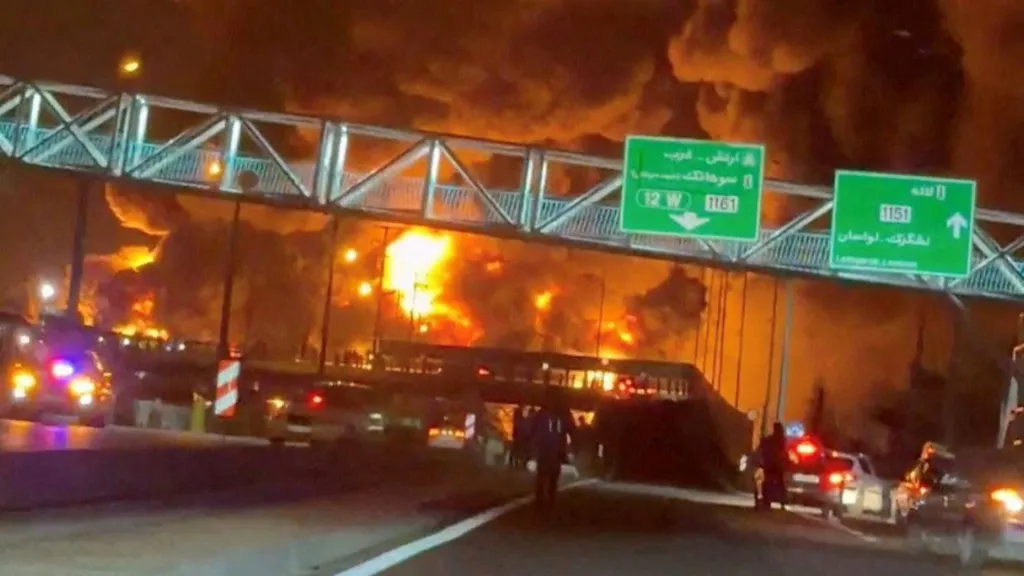
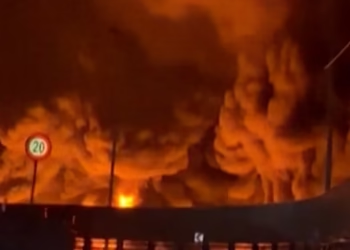
Residents of Tehran have described the terrifying moment Israeli airstrikes hit multiple oil storage facilities in the Iranian capital, with one telling the BBC that the explosions were so bright “it was as if night had turned into day” .
The strikes on Saturday evening sparked massive fires across four oil storage facilities and an oil production transfer centre in Tehran and the neighbouring province of Alborz, marking the first time Israel has directly targeted Iran’s energy infrastructure since the conflict began nine days ago . At least four tanker drivers were killed in the attacks, according to the Fars news agency .

Witnesses described scenes of apocalyptic horror as flames engulfed the city. “It started with a red light that lit up everything, followed by a wave that jolted the door,” one resident from Karaj, a city west of Tehran, told the BBC. “Then the sky lit up again, and a huge red cloud appeared” .
Another resident described the confusion in the immediate aftermath. “Karaj was calm for a day but now it’s turned wild again – they’ve blown it up,” he said .
The facilities targeted included the Aghdasieh oil warehouse in northeast Tehran, the Tehran refinery in the south, the Shahran oil depot in the west of the city, and an oil depot in Karaj . Witnesses reported that oil from the Shahran depot had leaked into nearby streets, with video footage showing flames flowing through roads while residents watched in shock .
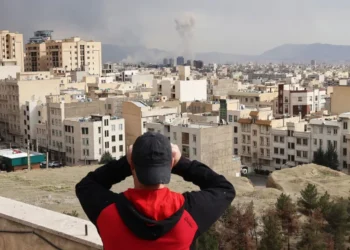
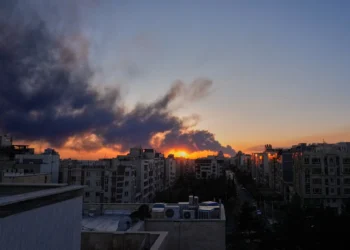
By Sunday morning, a dark haze hung over Tehran as thick black smoke billowed across the capital, with the smell of burning oil lingering in the air . Residents woke to find sunlight obscured by the dense smoke, forcing drivers to turn on their headlights during the day .
“You can smell the burning. I can’t see the sun. There is a horrible smell. It’s still there, I’m very tired,” a woman from Tehran told the BBC .
Another local woman described the health impacts to The Guardian: “The smoke has covered the entire city. I’m gasping for air, and my eyes and throat are burning. I can’t stay outside” .
Al Jazeera’s Tohid Asadi, reporting from Tehran, described seeing black raindrops on his windows on Sunday morning. “There is a high risk of being surrounded by toxic air,” he warned .
Iranian officials have raised alarm over the potential environmental and health consequences of the attacks. Foreign ministry spokesman Esmaeil Baqaei warned that the strikes were releasing hazardous materials and toxic substances into the air, “poisoning civilians, devastating the environment, and endangering lives on a massive scale” .
In a strongly worded statement on social media platform X, Baqaei called the attacks “nothing less than intentional chemical warfare against Iranian citizens” and described them as “war crimes, crimes against humanity and genocide – all at once” .
The Iranian Red Crescent Society warned that toxic compounds from the burning oil depots could cause dangerous acid rain if precipitation occurs . The Tehran municipal government stated: “The explosion of oil tanks has spread large amounts of toxic hydrocarbons, sulfur, and nitrogen oxide compounds into the atmosphere and clouds. If rain occurs, it will become highly dangerous, strongly acidic rain” .
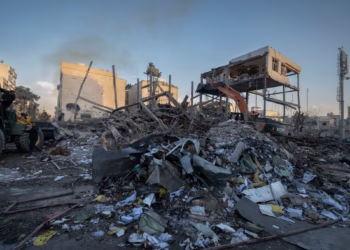
Dramatic video footage emerging from Tehran showed flames erupting from storm drains and manholes in some areas shortly after the strikes, as burning fuel infiltrated the city’s underground infrastructure . The explosions were powerful enough to shake houses several miles away .
Iran’s oil distribution company confirmed that four employees were killed in the attacks, according to Al Jazeera . The semi-official Tasnim news agency later reported that six people were killed and 21 injured in one of the strikes on an oil storage facility in Alborz province .
With fuel supply disrupted by the attacks, authorities in Tehran have been forced to impose emergency rationing. The maximum per-person gasoline purchase limit has been reduced from 30 litres to 20 litres, according to Mohammad Sadegh Motamedian, governor of Tehran Province .
Motamedian described the measure as temporary, stating: “Pollution levels have surged since the bombing of oil storage facilities. The fuel reduction will be a temporary measure for two to three days before returning to normal” .
The Israeli military confirmed it had struck “a number of fuel storage facilities in Tehran” that were used “to operate military infrastructure” . In a statement, the military said the targeted fuel depots were used by the Iranian government to supply fuel to various customers, including its military units .
Israeli Prime Minister Benjamin Netanyahu said his government would press on with the assault and strike Iran’s rulers “without mercy”. “We have an organised plan with many surprises to destabilise the regime and enable change,” he said in a video statement. “We have many more targets” .
The United States has expressed dismay at the scale of the Israeli strikes, marking the first notable disagreement between the two allies since the conflict began . According to a report by Axios cited by Anadolu Agency, the strikes targeted around 30 fuel depots across Iran, exceeding what US officials expected after Israel notified Washington ahead of the operation .
An adviser to US President Donald Trump said: “The president doesn’t like the attack on the oil facilities. He wants to save the oil, not burn it. And it reminds people of higher gas prices” . A senior US official added: “We don’t think it was a good idea” .
Washington is concerned that attacks on infrastructure serving ordinary Iranians could backfire strategically by strengthening public support for the Iranian leadership and driving up global oil prices .
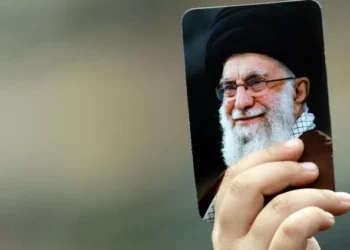
The strikes on Saturday represent a significant escalation in the conflict that began on February 28 when the US and Israel launched joint attacks on Tehran and several other Iranian cities, killing the country’s Supreme Leader Ayatollah Ali Khamenei, some of his family members, high-ranking military commanders, and civilians .
According to Iranian officials, more than 1,300 people have been killed in Iran since the conflict began, with over 10,000 injured . At least 300 people have been killed in Lebanon, and about a dozen in Israel, according to officials .

Iran has responded with several waves of missile and drone attacks targeting Israel, Iraq, Jordan and Gulf countries that are home to US military assets .
Iran’s military has threatened to attack oil facilities across the region in retaliation for the strikes on its energy infrastructure. The Khatam al-Anbiya Central Headquarters, the unified combatant command of the Iranian Armed Forces, warned that continued attacks could have major economic consequences, suggesting oil prices could exceed $200 per barrel if the conflict widens .
A spokesperson for Iran’s military command said Tehran has so far avoided targeting regional energy infrastructure but warned that failure to halt attacks could lead to “similar retaliatory measures across the region” .
Iranian Parliament Speaker Mohammad Bagher Ghalibaf also warned that Tehran would retaliate “without delay” if strikes on infrastructure continue .
Related News:
 Eleven Killed in Israeli Strikes on Gaza, Rescuers Say
 ‘I Would Scream in My Sleep’: Alawite Women from Syria Tell of Kidnap and Rape
 Iran Says ‘Guiding Principles’ Agreed With US at Nuclear Talks
 US Pushes to Recruit Organised Crime Gangs into Gaza Police Force
 As Trump Retreats from Climate Goals, China Is Becoming a Green Superpower
 US Urges Iran to Make Deal as Military Presence Rises
 US Build-Up of Warships and Fighter Jets Tracked Near Iran
 Trump’s Foreign Policy Dilemma Laid Bare by Iran Tensions
 How Do You Modernise Mango Farming? India’s Growers Urged to Innovate as Climate Change Hits
 Hamas Holds Vote to Choose New Interim Leader, Source Tells BBC
 Probe After Illness Kills 72 Tigers in Thailand
 US Partially Evacuates Beirut Embassy Amid Rising Iran Tensions
 US and Iran to Hold Talks as Pressure for Nuclear Deal Builds
 Middle East Flights Halted After Iran Strikes
 Israel and Hezbollah Exchange Fire as Conflict Worsens
 Iran’s Regime Still Intact — Coming Days Will Test Its Survival
 Allies of US in the Gulf Bear Brunt of Iran Attacks
 Hopes and Fears as US Iranians Take to Streets After Toppling of Supreme Leader
 Retaliations Continue on Day Two of US-Israel Attacks on Iran
 At Least 153 Dead After Reported Strike on School, Iran Says
 At Least 153 Dead After Reported Strike on School, Iran Says
 ‘It’s Eerie’ – Dubai on Edge as City Comes Under Attack
 BBC Reports from Beit Shemesh After Deadly Iranian Missile Strike
 Iran, the US, and a World Cup That Starts in Three Months
 Allies of US in the Gulf Bear Brunt of Iran Attacks
 Israeli Attacks Kill 31 in Lebanon, Iran Strikes Across Region, US Warplanes Crash in Kuwait
 In Maps: Strikes Across Iran and the Middle East
 Months of Planning Behind US‑Israeli Mission to Target Iran’s Supreme Leader
 Cooper: Joining US Strikes on Iran ‘Not in Britain’s Interest’
 What Khamenei’s Death Means for Russia and China
 US Iran Operation: Sixth Service Member Killed
 Hezbollah Anger Erupts as War Returns to Beirut
 Tehran Makes New Threat to Gulf Shipping as US Says ‘Hardest Hits’ on Iran ‘Yet to Come’
 Trump’s Iran Endgame Unclear After Mixed Messaging on War Aims
 Did Trump Declare War and Did Congress Approve Iran Attacks? What to Know
 Gaza Siege Deepens as Iran War Escalates
 Melania Trump Chairs UN Security Council Meeting on Children in Conflict Amid Iran Strikes
 Rubio Responds to Reported Strike on Iranian School
 Scots Caught Up in Middle East Crisis ‘Just Waiting for the Next Explosion’
 The Third Day of the US‑Israeli War With Iran
 Limited Flights Leave UAE But Disruption Continues Amid Iran Strikes
 Why the US and Israel attacked Iran
 Israel Launches Fresh Strikes on Tehran & Beirut; US Warns “Hardest Hits” Ahead
 Three Days In, This War’s End Is Still Unclear
 US Has ‘Enough Weapons for Forever War,’ Trump Says
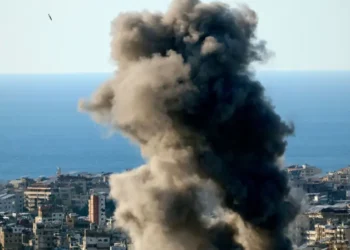 Israel Launches Fresh Strikes on Tehran and Beirut on Day Four
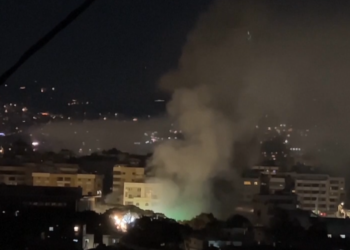 Israel Strikes Lebanon After Hezbollah Rocket Fire as Iran Conflict Widens
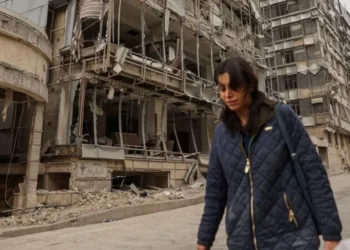 ‘They Hit So Hard the House Was Shaking’: Iranians Describe US‑Israel Attacks
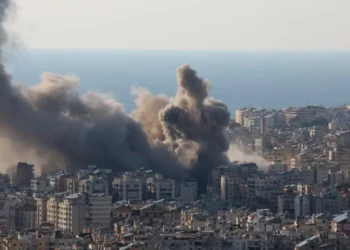 Latest on Middle East Conflict — In Maps: Strikes Across Iran and the Region
 ‘I saw missiles being intercepted’: Influencers recount shock as Iran hits Dubai landmarks
 Amazon Says Drones Damaged Three Facilities in UAE and Bahrain
 Man Recalls ‘Terrifying’ Dubai Missile Ordeal During Iran Strikes
 Israel’s New Airstrikes on Tehran & Beirut After US Embassy in Riyadh Is Hit
 Israel Launches Ground Invasion of Lebanon Amid Widening Middle East War
 Trump Underestimated the Iranian Regime’s Will to Survive
 U.S. Tells Citizens to Leave Israel Now as Regional Conflict Escalates
 Iranian Rockets Are Testing the Resolve of Dubai’s Instagram Stars
 Airline Pilots Feared Iranian Missile Had Been Fired at Them
 US Embassy in Riyadh Hit by Iranian Drones as Israeli Troops Enter Southern Lebanon
 Riyadh Drone Attack Escalates Regional War
 US Strikes on Iran Triggered by Israel’s Plan to Launch Attack, Rubio Says
 First Wave of Europeans Stranded by Iran Conflict Return Home, With Hundreds of Thousands Still Left in Region
 Sixth American Service Member Killed in Iran Operation as Conflict Intensifies
 Trump Rebukes Starmer Over UK Refusal to Back Strikes on Iran
 Civilian Deaths in Iran Pass 700 Amid Fear of Bombs and Regime Clampdown
 Middle East attacks intensify as Trump rejects Iran talks
 Iran-Iraq border airstrikes spark new tensions
 US Senate Backs Trump War Powers Amid Iran Missile Barrage
 Iran-Iraq Border Strikes Spark New Front Fears
 Macron Finds ‘Freedom Fries’ Redemption in Iran Crisis
 Iran-Backed Militias Escalate Attacks Across Middle East
 Study Says Only Two Nations May Survive Nuclear War
 ‘We Must Finish This’: Israelis Rally Behind War Effort as Iran Strikes Tel Aviv
 UK Prepares Aircraft Carrier for Middle East Crisis
 Mojtaba Khamenei Chosen as Iran’s New Supreme Leader
 Tehran Oil Depot Strikes Darken City With Toxic Smoke
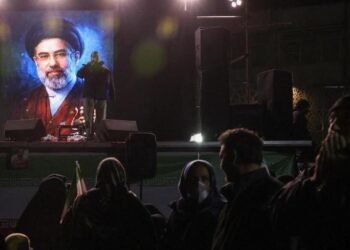 Oil price passes $100 a barrel for first time since 2022, as Khamenei’s son named new Iranian leader
 Zelenskyy Signs Fighter Jet Deal Amid Russian Drone Attacks
 Shadow Fleet at Sea: Europe’s Battle Against Illicit Oil Shipping
 US Suspends Afghan Immigration After White House Shooting