Published: 5 August 2026. The English Chronicle Desk. The English Chronicle Online
India’s ruling Bharatiya Janata Party (BJP) has suffered a major political setback after losing a long-held stronghold in a closely watched byelection, with analysts linking the result to growing public anger over education failures, exam scandals and youth unemployment.
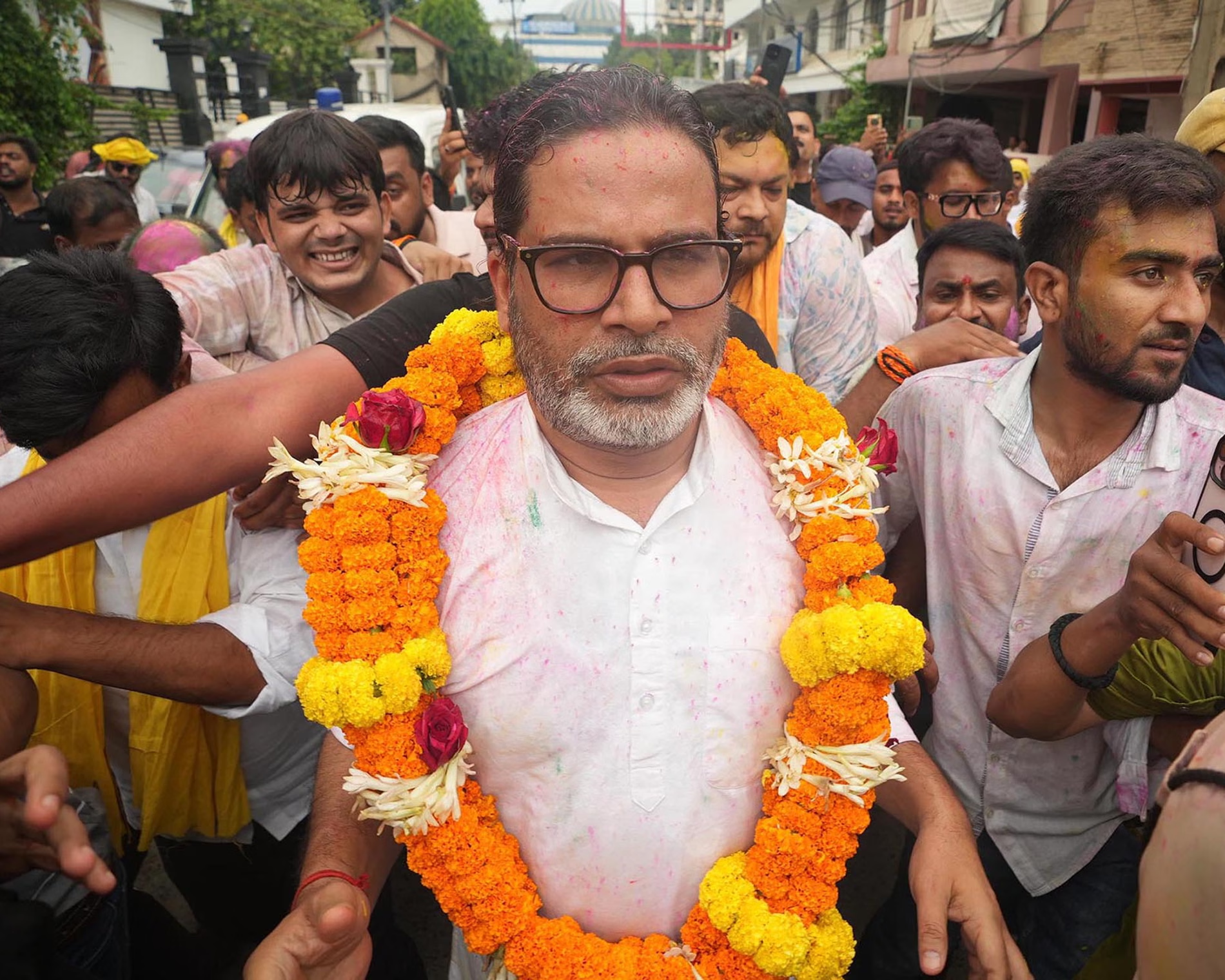
The BJP’s defeat in the Bankipur constituency of Patna, Bihar, marked the end of a seat the party had controlled for nearly three decades. The victory went to Prashant Kishor, a former election strategist who has entered politics with his newly formed Jan Suraaj party, presenting himself as an alternative voice focused on governance, education and employment.
The result has attracted national attention because it came shortly after the rise of the “Cockroach” student protest movement, a youth-led campaign that has challenged the Narendra Modi government over allegations of examination irregularities and unemployment.
The byelection was viewed as an important test of public sentiment following widespread student demonstrations that forced the resignation of India’s education minister, a rare political concession from a government often criticised by opponents for resisting pressure.
Kishor described the victory as a warning sign for the BJP leadership and urged the government to focus more seriously on education reform and job creation.
“This is a wake-up call,” Kishor said, arguing that young voters were increasingly concerned about opportunities, fair examinations and their future prospects.
The Bankipur result was part of a wider setback for the BJP, which lost two of three byelection contests held during the same period. The opposition Congress retained the Datia seat in Madhya Pradesh, while the BJP successfully defended Manjalpur in Gujarat, Prime Minister Modi’s home state.

Although the losses do not immediately threaten the BJP’s national position, political observers said the results highlighted growing dissatisfaction among sections of younger voters.
Kishor’s campaign focused heavily on issues affecting India’s younger population, particularly examination failures, unemployment and concerns about economic opportunities.
Supporters said his message appealed to families worried about the future of their children.
Deepak Sharma, a former BJP supporter, told Indian newspaper The Hindu that Kishor’s campaign succeeded because it avoided traditional political promises and instead focused on a simple message about protecting the future of young Indians.
The outcome has renewed debate about the BJP’s relationship with India’s youth population.
Almost two-thirds of India’s population is under the age of 35, making young voters a crucial political force. While the government’s official youth unemployment figures remain a major concern, independent studies suggest that unemployment among graduates is significantly higher.
According to research from Azim Premji University’s State of Working India report, unemployment among graduates aged between 15 and 25 remains particularly high, raising concerns about whether India’s economic growth is creating enough quality jobs.
The issue has become increasingly important as millions of young Indians enter the workforce every year.
The BJP has traditionally enjoyed strong support among many sections of the population, including young voters attracted by its nationalism-focused political messaging and promises of economic development.
However, critics argue that employment challenges and repeated examination controversies are weakening that support.
The controversy surrounding the student movement has also created political tension.
The movement began online after comments by a senior judge describing unemployed young Indians in derogatory terms sparked outrage. What started as an internet campaign later developed into a much larger youth mobilisation movement.
The movement, which adopted the “Cockroach Janata Party” identity, gained millions of followers on social media and became a symbol of frustration among young Indians who feel ignored by traditional political parties.
Its online presence has reportedly surpassed that of major political parties, including the BJP and Congress, highlighting the growing influence of digital activism in Indian politics.
During the byelection campaign, BJP president Nitin Nabin faced criticism after describing the largely Gen Z protesters as a “virus” and “cockroach gang” allegedly trying to damage the country.
The comments intensified criticism from opposition parties and student groups, who accused the BJP of dismissing legitimate concerns about education and employment.
After the defeat, Nabin said the party would conduct a detailed review of the result.
Senior BJP figures reportedly acknowledged that the loss demonstrated that even traditional supporters could reconsider their choices when local concerns become strong enough.
The result comes at a challenging time for the BJP, which recently celebrated electoral gains in West Bengal, expanding its influence in a state where it had historically struggled.
However, that success has been followed by several political difficulties, including criticism over education policies and growing youth dissatisfaction.
The government has also faced controversy involving social media platforms and political communication.
A video featuring Prime Minister Narendra Modi discussing action against examination fraud briefly disappeared from Facebook, leading to criticism from government officials.
India’s parliamentary committee on communications and information technology demanded explanations from Meta chief executive Mark Zuckerberg, questioning how political content could be removed by automated systems.
Meta reportedly explained that automated technology designed to identify harmful or misleading content was responsible for the removal.
The incident highlighted wider concerns among Indian politicians about the influence of global technology companies over political communication.
Nishikant Dubey, chairman of the parliamentary committee, argued that political parties with millions of supporters may receive less online visibility than informal digital movements because of algorithmic decisions made by technology platforms.
Political analyst Ajoy Bose said the Bankipur result carried symbolic importance beyond the constituency itself.

He said the timing of the defeat, coming soon after major student protests, had damaged the BJP’s image of electoral dominance.
However, Bose warned against interpreting the result as proof of a nationwide political shift.
According to him, the key change was not necessarily a collapse in BJP support but a weakening of the belief that the party’s election machinery could guarantee victory in every contest.
The result demonstrates the growing importance of youth issues in Indian politics.
Education, employment and digital freedom are becoming central concerns for a generation that represents a significant portion of the electorate.
For the BJP, the defeat serves as a reminder that economic expectations and social concerns can influence voters even in areas considered traditional party strongholds.
For opposition groups and emerging political movements, the victory offers evidence that alternative campaigns focused on specific public issues can challenge established political organisations.
Whether the Bankipur result represents a temporary setback or the beginning of a broader political change remains uncertain.
However, the message from young voters appears increasingly clear: education opportunities, fair examinations and employment prospects will play a decisive role in shaping India’s political future.
Related News:
 Inside Kyiv’s resolve as conflict nears five‑year mark
 Nepal Holds First General Election Since Gen Z Protests Toppled Government
 Nepal Election 2026: When Will We Get the Results?
 The ‘Pakistan Protocol’: How Islamabad Pulled the World Back from the Brink
 Victory or Compromise? Tehran’s Streets Erupt in Mixed Emotion Following Ceasefire
 Canadian astronaut French words ease language row
 Black Forest Tragedy Remembered 90 Years On
 Families Grieve Beyond Air India Crash Victims
 India’s Youth Revolt Challenges Modi Government
 India’s ‘Cockroach’ Protesters Begin Talks With Government
 India’s Gen Z Protest Movement Enters a New Phase
 Indian Women Protesters Face Online Abuse
 UK University Suspends Human Rights Research Following Pressure from China
 UK University Faces Counter-Terror Probe Over China Pressure
 After the Landslide: Can India Reset Ties with BNP Bangladesh?
 South Korea’s Ex-President Faces Death Penalty in Insurrection Trial
 Bill Gates Pulls Out of India’s AI Summit Over Epstein Files Controversy
 Schools in England to Get Budget for Children with Special Needs as Part of SEND Overhaul
 Could Kim’s Teen Daughter Become North Korea’s Next Leader?
 Why Aren’t Our Dirtiest Roads Getting Cleaned?
 Protesters Rally in San Francisco Against OpenAI Deal With Pentagon
 ‘Every Day Feels Like a Month’: Iranians Describe Life Under ‘Constant’ US‑Israeli Strikes
 How Depleted Weapons Stockpiles Could Affect the Iran Conflict
 Manchester Students Mourn Ayatollah Amid Protest
 China Moves to Enshrine ‘Ethnic Unity’ Law
 Gulf Oil Shock Sends Global Economic Ripples
 Video Analysis Suggests US Missile Hit Base Near Iran School
 Point-Blank Gunshot Misses Indian Politician
 Anti-Regime Iranians Turn Anger Toward Trump
 Nepal to swear in ex-rapper as new prime minister
 Missing Cuba-Bound Aid Ships Spark Urgent Search
 Status Quo Restored: Netanyahu Intervenes After Police Block Latin Patriarch from Holy Sepulchre
 India Begins Mammoth Census for 1.4 Billion People
 Pope Leo Urges Peace in First Easter Mass Address
 A Bridge to Peace? Taiwan’s Opposition Leader Lands in China
 ‘I Will Not Abandon Him’: Pauline Hanson Stands by Ben Roberts-Smith After War Crime Charges
 ‘The Soul of Spain’: Politicians Clash Over Renewed Push to Move Picasso’s Guernica
 The $100 Billion Peace: Trump’s ‘Grand Bargain’ Ends Iran Conflict at a Staggering Cost
 ‘No Gas, No Food’: LPG Shortage Triggers Reverse Migration in Indian Metros
 Moldova River Crisis Exposes War’s Hidden Cost
 Relief at the Pump: Irish PM Unveils €505m Package to Stem Fuel Crisis
 The Masked Frontier: Allegations of Greek Police Using Proxies for ‘Seismic’ Border Pushbacks
 The ‘Machli’ Manifesto: Why Indian Politicians are Trading Rallies for Fish Markets
 NHS Safety Fears as Nurses Cover Doctor Gaps
 Southeast Asia Turns to Russia Amid Energy Crisis
 Escobar’s Hippos May Be Moved to India Zoo
 The “Charles Charm” Offensive: Did the Royals Find Their Mojo in D.C.?
 Cartel crackdown raises fears of fresh violence
 US states redraw maps after voting rights ruling
 China Fireworks Factory Blast Kills 21 in Hunan
 BJP Sweeps West Bengal in Historic Breakthrough
 France Faces Record Presidential Crowded Race Amid Far-Right Surge
 US Awaits Iran Reply on New Ceasefire Proposal
 Immigration Judges Fear Pressure in Trump Era
 Hormuz Talks Near Critical Stage
 Discontent grows around Putin amid war strain
 Farage and Reform UK Reshape British Politics
 Starmer Leadership Under Pressure After Setbacks
 Trump-Netanyahu Call Fuels Iran Talk Crisis
 Royal Navy Mourns Devastating Helicopter Loss
 Xi Arrives in North Korea for Rare Summit
 Armenia Votes Under Pressure From Russia

 Prince George Set to Begin Studies at Eton This September
 China Missile Test Raises Pacific Security Concerns
 Bangladesh Balances China Ties as India Relations Improve
 Trump’s Major Recruitment Drive Targets Border Patrol Growth
 Le Pen’s Popularity Holds Despite Conviction
 Venezuela Quake Death Toll Surpasses 4,000
 Bangladesh President to Step Down After Political Shift
 Jewish Students Describe Rising Antisemitism on UK Campuses
 Technical Subjects to Be Expanded for Pupils Aged 14
 Burnham Reaffirms Support for Ukraine During Zelensky Visit
 Ecuador Police Battle Gangs in Growing Drugs War
 Bali Bans Dutch Expats Over Alleged Running Club Exclusion
 Many Trapped Inside Japanese Shopping Centre After Earthquake
 India’s Exam Leak Crisis Leaves Families Searching for Answers
 Avalanche Claims Nepal’s Greatest Mountain Guides
 Burnham Considers Inquiry Into Epstein UK Connections
 Cooper Vows Maternity Reform After Birth Care Failures