Published: 5 August 2026. The English Chronicle Desk. The English Chronicle Online
Europe’s great rivers are facing an escalating crisis as record-breaking droughts, rising temperatures and changing rainfall patterns transform waterways that have shaped the continent’s economy, ecosystems and cultures for centuries.
From the Danube to the Rhine, rivers that once supported major industries, international trade routes and communities are now experiencing historically low water levels. Scientists warn that events once considered rare are becoming an annual reality, creating serious consequences for wildlife, energy production, agriculture and transportation.
The warning signs have become increasingly visible across Europe this summer.
Last week, hundreds of passengers aboard the cruise ship Viking Ullur were forced to evacuate after the vessel became stuck on a sandbank in the Danube. Other river cruises operating between Vienna and Budapest were disrupted as water levels fell dramatically.
In Budapest, the Danube dropped to just 41 centimetres, approaching the lowest level ever recorded in the city. In parts of Hungary and Romania, new records were set as the river struggled under the pressure of prolonged dry conditions.
The Danube is one of Europe’s most important waterways, connecting multiple countries and supporting trade, tourism and communities along its route. However, the current crisis highlights a wider problem affecting rivers across the continent.

Further north, the Rhine has also suffered severe disruption.
The Rhine is one of Europe’s most important industrial transport routes, carrying coal, chemicals, agricultural goods and other essential materials between ports and factories. Low water levels near Kaub, Germany, fell to around 40 centimetres, forcing shipping companies to operate under emergency conditions.
Many cargo vessels have been forced to reduce their loads significantly because heavier ships risk becoming trapped in shallow sections of the river.
The economic consequences are already being felt.
A study led by Dr Sehrish Usman at the University of Mannheim, together with European Central Bank economists, found that extreme weather events including heatwaves, floods and droughts affected around a quarter of European Union regions last summer.
The research estimated that these climate-related events caused immediate economic losses of at least €43bn, with the total cost potentially reaching €126bn by 2029.
Germany’s industrial sector has been particularly vulnerable. Research from the Kiel Institute found that a single month of low water levels on the Rhine can reduce German industrial production by approximately 1%.
For industries that depend on river transport, falling water levels create higher costs, slower deliveries and supply chain uncertainty.
The current drought crisis is also closely linked to Europe’s increasing wildfire problem.
Scientists explain that a warmer atmosphere absorbs more moisture from soil, causing landscapes to dry out faster than rainfall can restore them. As soil moisture disappears, rivers receive less water, vegetation becomes weaker and fire risks increase.
France has already recorded an unusually high number of wildfires this year, with soil moisture levels among the lowest ever measured at this stage of the season.
The same climate pressures affecting rivers are creating dangerous conditions across forests and agricultural areas.
However, the damage caused by shrinking rivers cannot only be measured in economic terms.
Freshwater ecosystems are suffering significant disruption.
In 2018, Swiss authorities removed approximately one tonne of dead grayling fish from the Rhine after water temperatures exceeded 25C. The event represented around 30% of the annual catch.
The Atlantic salmon population, which had been carefully restored in parts of the Rhine after decades of conservation efforts, has also struggled because low water levels prevent fish from reaching traditional breeding areas.
As rivers shrink, pollution becomes more concentrated. Lower water volumes mean chemicals and waste products become less diluted, increasing risks for aquatic life.
During previous droughts, oxygen levels in parts of the Danube fell close to levels where sensitive species such as trout could no longer survive.
Governments have been forced to take emergency action.
Romania recently shut down nuclear reactors near the Danube for the first time because the river was too low to provide safe cooling water for the facilities.
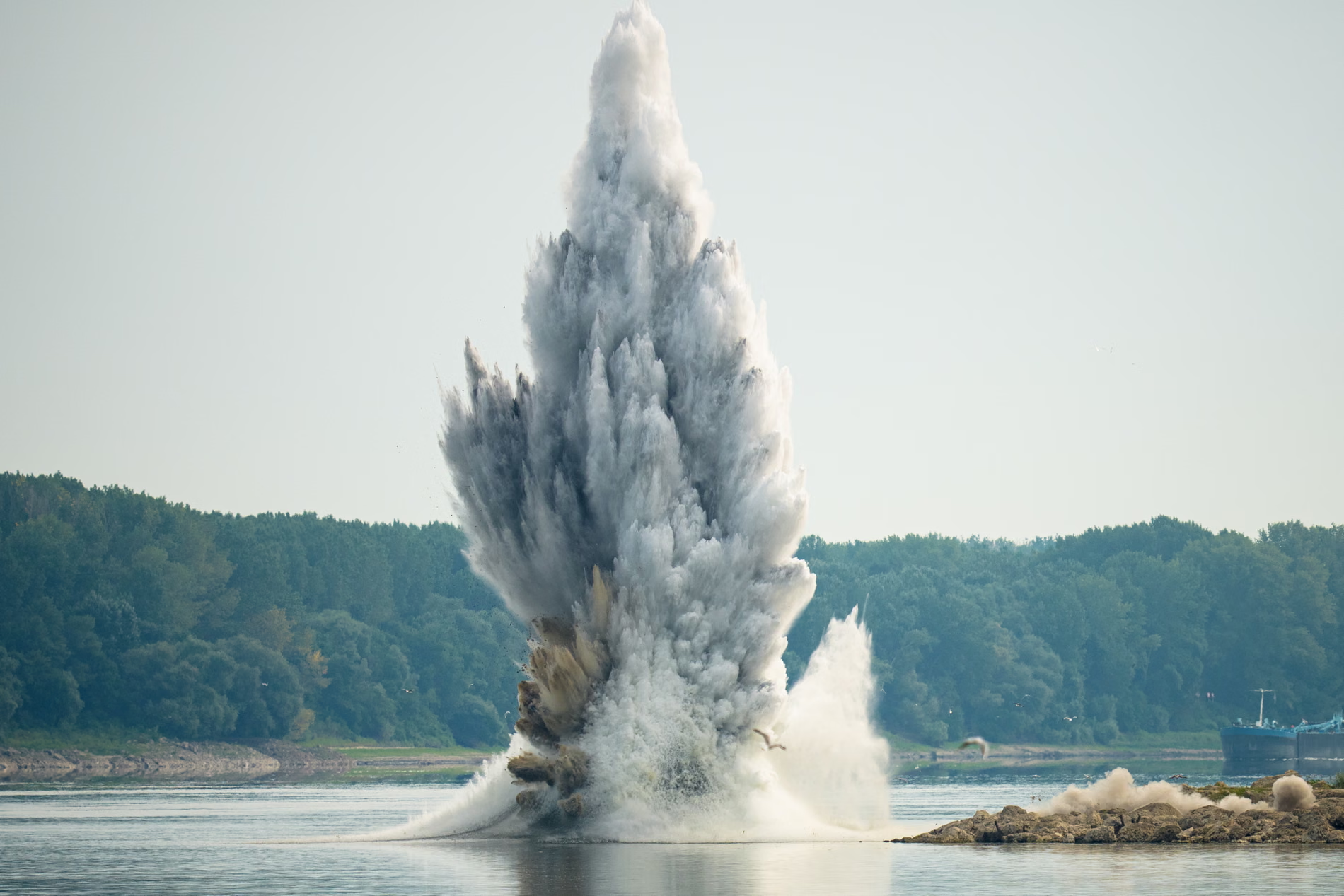
The country declared a national emergency and used explosives to remove underwater obstacles blocking water flow towards the Cernavoda nuclear power plant.
Hungary’s Paks nuclear plant, which normally provides almost half of the country’s electricity, has also faced the possibility of reduced operations because of falling river levels.
The crisis is affecting communities whose identities have been connected to rivers for generations.
Freshwater ecologists and researchers have warned that climate change is not only altering landscapes but also threatening traditional ways of life.
Along the Danube, fishing communities that once depended on the river have gradually disappeared. The knowledge of generations of fishermen, built around seasonal changes and river behaviour, is becoming harder to preserve as the waterway itself changes.
The cultural importance of Europe’s rivers is difficult to separate from their environmental role.
For centuries, rivers such as the Danube and Rhine have been central to the development of European civilisation.
The Danube connected regions across central and eastern Europe, linking cities such as Vienna and Budapest and serving as a route for trade, migration and cultural exchange.
The Rhine became the industrial backbone of Germany, helping transport the resources that powered the country’s economic growth.
Italian writer Claudio Magris famously explored the Danube’s historical importance, describing it as a thread connecting different societies and cultures across Europe.
But today, those rivers face an uncertain future.
Scientists warn that the language used to describe these events has changed. Terms such as “once-in-a-century drought” no longer accurately describe reality when record lows occur repeatedly within a few years.
Events once considered exceptional are becoming part of a new climate pattern.

The challenge facing Europe is not simply about temporary water shortages. It represents a fundamental shift in the relationship between societies and the natural systems that support them.
Governments are now under pressure to adapt infrastructure, rethink water management and reduce greenhouse gas emissions to limit future damage.
Experts argue that Europe must prepare for a future where rivers may no longer behave as they have for centuries.
This means changing how industries use waterways, improving conservation efforts and protecting ecosystems that depend on stable river conditions.
The decline of Europe’s rivers is a warning about the wider consequences of climate change.
These waterways are more than channels of water. They are economic lifelines, environmental habitats and symbols of shared history.
As droughts become more frequent and severe, Europe faces the challenge of protecting not only its rivers but the societies and cultures that have grown around them.
Related News:
 Moldova River Crisis Exposes War’s Hidden Cost
 Chornobyl Still at Risk 40 Years After Disaster
 Mangrove Forests Recover After Years of Damage
 Photographers Capture Stunning Wildlife Moments
 Airline Leaders Warn 2050 Net Zero Target May No Longer Be Achievable
 Olympus Awaits Unesco Heritage Recognition
 South Africa’s Garden Route Gem Faces Looming Water Crisis
 As Trump Retreats from Climate Goals, China Is Becoming a Green Superpower
 Inland Australia Town Turns Streets into a Beach for Volleyball Contest
 How Do You Modernise Mango Farming? India’s Growers Urged to Innovate as Climate Change Hits
 Storm Hernando: Edinburgh Airport Flights Cancelled in US Travel Chaos
 Probe After Illness Kills 72 Tigers in Thailand
 Ocean Warming Drives Massive Marine Life Loss, Study Warns
 UK Winter Nowhere Near a Record Breaker Despite Floods and Storms
 UK Records Warmest Day of the Year as Temperatures Exceed 18 °C
 Conservation Budgets Hit by Increased Fly‑Tipping Costs
 The Sad, Strange Story of the World’s Most Radioactive Paradise
 Water Cremation Introduced in UK First
 Passengers on Dubai‑Dublin Flight ‘Never So Happy to Be Home’
 Boy, 12, Home After Being Stranded in Middle East
 Study Says Only Two Nations May Survive Nuclear War
 ‘Holiday From Hell’ Leaves UK Couple Stranded in Thailand
 Baba Vanga’s Chilling World War 3 Prediction and Russia’s New Leader
 My One-Hour Flight Transfer Left Me Facing 10 Days Stuck in a City Under Attack
 Tiny Possum and Glider Thought Extinct for 6,000 Years Found in Remote West Papua
 Musk’s xAI Permit Sparks Fury Over Power Plant Expansion
 Rescued Sea Turtle Shows ‘Fighting Spirit’ After Vital CT Scan
 How and When to See April’s Full Pink Moon
 I’ve Lived in a French Village for 35 Years. This is Why They are So Special.
 “Homo Sapiens are All of Us”: Artemis II Crew Sends Emotional Message of Unity from Deep Space
 Paradise Aground: Cruise Ship Evacuated After Striking Reef Near ‘Cast Away’ Island
 The Lithium Inferno: Lorry Loaded with Batteries Engulfs Major Motorway
 The Outback Squeeze: ‘Out of Control’ Diesel Prices Threaten Australia’s Freight Arteries
 The Sinking Heritage: The Dutch Village at Risk of Being Demolished
 Canadian astronaut French words ease language row
 Tsunami Alerts Eased After Magnitude 7.7 Earthquake Rattles Northern Japan
 ‘A Week of Fear’: Japan Braced for Magnitude 8.0 Megaquake After Sanriku Jolt
 Stalemate at the Serac: 100-Foot Ice Block Paralyzes Everest Climbing Season
 RAF Typhoons scrambled amid Russian drone threat near Nato
 Escobar’s Hippos May Be Moved to India Zoo
 Older Than Dinosaurs: Secrets of Mayfly Dance Revealed
 Capitalism ‘Suicidal’, Warns Petro at Climate Summit
 Two Dead in Adelaide Airport Plane Crash Fire
 The $2.5 Billion “Speed Breaker”: RBI Battles Digital Fraud Surge
 The Ethylene Enigma: Is Foil-Wrapping the Stems Truly the Secret to “Evergreen” Bananas?
 Record May Heat to Cold Front in Eastern Australia
 “The Floating Fever”: WHO Confirms Second Hantavirus Case as Cruise Outbreak Death Toll Reaches Three
 “The Trial’s Strange Turn”: Musk v. Altman Case Veers into Personal Testimony and ‘Sperm Offers’
 “Not a New Pandemic”: UN Health Agency Calms Global Fears Over ‘Nasty’ Hantavirus Cruise Outbreak
 Doomsday Clock Nears Midnight Amid Global Crises
 Pope Meets Families in Italy Toxic Waste Zone
 Man killed in shark attack on Great Barrier Reef
 UN Issues Urgent Warning: Imminent Return of El Niño
 Everest Climber Recalls Guide’s Six-Day Survival
 Bear Escapes Factory Through Open Window
 Ancient Method Turns Food Waste Into Meals
 Families Grieve Beyond Air India Crash Victims
 Spain Tourism Surges as Travellers Avoid Middle East
 Keeping a 125-Year-Old Pier Alive
 At Least 19 Killed After Powerful Earthquake Hits Southern Philippines
 Spain Sees Tourism Boom as Travellers Shift Away From Middle East
 African Fishermen Blame Chinese Trawlers for Declining Catches
 Eight Rescued After Seaplane Makes River Landing in Manhattan
 Extreme Heat Grounds Birds of Prey Across the UK
 England and Norway Fans Turn Miami Into World Cup Carnival
 London Tube Heat Reaches Dangerous Levels
 Thousands Evacuated in France as Wildfires Spread Across Regions
 Three-Quarters of England’s Riverbanks Still Off Limits
 Wildfires Threaten Bordeaux as Mass Evacuations Grow
 Birding Apps Are Inspiring a New Generation of Nature Lovers
 French Firefighters Battle ‘David vs Goliath’ Wildfire
 Magnitude 7.1 Earthquake Strikes Japan, Several Injured
 People Trapped in Japan Shopping Centre After Earthquake
 Bali Bans Dutch Expats Over Alleged Running Club Exclusion
 Many Trapped Inside Japanese Shopping Centre After Earthquake
 Japan Quake Survivors Recall Terror as Homes Crumble
 Wildfires Intensify in South-West France as Region Braces for 40C Heatwave
 Two Killed as Firefighting Helicopters Collide During Greece Wildfire Mission
 Avalanche Claims Nepal’s Greatest Mountain Guides
 Calls Grow to Ban Toxic Pet Flea Treatments