Published: 6 July 2026 | The English Chronicle Desk | The English Chronicle Online
For generations, fishing has sustained countless coastal communities across Africa, providing food, employment and a way of life deeply rooted in local traditions. Today, however, many fishermen say their livelihoods are under increasing threat as industrial fishing fleets—particularly Chinese-owned trawlers—expand their presence in African waters. Across several coastal nations, fishermen report dwindling catches, shrinking incomes and growing uncertainty about the future, blaming large commercial vessels for exhausting fish stocks and disrupting traditional fishing grounds.
The concerns have sparked renewed debate over foreign fishing operations, marine conservation and the management of Africa’s rich but increasingly pressured fisheries. While Chinese companies insist they operate legally under agreements with African governments, many local communities argue that the scale and methods of industrial fishing are placing unbearable pressure on already fragile marine ecosystems.
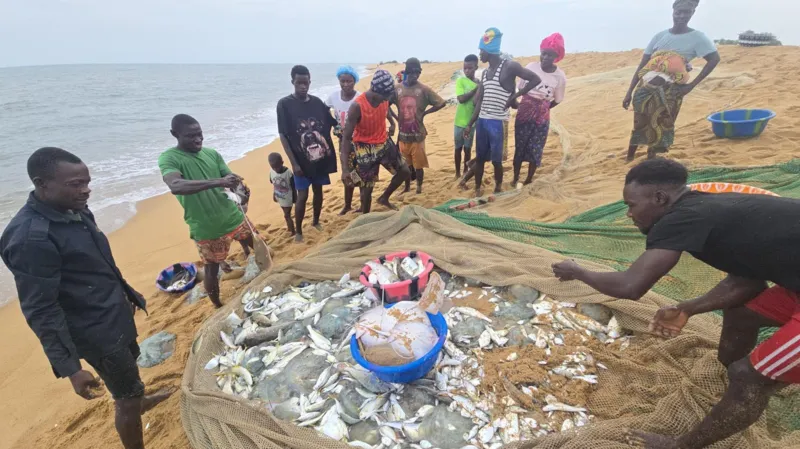
From the Atlantic coastline of West Africa to parts of East Africa and the Indian Ocean, fishermen describe a similar pattern. Boats that once returned with nets full of fish now spend longer hours at sea for significantly smaller catches. The decline, they say, has made it increasingly difficult to support families, repay debts and preserve a profession passed down through generations.

Many small-scale fishermen rely on traditional wooden boats and relatively simple equipment, limiting how far they can travel offshore. They contend that large industrial trawlers, equipped with sophisticated navigation systems, sonar technology and enormous nets, are capable of harvesting vast quantities of fish in a single voyage, leaving little for local fishing communities.
Several fishermen interviewed by local media and international researchers say they have witnessed industrial vessels operating close to coastal waters that were historically used by artisanal fishers. Although national regulations in many African countries restrict where industrial trawlers may operate, enforcement remains inconsistent because of limited patrol resources and the vast size of maritime territories.
Environmental experts acknowledge that overfishing has become one of the greatest challenges facing Africa’s marine ecosystems. According to fisheries researchers, multiple factors contribute to declining fish populations, including climate change, rising ocean temperatures, habitat degradation, illegal fishing and increasing demand for seafood.
However, industrial fishing remains one of the most contentious issues.
Modern trawlers are capable of catching hundreds of tonnes of fish during a single expedition. Bottom trawling, in particular, has drawn criticism from conservation groups because large nets dragged across the seabed can damage marine habitats while capturing numerous non-target species.
Marine scientists warn that unsustainable fishing practices can reduce fish populations faster than they are able to reproduce, threatening long-term ecological balance.
Chinese fishing companies have become major participants in African fisheries over the past two decades.
China maintains one of the world’s largest distant-water fishing fleets, operating in oceans across Asia, Africa, South America and the Pacific. Many Chinese vessels fish under bilateral agreements signed with African governments, which often view such partnerships as valuable sources of investment, employment and revenue.
Chinese officials have repeatedly stated that their companies are required to comply with local laws and international fisheries regulations. Beijing has also pledged to combat illegal, unreported and unregulated fishing while improving oversight of its distant-water fleet.
Nevertheless, environmental organisations and investigative reports have frequently raised concerns about alleged violations involving some vessels operating under Chinese ownership or management.
Accusations have included illegal fishing, under-reporting catches, using prohibited equipment and operating within restricted coastal zones. Not all allegations have been substantiated, and industry representatives argue that the overwhelming majority of licensed operators comply with legal requirements.
Governments across Africa face the difficult task of balancing economic development with environmental sustainability.
Foreign fishing agreements can generate substantial licence fees, tax revenues and employment opportunities while supporting seafood processing industries and export earnings. For countries with limited resources to develop domestic industrial fleets, partnerships with international operators may offer significant economic benefits.
At the same time, policymakers must ensure that commercial fishing does not undermine the livelihoods of millions of people who depend on small-scale fisheries.
According to the United Nations Food and Agriculture Organization, fisheries remain a vital source of nutrition and employment throughout Africa. Millions of people rely directly or indirectly on fishing for income, while fish provides an essential source of protein in many coastal communities.
Declining catches therefore affect not only fishermen but also fish processors, traders, transport workers and countless small businesses connected to the fishing economy.
Women, who often play central roles in processing and marketing fish, may also experience significant economic hardship when supplies diminish.
Marine conservation experts stress that sustainable fisheries management requires accurate scientific data, effective regulation and consistent enforcement.
Many African countries face considerable challenges in monitoring fishing activity across extensive exclusive economic zones. Limited patrol vessels, surveillance technology and enforcement capacity can make it difficult to detect illegal or unauthorised operations.
International organisations have increasingly supported African governments by providing satellite monitoring systems, maritime surveillance technology and technical assistance to strengthen fisheries management.
Advances in satellite tracking and vessel monitoring systems have improved authorities’ ability to observe fishing activity, identify suspicious behaviour and enforce maritime regulations.
Conservation groups argue that transparency should also play a greater role.
They have called for governments to publish fishing agreements, licence information and catch data, enabling greater public oversight of how marine resources are managed.
Several African governments have already begun reviewing fisheries policies in response to concerns about sustainability.
Some have introduced stricter licensing requirements, expanded marine protected areas and increased penalties for illegal fishing. Others are investing in scientific research to better understand changing fish populations and establish sustainable catch limits.
Regional cooperation has also become increasingly important because many fish species migrate across national boundaries.
Neighbouring countries are working together through regional fisheries organisations to coordinate management policies, share information and combat illegal fishing networks.
Climate change further complicates the situation.
Rising sea temperatures, ocean acidification and changing migration patterns are affecting fish stocks worldwide. Scientists caution that even without industrial fishing, environmental changes would likely continue altering marine ecosystems.
Consequently, addressing declining fish populations requires comprehensive approaches combining conservation, climate adaptation and responsible fisheries management.
Chinese officials have consistently maintained that cooperation with African countries is based on mutual benefit and respect for national sovereignty.
Beijing argues that Chinese investment has contributed to infrastructure development, employment and economic growth throughout the continent, including within the fisheries sector.
Many African governments similarly emphasise that foreign investment remains essential for national development while acknowledging the importance of ensuring sustainable resource management.
For fishermen along Africa’s coastlines, however, the debate remains deeply personal.
Each smaller catch represents reduced income, greater financial uncertainty and growing concern about whether future generations will be able to continue a profession that has sustained their communities for centuries.
Many say they do not oppose international cooperation or foreign investment but simply seek fair access to marine resources and stronger enforcement of existing fishing regulations.

As demand for seafood continues to grow worldwide, pressure on marine ecosystems is likely to intensify.
Experts agree that balancing economic opportunity with environmental protection will require closer cooperation among governments, fishing companies, conservation organisations and local communities.
The future of Africa’s fisheries may ultimately depend not only on regulating industrial fleets but also on ensuring that the voices of small-scale fishermen are included in decisions affecting the waters upon which their livelihoods depend.
The ongoing debate surrounding Chinese trawlers reflects broader global challenges involving food security, sustainable development and the responsible use of shared natural resources. Whether meaningful reforms can protect both marine ecosystems and coastal communities will remain one of the defining questions for African fisheries in the years ahead.
Related News:
 Millions Left Without Power as Grid Fails
 Capitalism ‘Suicidal’, Warns Petro at Climate Summit
 As Trump Retreats from Climate Goals, China Is Becoming a Green Superpower
 The Truth Behind Rising Energy Costs and Fossil Fuel Myths
 Trump to Deploy “God Squad” Over Gulf Wildlife Protections
 The Empty Express: India’s $100 Billion Metro Gamble Faces a Ridership Crisis
 Stalemate at the Serac: 100-Foot Ice Block Paralyzes Everest Climbing Season
 The Coastal Crossroads: Santa Marta Caught at the Heart of the Global Energy Shift
 “A Food Security Timebomb”: Fertilizer Boss Warns Iran War Puts Billions of Meals at Risk
 Norway Doubles Down on Oil and Gas for Europe Energy Security
 Hope for mountain bongos returns to Kenya
 Albania Protests Erupt Over Luxury Resort Plan
 Global Chicken Consumption Soars, UN Reports
 Asia Prepares for Severe El Niño Threat
 At Least 19 Killed After Powerful Earthquake Hits Southern Philippines
 Airline Leaders Warn 2050 Net Zero Target May No Longer Be Achievable
 China’s crackdown on civil servant perks sparks economic concerns
 Shein UK Faces Allegations of Shifting Majority of Profits to Singapore to Reduce UK Tax
 Canada Passes Carney’s First Budget in Tight Parliamentary Vote
 ‘Extinct’ Antelope Returns to Sahara, Bringing Hope
 UK New Car Discounts Near £6,000 as Prices Are Slashed
 South Africa’s Garden Route Gem Faces Looming Water Crisis
 What is Groundwater Flooding and Why Dorset is Seeing ‘Historical Highs’
 Dozens of Flood Warnings in England After Days of Non-Stop Rain
 Lunar New Year 2026: Celebrations Around the World
 Temperatures Dip Below Freezing as Arctic Air Sweeps Across the UK
 How Do You Modernise Mango Farming? India’s Growers Urged to Innovate as Climate Change Hits
 Live Nation Sees Strong Ticket Sales as Monopoly Lawsuit Looms
 Storm Hernando: Edinburgh Airport Flights Cancelled in US Travel Chaos
 Chad Shuts Border With Sudan in Bid to Stop Conflict Spreading
 Bill Gates ‘Took Responsibility’ Over Epstein Ties in Staff Meeting, Foundation Says
 Kidnapping of Foreigners Soars in Africa’s Lawless Sahel Region
 Limited Flights Leave UAE But Disruption Continues Amid Iran Strikes
 Study Says Only Two Nations May Survive Nuclear War
 Oil Prices Surge Above $100 Amid Iran War
 Cocoa Farmers Suffer as Chocolate Market Collapses
 Oil Price Jumps Despite Deal to Release Record Amount of Reserves
 Trump Threatens Iran With Total Infrastructure Destruction
 Russia: The Unforeseen Winner of the Iran Conflict
 The Banbridge Rescue: 300 Sheep Saved from Massive Hay Shed Inferno
 US Senators Slam Ticketmaster Over Sneaky New Fee Hikes
 Oil and Diplomacy: Russian Refineries Burn as Zelenskyy Secures Middle East Shield
 “A Perfect Storm”: UK Small Businesses Face Doubling Energy Bills as Iran War Rattles Markets
 Electric Shock: Australians Buy Record Number of New EVs as Fuel Crisis Bites
 War, Windfalls, and the Carbon Trap: The Iran Conflict’s Brutal Energy Math
 The Great Saddle-Up: Sydney Commuters Ditch the ‘Crazy’ Bowsers for the Bike Lane
 The Great Chokehold: Why the Strait of Hormuz is the Epicenter of the 2026 Crisis
 Moldova River Crisis Exposes War’s Hidden Cost
 California fireworks blast: murder charges filed in case
 Diplomatic Deadlock: Lebanon Enters High-Stakes Border Talks with ‘No Cards to Play’
 Blockbuster Resurrection: Avengers Reassemble and Top Gun Returns as Studios Tease 2026 Slate
 The Fog of War and the Ticker Tape: Suspicious Trades Rile Washington
 Brinkmanship in Islamabad: Tehran Vows ‘New Battlefield Cards’ as Ceasefire Wanes
 ‘The £100,000 Hammer’: War in Iran Forces UK Businesses to Absorb Historic Fuel Hikes
 ‘A Fragile Calm’: Oil Prices Dip as Trump Extends Iran Ceasefire, But Blockade Holds Firm
 Red Lines in Ottawa: PM Carney Insists US “Won’t Dictate Terms” of Trade Review
 “Industrial-Scale Extraction”: White House Memo Accuses China of Mass AI Theft
 Beyond the Swoosh: Anta Sports Overtakes Rivals to Become Global Top Three
 Return of the “Skiffs”: Threat Level Raised as Somali Pirates Seize Second Vessel in a Week
 The Sinking Ledger: How Climate Change Is Dismantling the Pacific’s Economic Backbone
 Southeast Asia Turns to Russia Amid Energy Crisis
 Ukraine Urges UK to Seize Russian Oil Tankers
 US Calls Australia Media Law “Foreign Extortion”
 “Grounded”: Beijing Implements Total Ban on Drone Sales Citing Capital Security
 The Silent Scythe: How the Iran War is “Starving” Asian Paddy Fields Before the Harvest
 Ukraine strikes Tuapse as oil disaster worsens
 US to Escort Trapped Ships Through the Strait of Hormuz
 Trump Threatens UN Budget Cuts as US Pushes ‘Trade Over Aid’ Agenda
 US Awaits Iran Reply on New Ceasefire Proposal
 High Street Crisis: Fears Grow Over Post Office Closures
 Oil Markets Face ‘Red Zone’ Threat Amid Iran Crisis
 Pope Meets Families in Italy Toxic Waste Zone
 Man killed in shark attack on Great Barrier Reef
 UN Issues Urgent Warning: Imminent Return of El Niño
 Trump Approves $700m Coal Industry Investment
 Spain Tourism Surges as Travellers Avoid Middle East
 Spain Sees Tourism Boom as Travellers Shift Away From Middle East
 UK Economy Suffers a Sharp Downturn as Iran Conflict Bites
 Net Zero School Remains Cool and Open as Heatwave Tests Britain’s Buildings
 Why Extreme Heat Can Cause Trees to Collapse and What Experts Say Can Be Done