Published: 27 April 2026. The English Chronicle Desk. The English Chronicle Online
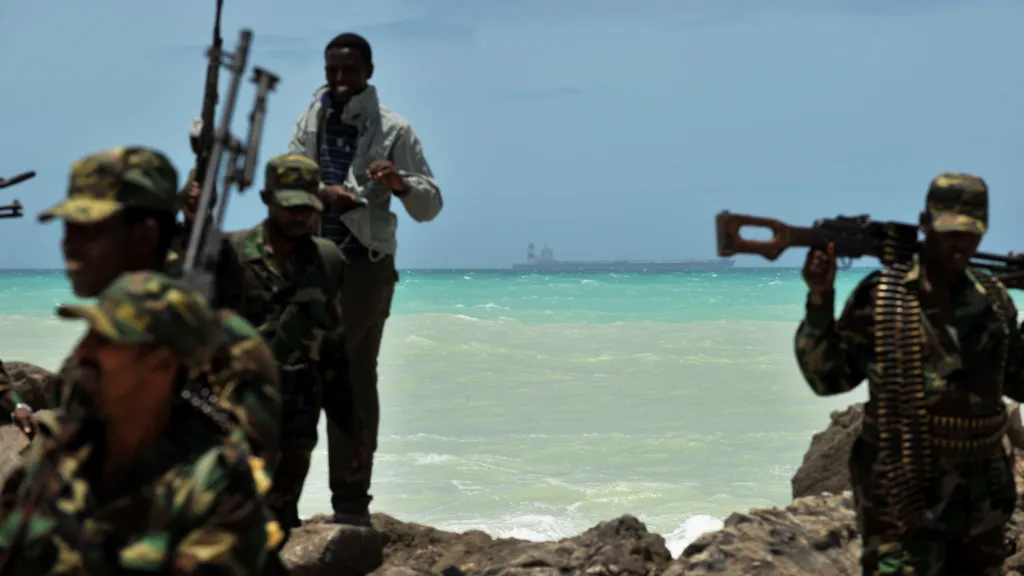
The spectre of large-scale maritime hijacking has returned to the Horn of Africa, as maritime authorities officially raised the piracy threat level to “substantial” following a string of aggressive attacks. On Sunday, April 26, the United Kingdom Maritime Trade Operations (UKMTO) reported that a cargo vessel was seized by “unauthorised persons” just six nautical miles off Garacad, Somalia. This marks the second major commercial hijacking in less than a week, signalling a dangerous resurgence in a region that had been relatively quiet for over a decade.

The latest seizure involves a cargo ship that was forcibly redirected into Somali territorial waters. It follows the hijacking of the Palau-flagged oil tanker Honour 25 on April 21, which was boarded by six gunmen approximately 30 nautical miles offshore. Carrying 18,500 barrels of oil and 17 crew members, the Honour 25 is currently being held near the coastline between Xaafun and Bander Beyla.
The Joint Maritime Information Center (JMIC) has responded to the surge by upgrading the threat level for the Somali Coast and Somali Basin. The “substantial” rating indicates that further attacks are now considered a “strong possibility.“
The Recent Spree: In the past seven days alone, at least four vessels have been targeted. In addition to the two hijackings, a Somali-flagged fishing vessel was seized near Xaafuun on April 23, and a cargo ship successfully repelled an armed boarding attempt 83 miles off Eyl on April 24 after its crew fired warning shots.
The Geographic Shift: Pirates appear to be operating further from the shore than in previous years, utilizing “mother ships” to launch skiffs deep into the Somali Basin.
The Hostage Crisis: While no injuries have been reported, the 17 crew members of the Honour 25 remain in a standoff with local authorities and Puntland security forces, with no immediate ransom demands made public.
Analysts warn that the resurgence of Somali piracy is being fueled by a “vacuum of security” in the wider region.
“We are seeing a deeply difficult moment for maritime security,” noted Sam Chambers, a regional shipping expert. “With the Strait of Hormuz closed due to the US-Israel conflict with Iran, and nearly 1,000 ships currently stranded in the Arabian Gulf, resources are stretched thin. The pirates are exploiting the fact that international naval patrols are distracted by larger geopolitical fires.”
The semi-autonomous state of Puntland has become the epicentre of the new activity. The Honour 25, which had departed from Berbera and was heading to Mogadishu, was intercepted by men reportedly originating from the Bandarbeyla district. Local officials are under intense pressure from community leaders to resolve the situation, but the lack of a coordinated international naval response has left a window of opportunity for Pirate Action Groups (PAGs) to rebuild their infrastructure.
In light of the increased threat, the UKMTO has issued an urgent advisory for all commercial traffic in the Indian Ocean.
Heightened Vigilance: Vessels are advised to maintain a 24-hour visual and radar lookout.

Vessel Hardening: Ships are urged to review Best Management Practices (BMP5), including the use of razor wire, water cannons, and “safe rooms” or citadels for crew.
Reporting: Any suspicious activity, including the sighting of small skiffs with ladders or multiple outboard motors, must be reported immediately to the UKMTO.
As the “Digital Iron Curtain” of regional instability continues to grow, the return of Somali piracy threatens to add yet another layer of complexity to the global supply chain. For the first time since the peak of the crisis in 2011, the “scourge of the seas” is no longer a memory—it is a present and growing reality for the thousands of seafarers navigating the waters of the Somali Basin.
Related News:
 The $100 Billion Peace: Trump’s ‘Grand Bargain’ Ends Iran Conflict at a Staggering Cost
 ‘A Double-Sided Ceasefire’: Inside the 14-Day Truce Between the US and Iran
 The Prediction Prohibition: White House Staff Barred from Betting on Political Markets
 The Vance Verdict: How the Vice President Navigated the Islamabad “Pressure Cooker”
 The Blockade Gambit: Trump’s High-Stakes Threat Leaves Middle East Predicaments Unchanged
 The Liberal Gamble: Carney’s Majority Quest Hits the ‘Poilievre Wall’
 The Atlantic Rift: Starmer Pledges UK Neutrality in Iran Port Blockade
 ‘I Get it in Writing’: Trump Extends Iran Ceasefire Amid Frantic Islamabad Push
 Trump Administration Dismisses 17 Immigration Judges, Sparking Debate Over Judicial Independence
 Modi’s London Visit Seals Historic UK-India Trade Pact Amid Global Tensions
 David Lammy Faces Possible Legal Challenge Over Foreign Office Secondment Scheme
 Jailed Georgian Opposition Leaders Warn UK of Iranian Links to Ruling Party
 UK Extradition Law Change Sparks Fears Among Hong Kong Dissidents
 Lucy Powell urged ministers to reconsider costly legal case for Labour donor’s firm
 Rachel Reeves to lead UK trade push in Saudi Arabia amid rights debate
 Johnson Approved China’s London ‘Super-Embassy’ in 2018
 China-critical UK academics face ‘extremely heavy’ pressure from Beijing
 Trump Urges Herzog to Grant Netanyahu Full Pardon
 US Justice Department Files Lawsuit Against California Over Partisan Voting Maps
 Trump Deploys DHS to Charlotte in Major Arrest Operation
 Canada Passes Carney’s First Budget in Tight Parliamentary Vote
 Congress Approves Release of Epstein Files, Trump Expected to Sign
 Texas Governor Faces Lawsuit From CAIR
 India’s Labour Law Overhaul Sparks Fierce Debate
 Chinese & Japanese Boats Clash Near Disputed Islands
 Putin Meets US Envoy Amid Key Ukraine Peace Talks
 South Korea Jails Ex-President in Martial Law Ruling
 Emails Show Epstein Funded Mandelson’s Husband After Jail
 Sydney Protest Clash Triggers Police Probe
 Nine Arrested in France Over Death of Far‑Right Student
 Japan Braces as Takaichi Begins New Term with Huge Mandate for Low‑Tax, Ultra‑Conservative Agenda
 How Much Could Andrew’s Arrest Hurt the Royal Family?
 Live Nation Sees Strong Ticket Sales as Monopoly Lawsuit Looms
 ‘We’re Still on Edge’: Toy Firms Look to US Supreme Court as Tariffs Hit Profits
 What Now for Asia After Trump’s Tariffs Were Struck Down?
 US Senate Vote Fails to Rein in Trump War Powers on Iran
 Trump Removes Kristi Noem From Homeland Security Role
 Gulf Oil Shock Sends Global Economic Ripples
 Iran Rejects Ceasefire, Warns Trump With Chilling Message
 US Says 16 Iranian Mine Ships Destroyed in Hormuz
 Queensland Protest Laws Spark Free Speech Backlash
 China Approves ‘Ethnic Unity’ Law Requiring Minorities to Learn Mandarin
 Belarus Leader Gifts Rifle to Kim Jong Un
 PM Seeks to Reassure Australians Over Fuel Supply

 AfD Demands Full US Troop Withdrawal as ‘Project Veto’ Tensions Flare
 Zelensky Looks to Gulf to Protect Him from Putin
 Iran Strikes Kuwaiti Desalination Plant, Killing Worker as ‘Water War’ Escalates
 Israel Enacts Death Penalty Law for Palestinians Following 12-Hour Debate
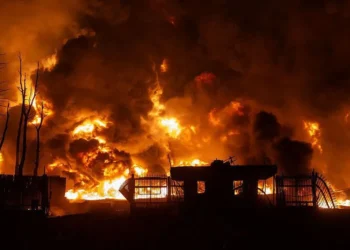 Epic Fury: The Strategic Logic and Uncertain Horizon of the 2026 Iran War
 “Time is Up”: M&S Bosses Demand Urgent Action as Retail Crime Hits “Brazen” New Highs
 Report Says Pezzullo Acted ‘Recklessly’ in Dealings
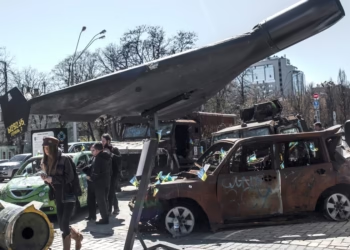 Oil and Diplomacy: Russian Refineries Burn as Zelenskyy Secures Middle East Shield
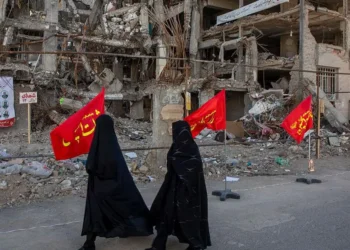 “A Perfect Storm”: UK Small Businesses Face Doubling Energy Bills as Iran War Rattles Markets
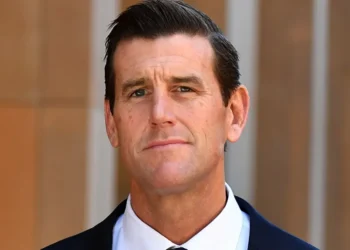 National Icon in Custody: Ben Roberts-Smith Arrested Over Alleged War Crimes in Afghanistan
 Justice in Limbo: Top Australian Soldier to Remain on Remand for War Crimes
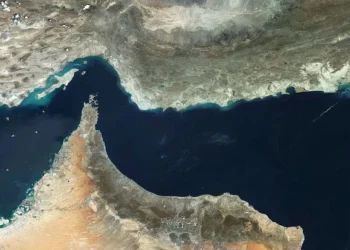 The Great Chokehold: Why the Strait of Hormuz is the Epicenter of the 2026 Crisis
 Global Commerce Crisis: Cooper Demands Immediate, Toll-Free Access to Hormuz
 California fireworks blast: murder charges filed in case
 Suspected Plot Targets Pipeline Before Hungary Vote
 Relief at the Pump: Irish PM Unveils €505m Package to Stem Fuel Crisis
 The Frozen Frontier: Why Frostbite is the Least of Concerns for Canada’s Arctic Forces
 Diplomatic Deadlock: Lebanon Enters High-Stakes Border Talks with ‘No Cards to Play’
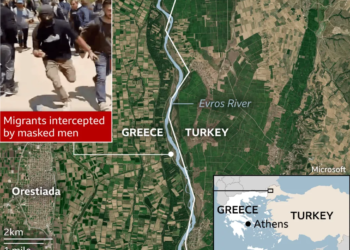 The Masked Frontier: Allegations of Greek Police Using Proxies for ‘Seismic’ Border Pushbacks
 Trump Slams UK Ties and Threatens To Rewrite Trade Deal
 The Fog of War and the Ticker Tape: Suspicious Trades Rile Washington
 High-Seas Seizure: US Navy Intercepts Iranian Cargo Ship in Gulf of Oman
 ‘Table of Surrender’: Tehran Vows ‘New Cards’ as Islamabad Peace Talks Teeter on Brink
 Brinkmanship in Islamabad: Tehran Vows ‘New Battlefield Cards’ as Ceasefire Wanes
 ‘The End of the Quiet Era’: Japan Relaxes Arms Export Rules in Historic Pivot From Pacifism
 ‘Diplomatic Turbulence’: Taiwan President Cancels Landmark Africa Tour Amid Airspace Lockout
 ‘The K-Pop Fugitive’: Interpol Red Notice Looming for Billionaire BTS Founder
 Resilience and Rupture: Why the Middle East Crisis is Succeeding Where Trade Wars Failed
 “War Crime”: Lebanon Condemns Death of Journalist in Targeted Strike
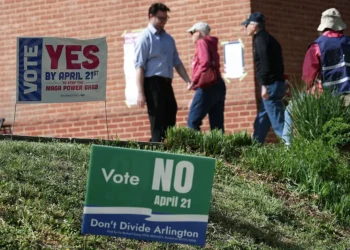 Judicial Whiplash: Virginia Court Pauses Redistricting 24 Hours After Public Vote
 Red Lines in Ottawa: PM Carney Insists US “Won’t Dictate Terms” of Trade Review
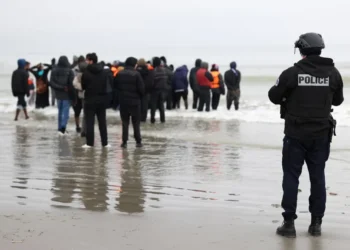 Border Breakthrough: UK and France Finalize New £662m Small Boats Deal
 “Industrial-Scale Extraction”: White House Memo Accuses China of Mass AI Theft
 “I Speak for the UK”: Trump Bristles at Prince Harry’s Ukraine Plea
 Diplomatic Crossfire: President Trump Dismisses Prince Harry’s “Passionate” Ukraine Appeal