Published: 29 July 2026 | The English Chronicle Desk | The English Chronicle Online
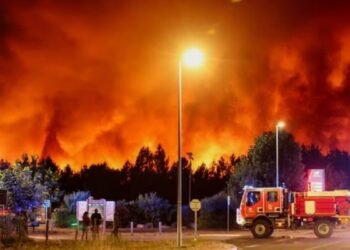
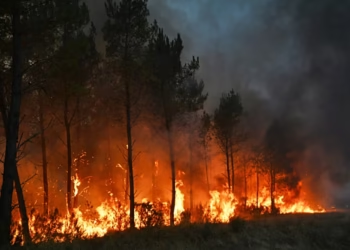
Wildfires burning across south-west France have intensified as firefighters battle advancing flames amid soaring temperatures and dry conditions. Authorities have warned that the situation could worsen as the region prepares for a new heatwave expected to push temperatures close to 40 degrees Celsius, increasing the risk of fresh outbreaks and making containment efforts even more challenging.
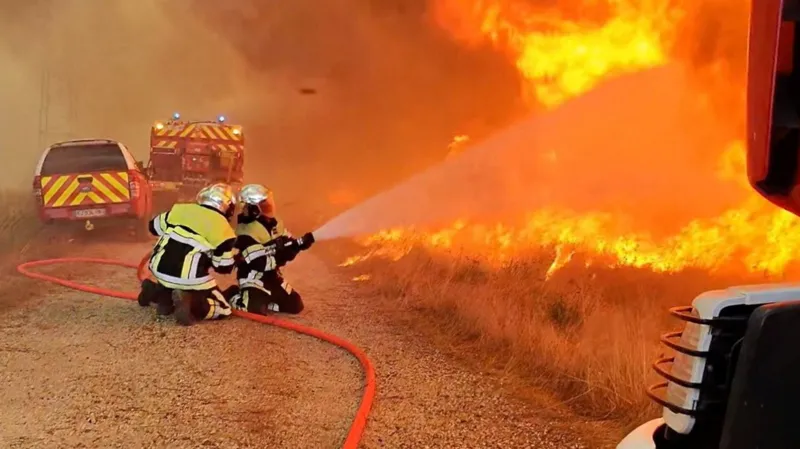
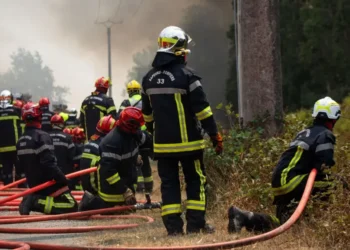
Emergency services remain on high alert, with thousands of firefighters, aircraft and specialist response teams deployed to protect homes, farmland and forests threatened by the rapidly spreading blazes. Several communities have been placed under evacuation orders or advised to prepare for possible relocation as changing winds continue to drive the fires across the countryside.
Officials say the combination of prolonged drought, strong winds and extreme heat has created ideal conditions for wildfires to spread quickly. Although firefighters have managed to contain parts of the affected areas, new flare-ups continue to emerge, forcing emergency crews to shift resources to protect lives and critical infrastructure.

The latest heatwave is expected to place additional pressure on emergency responders already working around the clock.
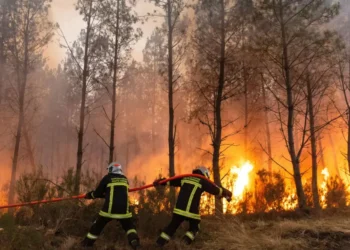
Fire crews have described the operation as one of the most demanding wildfire responses in recent years. Thick smoke, high temperatures and rapidly changing fire behaviour have complicated efforts to establish containment lines.
Aircraft have been dropping water and fire retardant over the most active fire zones while ground teams work to prevent flames from reaching populated communities.
Emergency officials said firefighting operations continue day and night, but extreme weather conditions have limited the effectiveness of some containment measures.
In several locations, fires have crossed roads and natural barriers that would normally help slow their advance.
Authorities warned that strong winds associated with the approaching heatwave could change fire directions with little warning, placing additional communities at risk.
Thousands of residents and holidaymakers have either been evacuated or advised to leave vulnerable areas as a precaution.
Temporary shelters have been established for displaced families, while local authorities continue monitoring conditions to determine whether additional evacuations are necessary.
Police have closed several roads to allow emergency vehicles access and to keep civilians away from dangerous areas.
Residents returning to affected communities have been warned that damaged infrastructure, fallen trees and poor air quality continue to pose significant hazards.
Many families have left behind homes, businesses and livestock without knowing when they will be able to return.
Local officials have urged residents to cooperate fully with evacuation instructions, stressing that safety remains the highest priority.
The wildfires are also threatening one of France’s important agricultural regions.
South-west France is known for vineyards, forests, livestock farming and crop production, all of which have been affected by prolonged drought and repeated heatwaves.
Farmers have expressed concern about potential losses to crops, grazing land and agricultural infrastructure.
Some vineyards located near active fire zones have implemented emergency measures to protect valuable harvests, while livestock owners have relocated animals away from advancing flames.
Agricultural organisations warn that repeated climate-related disasters are placing increasing financial pressure on rural communities.
Meteorologists forecast temperatures approaching or exceeding 40C across parts of south-west France during the coming days.
The combination of extreme heat and low humidity is expected to dry vegetation even further, creating highly combustible conditions.
Fire experts explain that under such circumstances even small ignition sources—including machinery, discarded cigarettes or lightning strikes—can trigger rapidly spreading fires.
Authorities have therefore introduced strict restrictions on outdoor activities in several regions.
Campfires, barbecues, certain agricultural operations and other activities capable of generating sparks have been temporarily restricted in high-risk areas.
Scientists say Europe is experiencing longer and more intense wildfire seasons than in previous decades.
Although individual fires cannot be attributed solely to climate change, rising average temperatures, prolonged droughts and more frequent heatwaves have increased the likelihood of severe wildfire conditions.
Southern Europe has repeatedly experienced record-breaking temperatures in recent summers, contributing to devastating fires in countries including France, Spain, Portugal, Greece and Italy.
Environmental researchers warn that climate change is increasing the frequency of conditions that favour large, fast-moving wildfires.
Governments across Europe are investing in improved firefighting equipment, satellite monitoring and early warning systems to better prepare for future wildfire seasons.
Beyond the immediate danger posed by flames, health authorities have warned that smoke pollution presents serious risks, particularly for older adults, children and people with respiratory illnesses.
Residents in affected areas have been advised to remain indoors when possible, keep windows closed and avoid unnecessary outdoor activity.
Hospitals are preparing for increased numbers of patients experiencing breathing difficulties, heat exhaustion and dehydration as temperatures continue rising.
Medical professionals have also urged people to drink plenty of water, avoid strenuous activity during the hottest part of the day and regularly check on vulnerable family members and neighbours.
The fires are affecting one of France’s busiest holiday periods.
South-west France attracts large numbers of domestic and international tourists during the summer months, many of whom visit forests, beaches, vineyards and rural destinations.
Some campsites, hiking trails and recreational areas have been temporarily closed because of wildfire risks.
Tourism businesses fear cancellations could affect local economies already dealing with the consequences of extreme weather.
Officials have encouraged travellers to follow local advice and remain informed about changing conditions before visiting affected regions.
France has previously received assistance from neighbouring European countries during major wildfire emergencies through the European Union’s civil protection mechanism.
Cross-border cooperation allows countries to share firefighting aircraft, specialist personnel and emergency resources when national capacities are stretched.
Authorities say international coordination remains available should conditions continue deteriorating.
Even after the fires are eventually contained, recovery is expected to take months or even years.
Burned forests require extensive restoration, damaged homes must be rebuilt and affected communities will need financial and psychological support.
Environmental experts warn that wildfire recovery extends beyond replacing buildings.
Burned landscapes become more vulnerable to soil erosion, flooding and biodiversity loss, creating long-term ecological challenges.
Emergency officials believe the coming days will be decisive.

If forecast temperatures reach 40C and strong winds develop as expected, firefighters could face even more difficult conditions.
Authorities continue urging residents to remain vigilant, report signs of new fires immediately and strictly follow emergency instructions.
As France confronts another period of extreme weather, the ongoing wildfires illustrate the growing challenge posed by increasingly intense heatwaves across Europe.
For firefighters working on the front lines and families forced from their homes, the immediate priority remains containing the flames and protecting lives before the next surge in temperatures arrives.
Related News:
 French Firefighters Battle ‘David vs Goliath’ Wildfire
 Evacuations Ordered as California Wildfires Spread Fast
 Queensland Braces for Potential Second Severe Cyclone Hit
 Capitalism ‘Suicidal’, Warns Petro at Climate Summit
 Ukraine strikes Tuapse as oil disaster worsens
 Norway Doubles Down on Oil and Gas for Europe Energy Security
 Pope Meets Families in Italy Toxic Waste Zone
 Deadly Spain Wildfire Leaves 11 Dead, 19 Missing
 Thousands Evacuated in France as Wildfires Spread Across Regions
 France Evacuates Tourist Area as Wildfires Spread
 Wildfires Force Mass Evacuations in France And Spain
 Wildfires Threaten Bordeaux as Mass Evacuations Grow
 Wildfires Advance Toward Farmland Near Bordeaux
 French Wildfire Sparks Rare Lightning Storm Near Bordeaux
 ‘Extinct’ Antelope Returns to Sahara, Bringing Hope
 EU weighs response amid Greenland tariff crisis with Trump
 Half the World’s Largest Cities Face Rising Water Stress
 EU Says US Ties Have Suffered ‘Big Blow’ After Greenland Crisis
 Thousands Left Without Heating in Ukraine Amid Russia Strikes
 Storm Leonardo Triggers Election Delay Calls in Iberia
 Dozens of Flood Warnings in England After Days of Non-Stop Rain
 Portugal Election Delivers Socialist Win as Far Right Surges
 Fast-moving Wildfires Rage Across Southwestern US
 Shutting North Sea ‘Will Drive Up Carbon Emissions’
 Storm Hernando: Edinburgh Airport Flights Cancelled in US Travel Chaos
 Scotland’s Climate Plans Face Scrutiny Over ‘Science Fiction’ Targets
 Tropical Flowers Shift Blooming Due to Climate Crisis
 Greenpeace $345m Ruling Sparks Appeal Battle
 UK Winter Nowhere Near a Record Breaker Despite Floods and Storms
 UK Records Warmest Day of the Year as Temperatures Exceed 18 °C
 Hungary Faces Political Tension Over the Ukraine Crisis
 Cyprus Drone Strike Sparks Europe’s Strong Response
 Musk’s xAI Permit Sparks Fury Over Power Plant Expansion
 Trump to Deploy “God Squad” Over Gulf Wildlife Protections
 Red Skies and Raging Floods: One Dead as Storm Erminio and Saharan Dust Grip Greece
 UK Records Earliest Spring as Nature Awakens Fast
 Tragic End to Outback Search as Floods Claim a Life
 The Spiky Standoff: German Mayors Call for Night-Time ‘Robot Ban’ to Save Hedgehogs
 Hungary election: Orbán faces biggest test amid scandal
 Cyclone Vaianu Forces Mass Evacuations in New Zealand
 Chornobyl Still at Risk 40 Years After Disaster
 Escobar’s Hippos May Be Moved to India Zoo
 Coalition pushes fossil fuel phaseout plan
 Record May Heat to Cold Front in Eastern Australia
 Global order shifts amid Trump-era turmoil
 Ceasefire Standoff Deepens in Ukraine War
 France Faces Record Presidential Crowded Race Amid Far-Right Surge
 Bad Weather Threatens Hantavirus Cruise Ship Evacuation
 Doomsday Clock Nears Midnight Amid Global Crises
 Ex-Chief of Staff Named in Major Ukraine Corruption Probe
 UN Faces Crucial Vote on Landmark ICJ Climate Ruling
 Zelenskyy warns over Oreshnik threat as Kyiv hit
 Man killed in shark attack on Great Barrier Reef
 Hope for mountain bongos returns to Kenya
 Former ICC prosecutor condemns US sanctions
 Irish Gangland Figure Fails in Dublin Election Bid
 Deadly Russian Air Raids Strike Across Ukraine
 UN Issues Urgent Warning: Imminent Return of El Niño
 Papal Visit Offers Political Lifeline to Spanish Premier
 Deadly Earthquake Hits Philippines
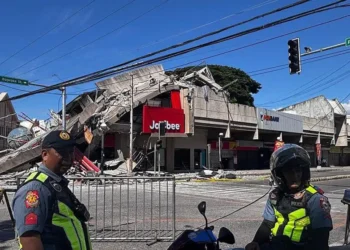 At Least 19 Killed After Powerful Earthquake Hits Southern Philippines
 Temperatures Set to Fall This Week, But Forecasters Warn Heat Could Return Soon
 Why Extreme Heat Can Cause Trees to Collapse and What Experts Say Can Be Done
 Germany Summons Chinese Envoy Over Russian Troop Training
 Sydney Records Hottest June Since 1859 as Expert Warns New High a ‘Signature’ of Global Warming
 African Fishermen Blame Chinese Trawlers for Declining Catches
 UK Heatwaves Ignite Crisis of Sleep and Public Safety
 China Storms Claim Fifteen Lives in Tragic Surge
 Le Pen to Run for President Despite Embezzlement Conviction
 Europe Scorched as Record Heatwaves Grip the Continent
 Venezuela Quake Death Toll Surpasses 4,000
 Zelensky Dismisses Ukraine’s Top Army Commander After Days of Nationwide Protests
 No Helicopters Available to Fight Wildfires as ‘Crisis Management’ Plans Activated
 Three-Quarters of England’s Riverbanks Still Off Limits
 Berlin Pride Attack Suspect Killed in Police Raid
 Fourth Heatwave Brings 35C Temperatures to UK
 Magnitude 7.1 Earthquake Strikes Japan, Several Injured
 People Trapped in Japan Shopping Centre After Earthquake
 Many Trapped Inside Japanese Shopping Centre After Earthquake
 Japan Quake Survivors Recall Terror as Homes Crumble