Published: 27 July 2026 | The English Chronicle Desk | The English Chronicle Online
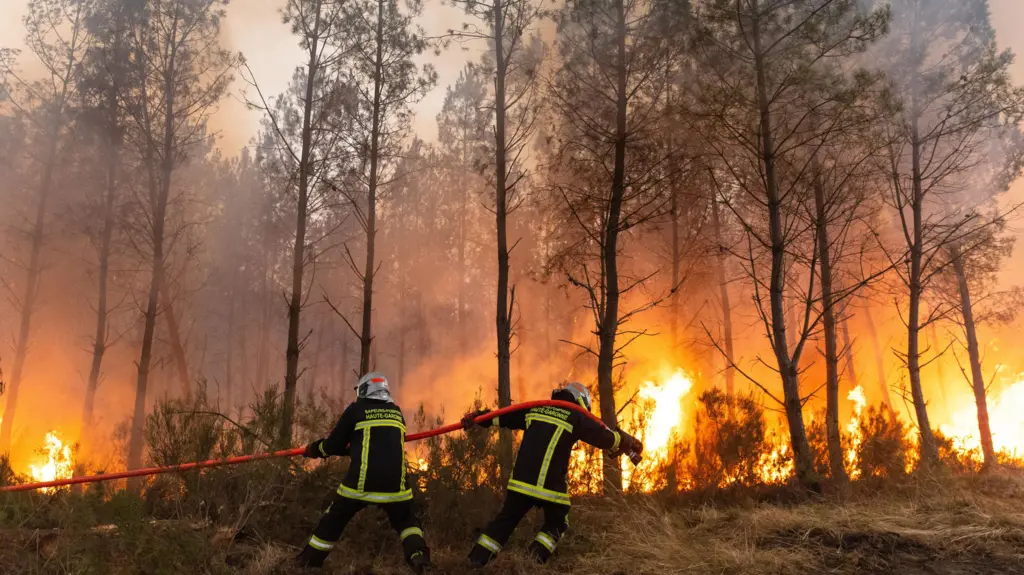
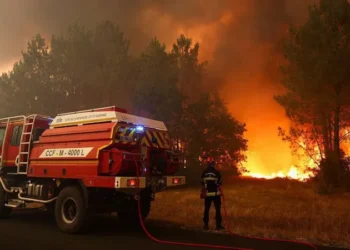
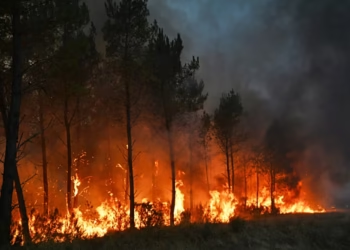
A fast-moving wildfire threatening areas near Bordeaux in southwestern France has created a dramatic and dangerous weather phenomenon, generating a lightning storm above the flames as firefighters continue battling one of the region’s most challenging blazes in recent years.
The wildfire, which has spread rapidly through dry landscapes affected by extreme heat and strong winds, has forced evacuations, disrupted communities and raised fears over further destruction as emergency crews work around the clock to contain the flames.
The formation of a fire-generated thunderstorm, known as a pyrocumulonimbus cloud, has added another layer of danger to an already difficult firefighting operation. These powerful clouds can produce lightning, intense winds and unpredictable fire behaviour, making it significantly harder for crews on the ground and aircraft battling the blaze from above.
Residents living near affected areas have been urged to remain alert as authorities continue monitoring the fire’s movement and assessing risks to nearby communities.

The wildfire has spread close to farmland and forest areas surrounding Bordeaux, one of France’s most famous wine-producing regions. The flames have threatened rural communities, agricultural land and natural habitats, creating widespread concern among residents and local authorities.
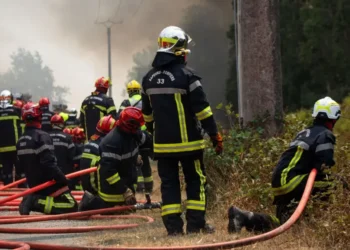
Emergency services have deployed hundreds of firefighters, supported by aircraft and specialist equipment, in an effort to slow the fire’s advance. Teams are working in difficult conditions as high temperatures, dry vegetation and changing winds continue to challenge containment efforts.
Officials said the priority remains protecting lives, assisting evacuated residents and preventing the flames from reaching more populated areas.
The development of the lightning-producing fire cloud has highlighted the extreme conditions facing firefighters.
Pyrocumulonimbus clouds form when intense heat from a wildfire forces hot air and smoke high into the atmosphere. As the rising air cools, it can create a massive storm-like cloud capable of generating lightning strikes.
While these clouds may appear similar to ordinary thunderstorms, they often make wildfires more unpredictable. Strong winds created by the storm system can push flames in new directions, while lightning strikes may ignite additional fires nearby.
Fire experts have described the phenomenon as one of the most dangerous challenges during major wildfires.
The Bordeaux region has already been experiencing severe summer heat, with prolonged dry conditions leaving forests and grasslands highly vulnerable to ignition.
Climate scientists have warned that rising global temperatures are increasing the likelihood of extreme weather events, including longer heatwaves, drought conditions and more intense wildfires.
France, like many countries across southern Europe, has faced increasingly frequent and severe wildfire seasons in recent years.
The combination of hotter temperatures, reduced rainfall and dry vegetation has created conditions where fires can spread rapidly and become difficult to control.
Authorities have introduced stricter fire safety measures during periods of extreme risk, including restrictions on outdoor activities that could accidentally trigger fires.
Despite these precautions, climate conditions continue to create significant challenges for emergency services.
The latest wildfire near Bordeaux has also raised concerns for the region’s agricultural sector.
Southwestern France is internationally recognised for its vineyards, farms and rural landscapes. Farmers and landowners in affected areas are monitoring the situation closely as flames approach agricultural zones.
Damage to crops, livestock facilities and farming infrastructure could have long-term economic consequences if the fire continues spreading.
The wine industry, which plays a major role in the local economy and cultural identity of the Bordeaux region, is particularly sensitive to climate-related threats.
Extreme heat, drought and wildfires have become growing concerns for vineyard owners, who are already adapting to changing weather patterns.
Local officials have praised the efforts of firefighters and emergency workers, many of whom have been operating in dangerous conditions for extended periods.
Firefighting teams are using ground crews, water-dropping aircraft and specialised vehicles to create barriers and slow the movement of flames.
However, officials have warned that weather conditions remain the biggest factor influencing the outcome of the operation.
Wind direction and temperature changes can rapidly alter the behaviour of large wildfires, sometimes creating new emergency situations within minutes.
Evacuated residents have described scenes of uncertainty as they leave homes and communities threatened by advancing flames.
Many families have temporarily relocated to shelters or stayed with relatives while waiting for authorities to confirm when it is safe to return.
Community organisations and local authorities have provided assistance, including food, accommodation and emergency support for those displaced.
The wildfire has also renewed debate about France’s preparedness for increasingly severe climate-related disasters.
Environmental experts argue that preventing future wildfire disasters will require stronger investment in forest management, early warning systems and climate adaptation strategies.
They say emergency responses are essential but must be combined with long-term measures to reduce vulnerability.
Scientists have repeatedly warned that Europe is becoming one of the fastest-warming regions in the world, with Mediterranean and southwestern European areas facing particularly high risks from heat and drought.
The increasing frequency of extreme wildfires has placed additional pressure on governments to strengthen climate policies and improve disaster planning.
France has expanded its wildfire response capabilities in recent years, including increasing firefighting resources and improving coordination between national and regional emergency services.
However, experts say the scale of modern wildfires requires international cooperation and greater investment in prevention.
The Bordeaux blaze comes during a period when several parts of Europe have faced serious wildfire threats.
From Spain and Portugal to Greece and Italy, countries across southern Europe have experienced major fires linked to extreme heat and dry conditions.
The pattern has strengthened concerns that wildfire seasons are becoming longer, more intense and more difficult to manage.

For residents near Bordeaux, the immediate priority remains safety as firefighters continue their battle against the flames.
Authorities have urged people in affected areas to follow evacuation instructions, avoid restricted zones and rely only on official updates.
As crews continue working to contain the wildfire, the dramatic sight of lightning forming above the flames serves as a reminder of the increasingly extreme conditions facing communities and emergency responders.
The fire’s final impact will depend on weather conditions in the coming days, but officials warn that the threat remains serious.
For Bordeaux and surrounding areas, the wildfire has become another example of the growing challenges posed by a changing climate and the urgent need for effective preparation, prevention and response.
Related News:
 Dozens of Flood Warnings in England After Days of Non-Stop Rain
 Fast-moving Wildfires Rage Across Southwestern US
 UK Winter Nowhere Near a Record Breaker Despite Floods and Storms
 UK Records Warmest Day of the Year as Temperatures Exceed 18 °C
 Evacuations Ordered as California Wildfires Spread Fast
 Queensland Braces for Potential Second Severe Cyclone Hit
 Temperatures Set to Fall This Week, But Forecasters Warn Heat Could Return Soon
 Why Extreme Heat Can Cause Trees to Collapse and What Experts Say Can Be Done
 Deadly Spain Wildfire Leaves 11 Dead, 19 Missing
 Rain Forecast to Return This Weekend as Parts of UK Edge Closer to Drought Conditions
 No Helicopters Available to Fight Wildfires as ‘Crisis Management’ Plans Activated
 Thousands Evacuated in France as Wildfires Spread Across Regions
 France Evacuates Tourist Area as Wildfires Spread
 Wildfires Threaten Bordeaux as Mass Evacuations Grow
 Wildfires Advance Toward Farmland Near Bordeaux
 What is Groundwater Flooding and Why Dorset is Seeing ‘Historical Highs’
 BRRRITAIN: Met Office Issues Yellow Weather Warning for More Snow
 Temperatures Dip Below Freezing as Arctic Air Sweeps Across the UK
 Flooding May Worsen Before It Improves as More Rain Forecast for the UK
 Shutting North Sea ‘Will Drive Up Carbon Emissions’
 Brace for Trump’s Brave New World of 1.7°C Global Warming
 As Trump Retreats from Climate Goals, China Is Becoming a Green Superpower
 ‘The New Tobacco’: Cities Ban Fossil Fuel Adverts
 Storm Hernando: Edinburgh Airport Flights Cancelled in US Travel Chaos
 Storm Hernando: Edinburgh Airport Flights Cancelled in US Travel Chaos
 Scotland’s Climate Plans Face Scrutiny Over ‘Science Fiction’ Targets
 Ocean Warming Drives Massive Marine Life Loss, Study Warns
 Tropical Flowers Shift Blooming Due to Climate Crisis
 Farmers on Edge as Record Rainfall Dampens Slurry Season
 Conservation Budgets Hit by Increased Fly‑Tipping Costs
 Net Zero by 2050 ‘Cheaper Than One Fossil Fuel Crisis’
 Scotland Braces for 80mph Gales and ‘Intense Rain’
 Millions Left Without Power as Grid Fails
 Concern Over Six Weeks of Sewage Discharge Into River
 Red Skies and Raging Floods: One Dead as Storm Erminio and Saharan Dust Grip Greece
 UK Records Earliest Spring as Nature Awakens Fast
 The Spiky Standoff: German Mayors Call for Night-Time ‘Robot Ban’ to Save Hedgehogs
 Cyclone Vaianu Forces Mass Evacuations in New Zealand
 Capitalism ‘Suicidal’, Warns Petro at Climate Summit
 Record May Heat to Cold Front in Eastern Australia
 Ukraine strikes Tuapse as oil disaster worsens
 Norway Doubles Down on Oil and Gas for Europe Energy Security
 The Great May Meltdown: Europe Braces for a Historic Swing from Arctic Chill to Extreme Late-Spring Heat
 UK Faces Mass Water Shortages by 2055, Lords Warn
 Pope Meets Families in Italy Toxic Waste Zone
 Hope for mountain bongos returns to Kenya
 Mangrove Forests Recover After Years of Damage
 Deadly Earthquake Hits Philippines
 At Least 19 Killed After Powerful Earthquake Hits Southern Philippines
 Airline Leaders Warn 2050 Net Zero Target May No Longer Be Achievable
 Amber Heat Health Alerts Issued as UK Temperatures Expected to Exceed 30C
 Met Office Issues Amber Extreme Heat Warning as Temperatures Near 35C
 Net Zero School Remains Cool and Open as Heatwave Tests Britain’s Buildings
 Hosepipe Ban Introduced Across Hampshire and Isle of Wight as Water Supplies Come Under Pressure
 Sydney Records Hottest June Since 1859 as Expert Warns New High a ‘Signature’ of Global Warming
 African Fishermen Blame Chinese Trawlers for Declining Catches
 UK Heatwaves Ignite Crisis of Sleep and Public Safety
 UK Braces for Prolonged Heatwave as Amber Alerts Issued
 ‘Extreme’ Marine Heatwave Forecast for UK Waters
 Extreme Heat Grounds Birds of Prey Across the UK
 Households Urged to Conserve Water Amid Rising Temperatures
 UK Seas Face Extreme Heatwave as Global Temperatures Surge
 Europe Scorched as Record Heatwaves Grip the Continent
 UK Heatwaves May Have Claimed Thousands of Lives
 UK Heatwave Nears Two-Week Milestone as High Temperatures Continue Across the Country
 Britain Set for ‘Bumper Year’ for Butterflies as Conservationists Predict Strong Season
 Wildfires Force Mass Evacuations in France And Spain
 Three-Quarters of England’s Riverbanks Still Off Limits
 ‘Extinct’ Antelope Returns to Sahara, Bringing Hope
 Conservatives Pledge to Scrap 2030 Petrol and Diesel Car Ban
 UK Weather: End of Cold Spell in Sight as Temperatures Rise
 No Gas Boiler Ban as UK Warm Homes Plan Backs Heat Pumps
 Finland Plans to Lift Decades‑Old Ban on Hosting Nuclear Weapons
 Spain Faces Backlash Over Xenophobic Chants in Egypt Draw
 The Banbridge Rescue: 300 Sheep Saved from Massive Hay Shed Inferno
 Romania’s Judicial Crisis: A System Under Siege
 UN Issues Urgent Warning: Imminent Return of El Niño
 Man Praised for Saving Neighbours After Lightning Strike Sparks House Fire
 London Tube Heat Reaches Dangerous Levels