Published: 10 March 2026. The English Chronicle Desk. The English Chronicle Online.
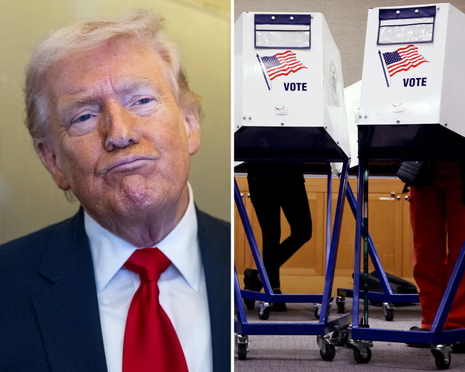
The debate surrounding the Save America Act intensified Monday after renewed pressure from Donald Trump on lawmakers. Speaking during a Republican gathering in Miami, the president warned he may block legislation until the bill advances. His remarks reignited a fierce national conversation about voting rules, election integrity, and political power before crucial midterm elections.
During the speech, Trump insisted that proof of citizenship must become mandatory for every voter nationwide. He also repeated demands to sharply restrict mail voting except under limited circumstances such as illness or military service. The proposal forms the core of the Save America Act, legislation Republicans describe as necessary protection for elections.
Trump told supporters the measure would reshape future political contests across the country. He claimed that if enacted, the legislation could prevent Democrats from winning elections for decades. Critics quickly challenged the statement, calling it exaggerated and politically motivated.
The president first escalated pressure on Sunday through his social platform Truth Social. In a post directed toward lawmakers, Trump insisted that passing the Save America Act should take priority. He wrote that the legislation must move immediately to the “front of the line” in US Congress.
Trump added that he would refuse to sign unrelated bills unless Congress approved the measure. His warning signals an unusual tactic, linking government legislation to a single election reform priority. Political observers say such pressure could intensify already tense negotiations in Washington.

The proposed law is closely related to earlier legislation known as the Safeguard American Voter Eligibility Act. That measure has circulated in various forms for more than two years within Congress. Lawmakers recently revived the plan under the new title Save America Act.
Earlier this year the bill passed the US House of Representatives after strong support from Republicans. However, the proposal faces more difficult prospects in the US Senate. Senate rules require sixty votes to overcome the filibuster barrier before most legislation can advance.
Republicans currently lack the necessary votes to guarantee passage without Democratic support. Party strategists are therefore considering whether procedural rules should be changed or temporarily suspended. Such discussions have triggered new debate about the future of the filibuster in American politics.
Trump’s comments also introduced several demands not fully included in the existing legislation. Among them are strict voter identification rules and mandatory proof of citizenship when registering. The proposal suggests documents such as passports or birth certificates would confirm eligibility.
Another provision would ban most forms of mail voting used widely during recent elections. Trump said only specific circumstances would allow ballots to be sent through the postal system. Supporters argue the measure could prevent potential fraud and increase public confidence in results.
The president also linked unrelated social policies to the voting legislation, further widening the debate. He repeated calls for restrictions on transgender participation in women’s sports and medical treatments for minors. Critics say combining these issues with election law complicates the legislative process significantly.
White House officials confirmed the president requested several policy additions during internal discussions about the bill. Press secretary Karoline Leavitt explained that Trump wants multiple priorities addressed together. She described the proposals as common-sense reforms supported by many voters.
Leavitt also defended the administration’s stance on gender-related policies affecting minors. She said the government would not tolerate medical procedures involving gender transition for children. Her remarks intensified criticism from civil rights organisations and medical professionals.
Beyond political messaging, the Save America Act contains extensive changes to federal election procedures. One requirement would prevent states from registering voters without documentary proof of citizenship. Election officials would need to verify documents during the registration process.
Another section directs states to share voter lists with the Department of Homeland Security. The department would then examine the lists to confirm citizenship status. Supporters argue the review could detect noncitizens improperly included on voter rolls.
The bill also allows private citizens to sue election officials over registration decisions. If authorities register someone lacking documentation, they could face legal challenges and possible penalties. Some critics warn such provisions could create widespread litigation across the country.
Legal experts note that similar efforts have already sparked courtroom battles in several states. Courts previously blocked parts of executive actions attempting to introduce comparable requirements nationwide. Judges argued some provisions exceeded presidential authority or conflicted with existing election laws.
Indeed, a recent executive order from Trump attempting similar reforms encountered immediate legal obstacles. Federal courts halted several sections, saying the administration lacked authority to implement them unilaterally. Those rulings reinforced the need for congressional approval before sweeping changes occur.
Trump has nevertheless continued advocating stronger federal involvement in election administration. In February he suggested the federal government might need to “nationalise” election management in certain states. His comments reflected ongoing frustration with state-run systems responsible for organising American elections.
Currently elections are administered by state and local authorities representing both major political parties. This decentralised structure has existed for generations and remains central to the US constitutional framework. Many scholars argue it provides checks and balances against national political influence.
Within the Republican Party, however, support for the legislation remains strong ahead of midterm contests. Several candidates view the bill as essential to their campaign platforms on election security. The issue has become a rallying point among conservative activists nationwide.
One prominent supporter is Ken Paxton, currently seeking a Senate seat in Texas. Paxton faces a competitive primary contest against long-serving senator John Cornyn. The race has drawn national attention as both candidates appeal to conservative voters.
Paxton recently suggested he might even withdraw from the race under certain conditions. He said stepping aside could become possible if Senate leaders helped pass the Save America Act. Analysts say the statement reflects intense political pressure surrounding the legislation.
Meanwhile, Democrats have voiced sharp opposition, describing the bill as a major threat to voting access. Members of the Democratic Party argue the legislation could disenfranchise millions of eligible voters. They say strict documentation rules disproportionately affect younger citizens and minority communities.
Voting rights organisations share similar concerns about potential barriers created by the proposal. The respected Brennan Center for Justice issued a warning earlier this year. Researchers argued the Save America Act could disproportionately affect voters of colour and younger Americans.
Their analysis noted that many citizens lack passports or updated identification documents. Married women who changed surnames sometimes hold documents that no longer match official records. Such discrepancies could complicate the verification process required under the legislation.
Critics also emphasise the possible impact on voter registration drives across communities. These campaigns often rely on mail forms or public events to encourage participation. The proposed law would require individuals to present citizenship proof in person before registration.
Supporters respond that the requirements mirror procedures already used in other government systems. They argue proving citizenship is reasonable when participating in national elections. According to advocates, stricter verification could strengthen confidence among sceptical voters.
However, data suggests that illegal voting by noncitizens rarely occurs in American elections. Studies repeatedly found only isolated incidents across decades of voting records. Even so, the issue continues shaping political rhetoric during heated campaigns.

The Bipartisan Policy Center recently examined examples cited by lawmakers. Researchers concluded that noncitizen voting has never influenced any election outcome. Their report highlighted a recent case reviewed in Utah.
Officials there examined thousands of registrations while searching for potential irregularities. Investigators identified a single noncitizen who registered but never cast a ballot. The review reinforced findings that widespread illegal voting remains extremely uncommon.
As the midterm elections approach, political pressure surrounding voting legislation is intensifying rapidly. Republicans argue the Save America Act could reassure voters concerned about election integrity. Democrats counter that the bill risks undermining democratic participation instead.
The coming months will likely determine whether the legislation advances beyond partisan debate. Senate leaders must decide whether negotiations or procedural changes could move the bill forward. Until then, Trump’s threat to withhold approval of other legislation continues raising stakes across Washington.
For now, the future of the Save America Act remains uncertain despite growing national attention. Yet the issue has already reshaped the political conversation ahead of the 2026 elections. Whether it becomes law or not, the debate will continue influencing American democracy.
Related News:
 British Woman in Iran ‘Losing Hope’ Amid Ongoing Detention
 BBC to Apologise Over Edited Trump Speech Amid Backlash
 Britain deploys RAF specialists to assist Belgium with drone threats
 US Justice Department Files Lawsuit Against California Over Partisan Voting Maps
 Greene Pushes Epstein Files Amid Trump Fallout
 Trump Deploys DHS to Charlotte in Major Arrest Operation
 December Run-Off in Chile as Election Produces No Winner
 Canada Passes Carney’s First Budget in Tight Parliamentary Vote
 Shadow Fleet at Sea: Europe’s Battle Against Illicit Oil Shipping
 Pentagon Officials in Ukraine to Discuss War End
 Venezuela Threatens Nobel Winner Machado with Fugitive Status
 Georgians Defy Government Crackdown After Year of Protests
 India’s Labour Law Overhaul Sparks Fierce Debate
 EU plans $105bn Ukraine aid using frozen Russian assets
 Global campaign launched to free Palestinian leader Barghouti
 Trump Policies Boost China’s Global Rise, Survey Finds
 Iran unrest slows under brutal crackdown and global tensions
 Pentagon Signals Reduced Role in Deterring North Korea
 Thousands Protest ICE Operations in Nationwide US Day of Action
 Epstein Files Reveal Trump Officials’ Emails with Financier
 Starmer Condemns ‘Depraved’ Russian Strikes on Ukraine
 Herzog visit sparks protests across Australian cities
 UK and US Drop in Global Corruption Index Rankings
 Sydney Protest Escalates and Elderly Woman Suffers Severe Injury
 Tarique Rahman’s Rise Toward Bangladesh’s Top Job
 Glass Cliff Debate After Ley’s Ouster
 Canberra Poster Seizure Sparks Free Speech Row
 Evo Morales Returns After Mysterious Absence
 AFP Reviews Pauline Hanson Comments
 Duterte ICC Hearing Begins Amid Defiance
 Trump Tariffs Threat Spark UK and EU Alarm
 The Dangerous Rise of Remigration Across Modern Europe
 Trump’s Marathon Speech Fails to Mask a Growing National Disconnect
 Jacinda Ardern Moves To Australia Following Her US Fellowships
 US to offer passport services in West Bank settlements
 Jacinda Ardern Move Sparks Kiwi Reflection
 Health Funding Row Rocks US‑Africa Relations
 Nick Greiner Warns Over Election Review Fallout
 New UK-EU Reset Faces Criticism from Parliament
 Cuba charges six exiles for terrorism after speedboat raid
 Iran Defiance Grows Amid US-Israel War Pressure
 US Strikes on Iran Set for Most Intense Day Yet
 Iran Nuclear Stockpile Sparks US Special Forces Debate
 China’s Ethnic Unity Law Set to Reshape Minority Schools
 Moscow Internet Blackouts Raise Censorship Fears
 Republicans Rebuke FCC Threat Over Iran War Coverage
 Oil Prices Surge as IEA Weighs Emergency Release
 Danish Election Deadlock Shakes Frederiksen’s Grip
 Trump to Visit China in May After Iran War Delay
 Pope Rebukes Leaders for War as Middle East Tensions Rise
 Trump to Deploy “God Squad” Over Gulf Wildlife Protections
 Army Probes Apache Flyover at Kid Rock’s Nashville Estate
 Italian Town Buys Mussolini Villa to Keep Away Fascist Fans
 Report Says Pezzullo Acted ‘Recklessly’ in Dealings
 Trump Employs Nixon’s Madman Theory Amid Iran Crisis
 Trump Voices Frustration Over Nato Role in Iran Conflict
 Hungary election: Orbán faces biggest test amid scandal
 Suspected Plot Targets Pipeline Before Hungary Vote
 Trump Slams UK Ties and Threatens To Rewrite Trade Deal
 Southeast Asia Turns to Russia Amid Energy Crisis
 Capitalism ‘Suicidal’, Warns Petro at Climate Summit
 Judge halts deportation of Yemeni refugees in US
 Activists allege abuse after Gaza flotilla seizure
 Trump approval plunges amid Iran war fears
 Ohio’s Battle for Trust: Democrats Vying to Flip the Buckeye State
 US ‘Narco Boat’ Strikes Draw Global Outcry
 Ohio Primaries Set Stage for Crucial Midterms
 Afghan Families Left in Limbo Face Risk of Deportation
 Tensions Emerge in Netanyahu-Trump Alliance
 US Awaits Iran Reply on New Ceasefire Proposal
 Hormuz Talks Near Critical Stage
 Discontent grows around Putin amid war strain
 Starmer Leadership Under Pressure After Setbacks
 House Curbs Trump’s War Powers in Rare Rebellion
 Germany Summons Chinese Envoy Over Russian Troop Training
 New South Wales Premier Chris Minns Signals Tough Road Ahead for Labor
 Le Pen to Run for President Despite Embezzlement Conviction
 Ukraine Creates Long-Range Strike Command
 Le Pen’s Popularity Holds Despite Conviction
 Houthis Strike Saudi Arabia as Middle East Tensions Rise