Published: 11 March 2026. The English Chronicle Desk. The English Chronicle Online.
Queensland’s controversial new river to the sea ban has led to its first arrests on the very day it came into force. Authorities confirmed that two pro-Palestinian protesters were charged after a demonstration outside the state parliament building in Brisbane on Wednesday.
The incident marks the first enforcement of the widely debated river to the sea ban, which restricts certain political slogans. The legislation, approved by the Queensland parliament last week, aims to curb expressions considered threatening, offensive, or harassing under newly strengthened hate-speech provisions.
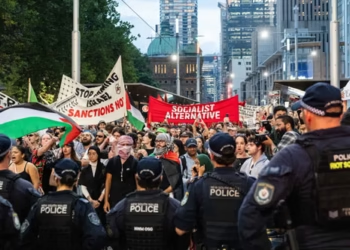
Police said the arrests occurred during a small protest organised by activists supporting Palestinian rights. The march began outside the parliament complex early Wednesday afternoon, drawing a modest crowd and a visible police presence. Officers from the public safety response team were deployed to monitor the gathering as tensions around the new law remained high.
The protest had been organised by members of Students for Palestine, a group advocating Palestinian rights and international awareness. Activists gathered with placards, banners, and chants calling for freedom and recognition of Palestinian struggles.
One of the protesters, Liam Parry, was leading the demonstration when police intervened. Witnesses reported that Parry addressed the crowd while discussing the controversial slogan now covered by the river to the sea ban.
According to attendees, Parry told the crowd he wanted to explain the historical meaning of slogans authorities now consider prohibited. He stated that many participants might not understand why the government had moved to restrict certain expressions.

During his speech, Parry reportedly referred to the phrase “from the river to the sea,” which authorities have included in the new restrictions. The slogan has long been used in pro-Palestinian demonstrations worldwide, although critics argue it implies the removal of Israel.
Parry told the gathering that the phrase should not be interpreted as violent or antisemitic. Instead, he described it as a call for freedom and dignity for Palestinians living between the Jordan River and the Mediterranean Sea.
Witnesses said Parry urged demonstrators not to chant the phrase despite explaining its historical meaning. However, police officers moved in shortly after his remarks, placing him under arrest while protesters prepared to march through central Brisbane.
The arrest occurred only hours after the river to the sea ban officially took effect. The timing immediately attracted attention across social media platforms and Australian news outlets.
Demonstrators continued marching after Parry’s arrest, heading toward King George Square in Brisbane’s city centre. Witnesses said the protest remained largely peaceful despite heightened police monitoring throughout the route.
Later in the afternoon, police detained a second participant at the square. Witnesses reported that the individual, described as an 18-year-old woman, wore a shirt displaying the prohibited phrase.
Authorities confirmed the second arrest shortly afterward, stating the woman was assisting officers with inquiries related to the protest. The two arrests have become a significant early test of the new law.
A Queensland police spokesperson said both individuals had been charged under provisions introduced in the recent legislation. The charges relate to the recital, distribution, publication, or display of expressions deemed prohibited by the government.
Officials said Parry was issued with a notice to appear before Brisbane Magistrates Court on 8 April. The case is expected to draw strong interest from civil rights groups and legal observers.
Police also confirmed the woman arrested at King George Square remains under investigation as officers continue reviewing evidence. Authorities added that the investigation into the demonstration remains ongoing.
Under the legislation, individuals convicted of using banned expressions in a threatening or offensive way could face severe penalties. The maximum punishment includes fines and prison sentences of up to two years.
Supporters of the law say it aims to reduce antisemitism and protect communities from inflammatory language. They argue that some slogans used during international conflicts can create fear or hostility within multicultural societies.
However, critics claim the river to the sea ban raises significant concerns about free speech and political expression. Human rights advocates warn that broad restrictions on political slogans could set troubling precedents.
Legal experts have also questioned how authorities will interpret the law’s wording. The legislation states that a phrase must be used in a manner that causes menace, harassment, or offence to be considered illegal.
Some analysts argue this wording could leave room for subjective interpretation by police or courts. Others believe judges will ultimately determine how strictly the law should be applied.
Activists supporting Palestinian rights have expressed strong criticism following the arrests. Several protest organisers said the law risks criminalising political discussion rather than addressing genuine threats.
Many demonstrators gathered outside parliament earlier Wednesday specifically to protest the legislation itself. They argued that restricting political slogans undermines democratic principles and limits open debate.
Protesters also said the phrase “from the river to the sea” has different interpretations depending on context. Some see it as a call for equality, while others view it as hostile toward Israel.
Jewish community organisations have welcomed efforts to tackle language they believe fuels antisemitism. Representatives say certain slogans have historically been used to intimidate Jewish communities during demonstrations.
Community leaders emphasise that protecting minority groups from harassment remains an essential responsibility for governments. They argue the new law sends a clear signal that threatening language will not be tolerated.
Nevertheless, legal scholars say the early enforcement of the river to the sea ban will likely face close judicial scrutiny. Court decisions could shape how similar laws operate across Australia in future years.
The Queensland government defended the legislation when introducing it last week. Officials said rising tensions around the Middle East conflict had led to growing concerns about public safety.
Government representatives insisted the law does not prohibit peaceful protest or legitimate political discussion. Instead, they said it targets expressions that provoke fear, hostility, or harassment in public spaces.
Civil liberties groups remain unconvinced by that explanation. Several organisations have already warned that the new law could chill free speech and discourage lawful demonstrations.

Some activists say the arrests highlight what they see as the immediate consequences of the river to the sea ban. They argue the law risks escalating tensions rather than encouraging constructive dialogue.
The case involving Liam Parry may now become an important legal test. Courts will examine whether his comments meet the threshold required for prosecution under the legislation.
Observers believe the outcome could determine how frequently authorities apply the law in future protests. If courts interpret the legislation narrowly, enforcement may remain limited.
If judges support broader interpretations, however, activists fear many forms of political expression could face new legal risks. The debate is expected to intensify as the case moves through the courts.
For now, the arrests have drawn national attention across Australia and beyond. International observers are watching closely as Queensland implements one of the country’s most debated speech laws.
As tensions surrounding global conflicts continue influencing domestic politics, the river to the sea ban may remain at the centre of public debate for months ahead.
The upcoming court hearing in April will likely mark the next significant development in this unfolding story. Until then, activists, legal experts, and community leaders continue discussing the implications of Queensland’s controversial law.
Related News:
 British Woman in Iran ‘Losing Hope’ Amid Ongoing Detention
 BBC to Apologise Over Edited Trump Speech Amid Backlash
 Britain deploys RAF specialists to assist Belgium with drone threats
 US Justice Department Files Lawsuit Against California Over Partisan Voting Maps
 Greene Pushes Epstein Files Amid Trump Fallout
 Trump Deploys DHS to Charlotte in Major Arrest Operation
 December Run-Off in Chile as Election Produces No Winner
 Canada Passes Carney’s First Budget in Tight Parliamentary Vote
 Shadow Fleet at Sea: Europe’s Battle Against Illicit Oil Shipping
 Pentagon Officials in Ukraine to Discuss War End
 Venezuela Threatens Nobel Winner Machado with Fugitive Status
 Georgians Defy Government Crackdown After Year of Protests
 India’s Labour Law Overhaul Sparks Fierce Debate
 EU plans $105bn Ukraine aid using frozen Russian assets
 Global campaign launched to free Palestinian leader Barghouti
 Trump Policies Boost China’s Global Rise, Survey Finds
 Iran unrest slows under brutal crackdown and global tensions
 Pentagon Signals Reduced Role in Deterring North Korea
 Thousands Protest ICE Operations in Nationwide US Day of Action
 Epstein Files Reveal Trump Officials’ Emails with Financier
 Starmer Condemns ‘Depraved’ Russian Strikes on Ukraine
 Herzog visit sparks protests across Australian cities
 UK and US Drop in Global Corruption Index Rankings
 Sydney Protest Escalates and Elderly Woman Suffers Severe Injury
 Tarique Rahman’s Rise Toward Bangladesh’s Top Job
 Glass Cliff Debate After Ley’s Ouster
 Canberra Poster Seizure Sparks Free Speech Row
 Evo Morales Returns After Mysterious Absence
 AFP Reviews Pauline Hanson Comments
 Duterte ICC Hearing Begins Amid Defiance
 Trump Tariffs Threat Spark UK and EU Alarm
 The Dangerous Rise of Remigration Across Modern Europe
 Trump’s Marathon Speech Fails to Mask a Growing National Disconnect
 Jacinda Ardern Moves To Australia Following Her US Fellowships
 US to offer passport services in West Bank settlements
 Jacinda Ardern Move Sparks Kiwi Reflection
 Health Funding Row Rocks US‑Africa Relations
 Nick Greiner Warns Over Election Review Fallout
 New UK-EU Reset Faces Criticism from Parliament
 Cuba charges six exiles for terrorism after speedboat raid
 Iran Defiance Grows Amid US-Israel War Pressure
 US Strikes on Iran Set for Most Intense Day Yet
 China’s Ethnic Unity Law Set to Reshape Minority Schools
 Moscow Internet Blackouts Raise Censorship Fears
 Republicans Rebuke FCC Threat Over Iran War Coverage
 Oil Prices Surge as IEA Weighs Emergency Release
 Trump Nato threats expose Iran strategy vacuum
 UK Minister Denies Iran Missile Threat to Britain
 Danish Election Deadlock Shakes Frederiksen’s Grip
 Trump to Visit China in May After Iran War Delay
 Pope Rebukes Leaders for War as Middle East Tensions Rise
 Trump to Deploy “God Squad” Over Gulf Wildlife Protections
 Army Probes Apache Flyover at Kid Rock’s Nashville Estate
 Italian Town Buys Mussolini Villa to Keep Away Fascist Fans
 Report Says Pezzullo Acted ‘Recklessly’ in Dealings
 Trump Employs Nixon’s Madman Theory Amid Iran Crisis
 Trump Voices Frustration Over Nato Role in Iran Conflict
 Hungary election: Orbán faces biggest test amid scandal
 Suspected Plot Targets Pipeline Before Hungary Vote
 Trump Slams UK Ties and Threatens To Rewrite Trade Deal
 Southeast Asia Turns to Russia Amid Energy Crisis
 Capitalism ‘Suicidal’, Warns Petro at Climate Summit
 Judge halts deportation of Yemeni refugees in US
 Activists allege abuse after Gaza flotilla seizure
 Trump approval plunges amid Iran war fears
 Ohio’s Battle for Trust: Democrats Vying to Flip the Buckeye State
 US ‘Narco Boat’ Strikes Draw Global Outcry
 Afghan Families Left in Limbo Face Risk of Deportation
 Tensions Emerge in Netanyahu-Trump Alliance
 US Awaits Iran Reply on New Ceasefire Proposal
 Hormuz Talks Near Critical Stage
 Discontent grows around Putin amid war strain
 Starmer Leadership Under Pressure After Setbacks
 House Curbs Trump’s War Powers in Rare Rebellion
 Germany Summons Chinese Envoy Over Russian Troop Training
 New South Wales Premier Chris Minns Signals Tough Road Ahead for Labor
 Le Pen to Run for President Despite Embezzlement Conviction
 Ukraine Creates Long-Range Strike Command
 Le Pen’s Popularity Holds Despite Conviction
 Houthis Strike Saudi Arabia as Middle East Tensions Rise