Published: 13 March 2026. The English Chronicle Desk. The English Chronicle Online.
Israel’s military justice system faced renewed scrutiny this week after prosecutors dropped charges in a high-profile Gaza detainee abuse case involving five Israeli soldiers. The decision, announced by Israel’s top military lawyer, has triggered fierce debate about accountability, the rule of law, and the treatment of Palestinian detainees during the Gaza war.
The ruling was confirmed by Itay Offir, Israel’s current military advocate general, who said prosecutors could not proceed with the case due to missing evidence and procedural concerns. Offir explained that the main victim had been released to Gaza under a ceasefire arrangement, preventing prosecutors from securing direct testimony during a trial.
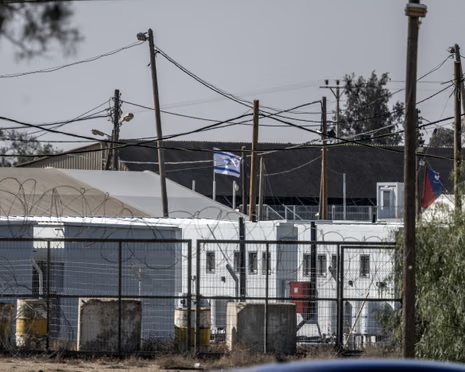
The case centred on allegations of severe violence against a Palestinian detainee held at the controversial Sde Teiman detention center. According to Israeli media reports and medical documentation, the detainee was hospitalised during the summer of 2024 with serious injuries. Doctors recorded broken ribs, a punctured lung, and extensive rectal damage, injuries prosecutors previously linked to the alleged assault.
These findings initially led military investigators to charge five Israeli soldiers stationed at the detention facility. Authorities accused them of brutalising the prisoner while he remained under military custody. The allegations quickly escalated into one of the most controversial legal cases connected to the ongoing Gaza conflict.
The Gaza detainee abuse investigation gained global attention when Israeli television broadcast security footage believed to capture the attack. The video appeared to show soldiers surrounding a restrained detainee during what investigators described as a violent assault. Although parts of the recording circulated widely in Israeli media, officials later questioned whether the footage clearly demonstrated the alleged crimes.

Offir said prosecutors struggled to interpret the images conclusively because shields carried by soldiers blocked most movements. According to his statement, “the vast majority of the defendants’ actions are obscured by shields,” making the footage insufficient as sole evidence during trial proceedings.
The controversy deepened further after Offir’s predecessor became the subject of a criminal investigation. Authorities suspect the former military advocate general authorised the leak of the security video to journalists. Investigators believe the footage may have been released in an attempt to calm public anger and defend the initial decision to arrest the soldiers.
Despite that effort, the footage failed to settle the fierce political arguments unfolding within Israel. Supporters of the accused soldiers insisted they were being unfairly targeted while performing routine security duties at a military detention facility during wartime conditions.
The situation became even more volatile when a far-right crowd gathered outside the Sde Teiman base after the arrests. Demonstrators included politicians and a government minister who openly demanded the soldiers’ immediate release. Some protesters forced their way into the base, turning the episode into a dramatic confrontation between civilian activists and the military justice system.
Critics argued that such pressure risked undermining Israel’s legal process. Supporters, however, framed the arrests as an attack on soldiers risking their lives in a national security crisis.
The case also intersected with broader diplomatic developments. In October 2025, a ceasefire agreement mediated by former US president Donald Trump included the release of Palestinian detainees held by Israel. The alleged victim in the Gaza detainee abuse investigation was among those returned to Gaza as part of the deal.
Offir said that development severely weakened prosecutors’ ability to continue the trial. Without the detainee present in Israel, military lawyers could not rely on direct testimony describing the assault or identifying the accused soldiers.
According to Israeli law, trials involving serious allegations normally depend heavily on victim statements. Prosecutors concluded that proceeding without such evidence risked collapsing the case entirely.
Israel’s prime minister, Benjamin Netanyahu, welcomed the decision to drop the charges. In a statement issued shortly after the announcement, Netanyahu criticised the lengthy legal process and defended the accused soldiers as loyal members of Israel’s armed forces.
He described them as “heroic warriors,” arguing that they had been unfairly accused while protecting the country during an intense conflict. Netanyahu’s remarks reflected a broader sentiment among parts of Israeli society that soldiers have faced excessive scrutiny during wartime operations.
Human rights organisations reacted very differently. Several groups said abandoning the Gaza detainee abuse prosecution raises profound concerns about accountability for alleged abuses against Palestinian detainees.
The criticism was particularly strong from the Public Committee Against Torture in Israel. Its executive director, Sari Bashi, warned that the decision could send a troubling message about the consequences of misconduct in detention facilities.
Bashi argued that failing to pursue the charges effectively gives soldiers permission to commit severe abuse without fear of punishment. She said the ruling forms part of what activists see as a wider pattern of leniency toward alleged violence against Palestinians held in Israeli custody.
Other legal experts expressed similar fears about the broader implications. Adalah, a prominent legal advocacy organisation, also criticised the outcome.
Its legal director, Suhad Bishara, said the case appeared unusually strong compared with previous allegations. According to Bishara, investigators possessed both security footage and detailed medical records documenting severe physical and sexual injuries.
She argued that dropping charges in such a case sends a message that perpetrators of abuse face little risk of legal consequences. For human rights advocates, the collapse of the Gaza detainee abuse prosecution reinforces longstanding concerns about Israel’s military justice system.
Those concerns have intensified since the outbreak of war following the Hamas attacks on Israel on 7 October 2023. The conflict triggered massive Israeli military operations across Gaza and the detention of thousands of Palestinians suspected of militant activity.
International organisations and United Nations investigators have repeatedly warned about alleged torture, degrading treatment, and medical neglect within Israeli detention facilities. Several reports claim that conditions deteriorated significantly during the conflict.
According to these investigations, detainees described harsh interrogation techniques, beatings, and extended periods of isolation. Some testimonies also mention sexualised violence, which rights groups say remains particularly difficult to prosecute due to stigma and lack of witnesses.
Israeli authorities strongly reject claims of systematic abuse. Officials insist that the military investigates credible allegations and punishes wrongdoing when evidence supports criminal charges.
Nevertheless, human rights groups say convictions remain extremely rare. Over more than two years of conflict, only one Israeli soldier has reportedly been convicted for assaulting Palestinian detainees.
Activists argue that the rarity of prosecutions contributes to a culture of impunity. They claim that without consistent legal consequences, detainee abuse becomes easier to conceal and harder to challenge.

The Gaza detainee abuse case became symbolic of that broader debate. For critics, the allegations highlighted the vulnerability of detainees held far from public scrutiny. For supporters of the soldiers, the case represented the difficult realities of security operations during wartime.
Legal experts note that war often complicates criminal investigations involving military personnel. Evidence may be incomplete, witnesses can disappear, and political pressures frequently influence public perceptions of justice.
Still, international observers say transparency remains essential for maintaining credibility. Many analysts believe Israel faces growing international pressure to demonstrate that its legal system can fairly investigate alleged war crimes.
The controversy surrounding the Sde Teiman facility illustrates how detention policies have become one of the most sensitive issues of the Gaza conflict. As the war continues to shape regional politics, questions about accountability and human rights remain central to global discussions.
Whether the case is permanently closed or revived in future remains uncertain. But the debate sparked by the Gaza detainee abuse allegations will likely continue shaping legal and political arguments for years.
For many observers, the outcome highlights the complex intersection of war, justice, and human rights in one of the world’s most polarised conflicts.
Related News:
 Middle East Flights Halted After Iran Strikes
 US Iran Operation: Sixth Service Member Killed
 Hezbollah Anger Erupts as War Returns to Beirut
 Gaza Siege Deepens as Iran War Escalates
 Riyadh Drone Attack Escalates Regional War
 Middle East attacks intensify as Trump rejects Iran talks
 Iran-Iraq border airstrikes spark new tensions
 Iran-Iraq Border Strikes Spark New Front Fears
 Iran-Backed Militias Escalate Attacks Across Middle East
 UK Prepares Aircraft Carrier for Middle East Crisis
 Mojtaba Khamenei Chosen as Iran’s New Supreme Leader
 Tehran Oil Depot Strikes Darken City With Toxic Smoke
 Seventh US Service Member Killed in Iran Conflict Identified
 Mojtaba Khamenei Supporters Rally as Iranians Fear Repression
 Tehran Strikes Mark War’s Most Devastating Night
 Iran Defiance Grows Amid US-Israel War Pressure
 Hormuz Crisis Sparks Global Oil Market Fears
 Iranian Exile Factions Seek US Backing for Iran’s Future
 US-Israeli Strategy Shifts to Plan B in Iran War
 Injured Mojtaba Khamenei Elevated as Iran Leader
 US Missile Strike on Iran School Sparks Global Shock
 Iran Gulf attacks escalate as ships and airports targeted
 Iran Conflict: Trump’s Uncertain Path and Diplomatic Off-Ramp
 Ancient Heritage Sites Damaged in Recent Airstrikes
 Tehran Diary: Dark Days Under Relentless Bombardment
 British Tourist Charged Over Dubai Missile Strike Video
 Trump Iran War Stance Hardens as Conflict Widens
 Lebanon Ground Campaign Raises Occupation Fears
 Gulf Tensions Rise as Iran Alleges Covert Support
 Kabul hospital strike sparks deadly blame row
 Iran Threatens Total Destruction of Mideast Energy Grid
 Ghalibaf Iran: Survivor Emerges in Shifting Power Game
 Gulf Distrust Grows Over Rumoured US-Iran Peace Talks
 WHO Warns of Health Crisis Unfolding in Middle East
 Saudi Arabia Urging US to Keep Up Iran Attacks
 Iranian President’s Son Shares Wartime Hopes and Fears
 Iran Warns of US Ground Assault Amid Rising War Tension
 MAGA Anxiety and the Iran War: A Movement Divided at CPAC
 Trump Threatens Iran With Total Infrastructure Destruction
 Iran Drone Strike Hits Kuwaiti Oil Tanker in Dubai Port
 Albanese to Address Nation as War Sparks Economic Crisis
 Death, displacement and military duties: children plunged into crisis
 Trump’s Six-Week Iranian War: The High Cost of Ignorance
 Beirut Under Fire: Massive Israeli Strikes Shaking Lebanon
 Middle East Analysis: The Cost of a Fragile Peace
 Lebanon Must Join Ceasefire to Prevent Escalation, Says Cooper
 Israel Launches Massive Airstrikes Across Lebanon
 Netanyahu Vows Continued Lebanon Strikes Amid Peace Talks
 Iran Crisis Tests Trump’s Global Leadership
 US and Iran Pursue Extension of Ceasefire via Pakistan
 Uncertain Peace: Tehran Residents Face a Ruined Capital
 Aid Crisis Grows as Hormuz War Disrupts Supply
 Trump likens US Navy actions to ‘pirates’
 Global order shifts amid Trump-era turmoil
 Middle East Crisis Escalates as Oil Routes Shake Markets
 Tensions Emerge in Netanyahu-Trump Alliance
 Trump Rejects Tehran Peace Plan as Regional Truce Crumbles
 Netanyahu Calls Early Election Amid Coalition Turmoil
 Tensions Flare as Israeli Nationalists March in Jerusalem
 Gulf Crisis Deepens After Drone Attack Near Nuclear Facility
 Global Flotilla Intercepted in International Waters
 Israeli Strikes in Lebanon Kill 10 Amid Ceasefire Strain
 Hunger increasingly weaponised in global conflicts
 Former ICC prosecutor condemns US sanctions
 Trump Claims Iran Peace Deal Near Completion
 US Strikes Iranian Sites Amid Shaky Ceasefire Talks
 Israel Intensifies Lebanon Strikes to Crush Hezbollah
 Trump’s Iran Deal Plan Sparks Intense Alarm Across Israel
 US and Iran Trade Fresh Strikes, Threatening Ceasefire
 Trump Confronts Netanyahu in Explosive Beirut Phone Call
 Iran To Propose New Shipping Fees In Strait Of Hormuz
 Grief and Devotion Amidst the Rubble of Nabatieh
 High Drama in Tehran Over Secret Nuclear Letters
 Houthis Strike Saudi Arabia as Middle East Tensions Rise
 BBC to Apologise Over Edited Trump Speech Amid Backlash
 Greene Pushes Epstein Files Amid Trump Fallout
 Zelenskyy Signs Fighter Jet Deal Amid Russian Drone Attacks
 Shadow Fleet at Sea: Europe’s Battle Against Illicit Oil Shipping
 Trump and Tehran Find Common Ground in Landmark Ceasefire
 Scepticism and tight security as Beijing braces for Trump