Published: 17 March 2026. The English Chronicle Desk. The English Chronicle Online.
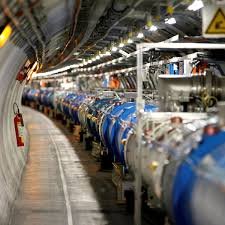
Physicists at the CERN laboratory near Geneva have unveiled a heavier proton version, exciting the global scientific community. This particle emerged during high-energy collisions at the Large Hadron Collider, where protons smash together at nearly the speed of light, recreating conditions from just after the Big Bang. The newly discovered proton, four times heavier than a standard proton, offers crucial insight into the strong nuclear force that binds atomic nuclei tightly together. Its detection was only possible after a significant upgrade to the LHCb detector, enhancing precision and allowing researchers to explore previously inaccessible particle interactions.
Prof Tim Gershon of the University of Warwick, incoming international lead for LHCb, explained the discovery represents only the first insight enabled by the upgraded detector. Previous experiments spanning a decade had not revealed this particle, underscoring the importance of technological advancement in subatomic physics research. The particle, named Xi-cc-plus, is remarkable because both of its up quarks are replaced by heavier charm quarks, creating a short-lived but highly informative state. Its existence provides a unique opportunity to investigate how quarks interact through the strong force, a fundamental interaction that strengthens with distance, unlike forces experienced in everyday life.

Hydrogen atoms, the simplest and most common elements in the universe, contain just a single proton and electron. Protons, along with neutrons in heavier elements, are composed of quarks, which come in several types: up, down, charm, strange, top, and bottom. The Xi-cc-plus particle, containing two charm quarks, showcases a rarely seen configuration, appearing only briefly before decaying into other particles in less than a millionth of a millionth of a second. Its fleeting presence leaves clear signatures in the detector, allowing scientists to reconstruct its properties with remarkable accuracy.
Prof Chris Parkes of the University of Manchester highlighted that each discovery of exotic particles deepens understanding of the strong force. By studying these unusual quark combinations, researchers can refine models describing how protons and neutrons remain bound in all atomic matter. The LHCb’s upgraded detector is vital for such studies, capturing subtleties in particle behaviour that older instruments could not resolve. Without these enhancements, the Xi-cc-plus may have remained undiscovered for many more years, limiting the knowledge available to particle physicists worldwide.
The discovery occurs amid controversy over funding decisions by UK Research and Innovation, which plans to cut £50 million from the LHCb’s future upgrades. These upgrades are critical for maximising the detector’s capability to explore new physics during upcoming transformations of the LHC. The funding reduction has sparked backlash from the scientific community, as UK contributions are central to international experiments investigating fundamental particles. Scholars in particle physics, nuclear science, and astronomy have raised concerns that the funding cuts could delay or compromise research with global significance.
Chi Onwurah, chair of the Commons science committee, recently criticised UKRI and government agencies in a formal letter, describing the cuts as wholly unacceptable and a failure to support vital scientific infrastructure. She demanded immediate reconsideration, emphasising the importance of sustaining UK participation in projects like the LHCb upgrade. Prof Gershon echoed these sentiments, noting that no other experiment currently running or planned will be capable of exploring the same aspects of heavy quark physics. Maintaining investment is essential for ensuring the international competitiveness of UK particle physics research and protecting the future of the field.
The Xi-cc-plus discovery also opens avenues for studying how quarks combine to form matter under extreme conditions. The strong nuclear force responsible for binding quarks inside protons behaves counterintuitively, growing stronger as particles move apart. Observing particles containing charm quarks allows scientists to test theoretical predictions with higher precision, revealing previously unknown behaviours. These findings may ultimately influence models of the early universe, offering clues about how matter formed during the first moments after the Big Bang.
Detection of the heavy proton relied on sophisticated analysis of the particle debris generated during collisions. The LHCb upgrade enhanced the detector’s ability to identify transient states that existed for an incredibly short duration, allowing the research team to isolate rare events from vast amounts of data. By carefully reconstructing particle trajectories and decay patterns, physicists confirmed the presence of Xi-cc-plus, proving the upgrade’s transformative impact on experimental capability. The result underscores the interplay between technological innovation and scientific discovery, demonstrating that advanced instruments are often the key to breakthroughs in fundamental physics.
International collaboration also played a crucial role in achieving this discovery. Researchers from universities across Europe, including the University of Warwick and the University of Manchester, contributed expertise in data analysis, detector operation, and theoretical modelling. The combined effort highlights the importance of cross-border cooperation in particle physics, where experiments are too complex and resource-intensive for any single nation to conduct alone. The heavy proton’s observation represents a milestone in this collaborative endeavour, reinforcing the value of global scientific partnerships.
Beyond its immediate scientific significance, the Xi-cc-plus could inspire future studies on quark interactions and exotic particles. These insights may have long-term implications for our understanding of nuclear structure and the forces shaping matter. Each discovery feeds into a broader effort to map the fundamental components of the universe, gradually filling gaps in knowledge that have persisted since particle physics emerged in the 20th century. As detection technologies continue to improve, researchers anticipate uncovering even more exotic particles, each offering a unique window into subatomic phenomena.

The LHCb’s success with the upgraded detector demonstrates the importance of continual investment in experimental infrastructure. While funding debates continue in the UK, this discovery serves as a powerful reminder of what is possible when resources are allocated effectively. Maintaining support for cutting-edge research ensures that scientists can explore fundamental questions about matter, energy, and the origins of the universe, producing insights with lasting impact for both science and society.
Overall, the observation of the Xi-cc-plus heavy proton marks a transformative moment for particle physics. It highlights the value of technological advancement, international collaboration, and sustained investment in scientific infrastructure. This rare particle offers new opportunities to explore the strong force, the behaviour of quarks, and the formation of matter itself. As researchers continue analysing data from the upgraded LHCb, further discoveries are expected to shed light on previously hidden aspects of subatomic physics, reaffirming CERN’s position at the forefront of global scientific exploration.
The discovery resonates far beyond the scientific community, illustrating the excitement and challenges of modern particle physics. It underscores the delicate balance between research funding, technological innovation, and international cooperation necessary to push the boundaries of knowledge. For the UK, ensuring continued participation in experiments like LHCb remains crucial to maintaining influence in the field and contributing to humanity’s understanding of the universe at its most fundamental level.
Related News:
 How Bringing Forests Into Preschools Boosts Children’s Health
 Critically Endangered Spider Rediscovered in UK After 40 Years
 UK Bans Fake Numbers: Scammers Lose Their Trick
 England Curriculum Review Recommends Major Changes
 Mortgages and AI Set to Feature in English Schools
 Experts Urge Legal Right to Timely Cancer Care
 Patients to Test Health at Home to Ease NHS Winter Pressure
 One of world’s last dinosaurs on sale for £3m
 North Sea oil workers must lose weight or face job loss
 No link found between paracetamol in pregnancy and autism
 Government urges schools to ban phones to curb classroom disruption
 Northern Lights May Illuminate UK Skies Amid Strong Solar Storm
 Northern Lights may illuminate UK skies this week
 UK Greenlights First Small Nuclear Plant in North Wales
 Higgs Donates Nobel Medal to His Beloved University
 Coffins Now Too Large to Cremate Amid Rising Obesity Crisis
 UK Taskforce Unveils Plan to Streamline Nuclear Reactor Rules
 Thinktank Urges Smaller Hospitals to End NHS ‘Permacrisis’
 NHS paediatric leave parents waiting months for answers
 Ofcom urges platforms to limit abuse and curb online ‘pile-ons’
 Starmer’s communications chief to outline media strategy overhaul
 UK Car Sales Pass 2 Million as Chinese Brands Surge
 AI Grok Sparks Child Safety Alarm in the UK
 Lammy and Vance unite against AI abuse images on X
 UK Threatens Action Against X Over Sexualised AI Images
 Amazon Milton Keynes closure sparks concern for UK warehouse workforce
 AI will transform human jobs, enhancing skills, says minister
 TikTok to Strengthen Age Verification Across the EU
 MPs warn AI financial risks threaten UK stability
 MPs warn AI financial risks threaten UK stability
 AI job losses UK: Britain faces sharper employment shock
 Pornhub blocks new UK users over age checks dispute
 UK New Car Discounts Near £6,000 as Prices Are Slashed
 Barnsley tech town leads UK AI transformation
 Childnet Censorship Row Over Teen Safety Speeches
 Revenge Porn Crackdown: 48-Hour Rule Warning
 UK Anti-Slavery Watchdog Urges Adult Sites Overhaul
 Facial Recognition Error Leads to Wrongful Arrest in Milton Keynes
 UK Social Media Ban for Under-16s Gains Momentum
 Met police to trial handheld facial recognition checks in London
 UK Teen Social Media Ban Trials Begin
 Cancer Death Rate in Britain Falls by Nearly a Third
 Ministers Urged to Act Faster on Deepfakes Threat
 MPs Reject Ban on Social Media for Under-16s
 Charity Watchdog Warns Alan Turing Institute Over Conduct
 Traffic: The Science Behind Why Slower Cars Always Catch Up
 The Night an AI Bot Threw a Party in Manchester
 OpenAI Halts Stargate UK Project Amid Energy Crisis
 Heavier SUVs Accelerate Britain’s Pothole Crisis
 Europe EV Demand Surges as Fuel Prices Rise
 Liz Kendall: UK Must Seize AI Growth Despite Risks
 Reform UK funding: mystery billionaire revealed
 Tatooine Dreams: 27 New Worlds Found With Double Suns
 Virtual Racing Faces New Era of Anti-Doping Measures
 Cambridge South Signals New Era for British Rail Travel
 Alarm as Sextortion and AI Abuse Threaten UK Children
 UK rejects EV charging VAT cut amid Treasury clash
 UK firms accused of ‘AI washing’ boom
 British Paralympian Set to Make History in Earth Orbit
 UK to Expand Prostate Cancer Trials for Black Men
 NHS Approves Landmark Ovarian Cancer Drug
 Tech Trends and the Battle Against Exam Hall Cheating
 Aviva Exposes Record £230m in Fraudulent AI Claims
 Stolen Mobiles Could Soon Become Useless Bricks
 UK Ministers Lobby Trump Over Under-16s Social Media Ban
 AI Lawyer Triumphs in Landmark English Court Victory
 How the ‘Happy Vowel’ Defines Class in Manchester
 UK Mobile Connectivity Trails Global Peers
 Reeves Launches City AI Skills Compact
 London’s 2026 ‘Great Stink’ Raises Sewer Concerns
 Starmer Faces Parliamentary Battles Over UK-EU ‘Reset’ Plan
 Met Police Vetting Failures Let Serial Rapists Remain
 Fatal Bolton Taxi Crash Claims Three Teens and Driver
 Secret Role of UK Security Services in Troubles Amnesty Law
 Tube Strike Brings Capital to a Standstill Over Shift Disputes
 Teaching Machines Right From Wrong in the Digital Age
 The Hidden Crisis Eroding Trust in British Communities
 Clean Air Initiatives Spark Major Fall in London Hospital Admissions
 UK Care Crisis: Row Explodes Over New Visa Settlement Rules
 Sainsbury’s Boss Optimistic As Grocery Inflation Eases