Published: 19 March 2026. The English Chronicle Desk. The English Chronicle Online.
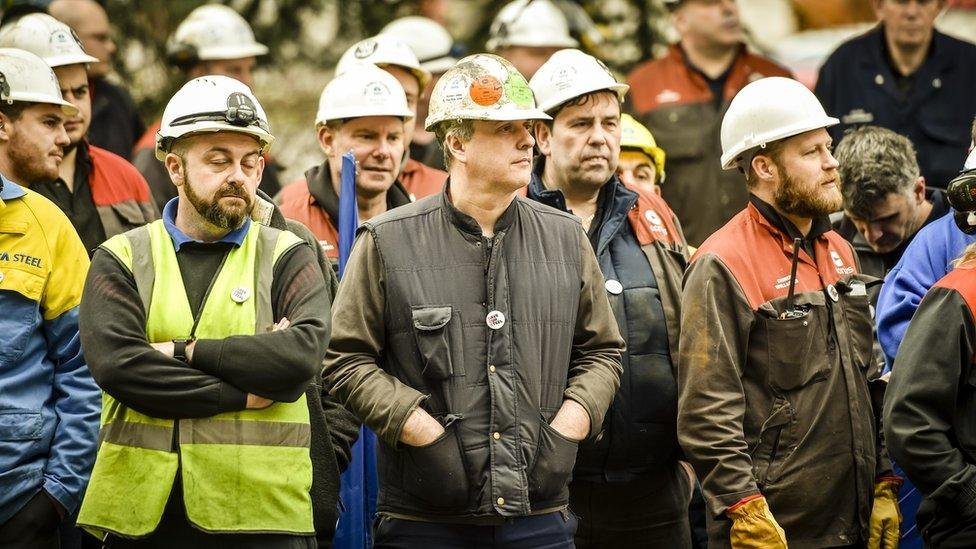
The United Kingdom is set to double tariffs on Chinese and foreign steel to protect domestic production. This measure aims to prevent the collapse of remaining UK steel plants amid global competition.
Business Secretary Peter Kyle announced that half of all steel used in the UK will now be domestically produced. Additionally, fifty percent of this production will come from Wales, safeguarding local jobs and industry infrastructure.
The new £2.5 billion strategy targets a thirty percent increase in domestic steel production. From July, import quotas for overseas steel will be cut by sixty percent, while duties on imports beyond these quotas rise to fifty percent.

Kyle described the measures as essential to counter “unfair competitive behaviour” abroad. He added that the strategy aligns with investments in green steel and ensures UK production meets global standards.
The UK’s move follows similar initiatives by the United States, European Union, and Canada to curb Chinese steel imports. China remains the world’s largest steel producer, with exports reaching record levels last December.
Current steel safeguards predate the UK’s EU exit and are set to expire on 1 July. Discussions between the EU and UK are expected to result in carve-outs allowing lower tariffs for bilateral trade while maintaining protection against cheap Chinese steel.
The policy aims to preserve the UK steel industry after decades of decline. The last blast furnace at Port Talbot closed in 2024 following a £500 million rescue for Tata Steel’s transition to electric arc furnaces, resulting in 2,800 job losses. Greener furnaces, melting scrap metal, are expected online by 2028.
Trade union officials, including Alasdair McDiarmid, described recent talks with ministers as productive. While energy prices remain a concern, progress on safeguarding UK steel plants is evident.

The First Minister of Wales, Eluned Morgan, welcomed the strategy, calling it “good news for steel communities and thousands of Welsh workers”.
This week’s developments follow a National Audit Office report warning that taxpayer costs for saving British Steel’s Scunthorpe plant could exceed £1.5 billion by 2028. Scunthorpe, now publicly controlled, remains the last plant producing virgin steel in the UK after threats of closure by its Chinese owner Jingye.
The government has not commented on the NAO figures but emphasised ongoing discussions about future operations at blast furnaces. Officials indicated that production will continue until companies transition to newer, more sustainable technologies.
Related News:
 BBC News Faces Deep Cuts in 2,000 Job Plan
 UK Pushes for New EU Goods Trade Deal
 Reeves Fights to Keep Treasury Role Amid Labour Turmoil
 Tories Push to Dilute Labour’s Workers’ Rights Bill
 Trump’s UK Ambassador Urges North Sea Drilling to Strengthen US Ties
 Rachel Reeves Set to Break Labour Pledge and Raise Income Tax
 Thinktanks Urge Rachel Reeves to Reform UK Tax System
 Company linked to Michelle Mone owes £39m in tax
MPs Press Rachel Reeves to Hike Gambling Taxes
Company linked to Michelle Mone owes £39m in tax
MPs Press Rachel Reeves to Hike Gambling Taxes
 Cuts to home insulation funding threaten UK climate goals
 Millionaires group urge Reeves to introduce wealth tax to ‘lift kids out of poverty’
 PM Highlights UK Business at G20 in South Africa
 English Mayors Set to Introduce Tourist Taxes
 Starmer Says Labour’s Economic Plan Needs Years to Deliver
BBC bosses ‘right to stick by their guns’ against Trump, says minister
Starmer Says Labour’s Economic Plan Needs Years to Deliver
BBC bosses ‘right to stick by their guns’ against Trump, says minister
 China Dependence Threatens UK Energy Supply Chains and Jobs
 MPs warn AI financial risks threaten UK stability
 MPs warn AI financial risks threaten UK stability
 UK Government Borrowing Drops to £11.6bn in December
 Labour Must Revive High Streets to Avoid Election Collapse
 Barclays drops Global Counsel after Mandelson link scrutiny
 Unsustainable gaps in franchise policing, MPs warn
 UK shelves £110m border project amid trade strain
 UK Sees Record £30.4bn Budget Surplus, Boosting Reeves’ Position
 Ministers Urged to Ban Crypto Political Donations
 Reeves Must Back Defence Plan or Face Dismissal, Says Unite Chief
 OBR Reform Row Deepens Before Spring Forecast
 Wealthy Britons Flee Gulf War but Avoid UK Taxes
 UK Wage Growth Slows as Jobs Market Holds Firm
 Starmer Adviser Urges New Profit Cap on Energy Firms
 Fuel Duty Relief Plea Amid Middle East Oil Crisis
 Unions Raise Concerns Over Doctors’ Pay Dispute
 OpenAI Halts Stargate UK Project Amid Energy Crisis
 Reform UK funding: mystery billionaire revealed
 New UK advice scheme to boost savings and investing
 Silent Tracks: Rail Line Without Passengers
 Labour Faces Internal Pressure for Bold Economic Shift
 Labour Factions Propose Bold Tax Cuts Amid Leadership Storm
 Thames Water Rescue Package Hit by Downing Street Chaos
 Kevin Warsh sworn in as Fed chair amid economic backlash
 Albanese Defends Tax Reforms Amid Emotional Speech
 UK Urged to Build EU Rejoin Consensus, Says Miliband
 UK rejects EV charging VAT cut amid Treasury clash
 Essex valley emerges as rising English wine hub
 UK Supply Chains Face Major Risks From Global Instability
 Hospitality Traders to Exploit Summer VAT Cut Loophole
 Andy Burnham Enlists Economic Heavyweights for Leadership Bid
 Great Britain Faces £90bn Electricity Grid Rewire Bill
 Burnham Promises Relief on Cost of Living Crisis
 Labour MPs Urge Burnham to Revive UK Aid Target
 Burnham unveils £65m drought aid for farmers
 Reeves Faces Setback as Labour May Miss Homes Target
 Reeves rejects £1bn plea for NHS redundancy payouts
 PM Condemns Leaks, Vows Loyalty to Ministers and Stability
 Starmer Faces Parliamentary Battles Over UK-EU ‘Reset’ Plan
 ScottishPower Tops List of Worst UK Energy Suppliers
 Trump Fed bid heads to Supreme Court
 Artificial intelligence will cost jobs, admits Liz Kendall
 Mandelson Faces Police Inquiry Over Epstein Leak
 Morgan McSweeney downfall shocks Labour leadership
 UK Unemployment Rate Climbs to 5.2% Peak
 Farage Unveils Reform UK Frontbench Team
 Wales Approves Assisted Dying Bill Consent
 Corbyn Leads Your Party in Coordinated Left-Flank Strategy
 Asylum Seekers to Work After Year-Long Wait
 Starmer Row as Greens Demand Apology
 Inquiry into HMRC child benefit errors launched by NAO
 Tough Fiscal Realities Await Next Scottish Government
 Reform UK Faces Crisis as Newly Elected Councillors Resign
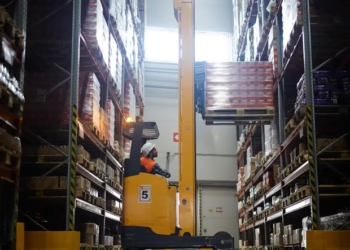 UK Firms Freeze Spending as Iran Conflict Bites
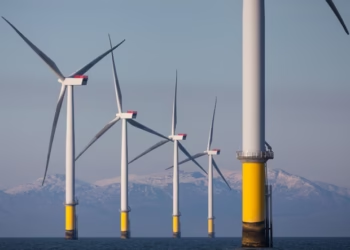 Reeves to Fast-Track Clean Energy Amid Iran Crisis
 Secret Role of UK Security Services in Troubles Amnesty Law
 Tube Strike Brings Capital to a Standstill Over Shift Disputes
 BP Stands Firm on Amanda Blanc Amid Boardroom Storm
 UK House Prices Drop For Third Month Due To War Fears
 The Hidden Crisis Eroding Trust in British Communities
 Deepfake Abuse on X Sparks Safety Concerns for Dissidents
 Sainsbury’s Boss Optimistic As Grocery Inflation Eases
 Farage Warns Sky News Following Financial Inquiry
 Ann Widdecombe, Formidable Political Figure, Dies at 78