Published: 4 April 2026. The English Chronicle Desk. The English Chronicle Online
Victor Pavlov showed off Ukraine’s newest and most versatile weapon: a battery-powered land robot.
The unmanned ground vehicles (UGVs) come in various forms: one runs on caterpillar tracks and resembles a roofless milk float, another has wheels and antennas, while a third carries anti-tank mines. Since spring 2024, their use has grown exponentially.
“This is what modern warfare looks like. Armies everywhere will have to robotise,” said Pavlov, a lieutenant with Ukraine’s 3rd army corps.
Russia’s full-scale invasion of Ukraine, now in its fifth year, has transformed the battlefield into a technological contest. The war is increasingly fought with cheap, expendable drones and robots rather than traditional tanks.

Ukraine’s expertise in drones has become highly sought after internationally. Last week, Volodymyr Zelenskyy signed 10-year defence agreements with Gulf states, including Saudi Arabia and Qatar, providing low-cost Ukrainian interceptors capable of shooting down long-range Shahed drones.
Kyiv has become a centre for unmanned weapons development. Engineers design new products, frontline soldiers give immediate feedback, and manufacturers scale up production, including ground vehicles, anti-Shahed interceptors, and pioneering sea drones.
Land robots now account for 90% of Ukrainian army logistics. Pavlov explained, “It’s very difficult to move around because of enemy first-person-view drones. So we use robotic systems.” In January, Ukraine conducted 7,000 operations using UGVs.
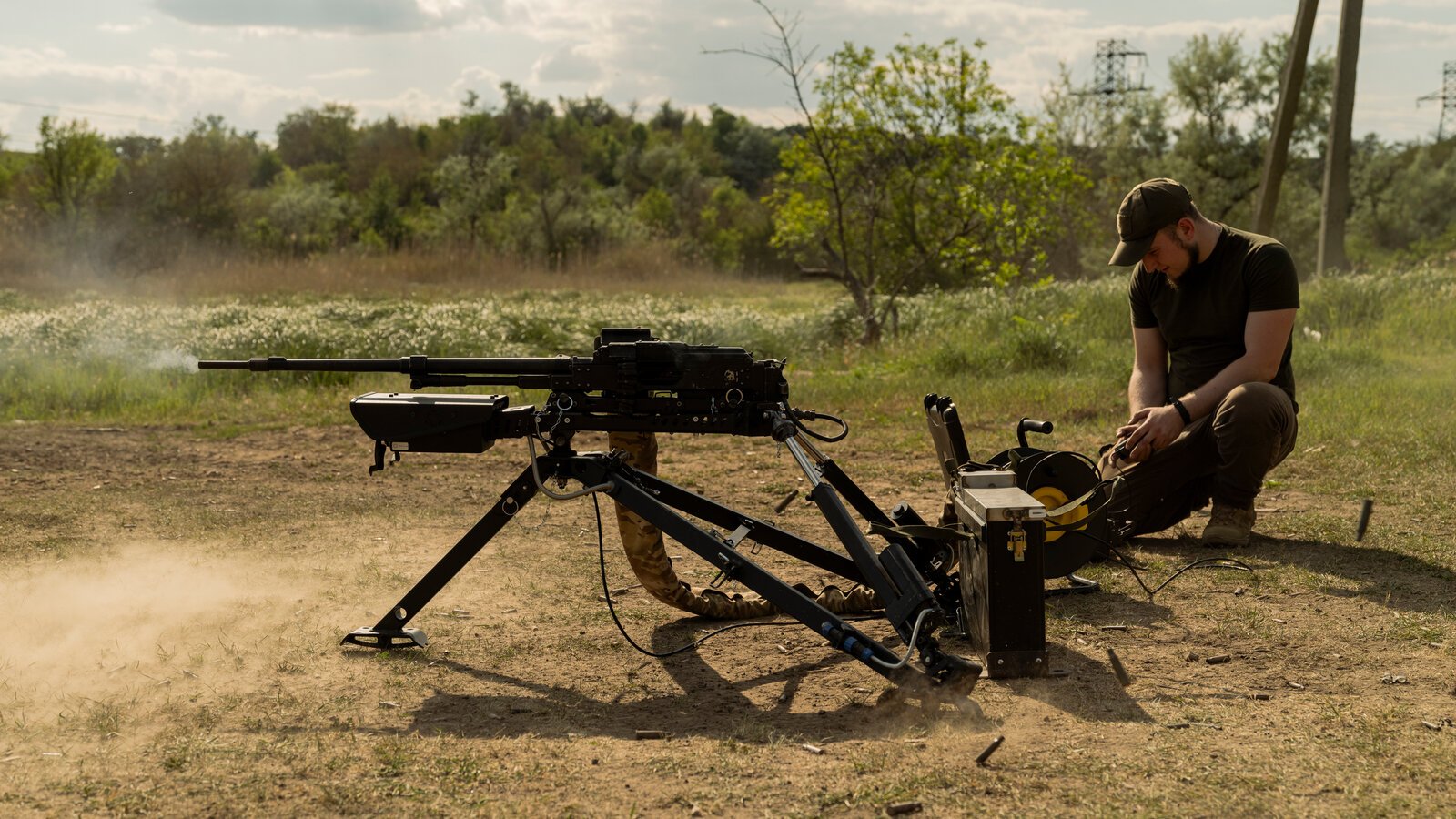
Robots are increasingly replacing human infantry in combat, equipped with remote-controlled machine guns and grenade launchers. One DevDroid TW 12.7 defended a position for 45 days, while a kamikaze robot last summer carried 200kg of explosives 20km to destroy a Russian-occupied school.
“It’s not Star Wars, where there are lasers. The frontline is more like Terminator,” said Bambi, a drone operator. “You can shoot a person and they stop firing. If you shoot a robot, it doesn’t feel pain. Someone is looking at a screen and will fire back.”
Land drones also deliver supplies, build shelters, and evacuate wounded soldiers. A robot can operate for eight hours and is smaller and less visible than traditional armoured vehicles, which are easily targeted by enemy drones.
Since December 2025, robots have brought provisions to Ukrainian soldiers near Pokrovsk, the site of intense fighting. “One rolled up to our dugout. I felt like a caveman gazing at alien technology,” said Bambi.
UGVs also perform engineering tasks: mining, demining, laying barbed wire, towing damaged vehicles, and retrieving wrecks. Pavlov noted an attrition rate of about three robots per day due to Russian attacks but emphasized, “This is a small price to pay when we are saving infantry lives.”
Ukraine’s defence minister, Mykhailo Fedorov, praised the rapid expansion of robotic operations, including casualty evacuations in high-risk areas, previously impossible without risking human life.
For the first time in warfare history, Russian soldiers surrendered to an armed ground robot last summer. Ukraine’s 3rd army corps deployed robots to retake the area successfully.
The KillHouse academy trains UGV pilots. Soldiers practice driving over snow and swamp terrain, simulating combat scenarios. Oleksandr, instructor “Barman,” explained that former gamers adapt quickly to operating robots, proving more effective than ordinary servicemen.

Russia also uses ground systems, such as the “Courier” EV, capable of transporting 250kg and conducting electronic warfare. However, Ukraine currently has the upper hand in ground robot technology. Pavlov said, “We have more systems than Russia. The priority is to scale them up.”
Despite Russia occupying about 20% of Ukraine, including Crimea, Ukraine has reclaimed roughly 300 sq km in southern Zaporizhzhia oblast. Andriy Biletsky, 3rd Corps commander, said new tactical approaches and robotic systems could determine the war’s ultimate outcome.
“Ground-based robotic systems will radically change the battlefield and replace a significant share of soldiers in logistics and combat,” he added.
Related News:
 UK Prepares Aircraft Carrier for Middle East Crisis
 Artemis II astronauts capture Earth en route to the Moon
 Artemis II Returns After Historic Moon Flyby
 RAF Typhoons scrambled amid Russian drone threat near Nato
 Putin Declares Russia Victory at Scaled Victory Day Parade
 Trump dismisses concerns over 250-day carrier deployment
 Britain deploys RAF specialists to assist Belgium with drone threats
 Night after night, Belgium is on high alert.
 Hitler’s DNA Confirms He Truly Had Only One Testicle
 Ukraine to Get 100 French Rafale Jets in Historic Deal
 Poll Reveals China Leads World in Trusting AI Technology
 US Clears Nvidia AI Chip Sales to China in Policy Shift
 UK New Car Discounts Near £6,000 as Prices Are Slashed
 Anthropic AI Refuses Pentagon’s Safety Demand
 Social Media Trial: Woman Says Addiction Began at Six
 Brady Tkachuk Denies AI Video Claims After Olympic Gold
 Musk’s xAI Permit Sparks Fury Over Power Plant Expansion
 The Kill Line: A Shifting Vision of the American Dream
 North Korea Fires Missiles Amid US-South Korea Drills
 Cern Prepares First-Ever Antimatter Transport Test
 Iran Social Media Strategy Shifts to Information War
 ABC Staff Strike Over Pay and AI Concerns
 Cluster Strikes Test Israel’s Missile Defences
 Russia Drone Attack Intensifies Ukraine War Pressure
 China’s Secret Mountain Ruins Rise Again in New Cold War
 Artemis II: Humanity Returns to the Moon After Decades
 Death, displacement and military duties: children plunged into crisis
 Apple at 50: Three Products That Changed How We Live
 Canadian astronaut French words ease language row
 Chornobyl Still at Risk 40 Years After Disaster
 Ukraine Urges UK to Seize Russian Oil Tankers
 Aid Crisis Grows as Hormuz War Disrupts Supply
 Trump orders US troop pullout from Germany
 Activists allege abuse after Gaza flotilla seizure
 Ukraine strikes Tuapse as oil disaster worsens
 Trump likens US Navy actions to ‘pirates’
 Germany to Return Rare Irritator Dinosaur Skull to Brazil
 Canadian Fiddler Sues Google Over AI Defamation Claim
 Ceasefire Standoff Deepens in Ukraine War
 Middle East Crisis Escalates as Oil Routes Shake Markets
 Trump Announces 3-Day Russia–Ukraine Ceasefire Deal
 Doomsday Clock Nears Midnight Amid Global Crises
 Musk v OpenAI Trial: The Battle for the Soul of AI
 China mine blast death toll rises to 90
 Ebola outbreak in DRC overwhelms health system as cases surge
 Zelenskyy warns over Oreshnik threat as Kyiv hit
 Hunger increasingly weaponised in global conflicts
 Discontent grows around Putin amid war strain
 UN Issues Urgent Warning: Imminent Return of El Niño
 Russian Frigate Fires Warning Shots Near British Yacht
 Unlocking the Genome: The Quest to Sequence Tardigrades
 Millions Gather for Khamenei’s Six-Day State Funeral
 Houthis Strike Saudi Arabia as Middle East Tensions Rise
 Taliban global ties grow as rights fears mount
 Israeli Strike in Southern Lebanon Kills Seven
 UK Bans Fake Numbers: Scammers Lose Their Trick
 Vibe coding’ named Collins dictionary’s word of the year
 BBC to Apologise Over Edited Trump Speech Amid Backlash
 Greene Pushes Epstein Files Amid Trump Fallout
 Zelenskyy Signs Fighter Jet Deal Amid Russian Drone Attacks
 Sundar Pichai Cautions on AI Hype and Market Risks
 Shadow Fleet at Sea: Europe’s Battle Against Illicit Oil Shipping
 US Suspends Afghan Immigration After White House Shooting
 ‘Extinct’ Antelope Returns to Sahara, Bringing Hope
 Irish Beach Tragedy: Irish Drown at Whitehaven Beach in Australia
 ABC Facebook Page Briefly Hacked, Adult Photos Posted
 Meta trial over child exploitation claims begins
 UK and US Drop in Global Corruption Index Rankings
 Canberra Poster Seizure Sparks Free Speech Row
 Stewart Brand on Musk, Bezos and a Life of Long Thinking
 Jacinda Ardern Move Sparks Kiwi Reflection
 Middle East Airspace Crisis Strands Thousands
 Kelly Wilkinson Inquest Reveals Bail Failure
 Injured Mojtaba Khamenei Elevated as Iran Leader
 Trump and Tehran Find Common Ground in Landmark Ceasefire
 Robots Outpace Humans in Beijing Half-Marathon
 Scepticism and tight security as Beijing braces for Trump
 Tensions Flare as Israeli Nationalists March in Jerusalem
 Pope Meets Families in Italy Toxic Waste Zone
 Stolen Mobiles Could Soon Become Useless Bricks