Published: April 6, 2026
The English Chronicle Desk
The English Chronicle Online
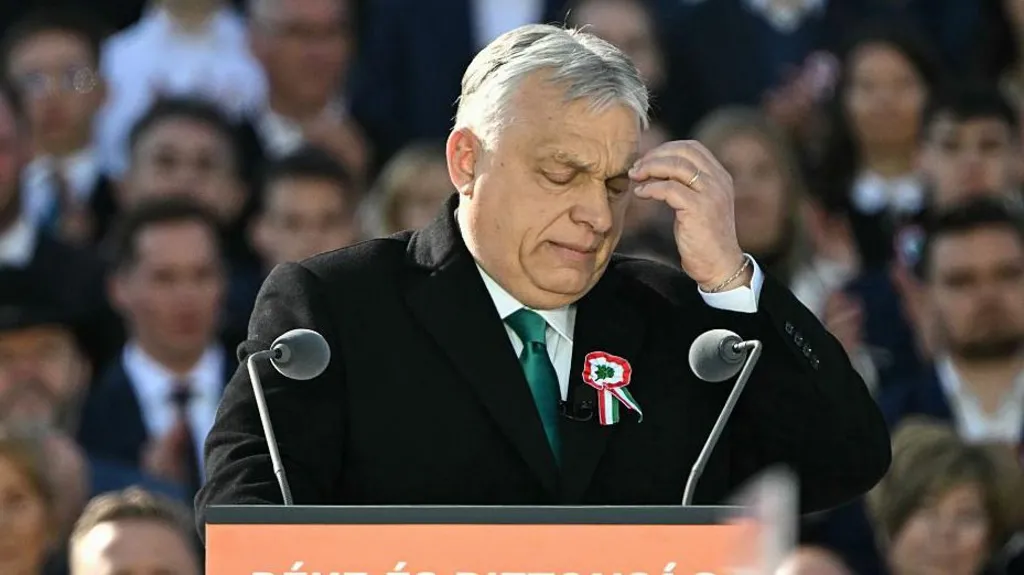
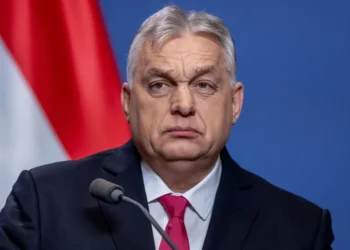
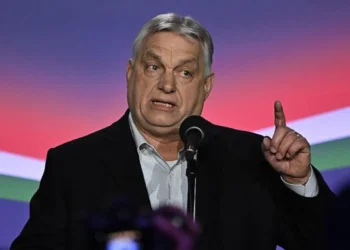
Viktor Orbán has dominated Hungary’s political landscape for more than a decade and a half, emerging as one of Europe’s most influential and controversial leaders. As he seeks to maintain his grip on power after 16 years in office, his leadership style, policies, and political strategy continue to shape both domestic politics and Hungary’s relationship with the wider world.
Born in 1963 in Székesfehérvár, Orbán rose to prominence during the final years of communist rule in Hungary. As a young activist, he gained national attention for calling for the withdrawal of Soviet troops, positioning himself as a symbol of democratic change. He later co-founded the Fidesz party, which began as a liberal youth movement before evolving into a dominant conservative political force.

Orbán first became prime minister in 1998, serving one term before returning to power in 2010. Since then, he has secured consecutive electoral victories, consolidating authority in a way that critics argue has weakened democratic institutions. Supporters, however, credit him with providing stability, economic growth, and a strong national identity.
A defining feature of Orbán’s leadership has been his concept of “illiberal democracy,” a model that prioritizes national sovereignty, cultural identity, and centralized governance over liberal democratic norms. Under his administration, Hungary has introduced constitutional changes, restructured the judiciary, and tightened control over media and civil society organizations. These moves have drawn criticism from the European Union and international observers, who have raised concerns about the erosion of checks and balances.
Migration has been another central issue in Orbán’s political agenda. During the European migrant crisis, his government took a hardline stance, constructing border fences and implementing strict asylum policies. He framed these measures as necessary to protect Hungary’s cultural and national integrity, a message that resonated with many voters but also intensified tensions with EU partners.
Economically, Orbán has pursued a mixed approach, combining market-oriented policies with state intervention. His government has promoted foreign investment while also supporting domestic industries and maintaining control over key sectors. While Hungary has experienced periods of economic growth, critics argue that benefits have not been evenly distributed and that corruption remains a concern.
Orbán’s relationship with the European Union has been complex. While Hungary remains a member state and benefits from EU funding, disputes over rule of law, media freedom, and migration policies have strained relations. These tensions have positioned Orbán as both a challenger to and a participant in the European project.
As elections approach, Orbán faces a more competitive political environment than in previous years. Opposition parties have attempted to unite against him, seeking to capitalize on voter fatigue and concerns about governance. At the same time, Orbán continues to rely on a strong support base, effective messaging, and control over political narratives.
His campaign strategy often emphasizes stability, national pride, and resistance to external influence. By framing himself as a defender of Hungarian sovereignty, he appeals to voters who are wary of globalization and external pressure. This approach has proven effective in past elections, though its sustainability remains uncertain.
Internationally, Orbán has cultivated relationships beyond the European Union, engaging with a range of global partners. This diversified foreign policy reflects his broader strategy of balancing alliances while maintaining independence. However, it has also contributed to perceptions of Hungary as a disruptive actor within Western institutions.
The question of Orbán’s future is closely tied to broader trends in global politics. His rise and استمرار in power reflect a wider shift toward populist and nationalist movements in various parts of the world. Whether he continues to succeed may depend on how effectively he adapts to changing political and economic conditions.

For many Hungarians, Orbán represents continuity and a clear political direction. For others, he embodies concerns about democratic backsliding and concentration of power. This divide underscores the stakes of the upcoming election, which will determine not only his political fate but also the trajectory of the country.
Ultimately, Viktor Orbán’s long tenure is a testament to his political resilience and strategic acumen. As he seeks to extend his time in office, the outcome will serve as a significant indicator of Hungary’s political future and its place within Europe.
Related News:
 EU weighs response amid Greenland tariff crisis with Trump
 EU Says US Ties Have Suffered ‘Big Blow’ After Greenland Crisis
 Macron Rebuked in Franco-German Defence Row
 Zelensky Says Putin Has Started WW3, Must Be Stopped
 New Russia Sanctions on Hold as Hungary Blocks EU Package Ahead of Fourth Ukraine War Anniversary
 Rob Jetten becomes Netherlands’ youngest ever prime minister
 Ukraine remembers its dead as war enters a fifth year
 Spain Declassifies Files on 1981 Attempted Coup in Effort to Dispel Conspiracy Theories
 Macron Finds ‘Freedom Fries’ Redemption in Iran Crisis
 Ukraine Accuses Hungary of Taking Seven Bank Workers Hostage in Budapest
 Finland Plans to Lift Decades‑Old Ban on Hosting Nuclear Weapons
 Putin Orders Evacuation at Iran Nuclear Plant Amid ‘Catastrophe’ Fears
 Istanbul Mayor Faces Corruption Trial Amid Political Storm
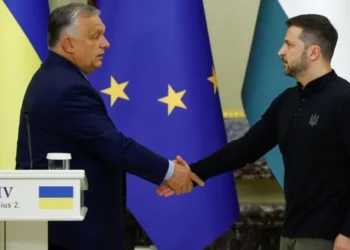 Ukraine War Becomes Flashpoint in Hungarian Election
 Italian Town Buys Mussolini Villa to Keep Away Fascist Fans
 UK Must Act with Courage and Clarity on Israel-Palestine Conflict, Says Foreign Affairs Committee Report
 Radioactive Leak at UK’s Nuclear Warhead Base Sparks Outcry Over Safety and Secrecy
 Mutual Inconvenience: Why Alaska Was Chosen for the Trump-Putin Summit on Ukraine
 Hong Kong Summons UK and Australian Envoys Following Asylum Grants to Democracy Activists
 Is the UK Ready to Put Boots on the Ground in Ukraine? Assessing Military Capacity and Challenges
 Channel Crossings Surge: Over 1,000 People Arrive in the UK in Small Boats in a Single Day
 Widow of Charlie Kirk Forgives Killer at Emotional Memorial Service
 Yvette Cooper Signals Global Momentum Towards Gaza Peace Deal Amid Humanitarian Crisis
 Public Trust in SNP Hits Historic Low Amid NHS Concerns
 Johnson Suggests Mandelson Linked to China Spy Controversy
 Rachel Reeves signals welfare reform ahead of key budget
 Russia’s Latest Push to Win US Favors Shows Deep Desperation
 BBC to Apologise Over Edited Trump Speech Amid Backlash
 Britain deploys RAF specialists to assist Belgium with drone threats
 Trump Urges Herzog to Grant Netanyahu Full Pardon
 Indian authorities demolish Kashmir home linked to Red Fort blast
 Greene Pushes Epstein Files Amid Trump Fallout
 Trump Deploys DHS to Charlotte in Major Arrest Operation
 December Run-Off in Chile as Election Produces No Winner
 Canada Passes Carney’s First Budget in Tight Parliamentary Vote
 Shadow Fleet at Sea: Europe’s Battle Against Illicit Oil Shipping
 India’s COP30 Delay Raises Global Climate Concerns
 Georgians Defy Government Crackdown After Year of Protests
 Albanese Opens Door to Bondi Royal Commission Amid Rising Pressure
 Israel Moves to Bar MSF From Gaza Operations
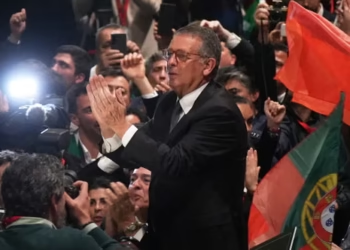 Portugal Election Delivers Socialist Win as Far Right Surges
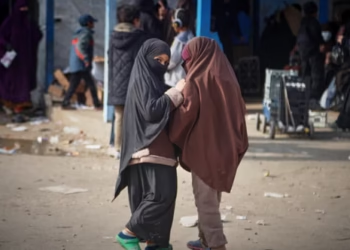 Australian Families Leave Syrian Camp for Home
 Starmer Weighs Fast-Tracking Defence Boost
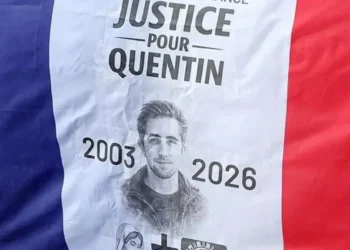 Nine Arrested in France Over Death of Far‑Right Student
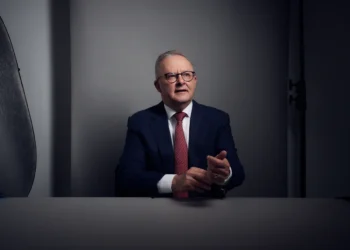 Andrew Arrest Sparks Republic Debate in Australia
 Australian PM Says Former Prince Andrew Has Suffered ‘Extraordinary Fall’ but That Won’t Prompt Republic Referendum
 Musk Cuts Starlink Access for Russian Forces – Giving Ukraine an Edge at the Front
 Farage Chagos Islands Row Sparks Fury
 Ukraine Negotiator Reveals What It Feels Like Facing Russia
 Chad Shuts Border With Sudan in Bid to Stop Conflict Spreading
 French Minister Moves to Block US Envoy Kushner from Government Access
 Louvre Museum Director Resigns Months After High‑Profile Heist
 Orbán Accuses Ukraine of Disrupting Oil Supplies to Hungary
 Has Europe truly learned from the failures of 2022?
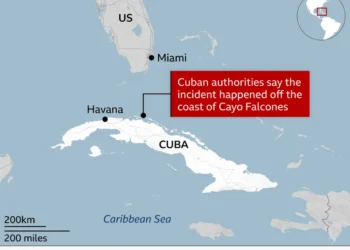 American Citizen Killed in Cuba Boat Shooting, U.S. Officials Say
 Iran’s Regime Still Intact — Coming Days Will Test Its Survival
 Allies of US in the Gulf Bear Brunt of Iran Attacks
 Trump Faces Questions Over Iran Conflict Plan
 Israel Launches Ground Invasion of Lebanon Amid Widening Middle East War
 Herzog Asio meeting sparks security storm
 Nepal Holds First General Election Since Gen Z Protests Toppled Government
 How Depleted Weapons Stockpiles Could Affect the Iran Conflict
 Minister Meets Crews Who Will ‘Take Out’ Iranian Drones
 UK–US Tensions Ease as Starmer and Trump Hold First Call Since Iran Row
 Nine Days of Strikes Reshape the Middle East
 Trump Pressures Congress Over Save America Act
 Iran War Puts Trump at Political Risk Amid Rising Prices
 Iran’s New Leader Faces Existential Test
 Iranian Football Squad Asylum Drama Shocks Australia
 Queensland Protest Laws Spark Free Speech Backlash
 Yvette Cooper: UK Must Follow Principles, Not US Pressure
 Trump Nato threats expose Iran strategy vacuum
 Trump’s Confidence Undimmed — But Every Iran Option Carries Risk
 Israel Says Iran Security Chief Larijani ‘Killed’
 Philippines energy emergency sparks coal power surge
 Trump Facing Backlash from Epstein Survivors Over Files
 UK Forces Ready to Seize Russian Shadow Fleet Vessels
 Trump Considers Military Operation to Seize Iran’s Uranium
 Report Says Pezzullo Acted ‘Recklessly’ in Dealings
 Hungary Claims Plot to Target Gas Pipeline Pre-Vote