Published: 19 April 2026. The English Chronicle Desk. The English Chronicle Online
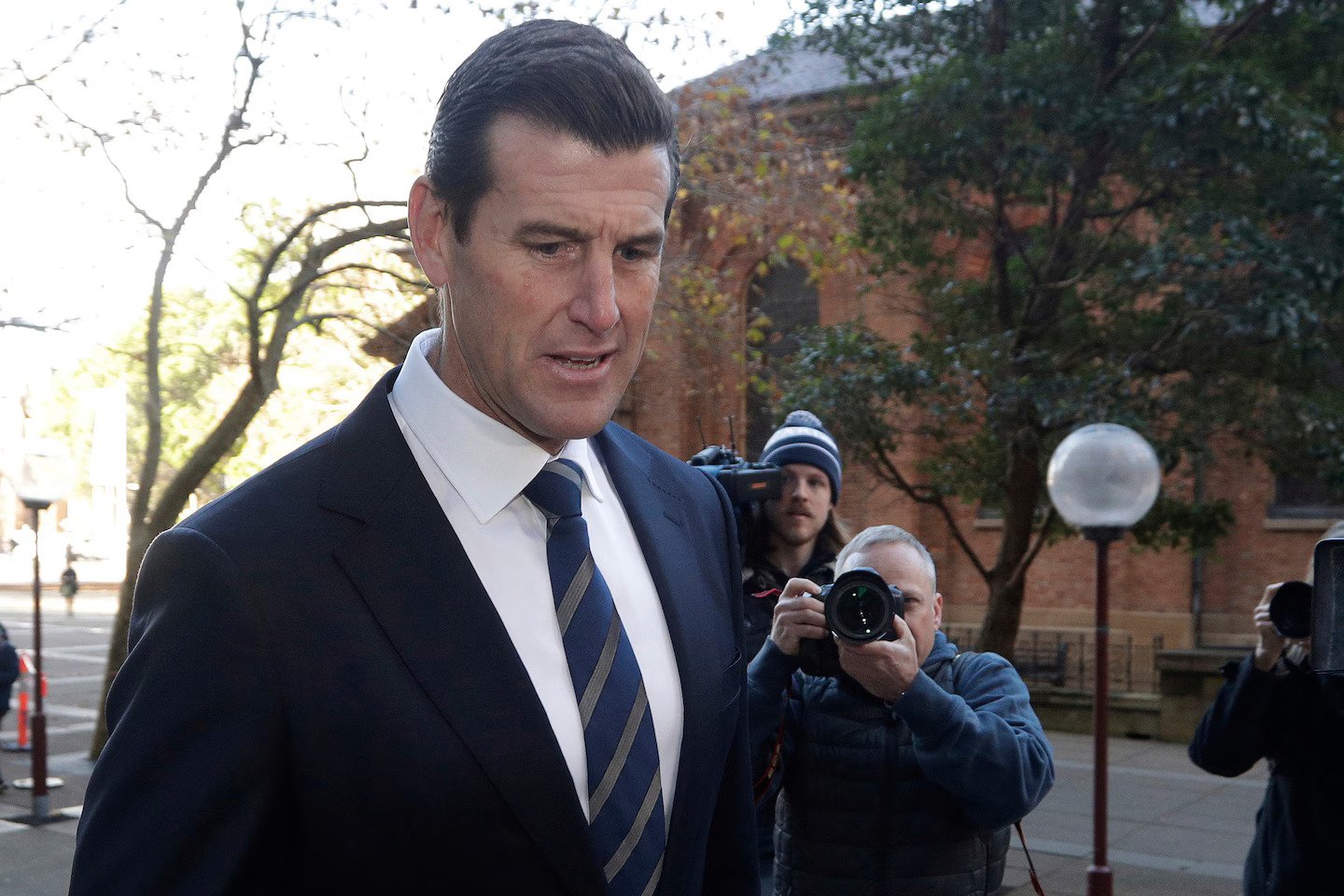
The Victoria Cross recipient Ben Roberts-Smith has publicly denied all allegations against him, declaring “I will never give up” as he addressed the media for the first time since his arrest over serious war crime murder charges linked to his military service in Afghanistan.
Speaking from the Gold Coast while on bail, Roberts-Smith strongly rejected claims that he was involved in the unlawful killing of unarmed civilians during his deployment with the Australian Special Air Service (SAS). He faces five charges of war crime murder, with prosecutors alleging he either personally carried out killings or ordered subordinates to do so while serving in Afghanistan.
The decorated former soldier said he had spent the past decade under what he described as a sustained effort to damage his reputation. “For the past 10 years, my family and I have been subject to a campaign to convince Australians that I’ve acted improperly in my service in Afghanistan,” he said, firmly maintaining that he categorically denies all allegations.

Roberts-Smith insisted that his actions during military service were always guided by training, rules of engagement, and personal values. “I always acted within my values, within my training and within the rules of engagement,” he said, adding that he remains proud of his service alongside fellow soldiers in Afghanistan.
The charges he faces relate to the alleged murders of five unarmed individuals, including a father and son identified in court documents as Mohammad Essa and Ahmadullah, a farmer named Ali Jan, and two detainees referred to as “person under control one and two.” According to prosecution filings, all incidents allegedly occurred in controlled environments where Australian forces held operational dominance.
Court documents, presented in a New South Wales local court, outline what prosecutors describe as “common themes” across the alleged incidents. These include claims that victims were unarmed, had been detained or restrained, and were questioned before being killed. The documents also allege that in some cases, weapons or evidence may have been placed near bodies after death in an attempt to present the killings as lawful combat actions.
The prosecution further claims that each of the incidents occurred outside active combat situations, with Australian forces allegedly in full control of the battlefield. The statement of facts argues that none of the victims were killed during immediate firefights, raising questions about whether the actions fall within the legal framework of military engagement.
A key element of the prosecution’s case involves testimony from three former soldiers who are expected to serve as witnesses. According to court filings, these individuals have admitted to their own involvement in killings they say were carried out under the direction or influence of Roberts-Smith, who was their superior officer at the time.
The documents state that each witness has provided written accounts describing their actions and allegedly witnessing additional unlawful killings during their deployment. These statements have not yet been tested in court, and their credibility will be a central issue in the upcoming trial proceedings.
Despite the gravity of the accusations, Roberts-Smith maintained his innocence and portrayed the legal proceedings as part of a broader effort to challenge his reputation. “I’d also like to say that I’m extremely proud of all of the men and women that served alongside me in Afghanistan,” he said, adding that the sacrifices of Australian personnel should not be forgotten.
He also expressed gratitude to his family, partner, and supporters, saying their backing has been crucial during what he described as an emotionally and legally challenging period. At the same time, he appealed for privacy, particularly for his children, criticising what he called a “sensational arrest” that turned his detention into a public spectacle.
Roberts-Smith said he was surprised and disappointed by the public nature of his arrest earlier this month, which occurred while he was on holiday with his partner and children. He argued that the handling of the arrest added unnecessary pressure on his family, who he said have already endured years of scrutiny.
Legal experts note that the case is among the most significant military-related criminal proceedings in recent Australian history, involving complex questions around battlefield conduct, rules of engagement, and accountability for elite special forces operations. However, all allegations remain untested in court, and Roberts-Smith is legally presumed innocent until proven guilty.
The case also follows years of public attention and previous legal battles involving the former soldier, including civil defamation proceedings in which similar allegations were examined in detail. While those earlier cases raised serious questions, the current criminal charges represent a separate and far more serious legal threshold, requiring proof beyond reasonable doubt.

Roberts-Smith ended his statement without taking questions from journalists, reiterating his determination to fight the charges. “I understand this journey will be long. I understand this journey will be difficult,” he said. “But I can promise everybody that I have never run from a fight in my life. I will never give up and I will always be in the fight.”
The upcoming legal process is expected to draw significant public attention both in Australia and internationally, given Roberts-Smith’s decorated military record and the severity of the allegations. The case will likely examine classified military operations, battlefield decision-making, and witness testimony from former comrades, making it one of the most closely watched war crimes-related trials involving an Australian serviceman.
For now, Roberts-Smith remains free on bail as preparations continue for what is expected to be a lengthy and complex trial process. The outcome will determine not only his personal fate but also contribute to wider discussions about accountability and conduct within modern special forces operations.
Related News:
 Cartel crackdown raises fears of fresh violence
 New Footage Revives Peter Falconio Mystery
 Pregnant UK Teen to Be Freed from Georgian Jail
 Just Stop Oil Protesters Convicted Amid Climate Defence Row
 British Grandmother to Return Home After Death Sentence in Bali
 Oklahoma Governor Grants Last-Minute Clemency to Death Row Inmate
 Teens ‘Ran Amok’ at Ex-MP’s Covid Testing Firm
 Suspect Named in Canada School Mass Shooting
 Undercover officer deceived women with ‘grotesque and cruel’ lies, spycops inquiry told
 California fireworks blast: murder charges filed in case
 Prevent Failings Exposed After Southport Attack
 Learner Driver Charged After Expo Tragedy
 OpenAI CEO Apologizes After Canada Shooting Case
 Police Suspect Help in Missing Alice Springs Girl Case
 FBI Links Brown University Shooting to Long-Term Grievances
 US states redraw maps after voting rights ruling
 US ‘Narco Boat’ Strikes Draw Global Outcry
 Search Intensifies for Missing Hiker on WA Bibbulmun Track
 Barrister Criticises Trial After Suicide Case Verdict
 China mine blast death toll rises to 90
 Ebola outbreak in DRC overwhelms health system as cases surge
 Gunman Killed After White House Security Shootout
 Irish Gangland Figure Fails in Dublin Election Bid
 Murder Probe Continues After Arrest Release
 Teen Charged After Layla Jeffery Found Dead
 Westminster Council Threatens Charing Cross Soup Kitchen
 BBC Warned About Missing Clothes of Murder Victim
 Israeli Strike in Southern Lebanon Kills Seven
 Cambridge Professor Jason Arday Found Dead at Home
 Northern Ireland Family of Three Shot Dead in Maguiresbridge Home Incident
 Jailed Georgian Opposition Leaders Warn UK of Iranian Links to Ruling Party
 Badenoch Warns Farage’s Grooming Gangs Plan Could Backfire
 Police Probe Four Knife Incidents Linked to Cambridgeshire Train Attack
 French Taxi Driver Cleared in David Lammy Theft Case After Fare Dispute
 UK University Faces Counter-Terror Probe Over China Pressure
 BBC’s Tim Davie to Address Staff Amid Trump $1bn Threat
 Ukraine-Russia war latest: Putin’s troops exploit bad weather to force Kyiv withdrawal from multiple towns
 US Justice Department Files Lawsuit Against California Over Partisan Voting Maps
 US Pushes Global Effort to Stop Arms Flow to Sudan RSF Forces
 Rio Raid’s Death Toll Raises Questions About Gang Impact
 Israel Confirms Returned Hostage as Meny Godard
 Greene Pushes Epstein Files Amid Trump Fallout
 Trump Deploys DHS to Charlotte in Major Arrest Operation
 Charlotte Raids: 130 Arrested in Major Immigration Sweep
 South African Detained After Neo-Nazi Rally in Australia
 Deadly Russian Strikes Hit Western Ukraine, 20 Killed in Ternopil
 Serial Rapist and Former Cop Found Guilty Again
 Man Charged Over Attempted Murder of Senior Officer
 Man Denies Stealing Bronze Age Gold from Museum
 Venezuela Threatens Nobel Winner Machado with Fugitive Status
 Runaway Driver Caught by DNA Evidence
 Trump Envoy to Discuss Ukraine Peace at Kremlin
 Two National Guard Soldiers Critically Injured Near White House
 Southern Lebanon reels as Israeli strikes shatter communities
 Video shows Israeli troops kill Palestinians after surrender
 Tokyo court rules Japan’s same-sex marriage ban constitutional
 American Mother Extradited From UK to U.S. on Murder Charges
 Thousands Protest ICE Operations in Nationwide US Day of Action
 SA Police Intensify Search in Gus Lamont Case
 El Mencho Killed as Mexico Faces Violence
 Kelly Wilkinson Inquest Reveals Bail Failure
 Bondi terror attack linked to global rise in IS plots
 Fugitive Dezi Freeman Killed in Rural Victoria Shootout
 Report Says Pezzullo Acted ‘Recklessly’ in Dealings
 Hungary election: Orbán faces biggest test amid scandal
 Suspected Plot Targets Pipeline Before Hungary Vote
 City & Guilds Sale Sparks Fees and Pay Uproar
 Two Children Die in Wolverhampton House Fire Tragedy
 Ukraine Urges UK to Seize Russian Oil Tankers
 Two Dead in Adelaide Airport Plane Crash Fire
 Judge halts deportation of Yemeni refugees in US
 China Fireworks Factory Blast Kills 21 in Hunan
 Trump warns Iran as Middle East tensions surge again
 Florida Surgeon ‘Devastated’ Over Fatal Surgery Error
 Immigration Judges Fear Pressure in Trump Era
 Former ICC prosecutor condemns US sanctions
 Teenage Victim Identified as Community Mourns Stabbing Death
 Ukraine Creates Long-Range Strike Command
 Le Pen’s Popularity Holds Despite Conviction
 UK’s Largest Muslim Convention Scales Up Security Amid Rising Bigotry