Published: 30 April 2026. The English Chronicle Desk. The English Chronicle Online
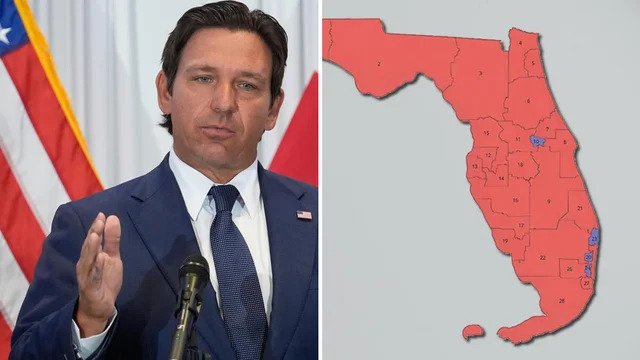
The Florida legislature has approved a new congressional map designed to significantly strengthen Republican representation in the US House of Representatives ahead of the upcoming midterm elections, intensifying an already heated national redistricting struggle. The controversial vote came shortly after Governor Ron DeSantis unveiled the proposal, and on the same day the US Supreme Court issued a ruling that rolled back a key provision of the Voting Rights Act, a decision widely expected to reshape how states can challenge electoral maps in federal court. The combination of these developments has immediately triggered political debate across the United States, with Democrats warning of long-term impacts on minority representation and electoral fairness.
The newly approved map is projected to increase Republican dominance in Florida’s congressional delegation from its current 20–8 split to a potential 24–4 advantage. Such a shift, if upheld in legal challenges, would represent one of the most significant partisan gains in a single state in recent US political history. Supporters of the plan argue that it reflects population changes recorded since the 2020 census, particularly growth in suburban and ex-urban regions that have leaned more Republican in recent elections. Critics, however, contend that the map is a clear example of partisan gerrymandering aimed at diluting Democratic voting strength rather than simply adjusting for demographic shifts.

The timing of the legislative approval has added to the controversy, coinciding with a Supreme Court ruling that struck down a Louisiana congressional district previously drawn to ensure a majority Black electorate. That decision effectively narrowed the scope of legal protections under the Voting Rights Act, particularly concerning race-based considerations in district drawing. Legal analysts suggest the ruling may make it more difficult for civil rights groups and Democratic-led states to successfully challenge new maps in federal courts, potentially emboldening Republican-led legislatures across the country to pursue more aggressive redistricting strategies.
Florida Governor Ron DeSantis and his administration have defended the new map as “race-neutral” and compliant with constitutional requirements. They argue that the changes are driven by legitimate population redistribution rather than partisan intent. However, the state constitution explicitly prohibits redistricting plans drawn primarily for partisan advantage, a provision that has previously been used in court challenges. DeSantis’s team has expressed confidence that recent judicial interpretations, including those from the Florida Supreme Court and now the US Supreme Court, will weaken legal obstacles to the plan’s implementation.
The map significantly reshapes several major urban and suburban regions across Florida. Districts in and around Orlando, Tampa-St Petersburg, and South Florida—including areas surrounding Palm Beach, Fort Lauderdale, and Miami—have all been redrawn. These areas have traditionally provided strong support for Democratic candidates, and the new boundaries are expected to fragment those voting blocs across multiple districts. As a result, sitting Democratic representatives such as Jared Moskowitz and Debbie Wasserman Schultz could face serious challenges in retaining their seats, depending on how electoral dynamics unfold under the new configuration.
One of the most contentious aspects of the new plan is the effective removal of a nearly majority-Black district in South Florida. That seat was previously held by Democrat Sheila Cherfilus-McCormick before her recent resignation. Civil rights advocates argue that the elimination of such a district raises serious concerns about minority representation in Congress, even if the map avoids explicitly racial classifications in its design. Legal experts expect this aspect of the plan to be central to upcoming lawsuits, which are likely to be filed as soon as the map is formally enacted.
Republican lawmakers in Florida maintain that the changes are necessary to reflect evolving demographic and political realities. They argue that suburban growth patterns and shifting voter preferences justify a recalibration of district boundaries. According to supporters, the goal is to create more competitive and geographically coherent districts rather than preserve outdated political advantages for any party. However, internal divisions within the Republican Party were visible during the legislative vote, with a small number of lawmakers breaking ranks and expressing concern that overly aggressive redistricting could backfire in closely contested elections.

Political strategists across the United States are closely watching Florida’s approach as part of a broader national trend. Several states, including Texas and Virginia, are also engaged in redistricting efforts that could reshape the balance of power in the US House of Representatives. In Texas, for example, Republican planners have attempted to distribute Trump-aligned voters across additional districts to expand their reach, though analysts warn that shifting political attitudes, particularly among Latino voters, could complicate those assumptions. Similarly, Democrats in Virginia are pursuing gains through voter-approved measures that are also facing legal challenges.
Despite the confidence expressed by Republican leaders, there is no certainty that the new maps will deliver the expected electoral outcomes. Political analysts note that attempts to engineer safe districts can sometimes produce unintended consequences, such as narrower margins that become vulnerable in wave elections or periods of strong opposition turnout. If voter sentiment shifts significantly against Republicans, particularly in response to national political developments, the newly drawn districts could prove more competitive than intended.
As legal challenges are expected to move quickly through state and federal courts, Florida’s redistricting plan is likely to remain a focal point of national political debate in the months ahead. With the Supreme Court’s latest ruling altering the legal landscape and partisan tensions already high, the outcome of these disputes could have lasting implications for congressional control and the future of electoral mapping in the United States.
Related News:
 US National Guard Member Killed in DC Shooting
 Trump to pause migration from ‘third-world countries’
 Franklin Turtle, Sabrina Carpenter Slam US Social Media Use
 Trump officials continue false claims after Alex Pretti shooting
 Partial US Government Shutdown Hits Homeland Security Funding
 Thousands Protest ICE Operations in Nationwide US Day of Action
 Swalwell Faces Pressure to Quit Governor Race
 Harmeet Dhillon Faces Scrutiny in DOJ Role Debate
 Trump at Press Dinner Sparks Tension
 Judge Blocks Trump Bid for Arizona Voter Data
 US Court Weighs Fate of TPS for Migrants
 US Voting Rights Ruling Sparks Celebration and Outcry
 US Court Ruling Reshapes Voting Rights Landscape
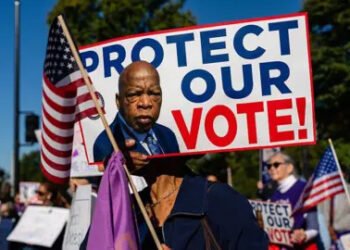 US states redraw maps after voting rights ruling
 Judge halts deportation of Yemeni refugees in US
 White House Security Case Sparks Political Firestorm
 Trump warns Iran as Middle East tensions surge again
 US Supreme Court fast-tracks Voting Rights ruling
 US Court Restores Abortion Pill Access Temporarily
 Immigration Judges Fear Pressure in Trump Era
 FDA Chaos Deepens as Trump Eyes Makary Exit
 US judge dismisses Kilmar Abrego Garcia indictment
 US green card applicants must apply from abroad, DHS says
 Tulsi Gabbard exits after turbulent intelligence tenure
 Trump’s Revenge Drive Deepens GOP Divide
 Former ICC prosecutor condemns US sanctions
 Gunman Killed After White House Security Shootout
 Prosecutor Proposes Law to Combat Election Deceit
 Trump Weighs Retreat from Controversial $1.8bn Slush Fund
 Mystery Grows Over Mitch McConnell’s Health
 Trump Refuses to Sign Housing Bill, But Law Takes Effect
 Trump Orders Signs Criticising Smithsonian Museum
 French Taxi Driver Cleared in David Lammy Theft Case After Fare Dispute
 Major Rent Reform Ends No-Fault Evictions in England
 Peers Flood Assisted Dying Bill with 942 Amendments
 US Justice Department Files Lawsuit Against California Over Partisan Voting Maps
 Trump Deploys DHS to Charlotte in Major Arrest Operation
 Peers Get Extra Time to Debate Assisted Dying Bill
 ICC to Rule on Duterte’s Provisional Release
 Australia grants Asio powers to designate hate groups under new laws
 Government Unveils Northern Powerhouse Rail Plans
 Trump press secretary attacks reporter over ICE question
 Kyrsten Sinema Faces High-Profile Lawsuit Over Marriage Interference
 Criticism of Netanyahu Risks Offence Under Australia Law
 Trump Fed bid heads to Supreme Court
 Tim Walz urges Trump to withdraw federal agents immediately
 Epstein Files Reveal Trump Officials’ Emails with Financier
 Sinema payment row deepens after $9,000 transfer claim
 Nurses’ families fear breakup under UK immigration crackdown
 California Democrats Vow Trump Reckoning
 Trump’s Surgeon General Pick Evades Vaccine Questions
 Adelaide University Faces Backlash Over Event Cancellation
 Proposed Law Leaves Gap for Children of Convicted Paedophiles
 Report Says Pezzullo Acted ‘Recklessly’ in Dealings
 Hungary election: Orbán faces biggest test amid scandal
 Melania Trump Epstein remarks spark survivor backlash
 Suspected Plot Targets Pipeline Before Hungary Vote
 Trump Signals Hope for New Iran Talks as Ceasefire Fades
 US Catholics Caught Between President and the Pope
 GOP Senator Criticizes Trump’s Feud With Pope Leo XIV
 UK Stands Firm on Falklands Amid US Rift
 Crackdown Backfires on UK Climate Protesters
 Investigation Into Anti-Trump Motives After Gala Shooting
 Trump Defiant After Washington Hotel Shooting
 Identity Revealed: Suspected Washington Gunman Named
 Trump approval plunges amid Iran war fears
 Ohio’s Battle for Trust: Democrats Vying to Flip the Buckeye State
 US ‘Narco Boat’ Strikes Draw Global Outcry
 Ohio Primaries Set Stage for Crucial Midterms
 Afghan Families Left in Limbo Face Risk of Deportation
 Florida Surgeon ‘Devastated’ Over Fatal Surgery Error
 Tensions Emerge in Netanyahu-Trump Alliance
 US Awaits Iran Reply on New Ceasefire Proposal
 Hormuz Talks Near Critical Stage
 DeSantis’s ‘Alligator Alcatraz’ Faces Final Shutdown
 House Curbs Trump’s War Powers in Rare Rebellion
 US Courts Back Trump on Park Signage Removals
 Trump’s Mount Rushmore Speech: A Divisive Anniversary
 Le Pen’s Popularity Holds Despite Conviction
 Houthis Strike Saudi Arabia as Middle East Tensions Rise