Published: 30 April 2026. The English Chronicle Desk. The English Chronicle Online.
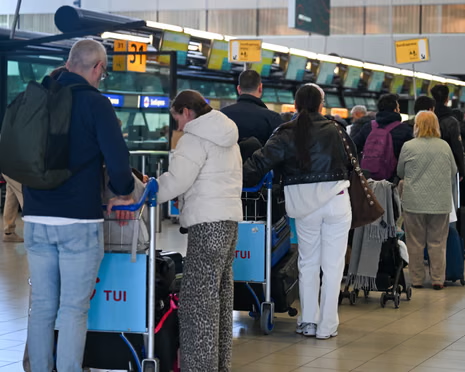
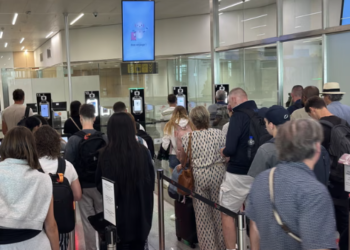
The dream of a smooth European getaway is fading for many British holidaymakers this spring. Recent reports indicate that the new European entry-exit system has caused significant travel disruption across the continent. Travellers are sharing stories of exhausting waits that stretch for several hours at major border points. These long delays are rooted in the biometric requirements now mandatory for all non-EU citizens. Many passengers have unfortunately missed their flights home because of these slow-moving security queues. The situation has created a sense of deep frustration among those seeking a simple break. Experts suggest that the infrastructure at many airports is not yet ready for high volumes. This lack of preparation has led to scenes of confusion and physical exhaustion for families. Some people have waited for three hours just to scan their fingerprints and faces.
The new regulations were first introduced in late 2025 but are now fully active today. They apply to nearly every popular destination within the Schengen Area and nearby partner states. While some lucky travellers report a seamless transition, many others describe a truly chaotic reality. The primary issue seems to be the processing of digital biometrics for every visitor. This requirement adds several minutes to the interaction time for every single person in line. When multiple flights land at once, the system quickly becomes overwhelmed by the sudden influx. Thousands of British citizens are now navigating these hurdles during their long-awaited spring holidays. For many, the joy of visiting Europe is being overshadowed by these entry challenges. The transition to a fully digital border was meant to increase security and efficiency. However, the current reality for passengers on the ground is proving to be quite different.

One particularly distressing account comes from an IT manager who attended a recent music festival. Dave Giles arrived at the Copenhagen airport several hours before his scheduled departure last week. He expected a routine journey back to his home in the quiet town of Raunds. Instead, he found himself trapped in a stagnant queue at the busy passport control. Only three kiosks were operational for a crowd of nearly one hundred desperate waiting people. To make matters worse, one of those few kiosks closed during the peak rush. Despite his early arrival, the clock ticked down toward his flight’s final boarding call. A supervisor attempted to intervene by calling the gate to hold the plane for him. Their efforts were ultimately unsuccessful and the plane departed without the Giles family onboard. This unfortunate turn of events left the family stranded in Denmark for another night.
The financial impact of these border delays can be quite devastating for the average family. Mr. Giles reported that he spent over two thousand pounds on his unexpected extra costs. This included new flight tickets, overnight accommodation, and expensive car rentals for his return. He also faced increased parking fees at his original arrival airport back in England. Most travel insurance providers do not cover losses caused by border control staff delays. Airlines often claim they have no responsibility for passengers who fail to reach the gate. This leaves travellers with very few options for recovering their hard-earned money after such incidents. The lack of a clear compensation path adds another layer of stress for everyone. Many feel that the system is failing those it was designed to monitor and protect. The total cost of a simple holiday can double in just a few hours.
Expectant mothers and families with young children are facing even more difficult conditions at borders. Georgia, a traveller from London, shared her harrowing experience at the airport in Pisa recently. She is currently five months pregnant and found herself standing in a hot corridor. The queue lasted for four hours without any access to seating or cooling ventilation. There were no staff members available to provide information or offer any special assistance. Water was only distributed to those who had already reached the very front of the line. Georgia described the environment as a windowless space that felt increasingly unsafe for vulnerable people. The experience was so traumatic that she decided to cancel her next trip abroad. She simply cannot face the prospect of another long wait in such harsh conditions. Many other holidaymakers are reaching similar conclusions about the current state of European travel.
Parents travelling with young children are also reporting a lack of clear guidance and support. Stuart MacLennan from Scotland encountered a nightmare scenario while visiting the sunny city of Málaga. He was travelling with two children, one of whom is only a single year old. Upon arrival, his family was met with massive queues from several different landing aircraft. There was no signage to direct families to priority lines or faster processing areas. After waiting for thirty minutes, they were finally moved into a line for minors. Even in this supposedly faster lane, the wait lasted for over two hours in total. The return journey proved to be even more taxing for his tired young family. They faced a three and a half hour wait before they could board. Stuart noted that the experience has discouraged him from visiting busy European hubs again.
Technical failures are also contributing to the growing list of complaints from international airline passengers. Dylan Thomas noticed that twenty new kiosks at one airport were still wrapped in plastic. Because the machines were not functional, only one staff member was available for manual checks. This led to a two-hour wait for every passenger arriving on his specific flight. In Kraków, the situation became even more bizarre according to another experienced British traveller. Paul Coleman observed staff members using their personal mobile phones to take photos of passengers. This occurred because the official cameras on the registration kiosks were not working at all. There were no apologies or explanations offered to the hundreds of people in the queue. This inconsistency across different countries makes it very difficult for travellers to plan effectively. One never knows if a border crossing will take minutes or several long hours.

Elderly travellers are also expressing their concerns about the physical demands of the new system. David from Durham described a recent trip to the Canary Islands as a total mess. He was held on his plane because the terminal was already over its capacity. Once inside, he found himself herded into a glass-partitioned area with almost no seating. Many elderly passengers were forced to stand for long periods without access to any toilets. If someone left the queue for a bathroom, they were subjected to full searches. This level of scrutiny feels excessive and poorly managed to many regular holiday travellers. David believes that better signage and separate lanes for returning visitors would help immensely. Without these improvements, the process will continue to be a source of great anxiety. The lack of basic facilities in waiting areas is a major health concern.
The airline industry seems to be distancing itself from these systemic border control problems. Many carriers inform their passengers that reaching the gate on time is a personal responsibility. This stance ignores the fact that travellers are often trapped in queues beyond their control. There is a clear disconnect between airport operations and the needs of the flying public. As the busy summer season approaches, there are fears that these delays will grow. More people will likely miss flights and lose money as the system struggles to adapt. Governments and airport authorities must work together to find a more efficient processing solution. Until then, the promise of easy European travel remains unfulfilled for many British citizens. The transition period for the new entry system is proving to be incredibly rocky. Travellers are advised to arrive much earlier than usual for all future European flights.
Related News:
 EU Biometric Border Checks Delayed for UK Travellers
 Bad Weather Threatens Hantavirus Cruise Ship Evacuation
 Essex valley emerges as rising English wine hub
 Man killed in shark attack on Great Barrier Reef
 Thailand Tightens Visa Rules to Curb Tourist Misbehavior
 Airlines Demand Freeze on EU Border System as Chaos Peak Looms
 England and Norway Fans Turn Miami Into World Cup Carnival
 Italy’s Beach Lunch Ban Sparks Holiday Backlash
 Olympus Awaits Unesco Heritage Recognition
 High-speed Spain train crash leaves nation in mourning
 EU weighs response amid Greenland tariff crisis with Trump
 EU Says US Ties Have Suffered ‘Big Blow’ After Greenland Crisis
 EU launches Grok AI probe into X over explicit images
 Scotland–France Ferry Revival Tied to Dunkirk’s Green Rebirth
 Thousands Left Without Heating in Ukraine Amid Russia Strikes
 Russia sanctions hit economy hard, says EU envoy
 TikTok Design Faces EU Crackdown Over Addictive Features
 Italy Arrests Protesters Amid Milan Olympic Chaos
 Portugal Election Delivers Socialist Win as Far Right Surges
 UK and Germany urge rearmament drive
 Qantas Revamps Loyalty Program Amid $1.46bn Profit Surge
 Cees Nooteboom, Dutch Writer, Dies Aged 92
 Rolling Hills and Heritage: A Car-Free Break in Leicestershire
 Mandelson Faces EU Inquiry Over Epstein Links
 Last Weekend of Summer Brings Sparkle and Stars to Sydney
 Middle East Airspace Crisis Strands Thousands
 Cyprus Drone Strike Sparks Europe’s Strong Response
 Spain Shuts Airspace to US Military Over Iran Conflict
 LA 2028: Millions of Affordable Olympic Tickets Announced
 UK Aviation Watchdog Clips Heathrow’s Fee Hike Wings
 Italy Faces Third Successive World Cup Absence After Loss
 Spain Faces Backlash Over Xenophobic Chants in Egypt Draw
 Italian Town Buys Mussolini Villa to Keep Away Fascist Fans
 Storm Dave Disrupts Travel but Conditions Set to Ease
 Teen Surfer Escapes South Australian Shark Encounter
 Own an Entire Australian Town for the Price of a UK Flat
 Battle of Britain Tower to House Tourists and Bats
 Hungary election: Orbán faces biggest test amid scandal
 Atlético Madrid Outlast Barcelona in Epic European Clash
 Rat Poison Found in Baby Food Sparks Major Recall Row
 Two Dead in Adelaide Airport Plane Crash Fire
 Ukraine strikes Tuapse as oil disaster worsens
 Alex Zanardi dies at 59, a symbol of resilience
 Asylum deal sparks fears over Syria deportations
 Ceasefire Standoff Deepens in Ukraine War
 France Faces Record Presidential Crowded Race Amid Far-Right Surge
 Norway Doubles Down on Oil and Gas for Europe Energy Security
 Search Intensifies for Missing Hiker on WA Bibbulmun Track
 Greece Probes Mystery Explosive Drone in Ionian Waters
 Ex-Chief of Staff Named in Major Ukraine Corruption Probe
 Macron Reimagines African Ties at Landmark Kenya Summit
 Romania’s Judicial Crisis: A System Under Siege
 Australia Welcomes the Iconic Michelin Guide
 Chaos at Valdebebas: Florentino Pérez Calls for Elections
 France Quarantines Cruise Ship After Suspected Virus Death
 Lockdown Lifted for British Cruise Ship in Bordeaux
 UEFA Resists FIFA’s New Red Card Rules for Next Season
 Belfast Approves Pilot Extension of Sunday Trading Hours
 Hybrid village stores fight rural decline
 Bernardo Silva Leaves Manchester City After Iconic Era
 Pope Meets Families in Italy Toxic Waste Zone
 Zelenskyy warns over Oreshnik threat as Kyiv hit
 Former ICC prosecutor condemns US sanctions
 Irish Gangland Figure Fails in Dublin Election Bid
 Can Robots Truly Replicate the Unmatched Magic of K-Pop?
 EU Debate Looms Over Restricting New Member Veto Rights
 Hungary Targets Oligarchs with Proposed Landmark Wealth Tax
 Deadly Russian Air Raids Strike Across Ukraine
 Papal Visit Offers Political Lifeline to Spanish Premier
 Lib Dems Demand Bold EU Reset to Salvage British Economy
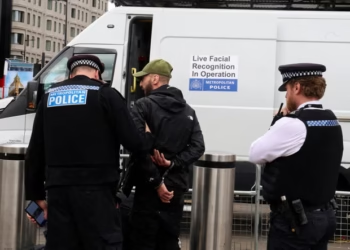 The Fear Gap: Why Europe Feels Less Safe Than It Is
 UK Nations Brace for Potential Breakup Amid Reform Surge
 Severn Trent CEO Reward Package Doubled Despite Public Anger
 BMA Faces Unprecedented Staff Cuts Amidst Severe Financial Turmoil
 Le Pen to Run for President Despite Embezzlement Conviction
 Jet2 Sees Summer Surge Despite Global Tensions
 London Tube Heat Reaches Dangerous Levels
 EasyJet Takeover Sparks Fears Over Passengers’ Future
 Wildfires Force Mass Evacuations in France And Spain
 Farage Defends £5m Gift Amid Threats