Published: 04 May 2026. The English Chronicle Desk. The English Chronicle Online.
The future of British aviation currently rests on a series of very delicate private negotiations. Philip Jansen has stepped into his role as Heathrow chairman with a massive challenge ahead. He must now bridge a wide gap between the airport and its most powerful partners. This specific conflict centers on the ambitious forty-nine billion pound plan for a third runway. For years this project has faced significant delays due to rising costs and legal battles. Many industry experts believe this expansion is vital for the long term British economy. However the high price tag has created deep divisions among those who use the site. Jansen is now meeting with major airlines to find a sustainable way to proceed. These talks represent a fresh attempt to fix relationships that have been broken for years.
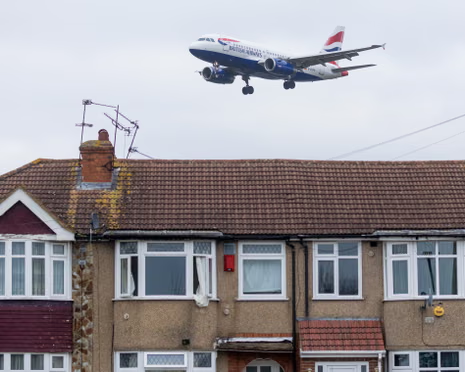
The new chairman is well known for his ability to solve complex corporate stalemates. He previously led a massive fiber broadband rollout during his successful time at the helm. That project required bringing together many different groups with very conflicting interests and financial goals. Now he must apply those same diplomatic skills to the world of international travel. Last week he met with leaders from International Airlines Group to discuss the current situation. This group owns British Airways which is the largest operator at the London based hub. British Airways accounts for more than half of all the available flight slots there. Their influence over the success of any expansion project is therefore absolutely critical and total. Without their support the financial logic of the third runway could quickly fall apart.

Luis Gallego serves as the chief executive of the powerful International Airlines Group company. He has been very clear about the financial limits his airlines are willing to accept. Gallego insists that the total cost of the expansion must stay under thirty billion. This figure is significantly lower than the current forty-nine billion pound estimate from Heathrow. The airlines are worried that high construction costs will lead to much higher landing fees. This would eventually make tickets more expensive for millions of British and international holiday travelers. Jansen must convince these carriers that the new runway will offer them great value. This requires a difficult balance between high quality infrastructure and keeping the operating costs low. Finding a middle ground is the only way to move the massive project forward.
The chairman has also reached out to the billionaire hotel owner and developer Surinder Arora. Arora has been a very vocal critic of Heathrow management for many long years. He previously proposed his own private version of the expansion for twenty-five billion pounds. His plan was much cheaper than the official proposal put forward by the airport. Arora has often accused the airport of overcharging passengers and the various airline companies. He leads a group called Heathrow Reimagined which seeks to modernize the entire site. This campaign group includes Virgin Atlantic and several large carriers from the United States. They all believe that the current management style needs a very radical financial change. Jansen knows that winning over Arora is a key part of his new mission.
Virgin Atlantic has joined other carriers in refusing to back expansion at any cost. They argue that Heathrow is already the most expensive airport in the entire European region. This reputation for high costs has caused tension with the United Kingdom aviation regulator. Recently the regulator rejected a plan to increase landing fees for a major upgrade. This decision has forced the airport to rethink how it will fund future growth. The source familiar with the talks says everyone agrees on the need for growth. However the path to achieving that growth remains a subject of intense public debate. Everyone wants a solution that allows the airport to remain globally competitive and modern. Cooperation is now seen as the only tool to fix this long running saga.
The political environment in the United Kingdom has also shifted in favor of expansion. Chancellor Rachel Reeves has recently put the weight of the government behind the project. She has pledged that construction work will begin before the next general election arrives. This support provides a major boost for the airport after decades of political indecision. Ministers have officially backed the runway plan to be fully operational by the year 2035. This timeline is very ambitious given the amount of planning still required for success. Heathrow is currently aiming to receive formal planning approval by the year 2029 at latest. Government backing helps but the private sector must still find a way to cooperate. The pressure is on Jansen to deliver a deal that satisfies all these groups.
The ownership of Heathrow is another factor that makes these negotiations quite complex today. A consortium of international investors including the French firm Ardian currently owns the airport site. This group also includes sovereign wealth funds from Qatar and Singapore and Saudi Arabia. These investors want to see a solid return on their massive capital investments. However some partners are showing signs of concern regarding the rising costs of expansion. The China Investment Corporation is reportedly considering selling its ten percent stake in the business. This potential exit suggests that international confidence in the project might be slightly wavering. Jansen must reassure these global investors that the airport has a very clear future. Clear communication and transparency will be vital for maintaining these important international financial links.
A spokesperson for Heathrow confirmed that Jansen is focusing on building these essential relationships. The airport wants to create an extraordinary experience that is fit for the future. They believe that working closely with airline partners is the only way forward now. This collaborative approach marks a significant change from the more confrontational styles of before. Jansen has a track record of removing leaders to ensure a company can restructure. He recently oversaw a major change at the global advertising firm known as WPP. His reputation for being a firm but fair negotiator is preceded by his actions. This experience will be tested as he navigates the complex world of aviation politics. The stakeholders are watching closely to see if he can finally break the deadlock.
 Beyond the runway row the industry is facing other immediate and very serious challenges. Aviation Services UK has recently written to the aviation minister about a possible crisis. They represent the companies that handle baggage and check-in services at the busy airport. These firms employ about thirty thousand people who keep the daily operations running smoothly. They are worried about potential fuel shortages causing widespread flight cancellations this summer season. If planes do not fly these service companies do not get paid for work. This could lead to a loss of staff who are very difficult to replace. Security vetting for airport workers is a long and very thorough bureaucratic process. The industry remembers the chaos caused by staff shortages during the recent global pandemic.
The ground handling sector is asking for a support scheme similar to previous years. They want to ensure that they can keep their skilled staff during quiet periods. This highlights the fragile nature of the entire aviation ecosystem in the United Kingdom. While Jansen focuses on the long term runway the daily operations remain quite vulnerable. A disruption this summer would only add more pressure to the ongoing expansion talks. All parties involved understand that the reputation of Heathrow is currently on the line. Ensuring a smooth summer is just as important as planning for the next decade. The government must decide if further financial support for the sector is truly necessary. This adds another layer of complexity to the task facing the new chairman.
Philip Jansen seems ready to tackle these many issues with a very focused approach. He knows that the third runway is a project of national historical importance. Successfully building it would secure the status of London as a global travel hub. Failing to do so could see other European airports take over that leading role. The coming months will be critical for the future of the entire aviation industry. If Jansen can find a middle ground he will achieve a major victory. This would be a historic moment for British infrastructure and the wider national economy. The eyes of the business world are now firmly fixed on these private meetings. Success requires everyone to move past old arguments and look toward a shared future.
Related News:
 Reeves Faces Setback as Labour May Miss Homes Target
 Trump’s UK Ambassador Urges North Sea Drilling to Strengthen US Ties
 ABF May Split Primark from Food Division Amid Tough Market
 M&S Profits More Than Halve After Cyber-Attack
 Tony Blair think tank warns Rachel Reeves must cut taxes if manifesto broken
 Oprah enjoys Meghan’s jam on English muffins
 Millionaires group urge Reeves to introduce wealth tax to ‘lift kids out of poverty’
 UK toy market enjoys bumper year as ‘kidults’ fuel demand
 Global markets drop amid tech sell-off and China slowdown
 PM Highlights UK Business at G20 in South Africa
 Mossmorran Plant Closure Hits Cowdenbeath Hard
 UK Taskforce Unveils Plan to Streamline Nuclear Reactor Rules
 Steel billionaire Lakshmi Mittal reportedly leaves UK
 Starmer Says Labour’s Economic Plan Needs Years to Deliver
 Virgin Media Fined £23.8m Over Telecare Safety Failures
 Rising Water Bills Lift Troubled Thames Back to Profit
 Sainsbury’s CEO leads business honours in New Year list
 Starmer Faces Parliamentary Battles Over UK-EU ‘Reset’ Plan
 Phoenixism Costs UK Taxpayers Millions in Recruitment Sector
 ScottishPower Tops List of Worst UK Energy Suppliers
 City & Guilds pay surge sparks backlash amid £22m cuts
 UK Government Borrowing Drops to £11.6bn in December
 AI job losses UK: Britain faces sharper employment shock
 Most young adults in UK fear uncertain jobs and economic future
 Royal Mail delivery delays affect 16 million during Christmas
 UK Housing Market Shows Early Recovery Signs
 UK economy struggles as growth stalls at 0.1% in late 2025
 Bank of England Urged to Cut Rates to Spur Growth
 UK Unemployment Rate Climbs to 5.2% Peak
 UK shelves £110m border project amid trade strain
 UK Inflation Surprise Sparks Early Rate Cut Hopes
 Progress on gender equality at top UK firms ‘achingly slow’
 Reeves Must Back Defence Plan or Face Dismissal, Says Unite Chief
 Switching Energy Deal Can Save £200 as Price Cap Falls
 OBR Reform Row Deepens Before Spring Forecast
 UK Hotel Data Sharing Probe Shakes Global Chains
 Rachel Reeves Faces Middle East Conflict Test
 Grocery Inflation Rises Amid War Fears
 Peak Greggs fears as profits tumble sharply
 BrewDog sold Highland estate for knockdown price after abandoning reforestation plans
 Yorkshire Water Funding Sparks Debate Amid Fines and Pay Row
 New £10bn rescue plan offered for Thames Water
 UK Energy Reform Could Cut Bills by £200
 Rising Costs Force Families to Rethink Days Out
 Hospitality Sector Teeters on Brink as Costs Surge
 Iceland Boss Offers Role to Sacked Waitrose Employee
 Student Loan Interest May Rise Despite 6% Cap
 Aegon Sells Historic UK Arm to Standard Life for £2bn
 Major Housebuilder Cuts Land Buying Amid Global Unrest
 UK Staycations Rise as Travel Fears Grow
 City & Guilds Sale Sparks Fees and Pay Uproar
 Silent Tracks: Rail Line Without Passengers
Carillion Executives Banned After Reckless Misconduct
Silent Tracks: Rail Line Without Passengers
Carillion Executives Banned After Reckless Misconduct
 Labour Faces Internal Pressure for Bold Economic Shift
 Millionaires Back Higher Taxes to Save UK Public Services
 Crypto Tycoon Enters UK Rich List at Number Six
 UK Firms Freeze Spending as Iran Conflict Bites
 Summer Shock: British Energy Bills Set for Grim July Hike
 Reeves to Fast-Track Clean Energy Amid Iran Crisis
 M&S Boss Slates Food Price Caps as ‘Preposterous’
 UK Pushes for New EU Goods Trade Deal
 UK Urged to Build EU Rejoin Consensus, Says Miliband
 Tube Strike Brings Capital to a Standstill Over Shift Disputes
 BP Stands Firm on Amanda Blanc Amid Boardroom Storm
 Steel Tensions Rise Between United Kingdom and European Union
 UK House Prices Drop For Third Month Due To War Fears
 Top Chefs Back Andy Burnham to Save UK Hospitality Sector
 UK Steel Crisis: Jingye Demands Payout After Takeover
 Flutter to Cancel London Stock Exchange Share Listing
 AI Scams Push UK Investment Fraud Past £220m
 Whitehall Steps In: The Battle Over Thames Water Deepens
 Thames Water Nationalisation Pushes Closer After Rescue Objected
 John Lewis Invests £20m in Glasgow Store Upgrade
 Andy Burnham Enlists Economic Heavyweights for Leadership Bid
 Tories Clinch Shock Victory in Aberdeen South Byelection
 Rethinking the Blueprint for Youth Employment in Britain
 Sainsbury’s Boss Optimistic As Grocery Inflation Eases
 UK Households Suffer Squeeze As Disposable Incomes Drop
 Bank of England Eases Rules Despite Rising AI Risks
 BBC Faces Real Jeopardy as Licence Fee Income Declines