Published: 18 May 2026. The English Chronicle Desk. The English Chronicle Online.
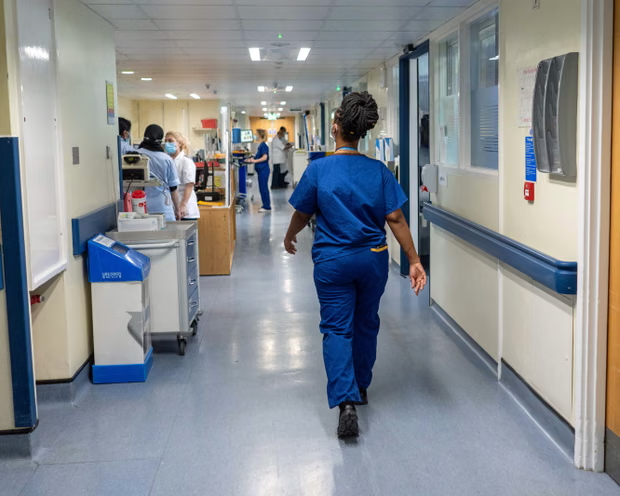
The British healthcare system faces a deep crisis as nursing shortages threaten patient safety daily. A comprehensive survey has revealed that almost two-thirds of nurses worry about these dangerous shortfalls. Frontline professionals argue that current staffing levels cannot guarantee proper clinical care across the United Kingdom. The Royal College of Nursing issued a stark warning regarding these growing systemic vulnerabilities today.
Medical needs are becoming increasingly complex because the British population is ageing quite rapidly. This combination of heavy demand and low staffing creates a very hazardous healthcare environment. Nurses struggle to manage heavy workloads while trying to maintain their usual high standards. Every day brings new operational challenges that push dedicated medical professionals to their absolute limits. The union believes that immediate government intervention is necessary to prevent further systemic decline.
More than thirteen thousand nurses participated in this major national study this year. The compiled data paints a very troubling picture of daily life inside British hospitals. About sixty-four percent of respondents stated that registered nurse numbers were dangerously inadequate. These shortages occurred during their most recent shifts and directly impacted clinical delivery. Such figures highlight a pervasive issue that affects multiple medical departments across the nation.
The report indicates that twenty-two percent of shifts operate well below safe limits. In these specific situations, essential patient care becomes significantly compromised on a regular basis. Nurses report a high risk of harm coming to both patients and staff. Working under these intense conditions creates immense psychological stress for the healthcare workforce. Many professionals feel that they are constantly fighting an uphill battle against time.
Individual testimonies from the frontline reveal the true human cost of this crisis. One emergency department nurse described a recent shift as completely unsafe for everyone. They remarked that avoiding serious patient harm felt like a genuine medical miracle. Such experiences are becoming alarmingly common in busy urban hospitals across the land. Staff members frequently raise formal alarms about these unacceptable risks to their management.
Professor Nicola Ranger leads the Royal College of Nursing with clear professional determination. She intends to address these critical issues directly during the upcoming annual congress. The general secretary will urge government ministers to establish mandatory minimum staffing laws. These statutory limits would ensure that hospitals always maintain a safe number of nurses. She believes that legislative action is the only way to protect vulnerable patients.
Widespread vacancies among registered nurses create an inherently unsafe environment for modern healthcare delivery. This fundamental risk multiplies when dealing with patients who suffer from multiple complex conditions. Professor Ranger described this current situation as a deadly mix for the public. The health service demands more from its workers while providing fewer resources overall. Consequently, the entire nursing profession feels unfairly set up for structural failure.
Frail and elderly patients face the greatest risks from these ongoing personnel shortages. Older people often require constant direct supervision to prevent dangerous accidental falls in wards. One specialist nurse explained that one-to-one care is currently impossible to achieve consistently. Without adequate eyes on the floor, elderly individuals remain highly vulnerable to injury. This reality causes deep distress to nurses who want to provide dignified care.
Statistics show that workforce growth slowed down significantly over the last twelve months. This represents the lowest rate of nursing staff increase seen in eight years. Meanwhile, the number of doctors grew much faster over the last decade. Specifically, medical doctor recruitment outpaced nursing growth by fifty-one percent during that time. This clear imbalance leaves wards severely understaffed despite an increase in senior physicians.
The Department of Health and Social Care responded to these serious union concerns. A government spokesperson called nurses the vital backbone of the National Health Service. They acknowledged that these professionals support vulnerable citizens through incredibly difficult personal moments. The government insists it wants to provide the tools needed for world-class care. However, frontline workers feel these official statements do not match their daily reality.
Official figures suggest that sixteen thousand new nurses have joined the workforce recently. This recruitment drive took place after the pivotal general election in July twenty-four. Furthermore, a new ten-year workforce plan will soon outline key structural improvements. This upcoming strategy aims to improve working conditions and deliver higher-quality professional training. Ministers hope these measures will eventually create more fulfilling roles for NHS staff.
Despite these promises, hospital bosses warn of imminent and deep financial cuts this year. A separate survey conducted by the NHS Alliance highlights severe budgetary pressures nationwide. Health trust leaders fear they do not have enough money to sustain services. Many organisations are currently preparing to reduce their offerings to balance the books. This financial strain threatens to undo recent progress made in reducing patient wait times.
According to the trust leaders, sixty-four percent expect to cut vital services soon. Additionally, eighty-three percent fear that financial constraints will harm planned patient care pathways. Emergency departments are also at risk, with seventy-eight percent of leaders expressing worry. Most alarmingly, fifty-seven percent expect to reduce clinical staffing levels to save money. These statistics suggest that the nursing shortage could worsen in the coming months.
Ciaran Devane serves as the chief executive of the prominent NHS Alliance organisation. He noted that the health service was actually starting to turn a corner. Public satisfaction has improved recently, and overall waiting times have started to drop. However, he warned that this fragile progress remains at risk of total reversal. Impending service closures and job cuts could severely damage the entire healthcare system.
The health service clearly requires additional funding to perform its duties safely and effectively. Without financial support, hospital trusts cannot maintain safe staffing levels for their patients. The tension between budgetary limits and patient safety continues to grow more acute. Medical staff find themselves caught between administrative targets and real clinical needs. This situation creates a profound sense of anxiety across the entire health service.
The Department of Health and Social Care defended its current financial record. A spokesperson stated that the government provides record investment to support health leaders. They have also boosted general productivity and introduced advanced technology to improve efficiency. Because of these efforts, waiting lists have reached their lowest point in years. Over half a million fewer people are currently waiting for hospital treatment.
The government has also expanded community diagnostics and created brand new surgical hubs. More general practitioner appointments are available to help patients see doctors much faster. While these administrative achievements are notable, the nursing crisis remains a major threat. The contrast between government statistics and frontline experiences highlights a deep political divide. Resolving this debate will determine the future safety of British healthcare for generations.
Related News:
 Hospice Cuts Raise Alarm Across England Amid Funding Crisis
 The diet that can significantly ease symptoms of IBS
 Celebrities and Charities Demand UK Government Act on Child Poverty
 Experts Warn on Home Birth Risks, Call for Skilled Midwives
 Experts Urge Legal Right to Timely Cancer Care
 Patients to Test Health at Home to Ease NHS Winter Pressure
 London’s Childlessness Crisis: Schools Closing as Families Shrink
 North Sea oil workers must lose weight or face job loss
 Crisis charity to become landlord amid UK housing emergency
 No link found between paracetamol in pregnancy and autism
 Shouting Works Best to Deter Gulls, UK Study Finds
 Reeves rejects £1bn plea for NHS redundancy payouts
 Leading doctors issue warning amid ‘bad’ flu season
 Stroke Patient Mistaken for Drunk, Care Delayed
 ‘Traumatic Wait’: Northern Ireland Women Face Breast Cancer Delays
 Welsh Government Christmas 2020 Lockdown Criticised
 Coffins Now Too Large to Cremate Amid Rising Obesity Crisis
 NHS paediatric leave parents waiting months for answers
 Catherine urges end to stigma around addiction
 Five-Year-Old Dies After Rare Tonsil Surgery Complication
 Fibromyalgia Patients Struggle as NHS Fails to Provide Care
 More Patients Now Contacting GPs Online, Data Shows
 Streeting launches review into mental health and ADHD diagnoses
 People in England’s Poorest Areas Face Higher Lung Health Emergencies
 Minor A&E Visits Surge Across England as Hospitals Face Pressure
 Children to Receive Home Vaccines as England Acts
 UK Enforces Junk Food Ad Ban Before 9pm
 Patients Collapsing in NHS Corridors, Watchdog Warns
 Offenders to Receive Health Support During Probation Appointments
 NHS Violence Crisis: Staff Face Daily Assaults
 NHS corridor care crisis sparks fears over patient safety
 Jess’s Rule Urges GPs to Rethink Persistent Symptoms
 UK Glaucoma Rise Signals Looming Eye Health Crisis by 2060
 Small risk warning raised over weight-loss jabs in UK review
 Pneumonia Surge Pushes England Emergency Cases Higher
 Streeting moves on doctor pay to end strike dispute
 UK reports baby formula toxin poisoning cases across the country
 Children of Close-Relative Parents Face Higher Mortality Risk in England
 Campaign Demands NHS Action on Placenta Accreta Diagnosis
 NHS Bone Cement Shortage Threatens Surgeries
 Placenta Accreta Warning as Hunt Urges Action
 Half of Britons Avoid GP When Ill, Survey Reveals Growing Concern
 NHS Maternity Units Cover Up Harmful Childbirth Errors
 Drop in Overseas Workers Sparks ‘Car Crash’ for UK Hospitals
 Weight-loss drugs may transform heart attack recovery
 Cancer Death Rate in Britain Falls by Nearly a Third
 Palantir NHS Contract Sparks Fears Over Data Power
 UK Patients Face Long Journeys as Pharmacies Cut Hours
 UK Biobank Health Data Leaks Raise Privacy Concerns
 NHS Plans to Cut Overseas Workers Labeled Overambitious
 Kent Meningitis Outbreak Claims Two Young Lives as Cases Rise
 Meningitis Cases in Kent Outbreak Rise to 27
 Palantir Boss Defends NHS Deal Amid Government Break Clause
 NHS Staff Shortages Stifling Recovery for Stroke Survivors
 Unions Raise Concerns Over Doctors’ Pay Dispute
 Wes Streeting Accuses Doctors of Torpedoing Pay Deal
 Private Profits From NHS Contracts Spark Urgent National Debate
 Crisis in NHS Surgery Scheduling Hits Patients Hard
 NHS Safety Fears as Nurses Cover Doctor Gaps
 New Scan Offers Hope for Faster Endometriosis Diagnosis
 New AI Tool To Target Obesity Risk And Transform NHS Care
 Barrister Criticises Trial After Suicide Case Verdict
 NHS Drug Deal Faces Legal Threat Over US Trade Agreement
 Crisis in Care: Children Stuck in A&E for Days
 Empowering the Elderly or Shifting the Blame to Individuals?
 England Faces Rising Lyme Disease Cases Amid New Vaccine Hopes
 Record Spending Highlights Growing Crisis In National Health Service
 The Race for Radical Change in Westminster
 Clean Air Initiatives Spark Major Fall in London Hospital Admissions
 Swimming Champion Demands Urgent Action on Brain Cancer
 Nursing Workforce Crisis Leaves Disabled Patients at Risk
 UK Heatwave: Why Extreme Humidity is Making June Feel Unbearable
 Mortuary Crisis Exposed at Scandal-Hit NHS Trust
 The Hidden Revival of a Fatal Infection on British Soil
 NHS Urges Investigation For Irregular Periods
 BMA Faces Unprecedented Staff Cuts Amidst Severe Financial Turmoil
 Trump Immigration Cuts Threaten US Caregiver Stability
 Stricter Rules Proposed to Shield Children from Vaping
 UK Schools Struggle as Classrooms Top 40C
 London Tube Heat Reaches Dangerous Levels