
Published: 20 May 2026. The English Chronicle Desk. The English Chronicle Online.
A major coalition of leading online safety campaigners has urged Prime Minister Keir Starmer to reconsider a blanket ban on social media for teenagers. These influential groups argue that the United Kingdom should reject the restrictive model recently introduced by the Australian government. Instead, they propose a more nuanced regulatory framework that specifically targets platforms failing to meet strict safety standards. The campaigners want the government to block under-sixteens only from applications that contain dangerous or addictive features. This joint intervention arrives at a critical moment as ministers deliberate on future digital regulations. The debate over how best to protect young people in the digital age is intensifying rapidly.
The high-profile appeal was coordinated by the NSPCC, the Molly Rose Foundation, and Smartphone Free Childhood. These prominent organisations sent a joint letter directly to the prime minister outlining their specific concerns. They strongly believe that a binary debate over total bans oversimplifies a highly complex societal issue. Rather than banning all social media, they argue access should be an earned privilege for tech companies. Under their proposed model, platforms must actively prove their digital environments are safe for younger users. If a tech company cannot demonstrate high safety standards, its services should be restricted. This approach shifts the burden of care entirely onto multibillion-dollar technology corporations.
The campaigners specifically highlighted several highly controversial features that pose severe risks to vulnerable teenagers. These features include infinite scrolling mechanisms, disappearing direct messages, and constant, aggressive push notifications. Such design elements are intentionally engineered to maximise user engagement and keep children online longer. The letter argues that these specific functionalities should be heavily restricted or entirely removed for minors. Tech platforms must not be allowed to offer such risky features to young British teenagers. The groups want a system where apps are thoroughly vetted before children can access them. This would also apply to any new features launched by these companies in the future.
The timing of this letter is highly strategic for the ongoing political debate. It was delivered just one week before the official closing of a major government consultation. This nationwide consultation is actively exploring various potential measures to improve online safety for children. Among the options being considered is a potential under-sixteen ban on popular social media networks. Ministers are also currently seeking public views on restricting livestreaming and real-time location sharing features. The government has already pledged to take firm legislative action once the consultation concludes. However, the precise nature of that upcoming action remains a subject of intense debate.
The Australian model serves as a key point of comparison for British policymakers. In Australia, access to popular apps like Instagram and TikTok is legally restricted for under-sixteens. Their strict legislation applies to any digital service enabling social interaction between multiple users. It also covers any online platform that allows users to publicly post material. British campaigners are explicitly calling for a different, more flexible system based on platform safety. They fear a total age ban would simply create a dangerous digital cliff edge. Teenagers might find ways to bypass age verification, leaving them entirely unprotected on unregulated sites.
This new letter represents a significant unification of various positions across UK civil society. Previously, individual campaigns held slightly different views on the necessity of a formal age limit. The Molly Rose Foundation and the NSPCC had traditionally stopped short of backing total bans. They prefer to focus heavily on enforcing safe product design across the entire tech industry. Meanwhile, Smartphone Free Childhood has actively campaigned for strict smartphone restrictions for all under-sixteens. Despite these previous differences, the organisations have now aligned around a single powerful principle. They all agree that access to children must be earned by tech firms.
Joe Ryrie, the director of Smartphone Free Childhood, emphasized the deep significance of this moment. He stated that civil society organisations are now standing together with a completely unified voice. Ryrie believes that tech companies have treated access to children as an automatic right for too long. The new consensus demands that this access be treated strictly as a hard-earned privilege. This sentiment is shared by Andy Burrows, the chief executive of the Molly Rose Foundation. The foundation was established by the family of Molly Russell, a tragic British teenager. Molly took her own life after viewing deeply harmful and distressing content online.
Burrows stated that safe app design must become an absolute precondition for doing business. Tech firms should not operate in the United Kingdom if they ignore child safety. The influential letter also received strong signatures from several other prominent digital rights organisations. These included the Future of Technology Institute thinktank and the campaign group known as FlippGen. The People vs Big Tech coalition also added its substantial weight to the appeal. Together, these groups represent a formidable front against unregulated social media algorithms and features. They are demanding immediate, decisive, and intelligent legislative action from the current Labour government.
The responsibility for overseeing the UK legal framework for social media rests with Ofcom. The communications watchdog will enforce the rules established under the landmark Online Safety Act. This existing legislation already requires platforms to protect children from various forms of illegal content. However, campaigners believe the current framework must go much further to address systemic design risks. They argue that algorithmic loops and addictive features are just as harmful as explicit content. Ofcom would likely be tasked with vetting platforms under the model proposed by campaigners. This would significantly expand the regulatory responsibilities of the UK communications watchdog.
The government has responded to the joint letter with an official public statement. A government spokesperson stated that ministers completely share the determination to keep children safe online. The spokesperson clarified that the ongoing debate is not about whether the government will act. Instead, the administration is focusing on precisely how it will implement these necessary protections. Ministers are currently reviewing all evidence submitted during the extensive online safety consultation process. The final decision will shape the digital landscape for millions of British children. Keir Starmer now faces a choice between a total ban or targeted design regulation.
The debate highlights a growing global consensus that the status quo is entirely unacceptable. Parents, teachers, and politicians increasingly agree that unregulated social media harms youth mental health. However, the tech industry frequently argues that total bans are practically impossible to enforce. Digital experts point out that tech-savvy teenagers routinely utilise virtual private networks to bypass restrictions. By focusing on safe app design, campaigners hope to create a more enforceable system. This approach aims to protect children regardless of the specific platform they choose to use. The outcome of this consultation will be watched closely by international policymakers.
As the consultation deadline approaches, pressure on the prime minister continues to mount significantly. The unified stance of these trusted charities carries immense emotional and political weight. Starmer must balance economic tech interests with his stated commitment to national social wellbeing. The decisions made in the coming months will define the UK digital regulatory landscape. For families affected by online harm, these legislative discussions are deeply personal and urgent. The English Chronicle will continue to track this vital story as it develops further. Safe internet access remains one of the defining social challenges of the modern era.
Related News:
 Reeves Faces Setback as Labour May Miss Homes Target
 Kate Winslet to Narrate Film Highlighting King’s Environmental Mission
 Trump’s UK Ambassador Urges North Sea Drilling to Strengthen US Ties
 UK Bans Fake Numbers: Scammers Lose Their Trick
 Millionaires group urge Reeves to introduce wealth tax to ‘lift kids out of poverty’
 Reeves rejects £1bn plea for NHS redundancy payouts
 PM Condemns Leaks, Vows Loyalty to Ministers and Stability
 Inside the Helpline Protecting Missing Children in the UK
 PlayStation PS5 Deals Hit Lowest Prices Ahead of Black Friday
 Five-Year-Old Dies After Rare Tonsil Surgery Complication
 Starmer Says Labour’s Economic Plan Needs Years to Deliver
 UK unemployment rises to four-year high of 5.1% before budget
 Wiltshire Police Use Lasso to Catch Rampaging Village Goat
 Coasting Drinks: The Trend Redefining Alcohol Enjoyment This New Year
 Rising Hate Crimes Threaten Safety on UK Public Transport
 Starmer Faces Parliamentary Battles Over UK-EU ‘Reset’ Plan
 Met Police Vetting Failures Let Serial Rapists Remain
 Google Employee Claims Redundancy After Harassment Report
 Fatal Bolton Taxi Crash Claims Three Teens and Driver
 ScottishPower Tops List of Worst UK Energy Suppliers
 Judi Dench Champions Fight to Save London’s Green Spaces
 Crowborough Camp Welcomes First Asylum Seekers
 BBC Funding Crisis: Tim Davie Warns of Jeopardy Ahead
 Storm Chandra floods Somerset, triggers major incident declaration
 Artificial intelligence will cost jobs, admits Liz Kendall
 Older Women Vanish from BBC Screens, Review Confirms Bias
 Mandelson Faces Police Inquiry Over Epstein Leak
 Streeting moves on doctor pay to end strike dispute
 UK reports baby formula toxin poisoning cases across the country
 Morgan McSweeney downfall shocks Labour leadership
 Send spending gap leaves deprived areas behind
 Hidden Crisis: Domestic Abuse Suicide Toll in UK
 UK Unemployment Rate Climbs to 5.2% Peak
 Farage Unveils Reform UK Frontbench Team
 BBC World Cup Presenting Duties Shared Among Trio
 Placenta Accreta Warning as Hunt Urges Action
 Wales Approves Assisted Dying Bill Consent
 CPS Updates Guidance on Honour-Based and Dowry Abuse
 Rolling Hills and Heritage: A Car-Free Break in Leicestershire
 Asylum Seekers to Work After Year-Long Wait
 Inquiry into HMRC child benefit errors launched by NAO
 Rising Costs Force Families to Rethink Days Out
 Scott Mills Sacked by BBC Over Personal Conduct Claims
 Palantir Boss Defends NHS Deal Amid Government Break Clause
 Relationship with Trump may be beyond repair, Starmer warned
 UK Government Poised to Revive Stalled Hillsborough Law
 Home Office Faces Legal Risks Over Asylum Hotel Living
 Crisis in NHS Surgery Scheduling Hits Patients Hard
 Blue Badge Abuse: The Rising Tide of Public Hostility
 Scott Parker Leaves Burnley After Premier League Drop
 Silent Tracks: Rail Line Without Passengers
 RFU Backs Borthwick Despite England’s Poor Six Nations
 Major test for Labour as polls open in Great Britain
 Keir Starmer Struggles to Secure His Grip on Downing Street
 Farage Faces Standards Probe Over Cash Property Purchase
 Closing the Gap: UK Pensions Commission Demands Action
 Reeves to Fast-Track Clean Energy Amid Iran Crisis
 The Battle for Wembley Sparking Unprecedented Legal Warfare
 Record Spending Highlights Growing Crisis In National Health Service
 Secret Role of UK Security Services in Troubles Amnesty Law
 Tube Strike Brings Capital to a Standstill Over Shift Disputes
 BP Stands Firm on Amanda Blanc Amid Boardroom Storm
 Teaching Machines Right From Wrong in the Digital Age
 UK House Prices Drop For Third Month Due To War Fears
 The Hidden Crisis Eroding Trust in British Communities
 Deepfake Abuse on X Sparks Safety Concerns for Dissidents
 Stolen Mobiles Could Soon Become Useless Bricks
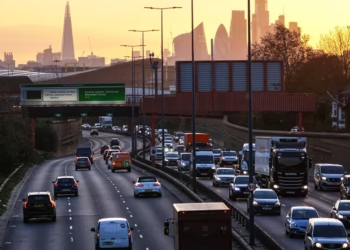 Clean Air Initiatives Spark Major Fall in London Hospital Admissions
 United Kingdom Politics Worse Now Than Before Brexit, Warns MP
 Russian Tanker Captain Remanded in UK Court After Channel Seizure
 Shocking Zoo Incident Sparks Attempted Murder Probe
 The Hybrid School Revolution Defying the Social Media Ban
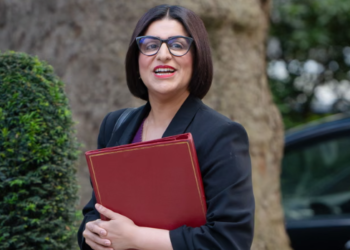 UK Care Crisis: Row Explodes Over New Visa Settlement Rules
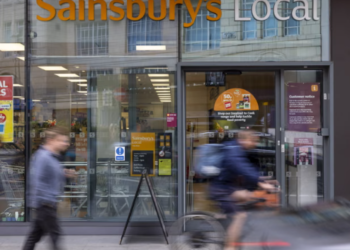 Sainsbury’s Boss Optimistic As Grocery Inflation Eases
 NHS Urges Investigation For Irregular Periods
 US Airman Avoids British Court in Indecent Exposure Case
 Farage Warns Sky News Following Financial Inquiry
 Ann Widdecombe, Formidable Political Figure, Dies at 78
 UK Schools Struggle as Classrooms Top 40C
 Westminster Council Threatens Charing Cross Soup Kitchen