Published: 1 September 2025. The English Chronicle Desk
Eastern Afghanistan has been left reeling after a powerful earthquake measuring 6.0 on the Richter scale struck late on Sunday night, killing at least 800 people and injuring more than 2,800 others. The tremor, which hit Kunar province at 11:47pm local time (8:17pm GMT), caused widespread destruction across villages, toppled homes and shook buildings as far away as Kabul and even Pakistan’s capital, Islamabad.

The US Geological Survey reported that the quake was shallow, occurring at a depth of only eight miles, making it particularly destructive. Its epicentre was located just 17 miles from Jalalabad in Nangarhar province. The initial jolt was followed by multiple aftershocks, including one measuring 4.5 and another registering 5.2 on the Richter scale, both contributing to the chaos and destruction.
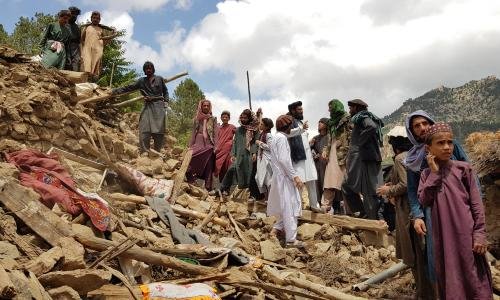
Entire villages in Kunar have been reduced to rubble. Witnesses described scenes of desperation as men, women, and children scrambled to dig through debris with bare hands in the hope of finding survivors. “Children are under the rubble. The elderly are under the rubble. Young people are under the rubble,” one villager told the Associated Press, appealing desperately for outside help.
The Taliban-run interior ministry confirmed that the majority of deaths have been reported in Kunar province, with additional fatalities in Nangarhar. Many of the injured have been airlifted by helicopters to hospitals in Jalalabad and Kabul, where harrowing images show victims on stretchers being rushed into overcrowded wards. Doctors say resources are already stretched thin and the scale of injuries is overwhelming.

International aid agencies have begun mobilising. The United Nations expressed solidarity with Afghanistan, with Secretary General António Guterres stating: “I stand in full solidarity with the people of Afghanistan after the devastating earthquake that hit the country earlier today.” UN teams on the ground have been distributing emergency assistance and lifesaving supplies, but officials warn that access to remote villages remains extremely difficult due to poor infrastructure and ongoing security challenges.
The disaster could not have struck at a worse time for Afghanistan. The country is already grappling with severe drought, widespread poverty, and a deepening humanitarian crisis worsened by political isolation since the Taliban takeover in 2021. Filippo Grandi, the UN High Commissioner for Refugees, described the quake as a “perfect storm,” adding: “That’s a country already suffering from a multiplicity of crises. And this earthquake, likely to have been quite devastating, is only going to add to the misery.”
Oxfam’s chief executive, Hamila Begun, echoed concerns about the challenges of delivering aid in Taliban-controlled territory, particularly due to restrictions on women’s rights. She noted that humanitarian organisations have had to scale back operations because of “operational difficulties,” warning that this has left local communities even more vulnerable in the face of natural disasters.
For many Afghans, this catastrophe revives the painful memory of the October 2023 earthquake that killed thousands and was regarded as one of the country’s deadliest natural disasters in decades. Survivors of the latest tremor fear history is repeating itself, with families once again left homeless, grieving, and uncertain about what the future holds.
Rescue operations remain ongoing, but officials warn that the death toll could rise further as many remain trapped beneath collapsed buildings. The need for urgent medical aid, food supplies, shelter, and international support is becoming ever more pressing. With villages wiped out and the fragile Afghan healthcare system overwhelmed, this latest tragedy underscores once again the vulnerability of the country, situated at the meeting point of the Indian and Eurasian tectonic plates, where deadly earthquakes are an ever-present threat.

As Afghanistan struggles to recover, the world watches anxiously to see whether sufficient relief can reach those most in need. For now, grief hangs heavy over the eastern provinces, where hundreds of families mourn their loved ones lost beneath the rubble of homes that crumbled in seconds.
Related News:
 The Explosive Fallout of a Broken Alliance Between Thailand and Cambodia
 Philippine Supreme Court Halts Impeachment of Sara Duterte, Fuelling 2028 Election Speculation
 Thailand and Cambodia Agree to Immediate Ceasefire Following Regional Diplomacy
 Tensions Flare as Thailand Accuses Cambodia of Breaching Hours-Old Ceasefire Amid Border Clashes
 European Leaders Insist Peace Talks Must Include Kyiv as Trump-Putin Summit Nears
 Suicide Bombing at Islamabad Court Kills 12, Injures Dozens
 Shook the ground under my feet: Panic as car blast hits near Delhi’s Red Fort
 Delhi Car Blast Kills Eight, Declared Terror Incident
 Pakistan parliament approves expanded powers for army chief
 Truck Crashes into South Korean Market, 2 Dead, Dozens Hurt
 Japan Deploys Police to Curb Deadly Bear Attacks
 Hasina Rejects Allegations Ahead of Bangladesh Tribunal Verdict
 Early Trends Suggest Modi’s Alliance Leading in Key Bihar Election
 Tragedy Strikes Indian Pilgrims in Saudi Bus Accident
 Israeli Strike Kills 13 Near Palestinian Camp in Lebanon
 Trump Says Crown Prince Knew Nothing About Khashoggi Death
 India’s COP30 Delay Raises Global Climate Concerns
 Historic Floods Devastate Thailand and Southeast Asia
 Southern Lebanon reels as Israeli strikes shatter communities
 Sri Lanka Floods Leave 56 Dead, Dozens Missing
 India’s Labour Law Overhaul Sparks Fierce Debate
 Video shows Israeli troops kill Palestinians after surrender
 Families wait in agony for missing after Hong Kong tower blaze
 Tokyo court rules Japan’s same-sex marriage ban constitutional
 Chinese & Japanese Boats Clash Near Disputed Islands
 Putin Meets US Envoy Amid Key Ukraine Peace Talks
 Indonesia to Repatriate Two Dutch Drug Convicts
 Kinnock’s Rebuke Echoes Loudly as Corbyn Allies Launch Left-Wing Breakaway: “A Gift to Farage”
 Trump Administration Dismisses 17 Immigration Judges, Sparking Debate Over Judicial Independence
 England’s Euro Odyssey: A Tale of Grit, Glory and the Lionesses’ Miraculous March to the Final
 UK Must Act with Courage and Clarity on Israel-Palestine Conflict, Says Foreign Affairs Committee Report
 Northern Ireland Family of Three Shot Dead in Maguiresbridge Home Incident
 Seventeen Dead as Russia Targets Ukrainian Prison in Devastating Airstrike
 Tottenham Takes On Newcastle
 Gen Z Embraces the Big, Bold ‘Fake’ Indian Wedding Party Trend
 Singapore Corruption Scandal: Details Emerge on Iswaran’s Luxury Flight and Ties to Tycoon Ong Beng Seng
 Trump Threatens 100% Tariff on Nations Importing Russian Oil Amid India Standoff Over Ukraine War
 Radioactive Leak at UK’s Nuclear Warhead Base Sparks Outcry Over Safety and Secrecy
 Mutual Inconvenience: Why Alaska Was Chosen for the Trump-Putin Summit on Ukraine
 China’s crackdown on civil servant perks sparks economic concerns
 Terence Stamp, ’60s British Film Legend and Star of Superman, Dies at 87
 Hong Kong Summons UK and Australian Envoys Following Asylum Grants to Democracy Activists
 Is the UK Ready to Put Boots on the Ground in Ukraine? Assessing Military Capacity and Challenges
 Costa Blanca Holiday Horror as Food Poisoning Outbreak Hits Four-Star Hotel
 British Couple Among 16 Killed in Lisbon Funicular Tragedy
 Protests Expected as Israeli Arms Firms Join Global Defence Trade Fair in London
 Trump Appears Sidelined as Israel’s Unprecedented Strikes Hit Qatar
 Conservative Influencer Charlie Kirk Fatally Shot During University Debate
 Charlie Kirk’s Death Sparks Fierce Debate Over Free Speech, Gun Rights and Political Decency
 Thousands Gather in London to Protest Donald Trump’s Second UK State Visit
 British AI Startup Outshines Human Forecasters in Global Prediction Contest
 Las Vegas Faces Decline as Rising Costs Drive Tourists Away
 Dembélé and Bonmatí Shine as Ballon d’Or Winners in Glittering Paris Ceremony
 Liverpool Vs outhampton Set for Carabao Cup Clash at Anfield
 Denmark Investigates Professional Drone Incursions Across Multiple Airports, No Evidence of Russian Involvement
 UK Fighter Jet Purchase Could Breach Nuclear Treaty, Warns CND
 ICC Women’s World Cup 2025: India to Host as Pakistan Fixtures Moved to Neutral Venues
 A Third of EU Citizens in UK Report Discrimination by Public Bodies Post-Brexit
 Arsenal Showcase Depth and Flexibility as Arteta Eyes Title Challenge
 Public Trust in SNP Hits Historic Low Amid NHS Concerns
 Cooper Unveils £4m Cyber Plan Against Russian Hackers
 Johnson Suggests Mandelson Linked to China Spy Controversy
 Zelensky to Urge Missile Aid as Trump and Putin Plan Summit
 Rachel Reeves signals welfare reform ahead of key budget
 Ireland Votes as Two Women Compete for Presidency
 WW2 Pilot’s Long-Lost Crash Site Unearthed in Essex
 Experts Warn Russia’s Burevestnik Missile Could Destabilise Arms Control
 Johnson Approved China’s London ‘Super-Embassy’ in 2018
 Tragedy on Lizard Island: Cruise Passenger Dies
 Just Stop Oil Protesters Convicted Amid Climate Defence Row
 US Senate Passes Funding Bill to End Historic Shutdown
 US Justice Department Files Lawsuit Against California Over Partisan Voting Maps
 Pokémon to open world’s first theme park in Japan next year
 Trump Deploys DHS to Charlotte in Major Arrest Operation
 Orban Says Ukraine Has ‘No Chance’ as EU Support Continues
 Haiti Qualifies for World Cup Despite Coach Never Visiting Country
 Pentagon Officials in Ukraine to Discuss War End
 Vietnam Battles Deadly Floods as Rains Continue
 Venezuela Threatens Nobel Winner Machado with Fugitive Status
 Two National Guard Soldiers Critically Injured Near White House