Published: 30 September ‘2025. the English Chronicle Desk
In a stark blow to women’s education and professional aspirations in Afghanistan, the Taliban has imposed a nationwide internet shutdown, cutting off one of the last avenues of opportunity for Afghan women. The decision, announced on Tuesday, is indefinite and has left many, particularly students and young professionals, feeling isolated and powerless. For women like Fahima Noori, who had pursued higher education in law and midwifery and worked in a mental health clinic, the internet had represented a lifeline to knowledge, professional growth, and connection with the wider world. That connection has now been severed.
Since the Taliban regained control in 2021, the country has seen sweeping restrictions on women’s rights. Girls over the age of 12 have been barred from formal education, and women face severe limitations on employment opportunities. Recently, university curricula have been purged of books authored by women, reflecting the regime’s strict interpretation of Islamic Sharia law and its control over knowledge production. For many Afghan women, the internet had become the only channel to continue their education and participate in professional life.

Fahima, whose name has been changed for her protection, expressed despair at the abrupt halt to her online studies. “I recently enrolled in an online university and had hoped to finish my studies and find an online job. Our last hope was online learning. Now even that dream has been destroyed,” she said. Her experience mirrors that of countless women across the country who had begun to rely on virtual platforms to maintain educational continuity and professional development amidst severe domestic restrictions.
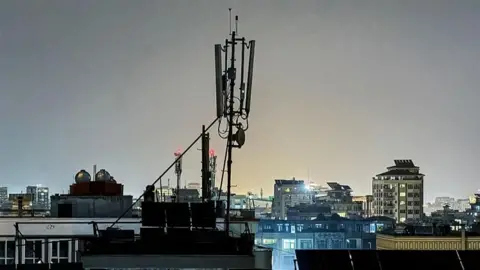
Reports indicate that in the weeks leading up to the nationwide shutdown, the Taliban began severing fibre-optic internet connections in multiple provinces, citing concerns about morality. Observers had warned that these initial disruptions could be a precursor to a complete blackout, and those fears were realised on Tuesday when the country entered what has been described as a “total internet blackout.” According to the independent internet monitoring organisation Netblocks, this shutdown has disrupted essential services, hampered communications for international news agencies in Kabul, and affected mobile internet and satellite television across Afghanistan. Local media reported that flights from Kabul airport have also been affected, reflecting the broad impact of the shutdown on daily life and infrastructure.
The human impact of the blackout has been profound. Students and professionals have described a sense of helplessness and isolation. Shakiba, a resident of northern Takhar province who was pursuing midwifery online, explained, “Before this, I studied midwifery, but unfortunately that programme was banned for women. The only hope left for us was the internet and online learning. We want to study. We want to be educated. We want to help people in our future. When I heard that the internet had been cut, the world felt dark to me.” Fahima similarly reflected on the loss of opportunity: “My two sisters and I were studying online. We used to stay updated on news and technology through the internet, but now we cannot keep up or learn new skills. We dreamed of finishing our education and helping our father financially, but now… we all sit at home doing nothing.”
The shutdown follows a series of other restrictive measures imposed by the Taliban, including the removal of approximately 140 books authored by women from university teaching systems. Titles spanning topics such as science, technology, and human rights were targeted, with the regime declaring them to be “of concern” due to alleged contradictions with Sharia law and Taliban policies. The ban extends to courses on human rights and sexual harassment, further constraining the intellectual and professional development of women in the country.
The Taliban has justified these measures by stating that they aim to respect women’s rights in accordance with Afghan culture and Islamic law. However, international observers argue that these restrictions are fundamentally discriminatory and severely undermine women’s access to education, employment, and civic participation. The internet blackout, in particular, has been widely condemned as a policy that deepens social isolation and prevents Afghan women from engaging with the wider world, both educationally and economically.
The consequences of this shutdown are already being felt in practical terms. Beyond individual frustration and despair, essential services, communication networks, and even economic activity have been disrupted. The closure of online educational platforms and professional resources leaves thousands of women unable to continue learning or working remotely, depriving them of both knowledge and financial independence. Analysts warn that the long-term impact could be catastrophic for Afghan women, entrenching cycles of dependency and limiting the potential for future societal progress.
As the Taliban continues to enforce its interpretation of Sharia law, women across Afghanistan are facing unprecedented limitations on their rights, freedoms, and opportunities. The internet, once a symbol of hope and resilience, has been stripped away, leaving many with no practical means to pursue education or contribute to society. In this environment, the future for Afghan women remains deeply uncertain, with their personal aspirations and societal participation severely curtailed under the regime’s increasingly restrictive policies.

In summary, the Taliban’s internet shutdown represents a severe blow to Afghan women, extinguishing a critical avenue for education, work, and connection with the global community. For individuals like Fahima and Shakiba, who had sought to continue their studies online and contribute meaningfully to their families and communities, the move is a devastating setback. The broader implications for Afghan society are equally grave, highlighting the intersection of gender, technology, and authoritarian governance in a country where women’s rights are under persistent threat.
Related News:
 Kinnock’s Rebuke Echoes Loudly as Corbyn Allies Launch Left-Wing Breakaway: “A Gift to Farage”
 Post Office Scandal Compensation Tops £1 Billion as Victims Finally See Justice
 UK and Norway Forge Stronger Ties Through Joint Sanctions and Enhanced Defence Cooperation
 Exclusive: Leaked Documents Reveal Khan’s Controversial Road Policy Overhaul – Drivers Warn of ‘Final Nail in Coffin’
 NHS Resident Doctors Vote for Strike Action Amid Escalating Pay Dispute
 UK Banks Granted Reprieve as BoE Delays Basel III Capital Rules Until 2028
 Trump Administration Dismisses 17 Immigration Judges, Sparking Debate Over Judicial Independence
 England Grapples with Unprecedented Bluetongue Virus Outbreak: Entire Nation Declared Infected Zone
 Justice Deferred, Not Denied: Government Orders Full Statutory Inquiry into Orgreave Clash Four Decades On
 Northern Ireland Family of Three Shot Dead in Maguiresbridge Home Incident
 West End Exposed as London’s Knife Crime Epicentre Amid Alarming Surge in Violence
 Singapore Corruption Scandal: Details Emerge on Iswaran’s Luxury Flight and Ties to Tycoon Ong Beng Seng
 Mystery Wallaby Spotted on Norfolk-Suffolk Border Sparks Police Appeal
 Manchester Airport Faces Delays After EasyJet Planes’ Wings ‘Clip’ on Runway
 Peter Andre Breaks 16-Year Silence with Scathing Statement Against Katie Price
 UK Weather: Heat Alerts Extended as Temperatures Set to Reach 30°C This Weekend
 Access to Iconic Cornish Beach Cut Off by National Trust Amid Safety Concerns
 Where Is Prince William and Kate Middleton’s New House? Inside the Historic Lodge Set to Become Their ‘Forever Home’
 Costa Blanca Holiday Horror as Food Poisoning Outbreak Hits Four-Star Hotel
 Hundreds of Swimming Pool Closures Leave Children ‘At Risk of Drowning’, Union Warns
 Xi, Putin and Kim Display Unified Front at Massive Beijing Military Parade
 British Holidaymaker’s Tragic Death in Greece Confirmed as Drowning
 India Triumph in Dubai Amid Unexpected Twists
 Public Executions in Gaza City Captured on Video Amid Ongoing Conflict
 Macron Phones Trump Over Traffic Jam in New York
 Denmark Investigates Professional Drone Incursions Across Multiple Airports, No Evidence of Russian Involvement
 Comey Indictment Deepens Fears of Political Retribution Under Trump
 Bournemouth Stun Fulham with Dramatic Comeback in Premier League Thriller
 Misinformation and Political Pressure Force Weston-super-Mare to Abandon Refugee Sanctuary Plan
 Arsenal Showcase Depth and Flexibility as Arteta Eyes Title Challenge
 UK Affirms No Relaxation of Visa Rules for India Amid Trade Push
 Nobel Peace Prize Officials Probe Suspicious Online Bets
 Women Challenge Meta Over Targeted Ads After Miscarriage
 Vice President Vance Warns of ‘Painful’ Job Cuts as U.S. Government Shutdown Deepens
 Hope Amid Heartbreak: The Stories Behind the Freed Israeli Hostages
 Japanese Court Sentences Man to Death for 2023 Quadruple Murder in Rare Gun and Knife Attack
 Zelensky to Urge Missile Aid as Trump and Putin Plan Summit
 Gibbs-White Inspires Forest to Thrilling Win Over Porto
 Manchester United triumph as Mbeumo brace seals thrilling win
 Hospice Cuts Raise Alarm Across England Amid Funding Crisis
 Tragedy on Lizard Island: Cruise Passenger Dies
 Fed Cuts US Interest Rates Again Amid Labour Market Uncertainty
 Zarah Sultana Launches Party to Change Politics
 Ex-Army Sergeant Jailed for Assault on Soldier Who Later Died
 US Senate Passes Funding Bill to End Historic Shutdown
 Mary Earps’s Manchester United Return Faces Mixed Reception
 Son Reveals UK Couple in Iran Resort to Hunger Strike for Help
 Pressure Mounts on Starmer to Sack Chief of Staff Over Briefing Row
 US Justice Department Files Lawsuit Against California Over Partisan Voting Maps
 Former Lion Heskey Warns of Shortage of England Strikers
 How Cultures Interpreted the Aurora Through History
 Orban Says Ukraine Has ‘No Chance’ as EU Support Continues
 Mother Watches in Horror as Teen Daughter Dies on Tracks
 Seven Countries, One Winner: Europe’s Best Christmas Market
 Israeli Strike Kills 13 Near Palestinian Camp in Lebanon
 Commuters warned as yellow snow and ice alert hits Northern Ireland
 Haiti Qualifies for World Cup Despite Coach Never Visiting Country
 US Judge Says Meta Did Not Hold Illegal Social Media Monopoly
 Serial Rapist and Former Cop Found Guilty Again
 Pentagon Officials in Ukraine to Discuss War End
 Ex-Harvard President Pauses Teaching Over Epstein Emails
 Vietnam Battles Deadly Floods as Rains Continue
 Scottish Families Take Legal Action Over School CO Leak
 Venezuela Threatens Nobel Winner Machado with Fugitive Status
 At Least Three Dead in Bangladesh Earthquake
 Vicki Fears Losing Motability Car
 Israel Confirms Hamas Returned Dror Or’s Body
 Millions Face Higher Taxes Under Reeves New Budget
 Two National Guard Soldiers Critically Injured Near White House
 Mbappe Scores 4 as Real Madrid Edge Olympiakos
 Sri Lanka Floods Leave 56 Dead, Dozens Missing
 Scotland Gains 33 New Towns – Life in Growing Communities
 Jordan Bardella: France’s Young Presidential Contender
 AI Actress Creator Says Tilly Norwood Won’t Replace Actors
 Search underway for British man overboard off Tenerife
 Pavarotti statue frozen in Italian ice rink sparks backlash
 Barcelona, Atletico set for decisive La Liga showdown
 EU plans $105bn Ukraine aid using frozen Russian assets
 Global campaign launched to free Palestinian leader Barghouti
 Kenya Signs $2.5bn Health Deal with US Amid Data Concerns