Published: 30 September ‘2025. the English Chronicle Desk
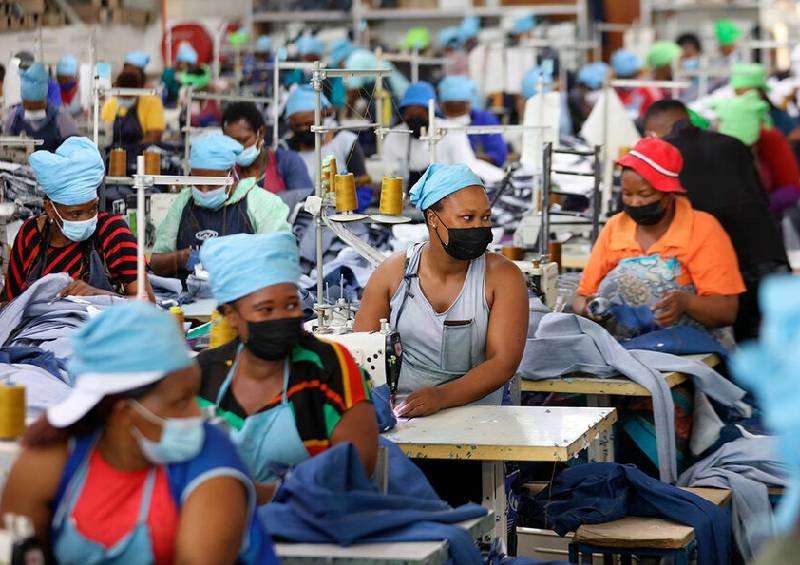
In Nairobi, Kenya, the hum of sewing machines usually fills garment factories like Shona EPZ with a rhythm of productivity, but today, that rhythm carries an air of uncertainty. For thousands of African workers, the impending expiration of the African Growth and Opportunity Act (Agoa) threatens not only their livelihoods but the broader economic stability of their countries. Agoa, enacted 25 years ago, has allowed African nations to export thousands of products duty-free to the United States, fostering jobs, industrial growth, and global trade participation. Now, as the expiry date approaches, workers and business owners alike face a precarious future.
Joan Wambui, a 29-year-old worker at Shona EPZ, has been employed for just six months, but her salary has already become the backbone of her household. Supporting her four-year-old daughter, two sisters in college, and her mother, Wambui describes the looming threat of job loss with palpable anxiety. “If Agoa expires, where shall we go?” she asks, her hands and feet moving in synchronized urgency on the sewing machine. For Wambui, employment has been about more than income; it has been a source of dignity, the ability to pay school fees, and a hope for a better future. “It’s going to hit me hard. Finding a new job in Kenya is extremely difficult,” she adds, folding a freshly stitched piece of fabric.

Kenya’s apparel sector has prospered under Agoa, with exports to the US reaching $470 million in 2024 alone, supporting over 66,000 direct jobs, three-quarters of which are held by women, according to the Kenya Private Sector Alliance. Factories like Shona EPZ have become crucial employers, particularly for youth who have struggled to find stable work in an increasingly challenging economic environment. Wambui notes that many employees were previously marginalized, some with histories of drug addiction or homelessness, and employment at Shona EPZ provided them with stability and a chance at rehabilitation.
Shona EPZ’s director, Isaac Maluki, emphasizes the impact of uncertainty on operations. Normally producing nearly half a million garments per month, the factory’s output has dropped to roughly a third this year as international buyers hesitate to commit to long-term orders. Tariffs imposed by the Trump administration earlier this year have already affected sales, and without an Agoa extension, the factory may face layoffs or even closure. “If the extension isn’t granted, we may have to send people home and possibly shut down,” Maluki explains. The factory has invested $10 million over the past seven years, and a lapse in the trade deal could render that investment effectively wasted.
The implications of Agoa’s potential expiration extend far beyond Kenya. More than 30 African countries currently export over 6,000 products to the US under the programme, including textiles, agricultural goods, and manufactured items. Agoa has been credited with fostering industrial growth, increasing employment, and strengthening Africa’s foothold in global trade. However, African negotiators face the challenge of redefining their approach in future discussions with the US. Trade policy expert Teniola Tayo emphasizes the importance of clear objectives, noting, “African countries need to figure out what they want from the US and what they can offer in exchange for market access.”
African leaders have intensified lobbying efforts in Washington. During the recent UN General Assembly, trade matters were high on the agenda. Kenya’s Trade Minister Lee Kinyanjui stressed the importance of at least a short-term extension, describing it as a crucial transition measure. Simultaneously, Kenya is pursuing a bilateral trade deal with the United States, with President William Ruto expressing hope for an agreement by year-end, while urging Washington to maintain duty-free access under Agoa for at least another five years. South African President Cyril Ramaphosa has issued similar warnings, noting that the lapse of Agoa would have serious repercussions for his nation.
Amid the uncertainty, African countries are also exploring new markets to reduce dependence on the US. Regional trade within Africa, facilitated by the African Continental Free Trade Area, offers opportunities to produce higher-value goods rather than solely exporting raw materials. Tayo highlights this approach as a strategic move for long-term economic resilience.
Yet for workers like Wambui, the slow pace of diplomacy and trade negotiations offers little solace against the daily pressures of sustaining a family. “We have ideas and the drive to make a difference. We just need support to show our potential,” she says, taking a brief break from the sewing line alongside her colleagues.
Agoa’s expiration is more than a legal or economic question; it represents the potential disruption of thousands of lives, the destabilization of fledgling industries, and the reversal of progress made over decades. For workers, families, and factory owners across Africa, the coming weeks will determine whether the trade deal’s legacy endures or dissolves, leaving many in financial and social uncertainty.

For Joan Wambui and countless others, the outcome is profoundly personal. It is about the ability to feed children, support education, maintain dignity, and preserve hope for a future built on opportunity rather than deprivation. The decisions made in Washington and across African capitals in the coming days will not only shape trade policy but the lives of ordinary people whose ambitions and livelihoods are entwined with the fate of Agoa.
Related News:
 Modi’s London Visit Seals Historic UK-India Trade Pact Amid Global Tensions
 Global Trade Earthquake: Trump Slaps 35% Tariff on Canada and Expands Tariff Blitz to Over 90 Nations
 China’s crackdown on civil servant perks sparks economic concerns
 Shein UK Faces Allegations of Shifting Majority of Profits to Singapore to Reduce UK Tax
 UK Imposes 100 New Sanctions Targeting Russia’s Revenues and Military Supplies
 Assumption Island Dispute Dominates Seychelles Election as Environment, Economy and Geopolitics Collide
 How the US Government Shutdown Could Disrupt Travel Plans Nationwide
 Rachel Reeves to lead UK trade push in Saudi Arabia amid rights debate
 US Super-Rich Are Draining Planet’s Safe Climate Space
 Fed Cuts US Interest Rates Again Amid Labour Market Uncertainty
 China Gained Military-Tech Access Through UK Investments
 India’s Labour Law Overhaul Sparks Fierce Debate
 Carney’s Alberta Pipeline Deal Sparks Immediate Pushback
 Kinnock’s Rebuke Echoes Loudly as Corbyn Allies Launch Left-Wing Breakaway: “A Gift to Farage”
 UK Banks Granted Reprieve as BoE Delays Basel III Capital Rules Until 2028
 Trump Administration Dismisses 17 Immigration Judges, Sparking Debate Over Judicial Independence
 England’s Euro Odyssey: A Tale of Grit, Glory and the Lionesses’ Miraculous March to the Final
 UK Must Act with Courage and Clarity on Israel-Palestine Conflict, Says Foreign Affairs Committee Report
 Northern Ireland Family of Three Shot Dead in Maguiresbridge Home Incident
 Seventeen Dead as Russia Targets Ukrainian Prison in Devastating Airstrike
 Tottenham Takes On Newcastle
 Gen Z Embraces the Big, Bold ‘Fake’ Indian Wedding Party Trend
 Trump Threatens 100% Tariff on Nations Importing Russian Oil Amid India Standoff Over Ukraine War
 Chancellor Faces Mounting Pressure Amid “Impossible Trilemma” Over Tax Rises
 A Budget Crossroads: Stammer Faces Pressure as £50bn Fiscal Hole Threatens Autumn Plans
 Radioactive Leak at UK’s Nuclear Warhead Base Sparks Outcry Over Safety and Secrecy
 Mutual Inconvenience: Why Alaska Was Chosen for the Trump-Putin Summit on Ukraine
 Terence Stamp, ’60s British Film Legend and Star of Superman, Dies at 87
 Larger Families Could Gain Thousands if Labour Ends Two-Child Benefit Cap
 Hong Kong Summons UK and Australian Envoys Following Asylum Grants to Democracy Activists
 Inflation Latest: Cost of Living Expected to Rise Again in Key Figures Released Today
 Is the UK Ready to Put Boots on the Ground in Ukraine? Assessing Military Capacity and Challenges
 Costa Blanca Holiday Horror as Food Poisoning Outbreak Hits Four-Star Hotel
 Rising Food Bank Dependence Highlights Deepening Hardship Across the UK
 Conservative Influencer Charlie Kirk Fatally Shot During University Debate
 Big Pharma Investment Freeze Puts UK Life Sciences Sector Under Strain
 Channel Crossings Surge: Over 1,000 People Arrive in the UK in Small Boats in a Single Day
 Widow of Charlie Kirk Forgives Killer at Emotional Memorial Service
 Las Vegas Faces Decline as Rising Costs Drive Tourists Away
 Public Executions in Gaza City Captured on Video Amid Ongoing Conflict
 Macron Phones Trump Over Traffic Jam in New York
 UK Government Backs Return of International Rail Travel to Kent Stations
 Comey Indictment Deepens Fears of Political Retribution Under Trump
 Google at 27: The Untold Story of Ruth Kedar, the Woman Behind the Iconic Logo
 Yvette Cooper Signals Global Momentum Towards Gaza Peace Deal Amid Humanitarian Crisis
 A Third of EU Citizens in UK Report Discrimination by Public Bodies Post-Brexit
 Arsenal Showcase Depth and Flexibility as Arteta Eyes Title Challenge
 UK households brace for October benefit payments and rising energy costs amid cost-of-living pressures
 Public Trust in SNP Hits Historic Low Amid NHS Concerns
 Cooper Unveils £4m Cyber Plan Against Russian Hackers
 Johnson Suggests Mandelson Linked to China Spy Controversy
 Zelensky to Urge Missile Aid as Trump and Putin Plan Summit
 Rachel Reeves signals welfare reform ahead of key budget
 Ireland Votes as Two Women Compete for Presidency
 WW2 Pilot’s Long-Lost Crash Site Unearthed in Essex
 Experts Warn Russia’s Burevestnik Missile Could Destabilise Arms Control
 Johnson Approved China’s London ‘Super-Embassy’ in 2018
 Tragedy on Lizard Island: Cruise Passenger Dies
 Green Party Surges Past Labour in Latest UK Poll
 Celebrities and Charities Demand UK Government Act on Child Poverty
 Top Christmas Books Reads: Classics to Cozy Romcoms
 Just Stop Oil Protesters Convicted Amid Climate Defence Row
 Tony Blair think tank warns Rachel Reeves must cut taxes if manifesto broken
 US Senate Passes Funding Bill to End Historic Shutdown
 Skims Eyes Global Expansion After Reaching $5 Billion Value
 Japan Deploys Police to Curb Deadly Bear Attacks
 US Justice Department Files Lawsuit Against California Over Partisan Voting Maps
 Pokémon to open world’s first theme park in Japan next year
 Global markets drop amid tech sell-off and China slowdown
 Trump Deploys DHS to Charlotte in Major Arrest Operation
 Orban Says Ukraine Has ‘No Chance’ as EU Support Continues
 Israeli Strike Kills 13 Near Palestinian Camp in Lebanon
 Haiti Qualifies for World Cup Despite Coach Never Visiting Country
 Pentagon Officials in Ukraine to Discuss War End
 Vietnam Battles Deadly Floods as Rains Continue
 Venezuela Threatens Nobel Winner Machado with Fugitive Status
 Two National Guard Soldiers Critically Injured Near White House
 Southern Lebanon reels as Israeli strikes shatter communities
 Sri Lanka Floods Leave 56 Dead, Dozens Missing
 Rising Water Bills Lift Troubled Thames Back to Profit