Published: 17 November 2025 Monday. The English Chronicle Desk. The English Chronicle Online
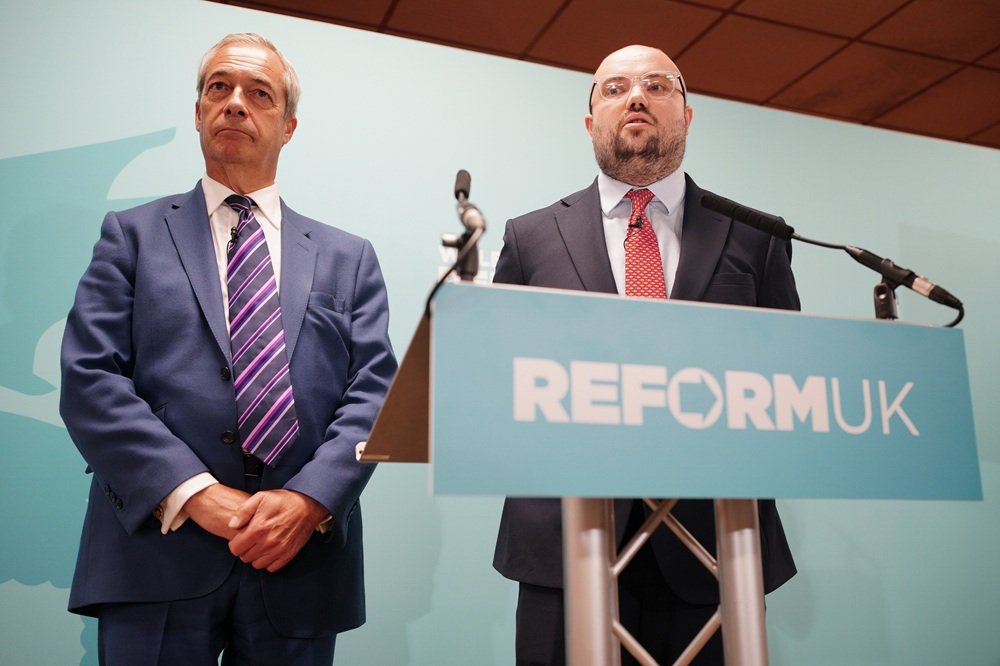
Llyr Powell, the Reform UK candidate who stood in last month’s Caerphilly by-election, has revealed he received at least 55 death threats over the course of his campaign—an escalation of intimidation that became so severe he was moved from his home to an undisclosed location for his safety. Powell, who ultimately finished second to Plaid Cymru’s Lindsay Whittle, said the threats did not stop after the election and that, at times, he feared for his life.
Speaking to Newyddion S4C, Powell described one of the most terrifying incidents, which happened late one evening while he was home alone. He recalled hearing “the door being kicked in downstairs,” a moment that left him convinced he might not survive the night. “I looked out the window and thought, this could be the moment they actually killed me, and it’s a really strange feeling,” he said. The attack, he explained, was one of several that left him feeling constantly on edge and ultimately forced him to relocate temporarily.
Despite the severity of the threats described, Gwent Police said they had not received any reports of safety concerns from Powell or Reform UK. This discrepancy has raised questions about how political candidates access police assistance, particularly during campaigns when threats and harassment tend to spike. Powell said he attempted to contact the police multiple times but found navigating the reporting process “the most difficult thing in the world,” adding that he was directed to generic phone lines and automated systems rather than being given a direct channel for urgent support.

Powell provided further details of the harassment he endured, including instances where the doors of his campaign office were glued shut, an act of vandalism that police said they could not pursue because the perpetrators seen on CCTV were wearing hoodies and could not be identified. In another incident, he said he was approached and spat upon by a group of individuals after closing his office one night. During a separate campaign visit to Cardiff, he faced verbal abuse and had objects thrown at him by passers-by.
As the threats mounted, Powell said he began questioning whether a future in politics was worth the personal risk. He admitted he is uncertain about standing in the 2026 Senedd election, a decision he had initially been enthusiastic about but now views through the lens of fear and exhaustion. “I’ve got to be honest,” he said, “right now it’s in my head—do I want this in my life?”
Powell’s experiences reflect a broader climate of hostility and intimidation that many politicians across Wales and the UK have spoken about in recent years. The Electoral Reform Society has warned that the issue is intensifying and must be addressed urgently before the next Senedd election scheduled for May. The organisation argues that political intimidation is no longer a fringe problem but a widespread threat to democratic participation, requiring a coordinated response from law enforcement, government bodies, and political parties.
Other Welsh politicians have shared similar experiences. Llinos Medi, MP for Ynys Môn, said that abuse directed at her has surged significantly since she took office last year. She explained that she had dealt with threats in her previous role as a council leader, but the level of hostility she now faces as a Member of Parliament is “enormous.” She described a growing “sense of fear” that has become part of the job, fuelled by increasingly aggressive messages and behaviour.

Conservative MS Sam Kurtz echoed these concerns, revealing he has been subject to repeated racist comments about his German heritage, including a period where he received constant abusive phone calls. Kurtz said he has taken extensive measures to protect himself and his staff, including installing CCTV at his home, equipping his office with panic buttons, and using a lone-worker safety device provided by the Senedd. He described his situation not as an exception but as part of a broader trend. “I have weekly phone calls from local police to ensure the safety of myself and my staff,” he said. “But to ensure that’s done across all of Wales at the next election has got to be a priority.”
A survey conducted by the Electoral Commission after the 2024 general election found that 55 percent of candidates experienced harassment, intimidation, or abuse during the campaign. Analysts say this alarming figure indicates that political hostility has become mainstream, especially on social media platforms where anonymity makes threats more common and more vicious. The survey’s findings have increased pressure on the UK Government to address safety concerns comprehensively.
The Home Office responded to the growing concerns by reiterating its stance that harassment and intimidation of anyone in public office is “unacceptable.” A spokesperson said the security minister is overseeing a cross-government approach involving police forces, parliamentary authorities, and the Electoral Commission to improve protections ahead of upcoming elections. Measures under consideration reportedly include streamlined reporting channels, clearer guidelines for police action, and expanded support for candidates deemed at high risk.
Despite these assurances, concerns remain about how quickly improvements will be implemented and whether candidates like Powell will be better supported in the future. Political observers argue that threats against elected officials have implications far beyond individual safety, warning that growing hostility could deter capable people from entering public service altogether. When candidates are subjected to violence or intimidation, they say, democracy itself is weakened.

For Powell, the emotional impact of the threats was compounded by frustration at what he saw as a lack of immediate police support. He said Reform UK members guided him to safety after he was moved from his home, and while the party expressed concern for his wellbeing, he felt the responsibility for navigating life-threatening situations largely fell on his own shoulders. He said he hopes his story will draw attention to the need for improved systems, especially as the next election approaches.
The Caerphilly by–election itself was a heated contest, drawing national interest due to its timing and political dynamics. Powell’s strong second-place finish surprised some analysts and highlighted Reform UK’s growing visibility in Welsh politics. Yet his experiences during the campaign illustrate the volatile environment candidates now face, particularly those working in polarised regions or representing controversial parties. As Wales prepares for the next Senedd election, the safety of candidates—not just their platforms—appears likely to become a major topic of public debate.
Whether Powell ultimately decides to stand again may depend on what steps are taken in the coming months. He emphasised that although he remains committed to his political beliefs, he must also consider the personal cost. “At some point,” he said, “you have to think about your family, your safety, and what kind of life you want to live.”
Related News:
 Reform Councillor Defects to Tories Over ‘Uncomfortable’ Policies
 FBI Director Kash Patel Defends Girlfriend Amid Government Jet Claims
 French Taxi Driver Cleared in David Lammy Theft Case After Fare Dispute
 Company linked to Michelle Mone owes £39m in tax
 Met Police Culture Makes Racial Harm ‘Inevitable’
 Eleven Arrested After Pro-Palestine Protest at Villa Match
 ‘Reckless’ cuts to victims’ services will cost more than they save
 British state supplied victims to ‘worst sex offender in history’
 Ex-Classmate Accuses Farage of Dishonesty on Racism Claims
 Ex-Brexit MEP Rejects Claim of Pro-Russia Payments
 Tasers Introduced in UK Prisons to Combat Rising Violence and Protect Staff
 Police Prepare for Potential Disorder as Far-Right Groups Promote Anti-Migrant Protests Across England
 Mass Arrests in London as Protest Defies Ban on Palestine Action
 Police Advised to Disclose Ethnicity of Suspects in High-Profile Cases
 UK Police Face ‘Chronic Pressure’ Amid Surge in Protests Over Asylum and Gaza
 Peter Mandelson Referred to Jeffrey Epstein as ‘My Best Pal’ in 50th Birthday Letter
 Metropolitan Police Considers Requiring Officers to Declare Freemasonry Membership
 Stephen Lawrence’s Father Demands Justice Before Killer’s Parole
 Peterborough Mosques Tighten Security After Attack
 British Woman in Iran ‘Losing Hope’ Amid Ongoing Detention
 BBC Journalist Held and Interrogated in Vietnam
 Five More Prisoners Freed by Mistake in Essex Week
 Green Party Surges Past Labour in Latest UK Poll
 Celebrities and Charities Demand UK Government Act on Child Poverty
 Afghan man charged with murder after west London knife attack
 Trump’s UK Ambassador Urges North Sea Drilling to Strengthen US Ties
 Trump Speaks on Prince Andrew’s Royal Scandal Fallout
 Rachel Reeves Set to Break Labour Pledge and Raise Income Tax
 UK Bans Fake Numbers: Scammers Lose Their Trick
 Just Stop Oil Protesters Convicted Amid Climate Defence Row
 MPs Press Rachel Reeves to Hike Gambling Taxes
 Jailed UK climate protesters face extremist-style restrictions
 Boris Johnson accused of undermining BBC leadership
 How to get help when a child goes missing – call 999 urgently
 Millionaires group urge Reeves to introduce wealth tax to ‘lift kids out of poverty’
 Starmer Faces Growing Dissent as Labour MPs Weigh Leadership Challenge
 BBC Faces Backlash as Reform UK Withdraws from Film
 Madeleine McCann Suspect Forced into Woodland Hideout After Release
 Reeves rejects £1bn plea for NHS redundancy payouts
 Farage appointee to lead Reform youth accused of anti-British views
 Palace to reinstate hyphen in Andrew’s surname
 Politics latest: Starmer ‘will fight any leadership coup’ as Streeting denies attempt to oust Labour PM
 PM Condemns Leaks, Vows Loyalty to Ministers and Stability
 New review urges UK to repatriate Shamima Begum, others from Syria
 Major Rent Reform Ends No-Fault Evictions in England
 Peers Flood Assisted Dying Bill with 942 Amendments
 England’s Special Needs Support Faces Breaking Point
 MoD warned over Excel risks before Afghan data breach
 UK Unveils Fast-Track Deportation and Asylum Overhaul
 UK Asylum Overhaul Sparks Debate Over Human Rights and Deportations
 UK Asylum Reforms: Temporary Refugee Status and Faster Deportations
 Criminal Gangs Pose as Truckers to Hijack UK Supply Chains
 Mahmood Defends Tough Overhaul of UK Asylum System
 Paralegal Fired After Exposé on Illegal Worker Scam
 Mother Watches in Horror as Teen Daughter Dies on Tracks
 South African Detained After Neo-Nazi Rally in Australia
 UK Warns China After MI5 Issues Espionage Alert
 Westminster Advances Legacy Bill Amid Criticism
 UK Vulnerable to Attack, Defence Committee Finds
 Labour Faces Historic Decline in Wales
 Rama Rebukes Mahmood for Targeting Albanian Families
 Russian Vessel Used Lasers on RAF Pilots, UK Claims
 PM Shares Emotional Letter to Son on Men’s Struggles
 Serial Rapist and Former Cop Found Guilty Again
 PM Highlights UK Business at G20 in South Africa
 Kate Forbes: Motherhood Harder Than Politics
 Welsh Government Christmas 2020 Lockdown Criticised
 Venezuela Threatens Nobel Winner Machado with Fugitive Status
Reeves to Crack Down on Benefit Fraud While Lifting Two-Child Limit
Venezuela Threatens Nobel Winner Machado with Fugitive Status
Reeves to Crack Down on Benefit Fraud While Lifting Two-Child Limit
 Police Name Woman Who Died in Swindon as Murder Probe Continues
 Most Tories Expect to Support a Farage-Led Government
 Labour MP claims devolution bill is ‘blatant discrimination’ against Cornwall
 Trump Envoy to Discuss Ukraine Peace at Kremlin
 Millions Face Higher Taxes Under Reeves New Budget
 Peers Get Extra Time to Debate Assisted Dying Bill
 Planned Palestinian Flag Raising at Belfast City Hall Faces Delay Amid Legal Concerns
 Sudanese Family Vows to Stay After Racist Graffiti
 Video shows Israeli troops kill Palestinians after surrender
 Government righting decades-old injustice for miners
 UK delays ruling on China embassy plan until January