Published: 04 December 2025. The English Chronicle Desk. The English Chronicle Online.
In Stirchley, south Birmingham, Christmas lights glimmer along lamp-posts adorned with multifaith designs. The area, often overshadowed by nearby Bourneville and Moseley, retains a reputation for community spirit. Last year, local residents celebrated when Stirchley was named the Midlands’ best place to live.
Along Pershore Road, shop windows display notices for knitting groups, winter fairs, and food bank drives. The old swimming baths now serve as a community hub with coffee morning flyers stacked neatly for visitors. Yet, under this tranquil surface, tensions simmer among residents over a surprisingly contentious issue: the flying of flags.

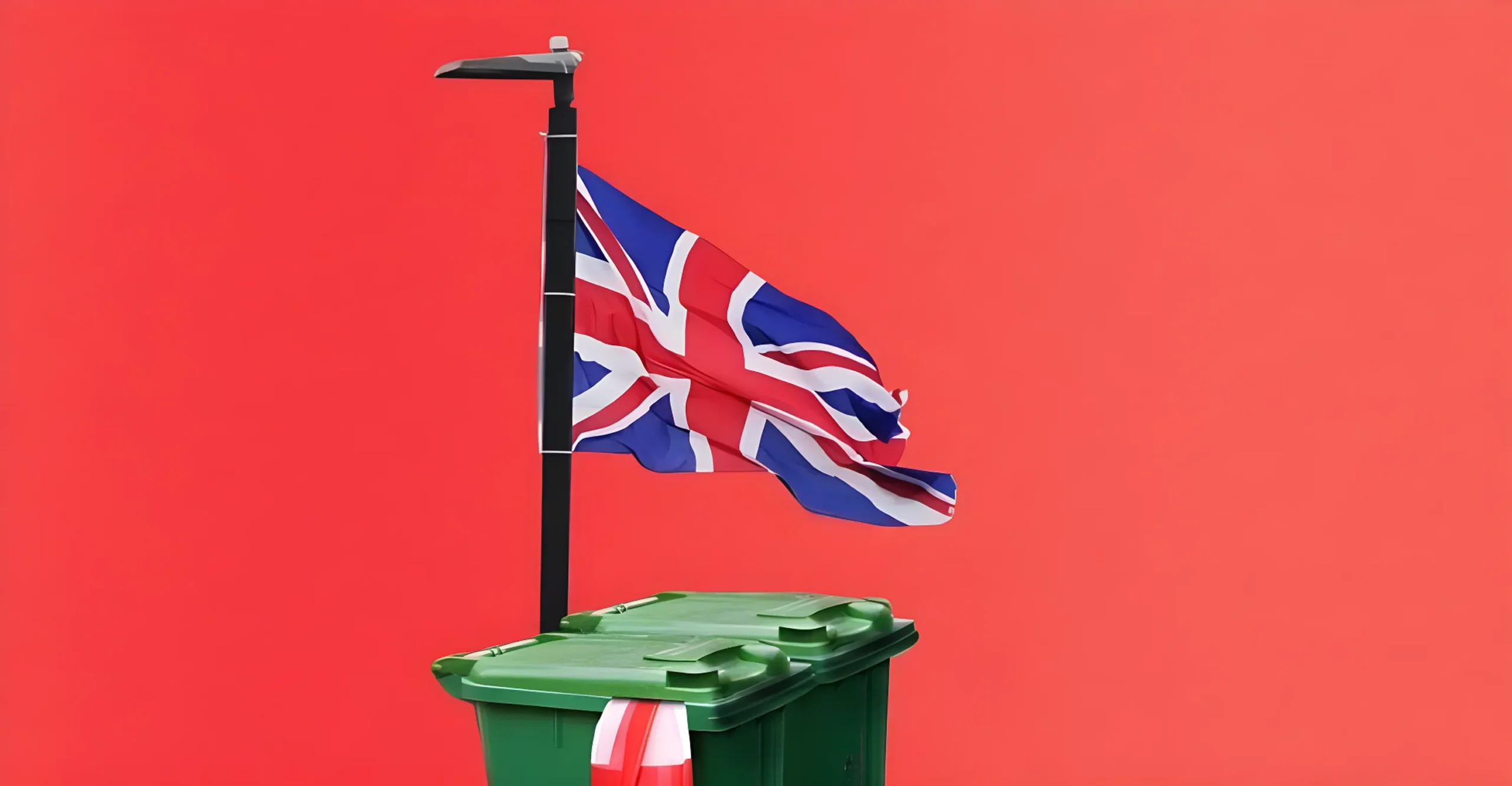
Since September, members of Raise The Colours (RTC), a Birmingham-based group, have repeatedly installed Saint George and union flags on Stirchley lamp-posts. Their campaign, featuring branded hard hats, hi-vis vests, and even a cherrypicker, aims to “fill the skyline with unity and patriotism,” according to the organisation.
Local residents opposing the display argue the flags mark territory linked to anti-immigrant movements. These residents have removed the flags multiple times but describe enduring harassment and intimidation during protests. Videos of residents removing flags are routinely posted online, often attracting further attention. Two independent Stirchley businesses were vandalised after their owners opposed flag installations. One business faced a deluge of negative online reviews following social media coverage by far-right activist Tommy Robinson.
RTC maintains its campaigns reflect “positive and inclusive patriotism,” branding confrontations as the “Battle of Stirchley.” Residents, however, see the campaign differently. David, a 65-year-old management consultant and Stirchley local, explained that neither he nor his fellow opponents want conflict. “We want to continue our lives without intimidation,” he said, while insisting the community will defend its welcoming values. Most residents interviewed for this report requested anonymity due to fear of retaliation.
Flag-flying disputes, once a prominent political issue, have largely faded from national debate. However, in some neighbourhoods, tensions remain high, with little intervention from local authorities. Residents describe organised campaigns by well-funded groups, often tied to far-right figures, actively influencing local streets.
Some councils have removed flags attached to civic property, an act that can be technically illegal without permission. Workers conducting removals have reported verbal abuse in areas including Knowsley, Trafford, Hertfordshire, and London. In Salford, a subcontractor was physically stopped while removing flags, illustrating the potential risks involved.
In Norfolk, 68-year-old Ian described a violent assault after attempting to remove a flag in Norwich. Local police closed the case citing insufficient CCTV evidence, highlighting gaps in legal protection for residents intervening against flag campaigns.
James Harvey, a Green councillor in south Norfolk, warned that grassroots anti-flag efforts are increasingly organised. Teams now remove flags discreetly to avoid confrontation, fearing escalation. “If authorities do nothing, tensions will continue and could result in serious injuries,” he said.

Groups opposing flag-flying often work in small, secure teams, coordinated via apps like Signal. They have developed tools such as extendable poles to safely remove flags from tall posts. Despite precautions, participants admit the work is risky and occasionally paranoid concerns of infiltration influence their operations.
Walkley, Sheffield, has witnessed similar conflicts. Anne, 66, likened local disputes to a “mini Battle of Cable Street,” referencing 1936 clashes against fascist marches in London. Flags erected by Reform Sheffield East have sparked confrontation with residents, creating an environment of intimidation. Andrew Scarsdale, spokesperson for Sheffield Communities against Racism and Fascism (Scarf), explained that flags in the area are perceived as deliberately divisive, not patriotic.
A YouGov poll last month showed most ethnic minority adults now associate the Saint George flag with racism, underscoring the symbolism’s growing controversy. Reform UK confirmed support for the flag displays, framing them as symbols of unity, while Sheffield City Council described lamp-post flags as illegal unless posing an immediate safety risk.
In Stirchley, flags have mostly shifted to Remembrance-themed banners, though local anti-flag residents view these too as provocations. RTC claims to have raised over £115,000 for continued campaigns and community outreach, though it declined comment for this report. Birmingham City Council has opted against removal, citing concerns for worker safety due to previous hostility.
Allie, 30, a local web designer and anti-flag activist, explained that real community change comes from local organisation. Residents are not only removing flags but also creating migrant support networks and volunteering at food banks. “This is what true democracy looks like,” she said. “It’s about acting together and defending the neighbourhood we care for.”
As English neighbourhoods like Stirchley and Walkley grapple with the symbolic meaning of flags, the tension between patriotism and intimidation continues. These disputes reveal that community cohesion and civic responsibility can clash sharply with orchestrated political displays, highlighting the delicate balance between free expression and local harmony.
Related News:
 Concerns Mount Over Accuracy of At-Home Health Tests as Study Calls for Stricter Regulation
 UK Must Act with Courage and Clarity on Israel-Palestine Conflict, Says Foreign Affairs Committee Report
 The Ketamine Crisis in the UK is a Silent Epidemic Leaving Users with Lifelong Pain
 London Set to Honour Euro 2025 Champions as Lionesses Take Victory Parade Through the Capital
 Targeted Attack in Bury Sparks Murder Investigation as Community Awaits Justice
 Chancellor Faces Mounting Pressure Amid “Impossible Trilemma” Over Tax Rises
 Princess of Wales Launches Animated Video Series to Support Early Childhood Development
 Heartbreak in the New Forest as Shetland Ponies Vanish, Community on Edge
 Radioactive Leak at UK’s Nuclear Warhead Base Sparks Outcry Over Safety and Secrecy
 Mutual Inconvenience: Why Alaska Was Chosen for the Trump-Putin Summit on Ukraine
 Fire Contained at Edinburgh’s Arthur’s Seat After Overnight Battle by Firefighters
 Premier League Supercomputer Predicts Tough Season for Man Utd Amid Three-Team Title Battle
 Mystery Wallaby Spotted on Norfolk-Suffolk Border Sparks Police Appeal
 UK Weather: Heat Alerts Extended as Temperatures Set to Reach 30°C This Weekend
 Terence Stamp, ’60s British Film Legend and Star of Superman, Dies at 87
 Chancellor Rachel Reeves Pushes for Sweeping Changes to Environmental Protections to Accelerate Development
 Inflation Latest: Cost of Living Expected to Rise Again in Key Figures Released Today
 Merseyside Police Helicopter Crew Cleared After Low-Altitude Pursuit of Suspect
 Is the UK Ready to Put Boots on the Ground in Ukraine? Assessing Military Capacity and Challenges
 Reform Voices Alarm as UK Asylum Figures Reveal Growing Hotel Crisis Amid Channel Crossings Surge
 Education Leaders Call for End to Compulsory GCSE Resits in English and Maths
 Police Scotland Spends £500,000 Compensating Officers Over Trump Visit
 Britain’s Migration Challenge: Rising Asylum Numbers and Hotel Pressures
 Elon Musk Sparks New Controversy by Backing Tommy Robinson Amid Farage Feud
 Thousands of New School Nursery Places to Be Rolled Out Across England
 Urgent Action Needed on Windrush Compensation as Survivors Speak of “Waiting to Die”
 Shein UK Faces Allegations of Shifting Majority of Profits to Singapore to Reduce UK Tax
 Tanni Grey-Thompson Faces Abuse Over Opposition to Assisted Dying Bill
 London to Regulate Pedicabs: Music Turned Down, Fares Set by the Minute
 Rising Food Bank Dependence Highlights Deepening Hardship Across the UK
 Birmingham Bin Strike Enters Sixth Month as Negotiations Stall
 TfL Invites RMT to Resume Talks as London Tube Strikes End
 Over 40% of Private Renters Forced to Ration Energy to Afford Bills, Study Reveals
 Jaguar Land Rover Extends Production Halt Following Cyber-Attack
 Systemic Racism in Maternity Care Continues to Endanger Black Women in England, MPs Warn
 One in Three GPs in England Do Not Work in NHS, Raising Concerns Over Access to Care
 Persistent Offenders Owe Over £700m in Ulez Fines as TfL Cracks Down on Evasion
 Northern Ireland Faces Fears of Prolonged Race Riot “Permacrisis”
 Nigel Farage Unveils Controversial Immigration and Welfare Plans at Reform UK Press Conference
 Great Britain’s Energy Operator Commits to Strengthening Grid to Prevent Blackouts
 Scottish Teenager’s Petition on Single-Use Plastics Gains Parliamentary Support
 White Low-Income Pupils in England Show Lowest Levels of School Engagement, Study Finds
 Ed Miliband Warns UK Government on X, Citing Elon Musk as a “Dangerous Influence”
 Everton Held by West Ham as Bowen Cancels Out Keane’s Header in Nuno’s First Game
 Monaco Hold Man City to Dramatic 2-2 Draw as Eric Dier Converts Late Penalty
 No Evidence Found to Substantiate Alleged Rape in Oxfordshire Churchyard, Police Confirm
 UK House Price Growth Slows as Buyers Exercise Caution Ahead of Autumn Budget
 Kemi Badenoch Unveils ‘Golden Rule’ to Halve Spending Cuts for Deficit Reduction at Tory Conference
 Massive London Poundland Fire Engulfs High Street
 Sussexes Warn on Children’s Phone Use Echoing Princess of Wales
 Paedophile Singer Ian Watkins Dies After Prison Attack
 Prince Andrew told Epstein “we are in this together”
 Former Premier League Referee David Coote Pleads Guilty to Child Image Offence
 UK border officers deployed to Balkans to tackle migrant smuggling
 UK MPs warn of repeat riots over online misinformation
 New V-Level qualification to transform post-16 education
Giuffre’s bombshell memoir names Prince Andrew 88 times in shocking revelations
New V-Level qualification to transform post-16 education
Giuffre’s bombshell memoir names Prince Andrew 88 times in shocking revelations
 Real living wage set to rise nearly 7% for UK workers in 2026
 M&S and Morrisons Lead Christmas Supermarket Taste Test
 New Prostate Cancer Drug Set to Halve Death Risk in England
 Army Barracks to House Migrants as Hotels Phase Out
 Reeves Faces Setback as Labour May Miss Homes Target
 Kate Winslet to Narrate Film Highlighting King’s Environmental Mission
 Trump’s UK Ambassador Urges North Sea Drilling to Strengthen US Ties
 UK Bans Fake Numbers: Scammers Lose Their Trick
 M&S Profits More Than Halve After Cyber-Attack
 Patients to Test Health at Home to Ease NHS Winter Pressure
 Millionaires group urge Reeves to introduce wealth tax to ‘lift kids out of poverty’
 Reeves rejects £1bn plea for NHS redundancy payouts
 Northern Lights may illuminate UK skies this week
 PM Condemns Leaks, Vows Loyalty to Ministers and Stability
 Major Rent Reform Ends No-Fault Evictions in England
 Stroke Patient Mistaken for Drunk, Care Delayed
 Inside the Helpline Protecting Missing Children in the UK
 Boots Showstopper Beauty Bundle Outshines Many Advent Calendars This Holiday Season
 PlayStation PS5 Deals Hit Lowest Prices Ahead of Black Friday
 Five-Year-Old Dies After Rare Tonsil Surgery Complication
 Starmer Says Labour’s Economic Plan Needs Years to Deliver
 Reform campaign in Clacton faced ‘juggernaut’ scrutiny, say rivals
 Christmas Code-Crackers: GCHQ Unveils Annual Festive Puzzle Card