Published: 08 December 2025. The English Chronicle Desk. The English Chronicle Online.
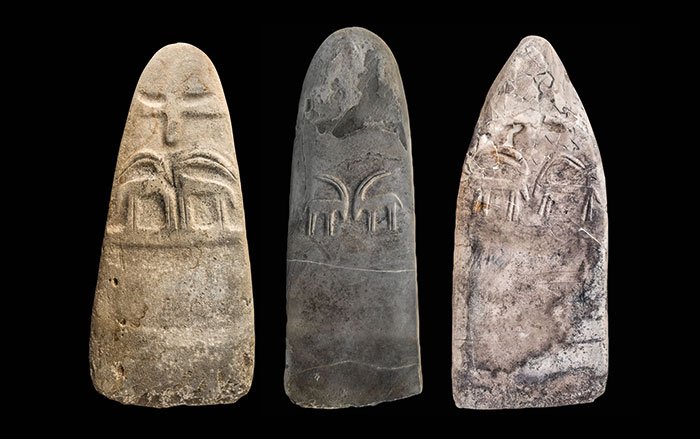
A groundbreaking linguistic project has quietly begun in west Wales that promises to shine new light on the voices of people who walked Britain and Ireland more than two thousand years ago. Scholars at Aberystwyth University have started work on what they believe will be the world’s first complete dictionary of the ancient Celtic language spoken across these islands before the Romans, Anglo-Saxons, and Vikings reshaped the linguistic map.
The finished book will not resemble the thick volumes we associate with modern dictionaries. Most of the language vanished long ago, swallowed by time and conquest. Yet the surviving fragments, scattered through Roman records, ancient place-names, and weathered stone inscriptions, are now being gathered with meticulous care. Researchers expect the final work to contain just over one thousand words, a modest total that nevertheless represents a treasure recovered from the edge of oblivion.

Dr Simon Rodway, a senior lecturer in Welsh and Celtic studies who leads the project, can barely contain his enthusiasm when he speaks about the task ahead. For the first time, every known scrap of ancient Celtic from Britain and Ireland will appear between two covers, or rather on one comprehensive digital platform alongside a printed edition. Sources range from Julius Caesar’s famous commentaries on his wars in Gaul to humble administrative tablets unearthed at Roman forts along Hadrian’s Wall. Memorial stones carved in the mysterious Ogham script, found from Cornwall to the west coast of Ireland, will also contribute their share of words.
The dictionary covers a sweeping period from around 325 BC to AD 500, the centuries when Celtic speech still dominated large parts of these islands. Almost everything we know comes second-hand. Celtic peoples themselves left hardly any writing of their own in the earliest centuries. Instead, Greek and Roman authors noted down tribal names, leaders, and settlements as they encountered them. Later, when Roman legions occupied Britain, soldiers and officials occasionally slipped a Celtic word into otherwise Latin documents. A weary centurion complaining about the weather, a merchant listing local goods, or a clerk recording a British recruit’s name might accidentally preserve a tiny piece of the old tongue for posterity.
Place-names have proved especially rich. The ancient name Moridunum, which means “sea fort” and survives in modern Carmarthen, reveals an early Celtic word for sea that closely matches môr in Welsh and muir in Old Irish. Such connections thrill the Aberystwyth team because they show how threads of the ancient language still run through the modern Celtic tongues of Wales, Ireland, Scotland, and Brittany. Cornish, recently revived after centuries of silence, also carries echoes of the same distant ancestor.
Dr Rodway explains that the project reaches far beyond pure linguistics. Historians will gain sharper insight into how Iron Age society was organised. Archaeologists will better understand the people who built hillforts and buried their dead beneath round barrows. Even archaeogeneticists, who study ancient DNA, may find the dictionary helpful when they try to match genetic patterns with the movement of languages across prehistoric Europe.
One of the biggest challenges lies in deciding what actually counts as ancient Celtic. Inscriptions in Celtic languages from Roman Britain are vanishingly rare, so the team must often work backwards from names preserved in Latin or Greek texts. They compare these with later evidence from medieval Welsh and Irish manuscripts to spot consistent patterns. Only then can they confidently claim a word belonged to the language spoken here two millennia ago.
Ireland presents a different puzzle. Because it lay beyond the Roman frontier, fewer written records survive from the early centuries. Yet Ogham stones, with their distinctive notches cut along the edges of standing stones, sometimes yield personal names or short phrases that match British material. Slowly but surely, the dictionary grows as each new fragment is checked, cross-referenced, and slotted into place.

The decision to produce both digital and printed versions reflects a desire to reach different audiences. Scholars around the world will be able to search the online database in seconds, while readers who simply love the feel of a book can hold the finished volume in their hands. Either way, the ancient Celtic dictionary will stand as a quiet monument to a language that refused to disappear entirely.
When the project reaches completion, probably several years from now, a remarkable chapter of British and Irish history will become clearer than ever before. We will hear, however faintly, the voices of people who looked out over the same hills and coasts we know today and gave them names that still whisper across the centuries.
Related News:
 Children to Judge Inaugural Booker Prize for Young Readers
 Bloomsbury chief: AI will aid authors in beating writer’s block
 Posthumous books are messy and fraught – but Virginia Giuffre’s gives her a voice
 The upcoming book-to-screen adaptations I’m most excited about
 My standout favourite book of 2025: The Names
 Top Christmas Books Reads: Classics to Cozy Romcoms
 Audio Books deals and promo codes to explore in November 2025
 Nigeria’s $25m Museum Faces Political Storm Amid Benin Bronzes Debate
 Algeria Pardons French-Algerian Novelist Sansal After Year in Jail
‘I’ve Read 38 Books, but This Is My Standout Favourite’
Algeria Pardons French-Algerian Novelist Sansal After Year in Jail
‘I’ve Read 38 Books, but This Is My Standout Favourite’
 Top Diaries and Planners to Upgrade Your Organisation in 2026
 Men Aren’t Vanishing From Fiction, But Misconceptions Persist
 Government officials are being called on to assist students stranded in Gaza by offering them places at UK universities.
 Michele Dougherty Makes History as the UK’s First Female Astronomer Royal
 Tragedy in Cambridge: Two Arrested Over Fatal Assault of International Student
 UK University Staff Studying Sensitive Chinese Issues Report Intimidation
 Princess of Wales Launches Animated Video Series to Support Early Childhood Development
 My Husband Won’t Stop Playing with Lego and It’s Driving Me Nuts
 University Education Faces New Challenges as Students Question Its Value
 Learner Drivers to Face CPR and Defibrillator Questions in New Theory Tests
 More than a Quarter of A-Level Students Poised to Achieve Top Grades Across UK
 Record Number of UK Students Secure University Places Following A-Level Results
 Boys’ Under-Performance at GCSEs a “National Concern,” Says Leading Education Expert
 From ‘Skibidi’ to ‘Mouse Jiggler’: Cambridge Dictionary Expands with Modern Slang and Social Terms
 Why Where You Live Can Affect Your School Grades – And the Gap Between Areas Is Only Widening
 Compulsory Period Education for Boys and Girls Urged by New Study
 Calls Grow for a Complete Ban on Smacking as Public Opinion Shifts
 Education Leaders Call for End to Compulsory GCSE Resits in English and Maths
 Thousands of New School Nursery Places to Be Rolled Out Across England
 University of Edinburgh Lecturers Launch Five-Day Strike Amid £140m Budget Cuts
 UK Set to Launch Its First ‘Super-University’ Through Landmark Merger of Kent and Greenwich
 UK Graduates in Healthcare Report Highest Satisfaction with Degree Choices
 Growing Crisis in UK Schools: One in Three Parents Seek Special Needs Assessments
 UK Launches Initiative to Teach Democracy to Toddlers in Memory of Sir David Amess
 UK Confronts Rising Crisis of Child-on-Child Sexual Abuse as Patterns Shift
 Historic Letters Unearthed on eBay Reveal UK Families’ Profits from Slavery
 It Changed My View’: Campaign Encourages Pupils in Deprived Areas to Consider University
 Report Finds School History Lessons Marginalise Women’s Contributions
 White Low-Income Pupils in England Show Lowest Levels of School Engagement, Study Finds
 UK Home Office approves extra visas for UCL international students amid deferred admission concerns
 Teacher Permanently Banned After Slapping Pupil Over Classroom Incident
 UK Universities Warn Students Ahead of 7 October Pro-Palestine Protests
 Eating International Foods Linked to Greater Tolerance, UK Study Finds
 Thousands of University Jobs Cut Amid Deepening Financial Crisis
 Parents spending £5,000 on special school assessments in England
 New V-Level qualification to transform post-16 education
 Oxford Union president-elect ousted following Charlie Kirk scandal
 The debate over England’s compulsory reading test for 13-year-olds
 One in 12 Secondary Pupils Sent to Isolation Weekly
 Six-Figure Tutors Teach Toddlers to ‘Be British’
 Marie Curie Launches End-of-Life Checklist to Ease Stress
 How Bringing Forests Into Preschools Boosts Children’s Health
 Is a two-week half-term a good deal? Some parents in England aren’t so sure
 Children to Learn Local History in Major Curriculum Overhaul
 UK University Suspends Human Rights Research Following Pressure from China
 UK University Faces Counter-Terror Probe Over China Pressure
England Curriculum Review Recommends Major Changes
UK University Faces Counter-Terror Probe Over China Pressure
England Curriculum Review Recommends Major Changes
 Greta Thunberg Backs Student Facing UK Visa Revocation
China-critical UK academics face ‘extremely heavy’ pressure from Beijing
Greta Thunberg Backs Student Facing UK Visa Revocation
China-critical UK academics face ‘extremely heavy’ pressure from Beijing
 Labour immigration crackdown could cost UK £4.4bn
 London’s Childlessness Crisis: Schools Closing as Families Shrink
 No link found between paracetamol in pregnancy and autism
 Government urges schools to ban phones to curb classroom disruption
 David Szalay’s ‘Flesh’ Wins 2025 Booker Prize
 South Korea’s College Exam Tests Perseverance of Blind Students
 Phillipson Accused of Appeasing Unions by Diluting EBacc
 England’s Special Needs Support Faces Breaking Point
 Nigerian Education Reversal: Mother-Tongue Teaching Scrapped
 Higgs Donates Nobel Medal to His Beloved University
 The Devil Wears Prada 2 teaser trailer revealed
 UK Schools Face Staff Exodus Amid Wellbeing Crash
 Ex-Harvard President Pauses Teaching Over Epstein Emails
 Scottish Families Take Legal Action Over School CO Leak
 Schools urged to trial four-day week to ease pressure on teachers in England and Wales
 Oxford Names ‘Rage Bait’ Word of the Year
 Graduate Surge Boosts Maths and Science Teacher Recruitment
 Youth Strategy Aims to End Decades of Political ‘Indifference’
 Christmas Code-Crackers: GCHQ Unveils Annual Festive Puzzle Card
 UK Set to Rejoin Erasmus as Student Exchanges Return
 Bristol Lecture Disruption Sparks Academic Freedom Legal Threat