Published: 24 January 2026. The English Chronicle Desk. The English Chronicle Online
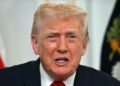
In the age of Donald Trump, satire feels less like a luxury and more like a coping mechanism. When politics becomes chaotic, abrasive and relentlessly performative, comedy often seems better equipped than straight news to keep pace. Animated grotesqueries, savage monologues and absurdist sketches can respond instantly, cutting through the noise with a clarity that traditional journalism sometimes struggles to achieve. From South Park’s deliberately unhinged portrayals of Trump cavorting with demons in the White House to the relentless punchlines of late-night television, satire has become one of the most trusted lenses through which many people now view politics.
That trust, however, comes with a heavy burden. Satirical shows were never meant to function as the public’s primary source of political understanding. Yet over the past three decades, they have increasingly been pushed into that role, not because comedians demanded it, but because large parts of the media ecosystem failed to do their job.
This failure was identified long before Trump descended his golden escalator. As far back as 2000, the economist Paul Krugman warned that American journalism was trapped in a destructive notion of “balance”. Determined at all costs to appear even-handed, news outlets often treated blatant falsehoods as just another side of a debate. Krugman memorably observed that if a presidential candidate were to claim the Earth was flat, the press would respond with a headline suggesting that “both sides have a point”. The result was not neutrality, but distortion.

It was in this environment that political satire in the United States began to flourish as something more than entertainment. The Daily Show, under Jon Stewart, did not simply mock politicians; it interrogated them. Its interviews were often sharper and more revealing than those on supposedly serious primetime programmes. Stephen Colbert’s rise came through inhabiting a caricature of right-wing punditry so precise that many viewers initially missed the joke. John Oliver then pushed the format further, developing a style of “investigative comedy” that frequently exposed abuses of power with more rigour than the news broadcasts it lampooned.
Academic research has helped explain why this worked. Scholars have argued that political comedy benefits from what they describe as “affective shifts” in audience relationships. Viewers come to trust comedians because they speak emotionally, openly and without the ritualised detachment of news anchors. That trust allows satire to function, in practice, as a form of opinionated journalism. It does not pretend to be neutral; instead, it openly judges.
A new generation of comedians understands this instinctively. In Paris, where stand-up comedy has undergone a quiet renaissance, performers and producers describe a growing appetite for political material. Journalists-turned-comedians argue that comedy’s freedom lies in its ability to state what feels obvious but is rarely said aloud. Producers note that in an increasingly polarised society, audiences trust comedy to approach sensitive topics without the defensiveness that often accompanies political debate. Laughter, in this sense, becomes a safe entry point into uncomfortable truths.
Yet the very conditions that empower satire also threaten to overwhelm it. Under Trump, politics itself has frequently bordered on self-parody. Official statements from the White House have sometimes sounded indistinguishable from jokes, leaving writers scrambling to exaggerate reality that already seems exaggerated. As one American stand-up comedian put it, there were moments when satire felt reduced to simply recounting the day’s headlines. When power becomes absurd on its own terms, mocking it risks feeling redundant.
This raises a deeper problem. Comedy is at its sharpest when it punches up, when it destabilises authority and exposes hypocrisy. The moment satire begins to align itself too closely with power, or to substitute for genuine political engagement, it loses its edge. Several comedians have warned that the flirtation between certain entertainers and Trump blurred this line, undermining comedy’s credibility. Satire can question power, but it cannot safely become power.
There are also clear limits to what comedy can achieve. It can provide relief in dark times and space for reflection. It can puncture nationalist myths, challenge foreign policy orthodoxies and expose moral contradictions. What it cannot do is build sustained political movements or replace democratic institutions. Expecting it to do so is not only unrealistic, but dangerous.
This danger becomes clearer when viewed from outside the United States. When I moved to France in 2012, I was struck by the relative absence of American-style satirical news shows on French television. The reason was not a lack of humour, but the strength of political journalism. Programmes routinely conducted live fact-checking. Debate moderators followed up on evasive answers rather than moving on after 30 seconds. Fairness was enforced not by false equivalence, but by careful attention to evidence and speaking time. In that context, satire did not need to carry the weight of public accountability.
Over the past decade, however, that ecosystem has weakened. Concentrated media ownership, particularly by right-wing billionaires, has reshaped parts of the French media landscape. Channels modelled on Fox News have emerged. Trust in journalism has eroded. Disinformation has spread more easily, and political polarisation has intensified. As traditional media falter, satire has begun to fill the gaps, with satirical websites breaking stories or framing scandals that news outlets hesitate to confront directly.

This pattern should feel uncomfortably familiar. When journalism retreats, comedy advances. It becomes both a release valve for public frustration and, paradoxically, a contributor to cynicism. Anti-politics thrives where anti-media has taken root. In such environments, laughter can coexist with despair, and mockery can replace mobilisation.
The risk is not that satire is subversive, but that it becomes indispensable. When comedians are treated as the most trustworthy interpreters of political reality, something has gone wrong. Comedy lacks the institutional safeguards of journalism: editorial oversight, accountability mechanisms and a duty to correct errors. It is designed to provoke, not to inform comprehensively. Turning the comedian’s stage into the central public forum is unfair to comedians and unhealthy for democracy.
None of this is an argument against satire. On the contrary, in the Trump era and beyond, satire remains essential. It punctures pomposity, exposes cruelty and reminds audiences that power deserves scrutiny. But it cannot carry the burden alone. A healthy democratic culture requires robust, independent journalism capable of naming lies as lies, following money trails and holding leaders to account without fear or favour.
Rebuilding that culture will be expensive and politically fraught. It will require confronting media concentration, investing in public broadcasting and restoring professional norms that prioritise truth over performative balance. The returns, however, would be immense. Without such efforts, we risk normalising a world in which our sharpest political insights come not from reporters, but from punchlines.
Satire can help us survive the chaos. It can even help us understand it. What it cannot do is save democracy on its own. Expecting it to try is not just unrealistic; it is the opposite of what comedy, at its best, is meant to be.
Related News:
 British Woman in Iran ‘Losing Hope’ Amid Ongoing Detention
 BBC Journalist Held and Interrogated in Vietnam
 Green Party Surges Past Labour in Latest UK Poll
 Celebrities and Charities Demand UK Government Act on Child Poverty
 Army Officers Orders to Cut Ties with Men-Only Clubs
 Trump’s UK Ambassador Urges North Sea Drilling to Strengthen US Ties
 FBI Director Kash Patel Defends Girlfriend Amid Government Jet Claims
 UK University Suspends Human Rights Research Following Pressure from China
 French Taxi Driver Cleared in David Lammy Theft Case After Fare Dispute
 Labour immigration crackdown could cost UK £4.4bn
BBC to Apologise Over Edited Trump Speech Amid Backlash
Labour immigration crackdown could cost UK £4.4bn
BBC to Apologise Over Edited Trump Speech Amid Backlash
 Britain deploys RAF specialists to assist Belgium with drone threats
 ‘Reckless’ cuts to victims’ services will cost more than they save
 Millionaires group urge Reeves to introduce wealth tax to ‘lift kids out of poverty’
 Starmer Faces Growing Dissent as Labour MPs Weigh Leadership Challenge
 Reeves rejects £1bn plea for NHS redundancy payouts
 Politics latest: Starmer ‘will fight any leadership coup’ as Streeting denies attempt to oust Labour PM
 Ukraine-Russia war latest: Putin’s troops exploit bad weather to force Kyiv withdrawal from multiple towns
 PM Condemns Leaks, Vows Loyalty to Ministers and Stability
 Major Rent Reform Ends No-Fault Evictions in England
 Peers Flood Assisted Dying Bill with 942 Amendments
 England’s Special Needs Support Faces Breaking Point
 Senator John Fetterman Hospitalized After Fall from Heart Flare-Up, Keeps Sense of Humor
 US Justice Department Files Lawsuit Against California Over Partisan Voting Maps
 MoD warned over Excel risks before Afghan data breach
 Greene Pushes Epstein Files Amid Trump Fallout
 Trump Deploys DHS to Charlotte in Major Arrest Operation
 December Run-Off in Chile as Election Produces No Winner
 UK Asylum Overhaul Sparks Debate Over Human Rights and Deportations
 Canada Passes Carney’s First Budget in Tight Parliamentary Vote
 Shadow Fleet at Sea: Europe’s Battle Against Illicit Oil Shipping
 Labour Faces Historic Decline in Wales
 Pentagon Officials in Ukraine to Discuss War End
 PM Highlights UK Business at G20 in South Africa
 Kate Forbes: Motherhood Harder Than Politics
 Venezuela Threatens Nobel Winner Machado with Fugitive Status
 Most Tories Expect to Support a Farage-Led Government
 Labour MP claims devolution bill is ‘blatant discrimination’ against Cornwall
 Millions Face Higher Taxes Under Reeves New Budget
 Peers Get Extra Time to Debate Assisted Dying Bill
 Georgians Defy Government Crackdown After Year of Protests
 US National Guard Member Killed in DC Shooting
 India’s Labour Law Overhaul Sparks Fierce Debate
 ICC to Rule on Duterte’s Provisional Release
 Jordan Bardella: France’s Young Presidential Contender
 Starmer Says Labour’s Economic Plan Needs Years to Deliver
 EU plans $105bn Ukraine aid using frozen Russian assets
 Global campaign launched to free Palestinian leader Barghouti
 Culture secretary to review Telegraph takeover by Daily Mail owner
 Khaleda Zia Death in Bangladesh: First Female PM Dies at 80
 Russia losses Ukraine war peace talks intensify amid rising deaths
 Zelenskyy Accuses Russia of Sabotaging Peace Talks
 Albanese Opens Door to Bondi Royal Commission Amid Rising Pressure
 Trump Escalates Minnesota Immigration Surge Amid Rising Tensions
 Iran Protesters Defy Crackdown as Violent Clashes Intensify
 Homeland security agents deployed amid Minneapolis protests
 Trump escalates Fed clash as Justice probes Jerome Powell
 Plans to Limit Jury Trials Face Retreat After Mounting Opposition
 Hanson and Joyce Use Rinehart Jet to Tour Flooded Queensland
 Rudd successor: Defence chief and former ministers considered
 Trump Threatens Strong Action If Iran Executes Protesters
 US Senate rejects resolution limiting Trump military powers
 Quebec Premier François Legault Resigns in Surprise Move
 Machado Trump medal gesture reshapes Venezuela power struggle
 Trump Receives Machado’s Nobel Medal in White House Meeting
 Right Must Unite After Jenrick Defection, Urges Rees-Mogg
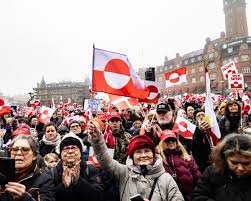 EU weighs response amid Greenland tariff crisis with Trump
 US Considers Asylum for British Jews Amid Rising Antisemitism
 ICE street raids expose a chilling future for public freedoms
 UK Ministers Drop Foreign Student Targets for Global Education Push
 MPs warn AI financial risks threaten UK stability
 MPs warn AI financial risks threaten UK stability
 Trump slams UK ‘stupidity’ over Chagos Islands, eyes Greenland takeover
 No Gas Boiler Ban as UK Warm Homes Plan Backs Heat Pumps
 Hugh Grant Joins Call for Under-16 Social Media Ban in UK
 Shinzo Abe’s killer receives life sentence in Japan
 Lords Vote Piles Pressure on Starmer Over Social Media Ban
 Sussan Ley leadership milestone shakes Liberal future
 EU Says US Ties Have Suffered ‘Big Blow’ After Greenland Crisis
 Andrew Hastie Emerges as Leadership Rival to Ley