Published: 09 February 2026. The English Chronicle Desk. The English Chronicle Online.
Portugal election results have delivered a decisive presidential victory for moderate socialist António José Seguro, while also revealing a powerful surge in support for his far-right challenger, André Ventura. The Portugal election outcome reflects both stability in leadership and a shifting political mood among sections of the electorate. Voters turned out despite severe weather disruption, showing strong engagement during a tense and closely watched national contest. The final numbers confirmed Seguro’s comfortable margin, yet Ventura’s historic vote share has reshaped political debate across the country and beyond.
Seguro secured 66.8 percent of the vote in the second round, defeating Ventura, who captured 33.2 percent nationwide. The margin was larger than many late campaign projections had suggested. Even so, Ventura’s performance marked the strongest ever presidential showing for a far-right candidate in modern Portuguese democracy. Analysts say the Portugal election has reinforced the centre ground while simultaneously legitimising a previously marginal political force.
The vote took place under difficult circumstances after weeks of destructive storms affected several regions. Flooding, infrastructure damage, and transport disruption raised concerns about turnout and fairness. Authorities declared a state of calamity in multiple districts, yet electoral officials insisted the constitutional timetable should remain intact. Most polling stations opened as planned, with only a small fraction of constituencies postponing voting for logistical reasons.

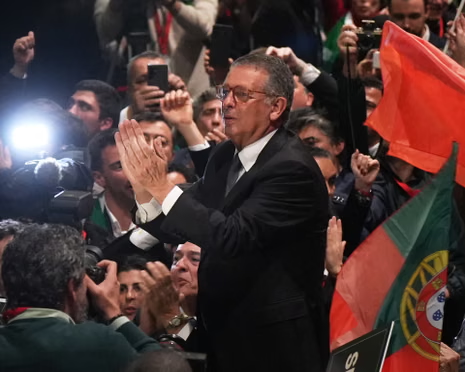
In his victory speech, Seguro praised voters for defending democratic values and national continuity. He said the public had chosen freedom, institutional balance, and social cohesion over division and confrontation. His remarks stressed unity and cooperation rather than triumph. He also pledged to work constructively with the sitting centre-right minority government led by Prime Minister Luís Montenegro.
Seguro positioned himself throughout the campaign as a stabilising figure who could bridge political divides. He emphasised constitutional responsibility, social protection, and measured reform. His message appealed to moderate conservatives as well as traditional centre-left supporters. Several senior right-leaning figures publicly backed him to block a far-right path to the presidency. That cross-party alignment proved decisive in the final round.
Ventura responded to defeat by declaring that his movement had permanently changed the political landscape. He argued that the vote confirmed his party, Chega, as the dominant force on the right. He claimed the broader political establishment had coordinated against him during the Portugal election campaign. Despite losing, he described the result as the foundation for future national power.
Chega built its campaign around anti-establishment messaging and strict immigration control proposals. Its advertising and rallies focused heavily on border policy, welfare access, and national identity themes. Some campaign messages drew sharp criticism from civil rights groups and migrant organisations. Opponents accused the party of promoting exclusionary rhetoric and social division. Supporters said it voiced concerns ignored by mainstream parties.
Ventura’s background as a media commentator and public personality helped him command attention. His communication style remained confrontational and direct throughout the race. That approach energised loyal supporters but also mobilised resistance among undecided voters. The Portugal election therefore became, in part, a referendum on political tone and democratic norms.
European leaders reacted quickly after the confirmed result. Messages of congratulations arrived from several capitals within hours of the official count. France’s president expressed readiness to cooperate closely on European competitiveness and sovereignty goals. European Commission leadership highlighted voter participation despite natural disasters as a sign of democratic resilience. Those reactions framed the outcome as reassuring for European institutional continuity.
Storm damage remained a serious backdrop to the vote. Emergency services continued recovery work while ballots were being cast. Ventura had argued for a short delay, saying equal participation required better conditions. The national electoral authority rejected that request, stating that adverse weather alone does not justify postponement. Only around 37,000 voters faced delayed polling, representing a very small share of the electorate.
Portugal’s presidency is largely ceremonial but still carries meaningful constitutional powers. The head of state can dissolve parliament under defined conditions and call fresh elections. The president also appoints certain officials and acts as a moderating institutional voice. Seguro signalled he would use these powers cautiously and within long-standing democratic conventions. He rejected calls for an activist or confrontational presidential model.
Financial markets and business groups reacted with measured calm after the result. Commentators noted that policy continuity reduces short-term uncertainty for investors. Seguro’s cooperative stance toward the current government suggested limited institutional conflict ahead. However, the scale of the far-right vote introduced a new variable into future legislative dynamics. The Portugal election may therefore influence party strategies in upcoming parliamentary contests.
Political scientists say the result reflects a broader European pattern. Centrist candidates often still win executive offices, yet populist challengers keep expanding their base. Economic pressure, housing costs, and migration flows remain key drivers of voter frustration. Portugal has not been immune to these forces, even with relatively stable growth indicators. Ventura’s numbers show that protest sentiment now has durable electoral weight.
Developments across the nearby Spanish border added further regional context. In Aragón, the far-right Vox party doubled its seat count in a regional contest. The conservative People’s party remained largest but required Vox support to govern. Spanish socialist leaders described themselves as the only progressive alternative despite recent losses. These parallel movements suggest a shifting Iberian political environment.
Within Portugal, mainstream parties are already reassessing their campaign approaches. Centre-right and centre-left strategists both acknowledged that voter trust cannot be assumed. Issues like public services, wages, and migration management will likely dominate future debates. Seguro’s victory speech called for practical solutions rather than ideological battles. Whether that message holds will shape post-Portugal election governance.

Civil society groups welcomed the orderly conduct of the vote despite hardship. Domestic observers reported that procedures remained transparent and secure. International monitors also noted strong administrative performance under pressure. Turnout levels, while slightly uneven by region, remained broadly consistent with recent presidential cycles. That participation reinforced confidence in institutional robustness.
Looking ahead, Seguro will take office with a strong personal mandate but a fragmented political atmosphere. His challenge will be to maintain dialogue across a more polarised spectrum. Ventura, meanwhile, is expected to consolidate his support and expand organisational reach. The Portugal election has closed one race but opened a longer contest over national direction and identity.
For many voters, the central message was not only who won, but how democracy functioned under strain. Ballots were cast through storms, disruption, and heated rhetoric. Institutions held firm, and results were accepted without procedural dispute. That alone marks a significant moment in the country’s modern democratic story and defines the lasting meaning of this Portugal election.
Related News:
 High-speed Spain train crash leaves nation in mourning
 EU weighs response amid Greenland tariff crisis with Trump
 EU Says US Ties Have Suffered ‘Big Blow’ After Greenland Crisis
 Thousands Left Without Heating in Ukraine Amid Russia Strikes
 Russia sanctions hit economy hard, says EU envoy
 British Woman in Iran ‘Losing Hope’ Amid Ongoing Detention
 BBC Journalist Held and Interrogated in Vietnam
 Top Christmas Books Reads: Classics to Cozy Romcoms
 Just Stop Oil Protesters Convicted Amid Climate Defence Row
 BBC to Apologise Over Edited Trump Speech Amid Backlash
 Britain deploys RAF specialists to assist Belgium with drone threats
 Palace May Restore Hyphen to Andrew Mountbatten-Windsor’s Name
 US Senate Passes Funding Bill to End Historic Shutdown
 Suicide Bombing at Islamabad Court Kills 12, Injures Dozens
 Hitler’s DNA Confirms He Truly Had Only One Testicle
 US Justice Department Files Lawsuit Against California Over Partisan Voting Maps
 Oklahoma Governor Grants Last-Minute Clemency to Death Row Inmate
 Greene Pushes Epstein Files Amid Trump Fallout
 Trump Deploys DHS to Charlotte in Major Arrest Operation
 December Run-Off in Chile as Election Produces No Winner
 Zelenskyy Signs Fighter Jet Deal Amid Russian Drone Attacks
 Orban Says Ukraine Has ‘No Chance’ as EU Support Continues
 Canada Passes Carney’s First Budget in Tight Parliamentary Vote
 Israeli Strike Kills 13 Near Palestinian Camp in Lebanon
 Zelensky Meets US Envoy in Turkey to Push Ukraine Peace Talks
 Shadow Fleet at Sea: Europe’s Battle Against Illicit Oil Shipping
 Tiny Curacao Makes History as Smallest Nation to Reach World Cup
 Haiti Qualifies for World Cup Despite Coach Never Visiting Country
 Deadly Russian Strikes Hit Western Ukraine, 20 Killed in Ternopil
 Pentagon Officials in Ukraine to Discuss War End
 Ukraine Peace Plan: Zelensky Ready for Dialogue
 Vietnam Battles Deadly Floods as Rains Continue
 Venezuela Threatens Nobel Winner Machado with Fugitive Status
 At Least Three Dead in Bangladesh Earthquake
 Royal Navy Shadows Russian Warships Entering the Channel
 Israel Confirms Hamas Returned Dror Or’s Body
 US Suspends Afghan Immigration After White House Shooting
 Two National Guard Soldiers Critically Injured Near White House
 Georgians Defy Government Crackdown After Year of Protests
 Southern Lebanon reels as Israeli strikes shatter communities
 Mbappe Scores 4 as Real Madrid Edge Olympiakos
 Sri Lanka Floods Leave 56 Dead, Dozens Missing
 India’s Labour Law Overhaul Sparks Fierce Debate
 Tokyo court rules Japan’s same-sex marriage ban constitutional
 ‘Extinct’ Antelope Returns to Sahara, Bringing Hope
 EU plans $105bn Ukraine aid using frozen Russian assets
 Global campaign launched to free Palestinian leader Barghouti
 American Mother Extradited From UK to U.S. on Murder Charges
 Khaleda Zia, Bangladesh’s First Female Prime Minister, Dies at 80
 Russia losses Ukraine war peace talks intensify amid rising deaths
 Facebook Slow to Remove Bondi Attack Praise, Anti-Hate Group Claims
 Australian Cruise Ship Freed After Reef Grounding in Papua New Guinea
 Zelenskyy Accuses Russia of Sabotaging Peace Talks
 US Cities Erupt in Protests Against Trump’s Venezuela Military Action
 Albanese Opens Door to Bondi Royal Commission Amid Rising Pressure
 Trump Escalates Minnesota Immigration Surge Amid Rising Tensions
 Venezuela Oil Shift to US Could Disrupt China Supplies
 Iran Protesters Defy Crackdown as Violent Clashes Intensify
 US Clears Nvidia AI Chip Sales to China in Policy Shift
 Trump Threatens Strong Action If Iran Executes Protesters
 Gulf states warn Trump Iran strikes risk wider Middle East war
 Machado Trump medal gesture reshapes Venezuela power struggle
 Greenland defence seen as shared Nato duty amid troop arrivals
 Trump Receives Machado’s Nobel Medal in White House Meeting
 Syria President Declares Victory as Ceasefire Reached with SDF
 US Considers Asylum for British Jews Amid Rising Antisemitism
 Sydney Shark Attack Surge Shocks Australia Beaches
 ICE street raids expose a chilling future for public freedoms
 Thousands Flee Cambodia Scam Centres Amid Global Pressure
 Andrew Hastie Emerges as Leadership Rival to Ley
 Starmer China visit raises human rights pressure on Beijing
 Arizona border shooting leaves suspect hospitalised after agent pursuit
 US Launches Multi-Day Air Drills Amid Rising Iran Tensions
 Videos reveal earlier clash before Alex Pretti shooting
 China Executes 11 Linked to Myanmar Scam Networks
 UK New Car Discounts Near £6,000 as Prices Are Slashed
 Israel Moves to Bar MSF From Gaza Operations
 Tragic Ski Lift Accident Claims Australian Snowboarder
 Trump Praises ‘Terrific’ Petro After White House Talks
 Canada Dispatches Senior Officials to Open Greenland Consulate