Published: 23 February 2026. The English Chronicle Desk. The English Chronicle Online.
The killing of El Mencho has triggered widespread violence across western Mexico. Mexican authorities confirmed that the feared cartel leader died during a military operation in Jalisco. News of El Mencho’s death spread quickly, prompting roadblocks, fires, and armed confrontations in multiple states. The dramatic scenes underscored his powerful grip on criminal networks across the country.
Mexico’s defence ministry announced that Nemesio Rubén Oseguera Cervantes, widely known as El Mencho, was killed on Sunday. The 59-year-old led the powerful Jalisco New Generation Cartel, often referred to by its initials CJNG. Officials stated that he died alongside at least six alleged associates during a special forces operation in Jalisco’s mountainous region.
According to the ministry, elite army and National Guard units launched the mission in Tapalpa. The town lies within the Sierra Madre range, about eighty miles from Guadalajara. Troops reportedly came under heavy gunfire while attempting to capture the cartel boss. They returned fire, resulting in a fierce confrontation that lasted several hours.
Four suspected cartel members were killed at the scene. Three others, including El Mencho, later died while being flown to Mexico City. Authorities said two additional suspects were arrested with high-powered weapons. Seized equipment reportedly included rocket launchers capable of damaging armoured vehicles and aircraft.

The operation also came at significant cost to security forces. Three soldiers were injured and transported for urgent medical treatment. A Jalisco state official later indicated that several National Guard members were killed in related clashes. Additional fatalities were reported in Zapopan, Puerto Vallarta, and Guadalajara amid unrest.
El Mencho had risen from relative obscurity to become one of the world’s most wanted traffickers. Under his leadership, the CJNG expanded rapidly across Mexico and beyond. The group built a reputation for military-style organisation and brutal displays of force. Its dominance rivalled that of the Sinaloa cartel, once headed by Joaquín “El Chapo” Guzmán.
Although less internationally recognised than El Chapo, El Mencho commanded deep influence at home. His organisation controlled strategic smuggling routes for cocaine, methamphetamine, and fentanyl. The United States had offered a reward of fifteen million dollars for information leading to his capture. American officials accused him of flooding communities with synthetic opioids.
Mexico’s defence ministry acknowledged that United States authorities provided complementary intelligence. The US embassy later confirmed that the operation reflected bilateral security cooperation. A specialised American task force focused on cartel intelligence reportedly supported planning efforts. Officials stressed that Mexican forces led the mission on national territory.
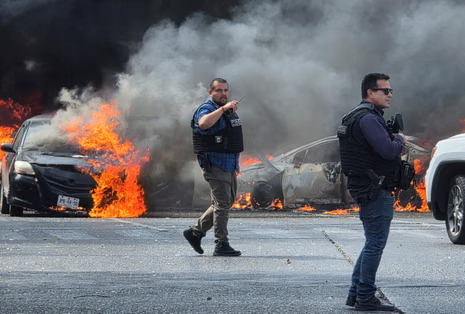
Within hours of confirmation, unrest erupted across at least eight Mexican states. Burning vehicles blocked major highways in Jalisco, Guanajuato, Nayarit, and Michoacán. Similar incidents occurred in Colima, Guerrero, Tamaulipas, and Zacatecas. Thick smoke filled skies above cities as gunmen torched buses and lorries.
In Guadalajara, panic spread through the international airport. Passengers were seen running for cover amid fears of reprisal attacks. Armed men set vehicles ablaze in central districts, heightening tension across the city. By nightfall, many streets appeared deserted as residents sheltered indoors.
Puerto Vallarta, a popular Pacific resort destination, also witnessed alarming scenes. Video footage showed plumes of smoke rising near busy neighbourhoods. Airlines responded swiftly to protect travellers and crew. Flights from the United States and Canada were cancelled or suspended indefinitely.
Air Canada announced it would suspend services to Puerto Vallarta due to security concerns. The carrier advised passengers not to travel to the airport. Other North American airlines reviewed schedules as the situation evolved rapidly. Tourism officials expressed concern about economic fallout during peak travel season.
Schools in several affected regions cancelled classes for Monday. Public transport services were suspended in parts of Jalisco for safety reasons. Governor Pablo Lemus Navarro urged residents to remain indoors until order returned. He described the disturbances as violent events spreading to multiple municipalities.
The US embassy in Mexico City issued a security alert for American citizens. It advised individuals in high-risk states to shelter in place temporarily. Canada’s government delivered similar guidance to its nationals in affected regions. Both embassies encouraged travellers to monitor local media updates closely.
Senior figures in Washington reacted strongly to the development. Officials described El Mencho as among the most ruthless traffickers operating globally. They emphasised that disrupting fentanyl supply chains remains a strategic priority. Public statements framed the operation as a major breakthrough against organised crime.
The killing follows months of diplomatic pressure over drug flows and migration. Former President Donald Trump had previously criticised Mexico’s handling of cartel violence. His administration discussed enhanced cross-border cooperation to combat trafficking networks. Recent intelligence sharing appears to reflect renewed operational alignment.
Analysts described the raid as the most significant blow to Mexican cartels in years. Yet they warned that removing a leader rarely dismantles entrenched structures. Criminal organisations often fragment or retaliate violently after high-profile losses. The immediate wave of roadblocks demonstrated that risk clearly.
Security experts believe succession struggles could further destabilise affected territories. The CJNG operates through semi-autonomous regional commanders with established networks. Those figures may compete for influence or attempt to prove loyalty through aggression. Such dynamics can intensify violence in the short term.
President Claudia Sheinbaum addressed the nation, urging calm and vigilance. She insisted that coordination between federal and state authorities remains strong. Official social media channels provided updates throughout the day. She maintained that daily life continued normally across most of the country.

Despite assurances, residents reported anxiety and uncertainty overnight. Shops closed early and many families chose to stay indoors. Social media platforms filled with images of fires and armed convoys. Authorities worked to clear blocked roads and restore public confidence.
International observers noted the symbolic importance of the operation. For years, El Mencho embodied the rise of newer, aggressive cartels. His organisation leveraged paramilitary tactics and advanced weaponry. Eliminating such a figure signals determination but also exposes fragile security gains.
Economic implications may unfold in coming weeks. Tourism accounts for significant revenue in Jalisco’s coastal cities. Any prolonged instability could deter visitors and investors alike. Officials emphasised that airports and highways would reopen once conditions stabilised.
For communities long affected by cartel violence, reactions were complex. Some residents expressed relief at the downfall of a feared leader. Others worried that rival factions could spark further bloodshed. The coming days will likely test government capacity and resilience.
The death of El Mencho marks a pivotal chapter in Mexico’s struggle against organised crime. It highlights the scale of coordination required to confront entrenched networks. Yet it also reveals the volatility that follows decisive action. As authorities attempt to restore order, citizens hope stability will endure beyond the headlines.
Related News:
 Trump Speaks on Prince Andrew’s Royal Scandal Fallout
 Pregnant UK Teen to Be Freed from Georgian Jail
 UK University Faces Counter-Terror Probe Over China Pressure
 Just Stop Oil Protesters Convicted Amid Climate Defence Row
 British Grandmother to Return Home After Death Sentence in Bali
 Second world war veterans honoured as King leads Remembrance Sunday
 BBC’s Tim Davie to Address Staff Amid Trump $1bn Threat
 Shook the ground under my feet: Panic as car blast hits near Delhi’s Red Fort
 Ukraine-Russia war latest: Putin’s troops exploit bad weather to force Kyiv withdrawal from multiple towns
 New Epstein Files Spark Political Clash in Washington
 Sydney Pair Accused of Running Multimillion-Dollar Scam
 Ukraine Energy Corruption Scandal Hits Zelensky’s Inner Circle
 Oklahoma Governor Grants Last-Minute Clemency to Death Row Inmate
 US Pushes Global Effort to Stop Arms Flow to Sudan RSF Forces
 Israel Confirms Returned Hostage as Meny Godard
 Greene Pushes Epstein Files Amid Trump Fallout
 Tragedy Strikes Indian Pilgrims in Saudi Bus Accident
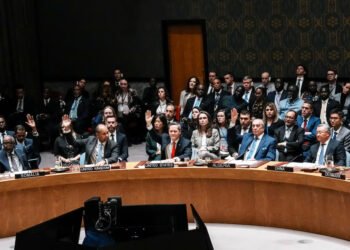 UN Security Council Approves Trump’s Gaza Peace Plan
 Thousands at Risk in Gaza Amid Winter Flooding
 Forgotten War, Shattered Lives: Sexual Violence Devastates Women in Ethiopia
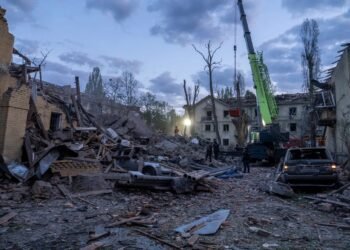 Deadly Russian Strikes Hit Western Ukraine, 20 Killed in Ternopil
 Teens ‘Ran Amok’ at Ex-MP’s Covid Testing Firm
 WhatsApp Messages Expose Nathan Gill’s Bribery
 South African Women Call Purple Protest Over Gender Violence
 Venezuela Threatens Nobel Winner Machado with Fugitive Status
 Trump Envoy to Discuss Ukraine Peace at Kremlin
 Twenty-Four Nigerian Schoolgirls Freed After Abduction
 Two National Guard Soldiers Critically Injured Near White House
 Southern Lebanon reels as Israeli strikes shatter communities
 Video shows Israeli troops kill Palestinians after surrender
 Guinea-Bissau President Flees After Military Coup
 Kidnap Gangs, Jihadists and Separatists Plague Nigeria
 Rare shark attack kills woman, injures man at remote NSW beach
 American Mother Extradited From UK to U.S. on Murder Charges
 Tragic Death of British Teen in Portugal Shocks Families and Raises Concerns
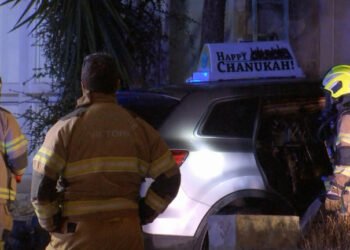 Melbourne Rabbi’s Car Firebombed Amid Hanukah Celebrations
 Thousands Flee Cambodia Scam Centres Amid Global Pressure
 Saif al-Islam Gaddafi Reportedly Killed in Libya Shooting
 Suspect Named in Canada School Mass Shooting
 SA Police Intensify Search in Gus Lamont Case
 Taylor Swift concert attack plot shocks Austria
 NSW kidnapping mistake sparks urgent appeal
 Northern Ireland Family of Three Shot Dead in Maguiresbridge Home Incident
 Channel Crossings Surge: Over 1,000 People Arrive in the UK in Small Boats in a Single Day
 Peterborough Mosques Tighten Security After Attack
 UK Bans Fake Numbers: Scammers Lose Their Trick
 BBC to Apologise Over Edited Trump Speech Amid Backlash
 Britain deploys RAF specialists to assist Belgium with drone threats
 Indian authorities demolish Kashmir home linked to Red Fort blast
 December Run-Off in Chile as Election Produces No Winner
 Zelenskyy Signs Fighter Jet Deal Amid Russian Drone Attacks
 Shadow Fleet at Sea: Europe’s Battle Against Illicit Oil Shipping
 Tiny Curacao Makes History as Smallest Nation to Reach World Cup
 Man Denies Stealing Bronze Age Gold from Museum
 Inside the Helpline Protecting Missing Children in the UK
 Runaway Driver Caught by DNA Evidence
 US Suspends Afghan Immigration After White House Shooting
 Georgians Defy Government Crackdown After Year of Protests
 ‘Extinct’ Antelope Returns to Sahara, Bringing Hope
 Facebook Slow to Remove Bondi Attack Praise, Anti-Hate Group Claims
 Albanese Opens Door to Bondi Royal Commission Amid Rising Pressure
 US Clears Nvidia AI Chip Sales to China in Policy Shift
 New Documentary Examines Teen’s Zombie Knife Murder
 Gulf states warn Trump Iran strikes risk wider Middle East war
 Woman Jailed for Life After Killing E-Bike Rider in Tragic Mistaken Identity Case
 EU weighs response amid Greenland tariff crisis with Trump
 Sydney Shark Attack Surge Shocks Australia Beaches
 EU Says US Ties Have Suffered ‘Big Blow’ After Greenland Crisis
 Police response times face strict new national limits
 Salford Attempted Robbery Sees 95-Year-Old Woman Tied Up
 Videos reveal earlier clash before Alex Pretti shooting
 UK New Car Discounts Near £6,000 as Prices Are Slashed
 Israel Moves to Bar MSF From Gaza Operations
 Police Doubt Fugitive Dezi Freeman Survived Bushland
 Portugal Election Delivers Socialist Win as Far Right Surges
 Australian Families Leave Syrian Camp for Home
 Nine Arrested in France Over Death of Far‑Right Student
 Eight Skiers Found Dead After California Avalanche
 Andrew Arrest Sparks Republic Debate in Australia
 Epstein Eyed Record Label Investment to Access Women, Files Suggest