Published: 23 February 2026. The English Chronicle Desk. The English Chronicle Online.
The Duterte ICC hearing has formally begun in The Hague this week. Proceedings opened despite the former Philippine president refusing to attend in person. Judges at the International Criminal Court confirmed the pre-trial session would move forward as scheduled. The case marks a historic moment for victims of the controversial drug war.
Rodrigo Duterte, now 80, was arrested in Manila last year. He was later flown to the Netherlands to face allegations. Prosecutors accuse him of crimes against humanity linked to his anti-drug campaign. Thousands of civilians were killed during operations that drew widespread condemnation.
The pre-trial stage will assess whether sufficient evidence exists to proceed. Judges must determine if substantial grounds support charges of murder and attempted murder. The hearing is expected to conclude on Friday. A written ruling should follow within sixty days. If charges are confirmed, the case will advance to a full trial.
Duterte declined to appear before the court this week. In a statement released days earlier, he described himself as old and frail. He claimed to suffer from memory problems and declining health. His legal team requested that his attendance be waived. Judges agreed to excuse him temporarily, though they described the reasons as speculative.

Last month, the court rejected arguments that Duterte was unfit. Defence lawyers had argued he suffered cognitive impairment in multiple domains. However, medical assessments presented to the bench did not convince judges. The panel concluded he remained capable of participating in proceedings. That ruling cleared the path for the Duterte ICC hearing to begin.
The charges stem from a violent anti-drug crackdown launched in 2016. Duterte campaigned on promises to eradicate narcotics through uncompromising force. After winning the presidency, he publicly urged civilians to target suspected dealers. He assured police officers they would not face prosecution for killings. His rhetoric shocked many observers worldwide.
During one speech, he said he would be happy to slaughter millions. He even compared himself to Adolf Hitler in a deeply controversial remark. On another occasion, he claimed he had personally killed suspects. Those statements later became central to the prosecution narrative. Investigators argue they demonstrate intent and encouragement of violence.
The ICC investigation covers alleged crimes from November 2011 onward. That period includes Duterte’s time as mayor of Davao City. It also extends through his presidency until March 2019. The Philippines formally withdrew from the court on 16 March 2019. However, judges ruled the ICC retained jurisdiction over earlier alleged crimes.
Prosecutors estimate between 12,000 and 30,000 civilians were killed. Many deaths occurred during police operations targeting alleged drug suspects. Human rights groups documented patterns of similar shootings nationwide. Families often reported masked gunmen and unclear circumstances. Critics described the campaign as systematic and brutal.
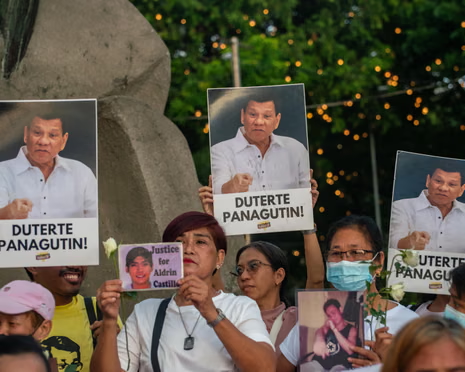
For many families, the Duterte ICC hearing represents long-awaited recognition. Sarah Celiz lost her two sons in separate incidents in 2017. She has campaigned for accountability ever since their deaths. Speaking this week, she rejected calls for sympathy. She said her sons begged for mercy and received none.
Another mother, Llore Pasco, also lost two sons during operations. In a statement, she described Duterte as desperate to avoid accountability. She called his refusal to attend an act of cowardice. Her words echoed sentiments shared by several advocacy groups. They argue justice must not be delayed further.
Duterte strongly denies overseeing extrajudicial killings. He calls the accusations an outrageous lie. He also disputes the court’s authority over him. In a recent message, he described his arrest as a kidnapping. He claimed he was forcibly placed on a jet. He accused current president Ferdinand Marcos Jr of facilitating the transfer.
Ferdinand Marcos Jr has not publicly detailed operational decisions behind the arrest. However, his administration has signalled cooperation with international mechanisms. Duterte insists his transfer violated Philippine sovereignty and constitutional protections. He maintains that his heart and soul remain with the nation.
Despite international criticism, Duterte retained strong domestic support. Many Filipinos credited him with reducing visible street crime. Surveys during his presidency reflected high approval ratings. His populist style resonated with significant sections of society. That enduring loyalty remains visible in online discussions and rallies.
His daughter, Sara Duterte, currently serves as vice-president. She recently announced plans to run in the 2028 presidential election. Early polling suggests she would be a formidable contender. Some families of drug war victims fear political backlash. They worry about potential retaliation if power shifts again.
Yet others insist fear no longer shapes their decisions. Celiz said she lost her fear the day her sons died. She believes the court represents the only remaining avenue for justice. For her, the Duterte ICC hearing offers fragile hope. It also brings painful memories back into public view.
Legal experts note that pre-trial confirmation hearings are rigorous. Prosecutors must present documentary evidence and witness accounts. Defence teams can challenge reliability and credibility. Judges weigh whether the threshold for trial has been met. The process aims to protect fairness for both victims and the accused.
Observers in The Hague describe heightened security and global attention. Media organisations from Europe and Asia have gathered outside the courthouse. Activists held vigils honouring those killed during the crackdown. Supporters of Duterte also staged demonstrations online and abroad. The atmosphere reflects deep divisions within Philippine society.

International human rights organisations have welcomed the proceedings. They argue accountability strengthens global norms against impunity. However, some legal scholars caution that trials may take years. Complex cases involving crimes against humanity require extensive evidence. Witness protection also remains a significant challenge.
For now, the focus remains on whether charges will be confirmed. The Duterte ICC hearing is only the beginning of a longer process. A confirmation would lead to a full trial phase. That stage would include more detailed testimony and cross-examination.
As the week unfolds, families continue watching developments closely. Many have waited nearly a decade for formal judicial scrutiny. They hope the court will move swiftly yet carefully. They also understand that justice through international law can be slow.
The outcome could influence future accountability efforts worldwide. It may shape how leaders calculate risks of controversial policies. For the Philippines, it raises questions about national memory and reconciliation. The Duterte ICC hearing stands at the intersection of law, politics and grief.
Whatever the judges decide, the case has already entered history. It has reopened wounds and revived fierce debate. It has also given victims a platform beyond national borders. In courtrooms far from Manila, their stories are finally being heard.
Related News:
 British Woman in Iran ‘Losing Hope’ Amid Ongoing Detention
 BBC Journalist Held and Interrogated in Vietnam
 UK University Suspends Human Rights Research Following Pressure from China
 UK University Faces Counter-Terror Probe Over China Pressure
 Abigail Spanberger Elected Virginia’s First Female Governor
China-critical UK academics face ‘extremely heavy’ pressure from Beijing
Abigail Spanberger Elected Virginia’s First Female Governor
China-critical UK academics face ‘extremely heavy’ pressure from Beijing
 British military receives first Ajax armoured vehicles – eight years late
 BBC to Apologise Over Edited Trump Speech Amid Backlash
 Britain deploys RAF specialists to assist Belgium with drone threats
 Ukraine-Russia war latest: Putin’s troops exploit bad weather to force Kyiv withdrawal from multiple towns
 Trump Claims Victory as Longest Shutdown Ends
 Hamas Fighters in Gaza Tunnels Stall Ceasefire Progress
 US Justice Department Files Lawsuit Against California Over Partisan Voting Maps
 South Sudan President Removes Vice-President Amid Political Uncertainty
 Greene Pushes Epstein Files Amid Trump Fallout
 Trump Deploys DHS to Charlotte in Major Arrest Operation
 December Run-Off in Chile as Election Produces No Winner
 Canada Passes Carney’s First Budget in Tight Parliamentary Vote
 Why Russian Liberals Push Strongly Pro-Israel Narratives
 Congress Approves Release of Epstein Files, Trump Expected to Sign
 Shadow Fleet at Sea: Europe’s Battle Against Illicit Oil Shipping
 Rama Rebukes Mahmood for Targeting Albanian Families
 Russian Vessel Used Lasers on RAF Pilots, UK Claims
 Pentagon Officials in Ukraine to Discuss War End
 US Military Team Visits Kyiv Amid War Talks
 Venezuela Threatens Nobel Winner Machado with Fugitive Status
 Texas Governor Faces Lawsuit From CAIR
 Trump Envoy to Discuss Ukraine Peace at Kremlin
 Pope Leo XIV Begins Historic Trip to Turkey and Lebanon
 Georgians Defy Government Crackdown After Year of Protests
 India’s Labour Law Overhaul Sparks Fierce Debate
 Video shows Israeli troops kill Palestinians after surrender
 Chinese & Japanese Boats Clash Near Disputed Islands
 EU plans $105bn Ukraine aid using frozen Russian assets
 Global campaign launched to free Palestinian leader Barghouti
 UK Aid Cuts Could Undermine Global Influence, Experts Warn
 Thailand and Cambodia Agree Ceasefire After Weeks of Deadly Clashes
 Russia losses Ukraine war peace talks intensify amid rising deaths
 Zelenskyy Accuses Russia of Sabotaging Peace Talks
 Trump ‘Not Worried’ as China Conducts Massive Taiwan Wargame
 Khaleda Zia Laid to Rest with State Honour in Dhaka
 Maduro Faces Court in New York Over Drugs and Weapons Case
 Albanese Opens Door to Bondi Royal Commission Amid Rising Pressure
 Shock US Raid: Maduro Pleads Not Guilty in Manhattan Court
 Trump Escalates Minnesota Immigration Surge Amid Rising Tensions
 Iran Protesters Defy Crackdown as Violent Clashes Intensify
 Iran Leader Blames Protesters, Says They Serve Trump
 Trump Eyes Strong Military Options Amid Iran Protest Crackdown
 Trump Threatens Strong Action If Iran Executes Protesters
 Machado Trump medal gesture reshapes Venezuela power struggle
 Trump Receives Machado’s Nobel Medal in White House Meeting
 EU weighs response amid Greenland tariff crisis with Trump
 US Considers Asylum for British Jews Amid Rising Antisemitism
 ICE street raids expose a chilling future for public freedoms
 US Africa aid remarks spark anger after leaked State email
 Trump Launches “Board of Peace” Amid Global Diplomacy Push
 EU Says US Ties Have Suffered ‘Big Blow’ After Greenland Crisis
 Andrew Hastie Emerges as Leadership Rival to Ley
 Russia Strikes Kyiv and Kharkiv as Peace Talks Enter Day Two
 Pentagon Signals Reduced Role in Deterring North Korea
 Starmer China visit underscores clear-eyed national security stance
 Starmer China visit raises human rights pressure on Beijing
 Israel Moves to Bar MSF From Gaza Operations
 Mandelson resignation shakes Labour over Epstein row
 Cory Bernardi joins One Nation for SA election
 Saif al-Islam Gaddafi Reportedly Killed in Libya Shooting
 Trump Praises ‘Terrific’ Petro After White House Talks
 Sydney Protest Escalates and Elderly Woman Suffers Severe Injury
 Tarique Rahman’s Rise Toward Bangladesh’s Top Job
 Glass Cliff Debate After Ley’s Ouster
 Japan Seizes Chinese Boat Amid Rising Tensions
 Sydney Protest Clash Triggers Police Probe
 Australian Families Leave Syrian Camp for Home
 Trump Attacks UK-California Energy Pact
 Kim Jong-un Unveils Housing for War Families
 Trump Warns Over Chagos Islands Deal
 Trump and Chagos Deal Rift Over Iran Strikes
 Andrew Mountbatten-Windsor Arrest After FBI Radar
 Andrew Arrest Sparks Republic Debate in Australia
 Global corruption crisis: Who Washington shields