Published: 26 February 2026. The English Chronicle Desk. The English Chronicle Online.
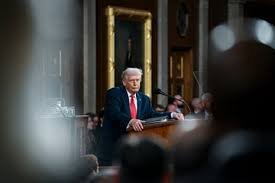
The recent American State of the Union address will likely be remembered more for its sheer length than its actual substance. Donald Trump stood before a divided Congress last night to deliver a speech that spanned one hour and forty-seven minutes. This performance officially set a new record as the longest address of its kind in United States history. Throughout the evening, the president employed his signature rhetorical style, which he often describes as a complex weave of various topics. He moved between scripted policy points and sharp personal attacks against his political rivals with visible energy at the start. However, as the night progressed, the ambitious State of the Union event seemed to drain the president of his usual fiery charisma. Observers noted that his delivery became increasingly robotic and detached during the final hour of the massive television broadcast.
The president attempted to balance the roles of a comedic performer and a serious national leader. He frequently paused to acknowledge his allies in the room while lobbing insults at several prominent Democrats. At one point, he specifically targeted Zohran Mamdani with labels that highlighted the deep ideological rifts within the American capital. Despite these aggressive moments, the president also tried to present himself as a figure of national unity. This shifting tone created a confusing experience for many viewers watching the State of the Union from their homes. While he was alert and sharp during his improvisational riffs, he appeared tired when returning to the teleprompter. This fatigue was evident as he navigated through a dense forest of policy descriptions and historical reflections.

This specific address arrived at a critical juncture for the current administration and the Republican party. With the midterm elections only months away, the president desperately needed a successful political reset to improve his standing. Recent polling suggests that his approval ratings have dropped significantly following several controversial incidents involving federal immigration agents. Public outrage has grown over the tragic deaths of American citizens during recent enforcement actions in the Midwest. Furthermore, the administration faces intense criticism for a foreign policy that many experts describe as incoherent and risky. The State of the Union was intended to bridge these gaps and reassure a nervous American electorate. Instead, the length of the speech seemed to bury any clear message under a mountain of words.
The president once campaigned on a firm promise to avoid long and expensive foreign military conflicts. However, the current global situation suggests that the United States is now deeply involved in multiple regions. A significant naval flotilla is currently positioned near Iran, raising fears of imminent airstrikes and further regional instability. Simultaneously, military tensions are rising across the Caribbean, complicating relations with many long-term Western allies. The president’s specialized Board of Peace has struggled to gain any meaningful international support for these bold maneuvers. Many critics argue that these actions are actively degrading the traditional international order that Americans helped to build. During the State of the Union, these complex global challenges were largely addressed through vague slogans rather than detailed plans.
Economic concerns also loomed large over the chamber as the president defended his controversial trade policies. His aggressive tariff strategy has become increasingly unpopular among both Republican lawmakers and their Democratic counterparts in the House. Recent economic data indicates that a significant slump may be approaching, threatening the stability of the domestic market. Reports show that the country has lost over one hundred thousand manufacturing jobs in the past year alone. This reality stands in stark contrast to previous promises that tariffs would bring industrial glory back to America. The State of the Union provided an opportunity to address these job losses with a fresh economic vision. Unfortunately, the president chose to stick to his previous rhetoric, blaming external forces for internal struggles.
The disconnect between official White House claims and the daily lives of citizens continues to grow wider. More than two-thirds of the American public believe the president is ignoring the most pressing national problems. Independent voters, who are crucial for any election victory, appear to be leaving the Republican coalition in droves. Over half of the electorate expresses deep dissatisfaction with how the current administration manages the national economy. During the State of the Union, the president claimed he inherited a failing system from his predecessor. However, reputable financial publications had previously described the American economy as the envy of the global community. This historical revisionism did little to calm the anxieties of families struggling with the rising cost of living.
To distract from these domestic failures, the president utilized several emotional tributes throughout the long evening. He invited members of the national men’s hockey team to receive a standing ovation from the assembled lawmakers. These moments of manufactured patriotism are a staple of the modern State of the Union tradition started decades ago. He also spoke at length about the upcoming two hundred and fiftieth anniversary of the American founding. References to the heroes of the Second World War were included to evoke a sense of shared national pride. While these segments were well-received by those in the room, they failed to provide a cohesive narrative. The speech often felt like a series of disconnected events rather than a focused plan for the future.
The sheer duration of the event led some commentators to compare the experience to a grueling endurance test. Many important topics were surprisingly absent from the president’s lengthy remarks despite the ticking clock of international crises. He failed to offer a clear strategy regarding the ongoing conflict in Ukraine as it reaches a somber anniversary. There was also no mention of the specific citizens killed by immigration agents, a topic of intense public debate. This omission was particularly striking given how much time was spent discussing border security and law enforcement. The State of the Union seemed to exist in a vacuum, separated from the immediate concerns of the people. This perceived lack of empathy may further alienate voters who feel unheard by the current political establishment.

Inflation remains a primary concern for the average household, yet the president’s solutions seemed disconnected from reality. Prices for basic groceries like hamburger meat and coffee have surged by nearly twenty percent over the last year. Furthermore, the dream of homeownership is slipping away for the majority of the American population. The expiration of key healthcare subsidies also threatens to make medical insurance unaffordable for millions of working families. Meanwhile, recent legislative actions have provided massive tax cuts to the wealthiest one percent of the country. These economic contradictions were not effectively resolved during the record-breaking State of the Union performance. Instead, the president relied on his usual talent for diversion and theatrical flair to fill the time.
As the president concluded his marathon address, he returned to the theme of historical greatness and national legacy. He often references the year seventeen seventy-six as a symbol of American resilience and democratic beginnings. However, historians note that this was also the year a famous study on the fall of Rome was published. That classic work explored how great nations can suffer when their civic institutions are allowed to wither. It suggested that societies often fail when they blame foreigners for their problems and prioritize entertainment over substance. The long and meandering State of the Union delivered last night may serve as a modern example of this historical warning. Whether the president can regain his momentum before the midterms remains an open and very urgent question.
Related News:
 British Woman in Iran ‘Losing Hope’ Amid Ongoing Detention
 BBC Journalist Held and Interrogated in Vietnam
 UK University Suspends Human Rights Research Following Pressure from China
 UK University Faces Counter-Terror Probe Over China Pressure
 Abigail Spanberger Elected Virginia’s First Female Governor
China-critical UK academics face ‘extremely heavy’ pressure from Beijing
Abigail Spanberger Elected Virginia’s First Female Governor
China-critical UK academics face ‘extremely heavy’ pressure from Beijing
 British military receives first Ajax armoured vehicles – eight years late
 BBC to Apologise Over Edited Trump Speech Amid Backlash
 Britain deploys RAF specialists to assist Belgium with drone threats
 Ukraine-Russia war latest: Putin’s troops exploit bad weather to force Kyiv withdrawal from multiple towns
 Trump Claims Victory as Longest Shutdown Ends
 Hamas Fighters in Gaza Tunnels Stall Ceasefire Progress
 US Justice Department Files Lawsuit Against California Over Partisan Voting Maps
 South Sudan President Removes Vice-President Amid Political Uncertainty
 Greene Pushes Epstein Files Amid Trump Fallout
 Trump Deploys DHS to Charlotte in Major Arrest Operation
 December Run-Off in Chile as Election Produces No Winner
 Canada Passes Carney’s First Budget in Tight Parliamentary Vote
 Why Russian Liberals Push Strongly Pro-Israel Narratives
 Congress Approves Release of Epstein Files, Trump Expected to Sign
 Shadow Fleet at Sea: Europe’s Battle Against Illicit Oil Shipping
 Rama Rebukes Mahmood for Targeting Albanian Families
 Russian Vessel Used Lasers on RAF Pilots, UK Claims
 Pentagon Officials in Ukraine to Discuss War End
 Venezuela Threatens Nobel Winner Machado with Fugitive Status
 Texas Governor Faces Lawsuit From CAIR
 Trump Envoy to Discuss Ukraine Peace at Kremlin
 Pope Leo XIV Begins Historic Trip to Turkey and Lebanon
 Georgians Defy Government Crackdown After Year of Protests
 India’s Labour Law Overhaul Sparks Fierce Debate
 Video shows Israeli troops kill Palestinians after surrender
 Chinese & Japanese Boats Clash Near Disputed Islands
 EU plans $105bn Ukraine aid using frozen Russian assets
 Global campaign launched to free Palestinian leader Barghouti
 UK Aid Cuts Could Undermine Global Influence, Experts Warn
 Thailand and Cambodia Agree Ceasefire After Weeks of Deadly Clashes
 Russia losses Ukraine war peace talks intensify amid rising deaths
 Zelenskyy Accuses Russia of Sabotaging Peace Talks
 Trump ‘Not Worried’ as China Conducts Massive Taiwan Wargame
 Khaleda Zia Laid to Rest with State Honour in Dhaka
 Maduro Faces Court in New York Over Drugs and Weapons Case
 Albanese Opens Door to Bondi Royal Commission Amid Rising Pressure
 Trump Escalates Minnesota Immigration Surge Amid Rising Tensions
 Iran Protesters Defy Crackdown as Violent Clashes Intensify
 Iran Leader Blames Protesters, Says They Serve Trump
 Trump Eyes Strong Military Options Amid Iran Protest Crackdown
 Trump Threatens Strong Action If Iran Executes Protesters
 Machado Trump medal gesture reshapes Venezuela power struggle
 Trump Receives Machado’s Nobel Medal in White House Meeting
 EU weighs response amid Greenland tariff crisis with Trump
 US Considers Asylum for British Jews Amid Rising Antisemitism
 ICE street raids expose a chilling future for public freedoms
 US Africa aid remarks spark anger after leaked State email
 Trump Launches “Board of Peace” Amid Global Diplomacy Push
 EU Says US Ties Have Suffered ‘Big Blow’ After Greenland Crisis
 Andrew Hastie Emerges as Leadership Rival to Ley
 Russia Strikes Kyiv and Kharkiv as Peace Talks Enter Day Two
 Pentagon Signals Reduced Role in Deterring North Korea
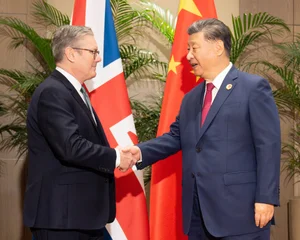 Starmer China visit underscores clear-eyed national security stance
 Starmer China visit raises human rights pressure on Beijing
 Israel Moves to Bar MSF From Gaza Operations
 Mandelson resignation shakes Labour over Epstein row
 Cory Bernardi joins One Nation for SA election
 Trump Praises ‘Terrific’ Petro After White House Talks
 Sydney Protest Escalates and Elderly Woman Suffers Severe Injury
 Tarique Rahman’s Rise Toward Bangladesh’s Top Job
 Glass Cliff Debate After Ley’s Ouster
 Japan Seizes Chinese Boat Amid Rising Tensions
 Australian Families Leave Syrian Camp for Home
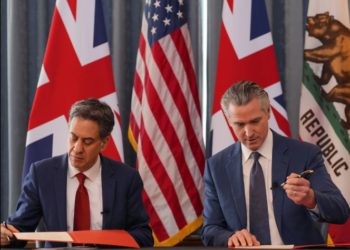 Trump Attacks UK-California Energy Pact
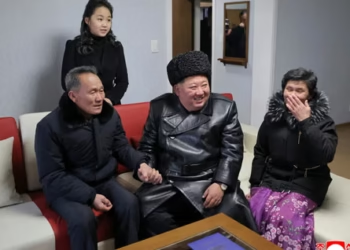 Kim Jong-un Unveils Housing for War Families
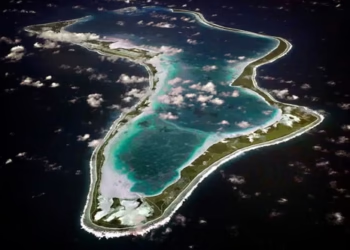 Trump and Chagos Deal Rift Over Iran Strikes
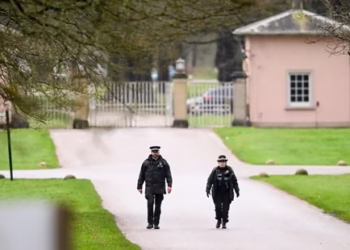 Andrew Mountbatten-Windsor Arrest After FBI Radar
 Andrew Arrest Sparks Republic Debate in Australia
 Global corruption crisis: Who Washington shields
 Duterte ICC Hearing Begins Amid Defiance
 Farage Chagos Islands Row Sparks Fury
 Trump Tariffs Threat Spark UK and EU Alarm
 Albanese on One Nation and Pocock Attack
 The Dangerous Rise of Remigration Across Modern Europe