Published: 27 February 2026. The English Chronicle Desk. The English Chronicle Online.
The Clinton testimony before a Republican-led congressional committee descended into fierce political confrontation on Thursday, as former US Secretary of State Hillary Clinton accused lawmakers of staging a “fishing expedition” to shield Donald Trump.
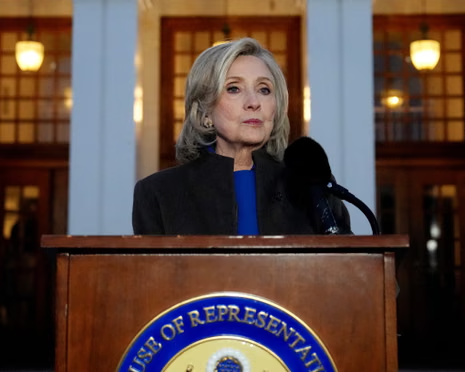
Speaking during a closed-door session near her home in Chappaqua, New York, Clinton delivered a blistering opening statement. She insisted she had never met the late financier Jeffrey Epstein and had no knowledge relevant to the inquiry. The Clinton testimony, she argued, was not a genuine search for truth but partisan political theatre.
Lawmakers convened at the Chappaqua Performing Arts Center rather than on Capitol Hill. The unusual venue followed negotiations over a subpoena issued by committee chair James Comer. Clinton and her husband, former president Bill Clinton, had initially resisted appearing in person. They ultimately agreed after being threatened with contempt proceedings.

In her remarks, Clinton said she had been compelled to testify despite lacking any relevant information. She accused Republican members of seeking distraction from legitimate questions surrounding Trump’s past relationship with Epstein. The Clinton testimony, she added, was an insult to the American public.
Epstein, who died in custody in 2019, had faced federal sex trafficking charges. His long association with prominent political and business figures has fuelled years of speculation. Clinton told the committee she had campaigned against human trafficking throughout her career. She said any serious inquiry would directly question those with documented links to Epstein.
Tensions escalated when a photograph of Clinton giving evidence surfaced online. The image was reportedly shared by conservative commentator Benny Johnson and allegedly taken by Republican congresswoman Lauren Boebert. Closed-door congressional rules prohibit photography during depositions. Democrats swiftly condemned the breach as unacceptable and disruptive.
Boebert later defended her actions on social media, making a pointed reference to the 2012 attack in Benghazi. That attack occurred while Clinton served as Secretary of State and remains politically contentious. The hearing was briefly paused at the request of Clinton’s legal team before resuming later that afternoon.
Following the interruption, Clinton completed several more hours of questioning. Outside the venue, she told journalists she would have preferred a fully public hearing. She expressed frustration that agreed procedures had been disregarded. Clinton described the questions as repetitive and occasionally veering into conspiracy territory.
According to her account, some queries referenced UFOs and the discredited “Pizzagate” theory. She said she repeatedly stated she had never met Epstein. “It is on the record numerous times,” she told reporters. The Clinton testimony, she maintained, offered nothing new to investigators.
The committee’s ranking Democrat, Robert Garcia, defended her cooperation. Garcia said Clinton had answered every question presented to her. He called for transcripts of the deposition to be released within 24 hours. Transparency, he argued, would allow the public to judge fairly.
Republicans framed the inquiry differently. Comer stated that no one was accusing the Clintons of wrongdoing. However, he insisted the committee had a duty to explore all potential links within the so-called Epstein files. He noted that other public figures had complied with similar requests without objection.
Among those previously questioned were former Attorney General Bill Barr and former Labour Secretary Alex Acosta. Both served during Trump’s first administration. Comer said the investigation aimed to understand the broader network surrounding Epstein and his associate Ghislaine Maxwell.
Democrats countered that Trump himself should testify under oath. Garcia referenced disclosures that certain files had been excluded from recent document releases. These files reportedly involved allegations by a woman claiming sexual assault when she was a minor. Trump has denied wrongdoing in past statements.
The Clintons have long argued they are being singled out unfairly. Bill Clinton has acknowledged flying four times on Epstein’s private plane. He has said he severed ties in 2006 when Epstein’s misconduct became widely known. Photographs released in justice department files show the two men socialising.
Bill Clinton is scheduled to deliver his own deposition under identical arrangements. Lawmakers have travelled to Chappaqua for both appearances. Written transcripts and video footage are expected to be released in the coming days. The Clinton testimony process has already intensified partisan divisions.
Historically, both Clintons have endured lengthy Republican-led investigations. In 2015, Hillary Clinton testified for nine hours before a House select committee examining the Benghazi attack. Many analysts concluded that performance blunted political criticism at the time. Bill Clinton faced sworn testimony during independent counsel investigations in 1998.
Those proceedings involved allegations linked to Paula Jones and later to Monica Lewinsky. The investigations ultimately led to impeachment proceedings, though he was acquitted by the Senate. The current Clinton testimony revives memories of those intense political battles.

Outside the arts centre, both parties sought to control the narrative. Republicans argued that due process required equal scrutiny of all individuals named in released files. Democrats insisted the focus should remain on documented associations and verified evidence. The Clinton testimony became a symbolic flashpoint in that broader struggle.
Observers note that the Epstein case continues to cast a long shadow over American politics. Thousands of documents remain in the possession of the US Department of Justice. Disputes persist over the scope and timing of their release. Public trust in institutions has been strained by years of conspiracy claims and partisan rhetoric.
For UK readers, the spectacle offers a familiar lesson about political accountability. Britain has witnessed its own debates over transparency and public trust. The American drama underscores how unresolved questions can linger for years. It also highlights the risks when investigations become entwined with electoral rivalries.
As proceedings concluded for the day, Clinton reiterated her call for openness. She said she believed sunlight was the best remedy for suspicion. Whether the Clinton testimony shifts public opinion remains uncertain. What is clear is that it has reignited long-standing divisions in Washington.
With Bill Clinton due to appear next, attention will remain fixed on Chappaqua. The release of transcripts may clarify what was asked and answered. Yet the political storm surrounding Epstein shows little sign of abating. For now, the Clinton testimony stands as another chapter in an enduring saga.
Related News:
 Putin Intensifies Territorial Demands Before US Talks
 Trump to Recheck Green Cards from 19 Nations After DC Attack
 Russia losses Ukraine war peace talks intensify amid rising deaths
 Trump Escalates Minnesota Immigration Surge Amid Rising Tensions
 Greenland Faces Pivotal Summit Over Arctic Power Struggle
 Trump Threatens Strong Action If Iran Executes Protesters
 Trump Receives Machado’s Nobel Medal in White House Meeting
 EU Says US Ties Have Suffered ‘Big Blow’ After Greenland Crisis
 Thousands Protest ICE Operations in Nationwide US Day of Action
 Epstein Files Reveal Trump Officials’ Emails with Financier
 Thousands Protest ICE in New York Against Trump Deportation Campaign
 Trump Praises ‘Terrific’ Petro After White House Talks
 British Woman in Iran ‘Losing Hope’ Amid Ongoing Detention
 BBC Journalist Held and Interrogated in Vietnam
 UK University Suspends Human Rights Research Following Pressure from China
 UK University Faces Counter-Terror Probe Over China Pressure
 BBC to Apologise Over Edited Trump Speech Amid Backlash
 Britain deploys RAF specialists to assist Belgium with drone threats
 Ukraine-Russia war latest: Putin’s troops exploit bad weather to force Kyiv withdrawal from multiple towns
 US Justice Department Files Lawsuit Against California Over Partisan Voting Maps
 Greene Pushes Epstein Files Amid Trump Fallout
 Trump Deploys DHS to Charlotte in Major Arrest Operation
 December Run-Off in Chile as Election Produces No Winner
 Canada Passes Carney’s First Budget in Tight Parliamentary Vote
 Shadow Fleet at Sea: Europe’s Battle Against Illicit Oil Shipping
 Rama Rebukes Mahmood for Targeting Albanian Families
 Pentagon Officials in Ukraine to Discuss War End
 Venezuela Threatens Nobel Winner Machado with Fugitive Status
 Trump Envoy to Discuss Ukraine Peace at Kremlin
 Two National Guard Soldiers Critically Injured Near White House
 Georgians Defy Government Crackdown After Year of Protests
 US National Guard Member Killed in DC Shooting
 India’s Labour Law Overhaul Sparks Fierce Debate
 Video shows Israeli troops kill Palestinians after surrender
 EU plans $105bn Ukraine aid using frozen Russian assets
 Global campaign launched to free Palestinian leader Barghouti
 American Mother Extradited From UK to U.S. on Murder Charges
 Zelenskyy Accuses Russia of Sabotaging Peace Talks
 Khaleda Zia Laid to Rest with State Honour in Dhaka
 US Cities Erupt in Protests Against Trump’s Venezuela Military Action
 Albanese Opens Door to Bondi Royal Commission Amid Rising Pressure
 Iran Protesters Defy Crackdown as Violent Clashes Intensify
 Homeland security agents deployed amid Minneapolis protests
 US Clears Nvidia AI Chip Sales to China in Policy Shift
 Machado Trump medal gesture reshapes Venezuela power struggle
 EU weighs response amid Greenland tariff crisis with Trump
 US Considers Asylum for British Jews Amid Rising Antisemitism
 ICE street raids expose a chilling future for public freedoms
 Trump Aide Sparks Fury as Greenland Dispute Intensifies
 Andrew Hastie Emerges as Leadership Rival to Ley
 ‘Unfathomable’: Australian veterans rebuke Trump claims
 Starmer China visit underscores clear-eyed national security stance
 Starmer China visit raises human rights pressure on Beijing
 Arizona border shooting leaves suspect hospitalised after agent pursuit
 Videos reveal earlier clash before Alex Pretti shooting
 Israel Moves to Bar MSF From Gaza Operations
 Fears of New Arms Race as US-Russia Nuclear Weapons Treaty Expires
 Sydney Protest Escalates and Elderly Woman Suffers Severe Injury
 Nurses’ families fear breakup under UK immigration crackdown
 Tarique Rahman’s Rise Toward Bangladesh’s Top Job
 Glass Cliff Debate After Ley’s Ouster
 Japan Seizes Chinese Boat Amid Rising Tensions
 Australian Families Leave Syrian Camp for Home
 Trump Attacks UK-California Energy Pact
 Kim Jong-un Unveils Housing for War Families
 ‘He Did It for Us’: US Soldier Recalls Jesse Jackson’s Efforts to Free Him and Two Other POWs
 Stephen Colbert Says CBS Spiked Interview With Democrat Over FCC Fears
 Sanders Condemns Billionaire ‘Greed’ in California Tax Debate
 Trump and Chagos Deal Rift Over Iran Strikes
 Andrew Mountbatten-Windsor Arrest After FBI Radar
 Andrew Arrest Sparks Republic Debate in Australia
 Global corruption crisis: Who Washington shields
 Duterte ICC Hearing Begins Amid Defiance
 Farage Chagos Islands Row Sparks Fury
 Trump Tariffs Threat Spark UK and EU Alarm
 The Dangerous Rise of Remigration Across Modern Europe
 Trump Speech Sparks Intense Debate Across Divided America
 Jacinda Ardern Moves To Australia Following Her US Fellowships
 US to offer passport services in West Bank settlements
 Has Europe truly learned from the failures of 2022?