Published: 27 February 2026. The English Chronicle Desk. The English Chronicle Online.
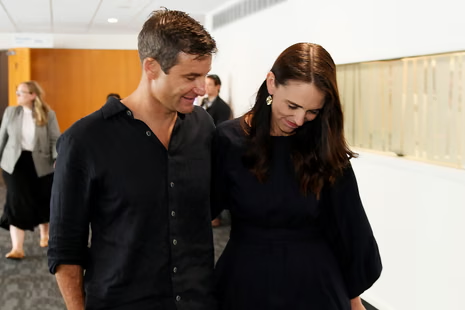
The Jacinda Ardern move to Australia has stirred emotion across New Zealand and beyond. News that the former prime minister is relocating to Sydney surfaced in an unusually candid way. It happened not through an official statement, but on a festival dancefloor at 2am. Her husband, Clarke Gayford, shared the news while dressed as a giant toadstool. The setting captured something unmistakably Kiwi, informal yet strangely profound.
The revelation came during the final Splore festival in Tāpapakanga, a beloved coastal gathering. Splore has long been considered one of the country’s most picturesque celebrations. Music drifted across the shoreline as partygoers embraced its closing chapter. It was here that Gayford confirmed the family’s plan to move to Sydney. For many, the moment symbolised a broader national mood.
The Jacinda Ardern move arrives at a time when many New Zealanders feel unsettled. Aotearoa has faced economic pressures, rising living costs and political debate. Ardern herself stepped down from office in early 2023, citing exhaustion. Her resignation marked the end of a globally recognised premiership. She had led through terror attacks, a pandemic and volcanic disaster.
During her leadership, Jacinda Ardern became an international figure of empathy and crisis management. Admirers praised her for decisive pandemic action and compassionate rhetoric. Critics challenged her economic record and questioned long term outcomes. Regardless of political alignment, her global profile was undeniable.
Her husband has remained a steady public presence throughout that period. Gayford, known for hosting fishing programmes and supporting community causes, often stood slightly outside the political glare. That dancefloor exchange therefore felt intimate and disarming. It was news delivered not from a podium, but amid music and costumes.
The Jacinda Ardern move also highlights a familiar migration pattern. For decades, New Zealanders have crossed the Tasman Sea seeking broader opportunity. Australia offers larger markets, higher average wages and extensive infrastructure. Movement between the two nations remains relatively straightforward under reciprocal arrangements.

Recent data indicates that hundreds of New Zealand citizens depart each week. Many cite housing affordability, career progression and healthcare access as primary factors. Sydney and Melbourne consistently rank among the most popular destinations. The departure of such a prominent family has therefore resonated symbolically.
Australia presents undeniable contrasts in scale and resources. Under Prime Minister Anthony Albanese, Canberra has pursued ambitious domestic spending agendas. The country’s Medicare system provides accessible healthcare to residents and citizens. Its cultural industries offer wider commercial opportunities.
Yet migration is rarely simple, even between close neighbours. New Zealand and Australia share history, humour and sporting rivalry. They also maintain distinct identities and political cultures. Leaving one’s homeland, even temporarily, can provoke complicated emotions.
Many younger New Zealanders describe a sense of economic stagnation at home. Property prices in Auckland have remained stubbornly high despite cooling markets. Rent levels continue to strain early career professionals and young families. Grocery costs have added to frustration during inflationary periods.
In contrast, certain Australian cities appear comparatively affordable for similar roles. Higher salaries in creative and professional sectors can offset relocation expenses. Public transport networks in Melbourne and Sydney reduce reliance on private vehicles. These practical considerations influence deeply personal decisions.
The Jacinda Ardern move therefore mirrors private calculations happening nationwide. Families weigh proximity to relatives against career ambition and financial stability. Individuals consider lifestyle changes alongside identity and belonging. Such reflections rarely generate headlines, yet they shape national demographics.
Ardern’s time in office remains a touchstone for many expatriates. Her response to the Christchurch terror attack in 2019 drew global respect. She moved swiftly to reform gun laws and comfort grieving communities. That leadership style built enduring international goodwill.
When she announced her resignation, Ardern acknowledged she no longer had enough in the tank. The phrase became shorthand for political burnout in modern governance. Few leaders articulate fatigue so plainly. Her departure from politics appeared final at the time.
Relocating to Australia does not necessarily signal permanent separation from New Zealand. Many Kiwis treat the Tasman crossing as a chapter rather than conclusion. Dual cultural ties remain strong through family, sport and media. Flights between Auckland and Sydney are routine and frequent.
The symbolism, however, remains potent. Seeing a former prime minister join the diaspora underscores widespread sentiment. Some observers interpret it as pragmatic rather than political. Others frame it as commentary on domestic challenges.
Economic realities form part of the broader narrative. New Zealand’s minimum wage translates to lower Australian dollar equivalents. Meanwhile, average rents in major cities consume substantial portions of income. For creatives and freelancers, margins can feel especially narrow.
Australia’s larger entertainment industry may also appeal to professionals in media and arts. Opportunities for collaboration and audience growth expand within bigger populations. These dynamics influence households connected to storytelling and broadcasting. Gayford’s background in television aligns with that ecosystem.
Critics caution against romanticising migration. Australia faces its own housing pressures and cost of living debates. Political controversies periodically stir public dissatisfaction. No country remains immune from global economic turbulence.
Still, the Jacinda Ardern move invites reflection about aspiration and contentment. Many New Zealanders cherish their landscapes and close knit communities. They also grapple with limited economic scale. Balancing pride with pragmatism becomes an ongoing negotiation.
Public reaction has been largely warm rather than hostile. Social media responses include congratulations and wistful humour. Some commenters recall Ardern’s pandemic briefings with nostalgia. Others simply wish the family privacy and stability.
New Zealand’s relationship with its diaspora remains complex yet affectionate. Citizens abroad often maintain strong emotional and financial ties home. Remittances, visits and eventual returns reinforce connection. Movement does not erase belonging.

As the music faded at that final festival, the moment carried metaphorical weight. A beloved event concluded while news of departure circulated quietly. Change can arrive softly, wrapped in costume and conversation. It can also reflect deeper societal currents.
The Jacinda Ardern move ultimately centres on family choice. Ardern, Gayford and their daughter Neve deserve space to pursue happiness. Public service can exact immense personal cost. Stepping away may represent renewal rather than retreat.
For New Zealand, the story prompts broader introspection. How can the nation retain young talent and creative ambition. What structural reforms might ease housing and wage pressures. These questions extend beyond any single household.
Across the Tasman, life will continue with familiar rhythms. Australians may greet their new residents with curiosity and respect. Kiwis will watch from afar, measuring their own options. The shared sea between them remains narrow in distance, yet rich in meaning.
In the end, migration stories often blend excitement with melancholy. They capture hope for fresh beginnings and grief for familiar ground. The Jacinda Ardern move embodies both impulses at once. It is at once personal, political and profoundly human.
Related News:
 British Woman in Iran ‘Losing Hope’ Amid Ongoing Detention
 BBC Journalist Held and Interrogated in Vietnam
 UK University Suspends Human Rights Research Following Pressure from China
 UK University Faces Counter-Terror Probe Over China Pressure
 Abigail Spanberger Elected Virginia’s First Female Governor
China-critical UK academics face ‘extremely heavy’ pressure from Beijing
Abigail Spanberger Elected Virginia’s First Female Governor
China-critical UK academics face ‘extremely heavy’ pressure from Beijing
 BBC to Apologise Over Edited Trump Speech Amid Backlash
 Britain deploys RAF specialists to assist Belgium with drone threats
 Ukraine-Russia war latest: Putin’s troops exploit bad weather to force Kyiv withdrawal from multiple towns
 Trump Claims Victory as Longest Shutdown Ends
 Hamas Fighters in Gaza Tunnels Stall Ceasefire Progress
 US Justice Department Files Lawsuit Against California Over Partisan Voting Maps
 Greene Pushes Epstein Files Amid Trump Fallout
 Trump Deploys DHS to Charlotte in Major Arrest Operation
 December Run-Off in Chile as Election Produces No Winner
 Canada Passes Carney’s First Budget in Tight Parliamentary Vote
 Why Russian Liberals Push Strongly Pro-Israel Narratives
 Shadow Fleet at Sea: Europe’s Battle Against Illicit Oil Shipping
 Rama Rebukes Mahmood for Targeting Albanian Families
 Russian Vessel Used Lasers on RAF Pilots, UK Claims
 Pentagon Officials in Ukraine to Discuss War End
 Venezuela Threatens Nobel Winner Machado with Fugitive Status
 Trump Envoy to Discuss Ukraine Peace at Kremlin
 Pope Leo XIV Begins Historic Trip to Turkey and Lebanon
 Georgians Defy Government Crackdown After Year of Protests
 India’s Labour Law Overhaul Sparks Fierce Debate
 Video shows Israeli troops kill Palestinians after surrender
 Chinese & Japanese Boats Clash Near Disputed Islands
 EU plans $105bn Ukraine aid using frozen Russian assets
 Global campaign launched to free Palestinian leader Barghouti
 UK Aid Cuts Could Undermine Global Influence, Experts Warn
 Thailand and Cambodia Agree Ceasefire After Weeks of Deadly Clashes
 Russia losses Ukraine war peace talks intensify amid rising deaths
 Zelenskyy Accuses Russia of Sabotaging Peace Talks
 Trump ‘Not Worried’ as China Conducts Massive Taiwan Wargame
 Khaleda Zia Laid to Rest with State Honour in Dhaka
 Maduro Faces Court in New York Over Drugs and Weapons Case
 Albanese Opens Door to Bondi Royal Commission Amid Rising Pressure
 Trump Escalates Minnesota Immigration Surge Amid Rising Tensions
 Iran Protesters Defy Crackdown as Violent Clashes Intensify
 Iran Leader Blames Protesters, Says They Serve Trump
 Trump Eyes Strong Military Options Amid Iran Protest Crackdown
 Trump Threatens Strong Action If Iran Executes Protesters
 Machado Trump medal gesture reshapes Venezuela power struggle
 Trump Receives Machado’s Nobel Medal in White House Meeting
 EU weighs response amid Greenland tariff crisis with Trump
 US Considers Asylum for British Jews Amid Rising Antisemitism
 ICE street raids expose a chilling future for public freedoms
 US Africa aid remarks spark anger after leaked State email
 Trump Launches “Board of Peace” Amid Global Diplomacy Push
 EU Says US Ties Have Suffered ‘Big Blow’ After Greenland Crisis
 Andrew Hastie Emerges as Leadership Rival to Ley
 Russia Strikes Kyiv and Kharkiv as Peace Talks Enter Day Two
 Starmer China visit underscores clear-eyed national security stance
 Starmer China visit raises human rights pressure on Beijing
 Israel Moves to Bar MSF From Gaza Operations
 Mandelson resignation shakes Labour over Epstein row
 Cory Bernardi joins One Nation for SA election
 Trump Praises ‘Terrific’ Petro After White House Talks
 Sydney Protest Escalates and Elderly Woman Suffers Severe Injury
 Tarique Rahman’s Rise Toward Bangladesh’s Top Job
 Glass Cliff Debate After Ley’s Ouster
 Japan Seizes Chinese Boat Amid Rising Tensions
 Australian Families Leave Syrian Camp for Home
 Trump Attacks UK-California Energy Pact
 Kim Jong-un Unveils Housing for War Families
 Trump and Chagos Deal Rift Over Iran Strikes
 Andrew Mountbatten-Windsor Arrest After FBI Radar
 Andrew Arrest Sparks Republic Debate in Australia
 Global corruption crisis: Who Washington shields
 Duterte ICC Hearing Begins Amid Defiance
 Farage Chagos Islands Row Sparks Fury
 Trump Tariffs Threat Spark UK and EU Alarm
 Albanese on One Nation and Pocock Attack
 The Dangerous Rise of Remigration Across Modern Europe
 Trump’s Marathon Speech Fails to Mask a Growing National Disconnect
 Trump Speech Sparks Intense Debate Across Divided America
 Jacinda Ardern Moves To Australia Following Her US Fellowships
 US to offer passport services in West Bank settlements
 Has Europe truly learned from the failures of 2022?