Published: 01 March 2026. The English Chronicle Desk. The English Chronicle Online.
Airlines across Europe, Asia and the Gulf have suspended, diverted or delayed dozens of flights after Iran launched retaliatory strikes across the Middle East, triggering widespread airspace closures and travel disruption. The escalation follows coordinated military action by the United States and Israel targeting Iranian sites, marking one of the most serious regional flare-ups in recent years.
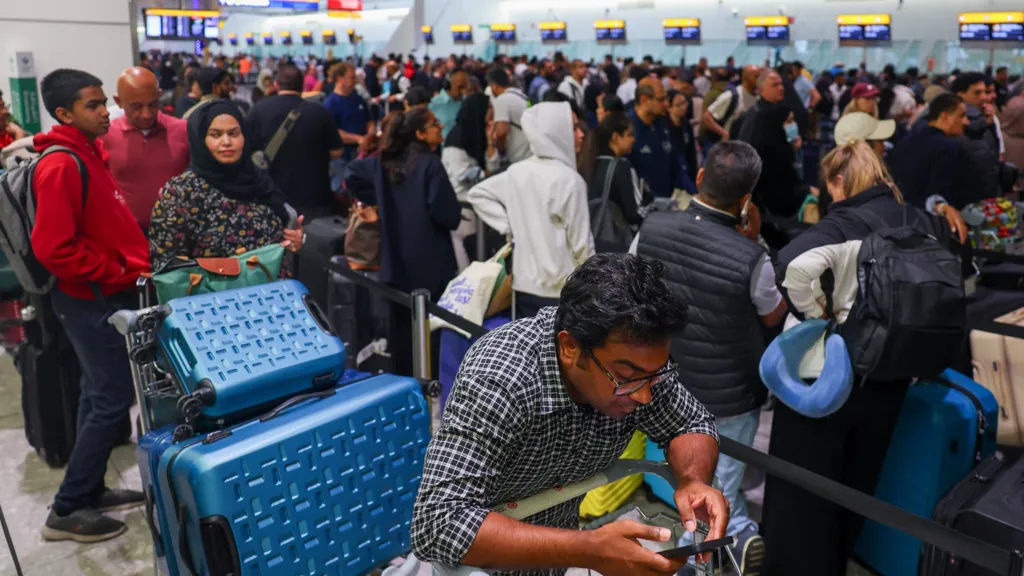
Major carriers including British Airways and Virgin Atlantic confirmed cancellations and route suspensions as governments scrambled to assess security risks. All flights in and out of Dubai International Airport and Al Maktoum International Airport were temporarily suspended, leaving thousands of passengers stranded and causing knock-on disruption across global long-haul networks.
The airspace closures have stretched well beyond Iran and Israel. Authorities confirmed that airspace over Iran, Israel, Iraq, Qatar, Bahrain, Kuwait, Syria and the United Arab Emirates remained closed into Sunday morning, while Saudi Arabia announced partial restrictions. Though Jordanian and Lebanese airspace remained technically open, flight activity was significantly reduced.

The ripple effect has been felt far beyond the region. Heathrow Airport urged travellers to check with airlines before travelling to the airport, warning that services linking Europe to Asia and Australia were being rerouted or cancelled at short notice. Tracking data showed aircraft diverting north over Saudi Arabia or rerouting via the Caucasus corridor to avoid restricted zones.
Iran’s retaliatory attacks reportedly targeted multiple Gulf states, including Bahrain, Kuwait, Qatar and the United Arab Emirates. Explosions were reported in Doha, and Qatar’s defence ministry stated that its air defences had intercepted incoming missiles. In Bahrain, footage circulated appearing to show a strike near a US-linked facility. The UAE also said it had intercepted missiles and drones launched from Iran.
At Dubai International, four airport staff members were injured in an incident on Saturday, according to an airport spokesperson. While details remain limited, airport authorities confirmed that emergency protocols were activated swiftly.
Emirates suspended all operations in and out of Dubai until mid-afternoon local time on Sunday due to the closure of surrounding airspace. The carrier said it was closely monitoring developments and would resume services once safety could be assured.
British Airways cancelled services to Tel Aviv and Bahrain until Wednesday and warned that routes connecting Heathrow with Abu Dhabi, Amman, Doha and Dubai could face disruption for several days. Virgin Atlantic suspended its Heathrow to Riyadh service on Sunday after cancelling earlier weekend flights to Dubai. The airline cautioned that journeys to India, Saudi Arabia and the Maldives would likely take longer because of extended flight paths around closed airspace.
Budget carrier Wizz Air also announced the suspension of all flights to and from Israel, Dubai, Abu Dhabi and Amman until at least next Saturday. The rapid succession of announcements underlined the uncertainty facing the aviation sector as airlines weighed operational safety against mounting passenger demand during the busy travel period.

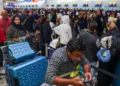
For passengers caught in transit, the uncertainty has been both exhausting and distressing. Sarah Short, who had been due to return to London from Dubai, described how her aircraft had already boarded and begun preparing for departure before the captain announced that the flight would not proceed. She and fellow passengers remained seated on the tarmac for more than three hours before being disembarked.
Elsewhere, Emma Belcher and her husband Vic were returning from a holiday in the Maldives when their connecting flight in Dubai was cancelled. Stranded in the emirate, they described confusion over when airspace might reopen and anxiety about getting home to their children. “There is absolutely no information about when they might open airspace so we don’t know how long we’ll be here,” she said.
In Doha, John Henry, a 71-year-old tourist from Northampton, recounted being inside a shopping centre when an air raid alert sounded. Moments later, he heard what he described as a dull thud accompanied by tremors. Shoppers began leaving the complex quickly as security officials directed people to safer areas. Though Qatari authorities later said missiles had been intercepted, the incident underscored the fragility of calm in a region hosting major transport hubs and expatriate communities.
Governments have moved swiftly to issue travel advisories. The UK Foreign Office warned against all travel to Israel and the Palestinian territories and instructed British nationals in Bahrain, Qatar, Kuwait and the United Arab Emirates to shelter in place immediately. Those in Saudi Arabia were advised to remain indoors in secure locations. British citizens in Jordan, Syria, Lebanon, Iraq, Yemen, Turkey and Oman were told to remain vigilant and follow local authority guidance.
The Foreign Office also invited British nationals in Bahrain, Israel, Palestine, Qatar and the UAE to register their presence in order to receive direct updates and potential evacuation information if required. Officials emphasised that consular assistance remains available but cautioned that movement could be restricted while airspace closures persist.
The escalation follows joint strikes by the United States and Israel on Iranian targets. US President Donald Trump cited Tehran’s failure to reach an agreement on limiting its nuclear programme as a key factor behind the decision to authorise the action. The development marks a significant intensification of tensions that have simmered for years over Iran’s nuclear ambitions and its regional influence.
In London, Prime Minister Sir Keir Starmer chaired an emergency Cobra meeting to assess the implications for British nationals and regional stability. A government spokesperson said the immediate priority was the safety of UK citizens in the affected countries and that the government stood ready to provide support.
The aviation industry now faces the dual challenge of ensuring passenger safety while managing operational and financial fallout. Middle Eastern hubs such as Dubai and Doha serve as critical connectors between Europe, Asia, Africa and Australasia. Even short-term closures can cascade into global schedule disruptions, crew displacement and aircraft positioning complications.
Analysts note that airlines must constantly adjust flight plans to avoid restricted zones, a process requiring coordination with multiple air traffic authorities and rapid decision-making. Extended detours increase fuel consumption and flight times, adding cost pressures to carriers already navigating high operating expenses.
For travellers, uncertainty remains the defining feature of the crisis. Many passengers are being advised to monitor airline communications closely and avoid travelling to airports without confirmation of flight status. Insurance providers have also begun receiving claims related to cancellations and extended stays abroad.
While some Gulf states signalled that airspace could reopen later on Sunday evening, aviation authorities stressed that safety assessments would determine timing. Any further escalation could prolong restrictions, deepening the impact on international travel and commerce.
As diplomatic efforts intensify behind the scenes, millions of travellers worldwide are watching developments closely. For now, the skies over much of the Middle East remain either closed or heavily restricted, a stark reminder of how geopolitical tensions can rapidly disrupt the rhythms of global mobility.
Related News:
 British Woman in Iran ‘Losing Hope’ Amid Ongoing Detention
 BBC Journalist Held and Interrogated in Vietnam
 UK University Suspends Human Rights Research Following Pressure from China
 UK University Faces Counter-Terror Probe Over China Pressure
 Abigail Spanberger Elected Virginia’s First Female Governor
China-critical UK academics face ‘extremely heavy’ pressure from Beijing
Abigail Spanberger Elected Virginia’s First Female Governor
China-critical UK academics face ‘extremely heavy’ pressure from Beijing
 BBC to Apologise Over Edited Trump Speech Amid Backlash
 Britain deploys RAF specialists to assist Belgium with drone threats
 Ukraine-Russia war latest: Putin’s troops exploit bad weather to force Kyiv withdrawal from multiple towns
 Hamas Fighters in Gaza Tunnels Stall Ceasefire Progress
 US Justice Department Files Lawsuit Against California Over Partisan Voting Maps
 Greene Pushes Epstein Files Amid Trump Fallout
 Trump Deploys DHS to Charlotte in Major Arrest Operation
 December Run-Off in Chile as Election Produces No Winner
 Canada Passes Carney’s First Budget in Tight Parliamentary Vote
 Why Russian Liberals Push Strongly Pro-Israel Narratives
 Shadow Fleet at Sea: Europe’s Battle Against Illicit Oil Shipping
 Rama Rebukes Mahmood for Targeting Albanian Families
 Russian Vessel Used Lasers on RAF Pilots, UK Claims
 Pentagon Officials in Ukraine to Discuss War End
 Venezuela Threatens Nobel Winner Machado with Fugitive Status
 Trump Envoy to Discuss Ukraine Peace at Kremlin
 Pope Leo XIV Begins Historic Trip to Turkey and Lebanon
 Georgians Defy Government Crackdown After Year of Protests
 India’s Labour Law Overhaul Sparks Fierce Debate
 Video shows Israeli troops kill Palestinians after surrender
 Chinese & Japanese Boats Clash Near Disputed Islands
 EU plans $105bn Ukraine aid using frozen Russian assets
 Global campaign launched to free Palestinian leader Barghouti
 UK Aid Cuts Could Undermine Global Influence, Experts Warn
 Russia losses Ukraine war peace talks intensify amid rising deaths
 Zelenskyy Accuses Russia of Sabotaging Peace Talks
 Trump ‘Not Worried’ as China Conducts Massive Taiwan Wargame
 Khaleda Zia Laid to Rest with State Honour in Dhaka
 Maduro Faces Court in New York Over Drugs and Weapons Case
 Albanese Opens Door to Bondi Royal Commission Amid Rising Pressure
 Trump Escalates Minnesota Immigration Surge Amid Rising Tensions
 Iran Protesters Defy Crackdown as Violent Clashes Intensify
 Iran Leader Blames Protesters, Says They Serve Trump
 Trump Eyes Strong Military Options Amid Iran Protest Crackdown
 Trump Threatens Strong Action If Iran Executes Protesters
 Machado Trump medal gesture reshapes Venezuela power struggle
 Trump Receives Machado’s Nobel Medal in White House Meeting
 EU weighs response amid Greenland tariff crisis with Trump
 US Considers Asylum for British Jews Amid Rising Antisemitism
 ICE street raids expose a chilling future for public freedoms
 US Africa aid remarks spark anger after leaked State email
 Trump Launches “Board of Peace” Amid Global Diplomacy Push
 EU Says US Ties Have Suffered ‘Big Blow’ After Greenland Crisis
 Andrew Hastie Emerges as Leadership Rival to Ley
 Russia Strikes Kyiv and Kharkiv as Peace Talks Enter Day Two
 Starmer China visit underscores clear-eyed national security stance
 Starmer China visit raises human rights pressure on Beijing
 Israel Moves to Bar MSF From Gaza Operations
 Mandelson resignation shakes Labour over Epstein row
 Cory Bernardi joins One Nation for SA election
 Trump Praises ‘Terrific’ Petro After White House Talks
 Sydney Protest Escalates and Elderly Woman Suffers Severe Injury
 Tarique Rahman’s Rise Toward Bangladesh’s Top Job
 Glass Cliff Debate After Ley’s Ouster
 Japan Seizes Chinese Boat Amid Rising Tensions
 Australian Families Leave Syrian Camp for Home
 Trump Attacks UK-California Energy Pact
 Kim Jong-un Unveils Housing for War Families
 US Urges Iran to Make Deal as Military Presence Rises
 Trump and Chagos Deal Rift Over Iran Strikes
 Andrew Mountbatten-Windsor Arrest After FBI Radar
 Andrew Arrest Sparks Republic Debate in Australia
 Global corruption crisis: Who Washington shields
 Duterte ICC Hearing Begins Amid Defiance
 Farage Chagos Islands Row Sparks Fury
 Trump Tariffs Threat Spark UK and EU Alarm
 Albanese on One Nation and Pocock Attack
 The Dangerous Rise of Remigration Across Modern Europe
 Trump’s Marathon Speech Fails to Mask a Growing National Disconnect
 Trump Speech Sparks Intense Debate Across Divided America
 Jacinda Ardern Moves To Australia Following Her US Fellowships
 US to offer passport services in West Bank settlements
 Has Europe truly learned from the failures of 2022?
 Health Funding Row Rocks US‑Africa Relations