Published: 01 March 2026. The English Chronicle Desk. The English Chronicle Online.
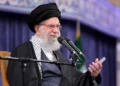
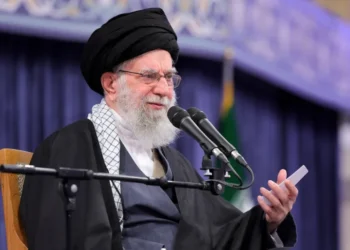
Iran has formally begun a 40-day period of national mourning following the killing of Supreme Leader Ali Khamenei in coordinated strikes carried out by the United States and Israel, according to state media. The announcement marks a pivotal and deeply emotional moment for the Islamic Republic, as the country confronts the loss of its most powerful political and religious authority amid ongoing military confrontation.
The strikes on Saturday not only killed Khamenei but also reportedly claimed the lives of several top security officials, along with members of his family, including his daughter, son-in-law and grandson. The deaths represent one of the most consequential blows to Iran’s ruling structure since the 1979 Islamic Revolution reshaped the nation’s political identity.
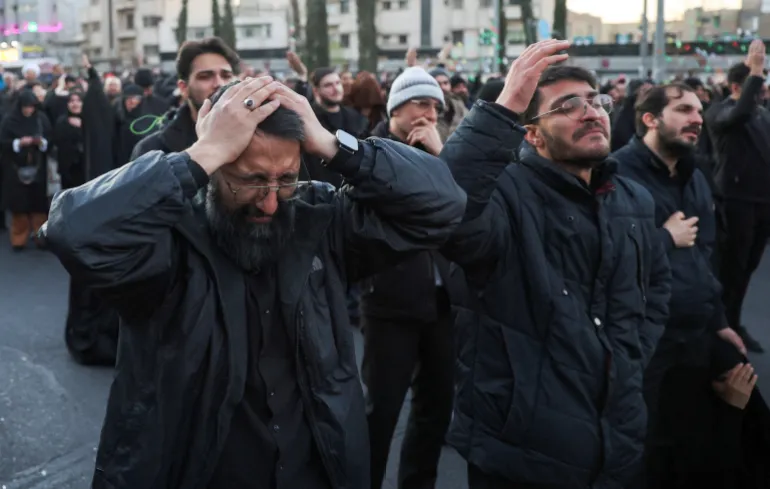
President Masoud Pezeshkian condemned the killing as “a great crime” in a statement issued by his office. In addition to the 40-day mourning period, Pezeshkian declared seven days of public holidays, urging citizens to honour what he described as a martyr of the nation. Across Tehran and other major cities, state television broadcast images of black banners, religious recitations and large crowds gathering in public squares.

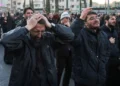
In the capital, mourners filled Enghelab Square, many carrying portraits of Khamenei and Iranian flags. State media showed emotional scenes at the shrine of Imam Reza in Mashhad, where supporters wept openly, some collapsing in visible grief. Reporting from Tehran indicated that public ceremonies are expected to continue throughout the mourning period, even as air raid sirens and sporadic bombardments persist in parts of the country.
Demonstrations denouncing the killing were also reported in Shiraz, Yasuj and Lorestan, where crowds gathered in solidarity. At the same time, there were isolated reports of small celebrations in parts of Tehran, Karaj and Isfahan, reflecting the political divisions that have surfaced in recent years amid economic hardship and social unrest.
The official Islamic Republic News Agency announced that a three-person council would temporarily assume leadership duties. The council is composed of the president, the head of the judiciary and a jurist from the Guardian Council. This interim arrangement will remain in place until the Assembly of Experts appoints a new supreme leader, a process that may unfold under intense internal and external pressure.
Khamenei had led Iran since 1989, succeeding Ruhollah Khomeini, who spearheaded the revolution that overthrew the Pahlavi monarchy. Over nearly four decades, Khamenei consolidated power across the military, judiciary and clerical establishment, shaping Iran’s domestic governance and expanding its regional influence through alliances and proxy networks.
The regional repercussions of his death have been swift. In Iraq, authorities declared three days of public mourning. In Baghdad, protesters gathered near the heavily fortified Green Zone, home to government institutions and foreign embassies. Demonstrators reportedly confronted security forces, with some attempting to approach the US Embassy compound. Videos showed crowds waving flags and chanting slogans while blocking roads near key entrances.
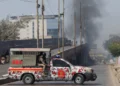
Further protests erupted in Karachi, Pakistan, where footage showed demonstrators attacking and setting fire to parts of the US consulate building. These scenes underscore the depth of anger among segments of the region’s population, particularly among groups aligned with Iran’s political and ideological stance.
Meanwhile, the Islamic Revolutionary Guard Corps pledged revenge and announced that it had launched strikes against 27 bases hosting US troops across the Middle East, as well as Israeli military facilities in Tel Aviv. Explosions have been reported in Qatar and the United Arab Emirates, and security alerts remain active in several Gulf states.
US President Donald Trump warned on social media that Iran would face unprecedented force if it continued retaliatory actions. His statement followed earlier remarks asserting that the strikes were necessary to neutralise what Washington described as escalating threats linked to Iran’s nuclear ambitions and regional activities.
The death of Khamenei introduces significant uncertainty into Iran’s leadership transition. While contingency planning for succession has long existed within the country’s constitutional framework, the current wartime environment complicates the process. Analysts suggest that power struggles within the clerical establishment and the Revolutionary Guard could influence the selection of the next supreme leader.

International observers remain divided over the strategic consequences of the operation. Some argue that eliminating Iran’s top authority may weaken centralised command structures. Others warn that leadership “decapitation” strategies can fuel instability and harden resistance rather than prompt negotiations.
Humanitarian concerns are also mounting. Iranian state media reported that at least 201 people were killed across 24 provinces in the joint US-Israeli strikes, citing the Red Crescent. In Minab, a strike on an elementary girls’ school reportedly left more than 140 dead and dozens injured, with casualty figures continuing to rise. The attacks have intensified scrutiny at the United Nations and among global human rights organisations.
As the mourning period begins, Iran finds itself navigating both grief and geopolitical crisis. Religious leaders are expected to lead nationwide ceremonies, while security forces remain on high alert. The symbolism of 40 days of mourning carries deep resonance in Shiite tradition, marking a solemn passage of remembrance that could also shape the political narrative in the weeks ahead.
Whether the transition results in continuity or transformation remains uncertain. What is clear is that Iran has entered one of the most consequential chapters in its post-revolution history, with regional stability and global diplomacy hanging in the balance.
Related News:
 British Woman in Iran ‘Losing Hope’ Amid Ongoing Detention
 BBC Journalist Held and Interrogated in Vietnam
 UK University Suspends Human Rights Research Following Pressure from China
 UK University Faces Counter-Terror Probe Over China Pressure
 Abigail Spanberger Elected Virginia’s First Female Governor
China-critical UK academics face ‘extremely heavy’ pressure from Beijing
Abigail Spanberger Elected Virginia’s First Female Governor
China-critical UK academics face ‘extremely heavy’ pressure from Beijing
 BBC to Apologise Over Edited Trump Speech Amid Backlash
 Britain deploys RAF specialists to assist Belgium with drone threats
 Ukraine-Russia war latest: Putin’s troops exploit bad weather to force Kyiv withdrawal from multiple towns
 Hamas Fighters in Gaza Tunnels Stall Ceasefire Progress
 US Justice Department Files Lawsuit Against California Over Partisan Voting Maps
 Greene Pushes Epstein Files Amid Trump Fallout
 Trump Deploys DHS to Charlotte in Major Arrest Operation
 December Run-Off in Chile as Election Produces No Winner
 Canada Passes Carney’s First Budget in Tight Parliamentary Vote
 Why Russian Liberals Push Strongly Pro-Israel Narratives
 Shadow Fleet at Sea: Europe’s Battle Against Illicit Oil Shipping
 Rama Rebukes Mahmood for Targeting Albanian Families
 Russian Vessel Used Lasers on RAF Pilots, UK Claims
 Pentagon Officials in Ukraine to Discuss War End
 Venezuela Threatens Nobel Winner Machado with Fugitive Status
 Trump Envoy to Discuss Ukraine Peace at Kremlin
 Pope Leo XIV Begins Historic Trip to Turkey and Lebanon
 Georgians Defy Government Crackdown After Year of Protests
 India’s Labour Law Overhaul Sparks Fierce Debate
 Video shows Israeli troops kill Palestinians after surrender
 Chinese & Japanese Boats Clash Near Disputed Islands
 EU plans $105bn Ukraine aid using frozen Russian assets
 Global campaign launched to free Palestinian leader Barghouti
 UK Aid Cuts Could Undermine Global Influence, Experts Warn
 Thailand and Cambodia Agree Ceasefire After Weeks of Deadly Clashes
 Russia losses Ukraine war peace talks intensify amid rising deaths
 Zelenskyy Accuses Russia of Sabotaging Peace Talks
 Trump ‘Not Worried’ as China Conducts Massive Taiwan Wargame
 Khaleda Zia Laid to Rest with State Honour in Dhaka
 Maduro Faces Court in New York Over Drugs and Weapons Case
 Albanese Opens Door to Bondi Royal Commission Amid Rising Pressure
 Trump Escalates Minnesota Immigration Surge Amid Rising Tensions
 Iran Protesters Defy Crackdown as Violent Clashes Intensify
 Trump Eyes Strong Military Options Amid Iran Protest Crackdown
 Trump Threatens Strong Action If Iran Executes Protesters
 Machado Trump medal gesture reshapes Venezuela power struggle
 Trump Receives Machado’s Nobel Medal in White House Meeting
 EU weighs response amid Greenland tariff crisis with Trump
 US Considers Asylum for British Jews Amid Rising Antisemitism
 ICE street raids expose a chilling future for public freedoms
 US Africa aid remarks spark anger after leaked State email
 Trump Launches “Board of Peace” Amid Global Diplomacy Push
 EU Says US Ties Have Suffered ‘Big Blow’ After Greenland Crisis
 Andrew Hastie Emerges as Leadership Rival to Ley
 Russia Strikes Kyiv and Kharkiv as Peace Talks Enter Day Two
 Starmer China visit underscores clear-eyed national security stance
 Starmer China visit raises human rights pressure on Beijing
 Israel Moves to Bar MSF From Gaza Operations
 Mandelson resignation shakes Labour over Epstein row
 Trump Praises ‘Terrific’ Petro After White House Talks
 Sydney Protest Escalates and Elderly Woman Suffers Severe Injury
 Tarique Rahman’s Rise Toward Bangladesh’s Top Job
 Glass Cliff Debate After Ley’s Ouster
 Japan Seizes Chinese Boat Amid Rising Tensions
 Australian Families Leave Syrian Camp for Home
 Trump Attacks UK-California Energy Pact
 Kim Jong-un Unveils Housing for War Families
 Trump and Chagos Deal Rift Over Iran Strikes
 Andrew Mountbatten-Windsor Arrest After FBI Radar
 Andrew Arrest Sparks Republic Debate in Australia
 Global corruption crisis: Who Washington shields
 Duterte ICC Hearing Begins Amid Defiance
 Farage Chagos Islands Row Sparks Fury
 Trump Tariffs Threat Spark UK and EU Alarm
 Albanese on One Nation and Pocock Attack
 The Dangerous Rise of Remigration Across Modern Europe
 Trump’s Marathon Speech Fails to Mask a Growing National Disconnect
 Trump Speech Sparks Intense Debate Across Divided America
 Jacinda Ardern Moves To Australia Following Her US Fellowships
 US to offer passport services in West Bank settlements
 Has Europe truly learned from the failures of 2022?
 Health Funding Row Rocks US‑Africa Relations
 Middle East Flights Halted After Iran Strikes
 Iran Confirms Khamenei Killed in Air Strikes