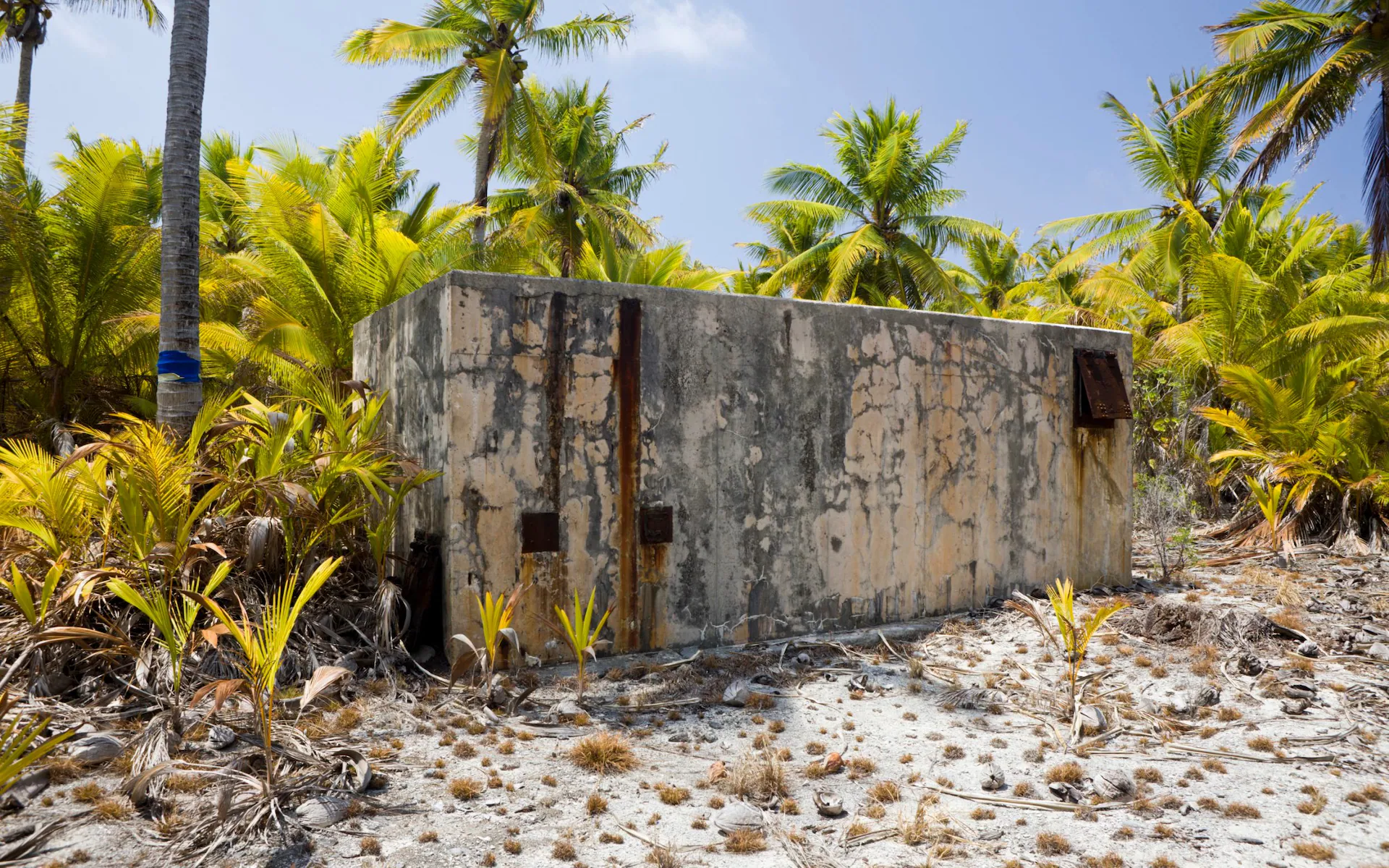
Published: 2 March 2026 . The English Chronicle Desk.
The English Chronicle Online
In the remote Pacific Ocean lies a place that, by name and history, embodies a paradox: a tropical idyll and once‑cherished destination now indelibly scarred by the legacy of mid‑20th‑century nuclear testing. The story of Bikini Atoll — dubbed one of the “world’s most radioactive paradises” — is a tale of beauty, grave danger, displacement and lingering uncertainty that has drawn international attention as the 80th anniversary of its first explosions approaches.

Located in the northern Marshall Islands, Bikini Atoll was selected by the United States after World War II as a site for atmospheric nuclear weapons testing. Between 1946 and 1958, more than two dozen detonations were carried out on and around the atoll, including the infamous 1954 thermonuclear explosion known as “Castle Bravo,” the largest nuclear blast ever conducted by the U.S. military. The yield of that test — about 15 megatons of TNT — was far higher than predicted, scattering radioactive fallout across wide swaths of ocean and island environments.
The consequences were immediate and lasting. Indigenous residents were relocated in 1946 to make way for tests, but even years later radioactive contamination persisted at hazardous levels. Although evacuations and promises of return were made, scientific assessments repeatedly underscored ongoing radiation risks to soil, food and people. Coconut crabs on the island retained high radiation levels that made them unsafe to eat, and traditional subsistence activities such as fishing remained constrained.
Despite its natural beauty — blue lagoons, coral reefs and abundant birdlife — Bikini Atoll’s legacy is defined by the tension between paradise and peril. Radiation has shaped ecological recovery in complex ways: some marine species recovered significantly after decades without fishing or human disturbance, but others essential for local ecosystems appear to have disappeared entirely, and biodiversity remains altered from its pre‑test state.
For the displaced Marshallese, the history of nuclear testing remains deeply personal. Exposure to fallout from Castle Bravo and other detonations sickened many atoll residents and neighbouring island populations, with elevated rates of radiation‑related illnesses documented in subsequent decades. Studies have linked the fallout exposure to higher incidences of cancer — including leukemia and thyroid disease — among people from the affected islands when compared with broader populations, underscoring long‑term health impacts that persist beyond the test era.
The human story of Bikini Atoll is also one of cultural disruption. Families separated from ancestral land witnessed the loss not only of their homes but of traditional ways of life that depended on island‑based livelihoods. The pattern of displacement and limited, often unfulfilled assurances of safe return has fostered a lingering sense of injustice in the broader Marshallese community, touching on issues of self‑determination, health rights and environmental stewardship.
Although the atoll’s natural environment has shown signs of resilience, the radiation legacy remains a cautionary tale of nuclear ambition and its consequences. Neither pristine tourism nor a fully rehabilitated home for former residents has emerged; instead, Bikini Atoll stands as a reminder of the costs — ecological, cultural and health‑related — of nuclear weapons testing.

The atoll has also influenced global perceptions of nuclear risk and served as a reference point in debates over weapons testing, environmental responsibility and indigenous rights. Its name entered international discourse not only through nuclear history but also through popular culture, with associations ranging from conservation debates to inspiration for fictional settings.
Decades after the last test, Bikini Atoll’s radioactive legacy continues to challenge assumptions about paradise and safety. The paradox of a place celebrated for natural beauty yet marked by contamination endures — a reminder that the impacts of human technological endeavor can echo long after the final explosion.
Related News:
 Robo-Vaccination Could Transform Fight Against Bovine TB
 UK Launches World-First Gonorrhoea Vaccine Amid Record Infection Surge
 AI Tools Used by English Councils Found to Downplay Women’s Health Issues, Raising Concerns Over Gender Bias in Care
 Shocking Rise in Children’s Exposure to Violent Online Pornography Raises Alarm
 Costa Blanca Holiday Horror as Food Poisoning Outbreak Hits Four-Star Hotel
 CDC Plunged Into Turmoil as Ousted Chief Susan Monarez Refuses to Step Down
 British Pilot Joins Crew Training for Year-Long Mars Simulation Mission
 British AI Startup Outshines Human Forecasters in Global Prediction Contest
 UK Fighter Jet Purchase Could Breach Nuclear Treaty, Warns CND
 Google at 27: The Untold Story of Ruth Kedar, the Woman Behind the Iconic Logo
 Omeprazole Alert: NHS Issues Guidance on Safe Use for Heartburn and Indigestion
 Russia repeatedly targets UK military satellites, warns Space Command chief
 Eligibility Confusion Over COVID Vaccination Leaves Pharmacies Struggling Across the UK
 Majority of UK Men Would Opt for Prostate Cancer Screening, Survey Finds
 Scientists Announce First Potentially Accurate Blood Test for Chronic Fatigue Syndrome
 NHS May Pay 25% More for Medicines Amid US Drug Talks
 Cooper Unveils £4m Cyber Plan Against Russian Hackers
 Survey Shows Most GPs Rushing Appointments
 Genetic Tests May Predict Return of Blood Cancer
 UK Woman Becomes Longest Survivor of Heart-Lung Transplant
 Thousands in the UK sue Johnson & Johnson over alleged talcum powder, linked to cancer
 New wearable UV detector aims to prevent sunburn
 ‘Game-Changing’ HIV Prevention Jab Set for NHS Approval
 Experts Warn Russia’s Burevestnik Missile Could Destabilise Arms Control
 Experts Urge Legal Right to Timely Cancer Care
 Patients to Test Health at Home to Ease NHS Winter Pressure
 North Sea oil workers must lose weight or face job loss
 No link found between paracetamol in pregnancy and autism
 Britain deploys RAF specialists to assist Belgium with drone threats
 NHS frontline staff forced to cover gaps as managers remain scarce
 Hitler’s DNA Confirms He Truly Had Only One Testicle
 Working-Class Men with Prostate Cancer Left Behind by NHS
 Pokémon to open world’s first theme park in Japan next year
 New AI tool could cut wasted efforts in organ transplants
 From Baby Teeth to Bioengineering: The Future of Self-Healing Teeth
 UK launches major AI drive to fight deadly superbugs
 Poll Reveals China Leads World in Trusting AI Technology
 Healthy Habits in Your 30s That Boost Life in Your 70s
 Coffins Now Too Large to Cremate Amid Rising Obesity Crisis
 NHS paediatric leave parents waiting months for answers
 “Enough is Enough”: Local MP Vows to Fight Rainham Quarry Plans
 ‘Extinct’ Antelope Returns to Sahara, Bringing Hope
 Local Fish Could Boost UK Health and Economy Significantly
 Google Removes Some AI Health Summaries Over Safety Concerns
 US Clears Nvidia AI Chip Sales to China in Policy Shift
 BP’s Influence Sparks Controversy in UK STEM Education
 Iran Signals Permanent Break From Global Internet, Activists Warn
 Half the World’s Largest Cities Face Rising Water Stress
 Genes May Hold the Secret to Long Life, Scientists Find
 AI breast screening cuts later cancer diagnoses by 12%, study finds
 UK New Car Discounts Near £6,000 as Prices Are Slashed
 James Valentine Retires from ABC After Cancer Battle
 Most Statin Side-Effects Are Not Caused by Drugs, Study Confirms
 Fungi Mining and Giant Waste Piles: How to Get Rare Earths Without Mining Rock
 Facing a Demographic Catastrophe, Ukraine Is Paying for Troops to Freeze Their Sperm
 Ancient Bone May Prove Legendary War Elephant Crossing of Alps
 Moment Officers Rescue Injured Bald Eagle From Icy Hudson River
 Chikungunya Spread in Europe Climbs as Climate Warms
 Shutting North Sea ‘Will Drive Up Carbon Emissions’
 Indian University Kicked Out of AI Summit for Claiming Chinese Robot Dog as Its Own Invention
 China Shows Off Nunchuck‑Wielding Humanoid Robots for Lunar New Year
 The Chinese AI App Sending Hollywood Into a Panic
 How Do You Modernise Mango Farming? India’s Growers Urged to Innovate as Climate Change Hits
 Bill Gates Pulls Out of India’s AI Summit Over Epstein Files Controversy
 Zuckerberg Defends Meta in Landmark Social Media Addiction Trial
 Musk Cuts Starlink Access for Russian Forces – Giving Ukraine an Edge at the Front
 ‘A Disgrace’ — Patient Blasts Neurology Report
 Brain Bran: The Protective Effect Fibre Has on Cognition
 Storm Hernando: Edinburgh Airport Flights Cancelled in US Travel Chaos
 Drugs, Denial, Stigma: Fiji’s HIV Crisis Hits Children
‘I Wanted to Save Her Life’ — The Moment Twin Sisters Learned They Were Identical
Drugs, Denial, Stigma: Fiji’s HIV Crisis Hits Children
‘I Wanted to Save Her Life’ — The Moment Twin Sisters Learned They Were Identical
 Ayahuasca Psychedelic DMT Shows Potential as Depression Therapy
 Greenpeace $345m Ruling Sparks Appeal Battle
 Social Media Trial: Woman Says Addiction Began at Six
 Tick Bite Tragedy Claims Teen in Meat Allergy Case
Instagram Investigating AI Profiles ‘Fetishising’ Disabled People
Tick Bite Tragedy Claims Teen in Meat Allergy Case
Instagram Investigating AI Profiles ‘Fetishising’ Disabled People
 Taking Collagen Keeps Skin More Elastic But Won’t Stop Wrinkles, Say Scientists
 Spain Declassifies Files on 1981 Attempted Coup in Effort to Dispel Conspiracy Theories
 Anthropic Boss Rejects Pentagon Demand to Drop AI Safeguards
 Vegetarian Diet Linked to Lower Risk of Several Cancers