Published: 09 March 2026. The English Chronicle Desk. The English Chronicle Online.
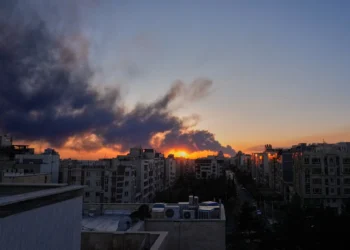
The Tehran oil depot strikes have left residents describing scenes of darkness, smoke, and fear. Overnight air raids hit several oil storage facilities near Tehran, sending flames high above the skyline. By Sunday morning, thick black smoke hung heavily over the capital of Iran.
Residents awoke to streets covered in soot and a sky almost completely hidden by smoke. Many people switched on lights indoors because daylight barely reached through the thick haze. The air carried a sharp chemical smell that residents said burned their lungs and eyes.
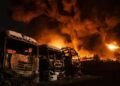
Several facilities were struck during the overnight attacks, including four oil depots and a logistics centre. Authorities reported casualties at one location, saying at least six people were killed and twenty others wounded. Emergency crews struggled through smoke-filled streets as fires burned throughout the night.
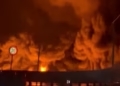
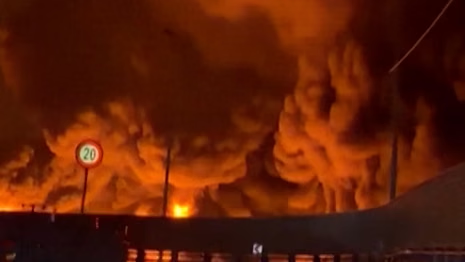
Videos filmed by citizen journalists showed towering flames lighting the sky above southern Tehran. Smoke clouds continued rising from storage tanks hours after the explosions ended. Rain later fell across the city, raising fears that contaminated droplets could harm people and animals.

Officials warned residents that toxic chemicals might mix with rainwater and produce acidic rainfall. The warning quickly spread through television broadcasts and messaging platforms across the country. Many families sealed windows, turned off ventilation systems, and avoided stepping outside.
The humanitarian organisation Iranian Red Crescent Society advised people to remain indoors where possible. Authorities warned that polluted air could irritate skin and lungs after exposure to rainfall. Officials also urged residents to cover exposed food and avoid using air conditioning systems temporarily.
Medical experts warned that smoke from burning petroleum could contain dangerous particles and chemicals. These pollutants may worsen respiratory diseases, heart conditions, and long-term health complications. Some specialists even warned that prolonged exposure might increase the risk of certain cancers.
Among those describing the aftermath was Negin, an activist speaking anonymously from eastern Tehran. She described the environment outside her home as frightening and nearly impossible to describe clearly. Smoke, she said, spread across the entire city and made breathing extremely difficult.
Her eyes burned constantly while her throat felt painfully dry after inhaling polluted air. She explained that many neighbours felt similar symptoms throughout the morning after the attacks. Despite the danger, people still needed to leave homes for food and essential supplies.
Negin attempted to purchase protective masks and inhalers at local pharmacies near her neighbourhood. She discovered that supplies were already becoming scarce across several parts of the capital. Some shops closed temporarily because employees could not safely remain outdoors during the heavy smoke.
Prices for medical items also rose sharply after the attacks shook the city overnight. Negin said she paid nearly nine hundred thousand tomans for a basic inhaler. For many residents already struggling economically, such prices created additional stress and anxiety.
She argued that ordinary citizens should not suffer because of political conflicts beyond their control. According to her, the attacks risk damaging water systems, refineries, and infrastructure essential for daily life. If pollution spreads to reservoirs, she warned, millions of people could face long-term consequences.
Negin also described growing shortages of everyday goods across neighbourhood markets and petrol stations. Fuel distribution quickly became limited as authorities introduced rationing to manage supply. Some residents reported receiving only small quantities of petrol after waiting hours in queues.
For people who depend on daily work to survive, the disruptions brought immediate financial pressure. Many businesses closed temporarily because employees feared exposure to contaminated air outside. Families already coping with inflation now faced rising prices for food, medicine, and fuel.
Another resident speaking anonymously described the emotional atmosphere across the city after the attacks. Mehdi, a forty-two-year-old restaurant owner, lives in western Tehran with his family. He compared the fear surrounding toxic air to the uncertainty people experienced during the coronavirus pandemic.
Mehdi said residents were afraid even to touch soot covering balconies, windows, and parked vehicles. The black residue spread across neighbourhood streets after drifting down from the burning oil facilities. Many people avoided cleaning surfaces because they feared contact with hazardous chemicals.
His eyes burned throughout the morning, forcing him to remain indoors for several hours. Looking outside, he noticed many residents still walking through the smoky streets without protective masks. He admitted feeling less brave than those continuing daily routines despite the contaminated atmosphere.
A strange chemical smell lingered throughout the neighbourhood long after the explosions stopped. Mehdi worried about serving food in his restaurant while pollution continued affecting water and air. Until he knew the environment was safe, he decided to close his business temporarily.
He also expressed frustration with political leaders and foreign powers involved in the conflict. According to Mehdi, ordinary citizens often feel abandoned during crises created by international tensions. Despite anger and uncertainty, he emphasised that neighbours were helping each other whenever possible.
Another resident, Mehnaz, experienced the terrifying moments during the strikes while trying to flee. She lives in southern districts of the capital near several industrial facilities and transport routes. When explosions began Saturday evening, she and her husband hurried to pack essentials into their car.
Believing the attacks might intensify before dawn, they attempted to leave the city quickly. As they drove through dark streets, bright flames suddenly appeared above the skyline nearby. The fire was coming from the Shahr-e Rey oil depot, which had just been struck.
Because the government imposed an internet shutdown during the crisis, information was limited. Mehnaz said she could not confirm what locations had been targeted or which areas were safe. Without reliable updates, many residents made decisions based only on rumours or distant explosions.
Traffic quickly built across roads leading out of the capital as frightened residents attempted to leave. Smoke filled highways and neighbourhood streets, making it difficult for drivers to see clearly. Even with car windows closed, polluted air slowly seeped inside vehicles.
Eventually Mehnaz decided it was safer to return home temporarily rather than continue driving blindly. Around midnight she sent messages describing the city as burning beneath thick clouds of smoke. Flames illuminated the skyline while darkness spread across streets below.
By Sunday morning the Tehran oil depot strikes continued dominating conversations across households and workplaces. Many residents debated whether leaving the capital was safer than remaining indoors. The situation remained uncertain because fires were still burning near the damaged depots.
Later that morning Mehnaz chose to leave the city again and travel toward her parents’ home. She departed around midday and joined long lines of vehicles moving slowly outwards. Petrol stations along the route rationed fuel carefully because supplies were rapidly decreasing.
Even as she drove away, the Rey depot still burned intensely in the distance. At night the fire made the sky glow brightly above the industrial district. Yet during daytime the smoke turned the sky unusually dark across the surrounding areas.
She described the eerie contrast between bright flames and an almost black daytime sky overhead. According to her, the scene resembled a new moon night despite being broad daylight. The darkness reflected her fears about what the future might hold for residents.

While leaving the city she noticed something else that felt strangely unsettling to her. Not a single bird flew above the roads or buildings as smoke drifted across neighbourhoods. She interpreted the absence of birds as a sign of how severe conditions had become.
The Tehran oil depot strikes therefore left more than physical damage across parts of the capital. They created a psychological shock that many residents said would remain long after fires disappear. People described feeling uncertain about safety, health, and economic stability.
Environmental concerns also continue worrying residents and health specialists across the wider region. Burning petroleum releases fine particles that can travel long distances through atmospheric currents. Experts warn that prolonged smoke exposure may affect neighbouring provinces beyond Tehran itself.
International observers are monitoring the Tehran oil depot strikes closely as tensions rise regionally. The strikes have been widely linked to military operations involving Israel, although official responses remain cautious. Governments and analysts warn that further escalation could increase instability across the Middle East.
For now, ordinary residents remain focused on immediate concerns inside their city. Families continue monitoring air quality while hoping the fires will soon be contained. Many residents say they simply want clean air, safe water, and peace returning to their daily lives.
Yet uncertainty continues hanging over the capital like the smoke still drifting across its skyline. The Tehran oil depot strikes have left a powerful reminder of how quickly conflict can transform everyday life. For millions of residents, recovery may take far longer than the fires themselves.
Related News:
 Middle East Flights Halted After Iran Strikes
 UK Prepares Aircraft Carrier for Middle East Crisis
 Mojtaba Khamenei Chosen as Iran’s New Supreme Leader
 British Woman in Iran ‘Losing Hope’ Amid Ongoing Detention
 BBC Journalist Held and Interrogated in Vietnam
 UK University Suspends Human Rights Research Following Pressure from China
 BBC to Apologise Over Edited Trump Speech Amid Backlash
 Britain deploys RAF specialists to assist Belgium with drone threats
 Ukraine-Russia war latest: Putin’s troops exploit bad weather to force Kyiv withdrawal from multiple towns
 US Justice Department Files Lawsuit Against California Over Partisan Voting Maps
 Greene Pushes Epstein Files Amid Trump Fallout
 Trump Deploys DHS to Charlotte in Major Arrest Operation
 December Run-Off in Chile as Election Produces No Winner
 Canada Passes Carney’s First Budget in Tight Parliamentary Vote
 Shadow Fleet at Sea: Europe’s Battle Against Illicit Oil Shipping
 Rama Rebukes Mahmood for Targeting Albanian Families
 Pentagon Officials in Ukraine to Discuss War End
 Venezuela Threatens Nobel Winner Machado with Fugitive Status
 Trump Envoy to Discuss Ukraine Peace at Kremlin
 Georgians Defy Government Crackdown After Year of Protests
 India’s Labour Law Overhaul Sparks Fierce Debate
 Video shows Israeli troops kill Palestinians after surrender
 EU plans $105bn Ukraine aid using frozen Russian assets
 Global campaign launched to free Palestinian leader Barghouti
 Russia losses Ukraine war peace talks intensify amid rising deaths
 Zelenskyy Accuses Russia of Sabotaging Peace Talks
 Khaleda Zia Laid to Rest with State Honour in Dhaka
 Albanese Opens Door to Bondi Royal Commission Amid Rising Pressure
 Trump Escalates Minnesota Immigration Surge Amid Rising Tensions
 Iran Protesters Defy Crackdown as Violent Clashes Intensify
 Trump Threatens Strong Action If Iran Executes Protesters
 Machado Trump medal gesture reshapes Venezuela power struggle
 Trump Receives Machado’s Nobel Medal in White House Meeting
 EU weighs response amid Greenland tariff crisis with Trump
 US Considers Asylum for British Jews Amid Rising Antisemitism
 ICE street raids expose a chilling future for public freedoms
 EU Says US Ties Have Suffered ‘Big Blow’ After Greenland Crisis
 Andrew Hastie Emerges as Leadership Rival to Ley
 Starmer China visit underscores clear-eyed national security stance
 Starmer China visit raises human rights pressure on Beijing
 Israel Moves to Bar MSF From Gaza Operations
 Trump Praises ‘Terrific’ Petro After White House Talks
 Sydney Protest Escalates and Elderly Woman Suffers Severe Injury
 Tarique Rahman’s Rise Toward Bangladesh’s Top Job
 Glass Cliff Debate After Ley’s Ouster
 Australian Families Leave Syrian Camp for Home
 Trump Attacks UK-California Energy Pact
 Kim Jong-un Unveils Housing for War Families
 Trump and Chagos Deal Rift Over Iran Strikes
 Andrew Mountbatten-Windsor Arrest After FBI Radar
 Andrew Arrest Sparks Republic Debate in Australia
 Global corruption crisis: Who Washington shields
 Duterte ICC Hearing Begins Amid Defiance
 Farage Chagos Islands Row Sparks Fury
 Trump Tariffs Threat Spark UK and EU Alarm
 The Dangerous Rise of Remigration Across Modern Europe
 Trump Speech Sparks Intense Debate Across Divided America
 Jacinda Ardern Moves To Australia Following Her US Fellowships
 US to offer passport services in West Bank settlements
 Has Europe truly learned from the failures of 2022?
 Health Funding Row Rocks US‑Africa Relations
 Iran’s Regime Still Intact — Coming Days Will Test Its Survival
 Allies of US in the Gulf Bear Brunt of Iran Attacks
 Hopes and Fears as US Iranians Take to Streets After Toppling of Supreme Leader
 Iran, the US, and a World Cup That Starts in Three Months
 Trump Faces Questions Over Iran Conflict Plan
 Nick Greiner Warns Over Election Review Fallout
 US Iran Operation: Sixth Service Member Killed
 Hezbollah Anger Erupts as War Returns to Beirut
 Why the US and Israel attacked Iran
 Israel Launches Fresh Strikes on Tehran & Beirut; US Warns “Hardest Hits” Ahead
 Israel Launches Ground Invasion of Lebanon Amid Widening Middle East War
 Herzog Asio meeting sparks security storm
 Middle East attacks intensify as Trump rejects Iran talks
 Trump Rebukes Starmer Over Iran Strikes Row
 Iran-Iraq border airstrikes spark new tensions
 US Senate Backs Trump War Powers Amid Iran Missile Barrage
 Macron Finds ‘Freedom Fries’ Redemption in Iran Crisis
 Thousands Protest Iran Strikes Outside US Embassy London
 US Bombers Arrive at RAF Base Amid Rising Iran Tensions