Published: 09 March 2026. The English Chronicle Desk. The English Chronicle Online.
Debate over the Australia Iran conflict intensified after warnings that military assistance could draw Canberra directly into war. Political leaders, defence experts, and legal scholars are now openly questioning the government’s next steps. The controversy comes as allies consider responding to escalating tensions between Iran, the United States, and Israel across the Gulf region.
Australia’s national security cabinet met on Monday to discuss requests for support from Gulf nations. Those countries are facing the consequences of Iran’s missile strikes following bombing operations ordered by Donald Trump and Israeli authorities. The meeting reflected growing concern in Canberra about regional security and the safety of Australians overseas.
The conflict has already raised complex legal and political questions surrounding the expanding Australia Iran conflict debate. Critics warn that even limited military support could place Australia legally inside the war. Government officials, however, say decisions must balance international obligations and national security responsibilities.
International law specialists say the distinction between offensive and defensive military support is often misunderstood. According to experts, assisting a nation defending itself can still qualify as direct involvement in armed conflict. That interpretation has intensified scrutiny of any Australian assistance offered to Gulf partners.
Professor Donald Rothwell from the Australian National University explained that legal responsibility does not depend on combat roles. Even limited operational help could technically place Australia within the legal framework of international war. His warning has been widely discussed in political circles and defence communities.

Rothwell noted that international law treats military support differently from humanitarian or diplomatic assistance. If Australia contributes to defensive military operations, the country becomes part of the conflict. That applies regardless of whether troops conduct offensive strikes or purely protective missions.
The professor contrasted this situation with Australia’s assistance during the war in Ukraine. Canberra supplied vehicles and weapons but never deployed military personnel on the battlefield. As a result, Australia was not formally considered a participant in that conflict.
Political opposition to involvement has been particularly strong from Australia’s Green Party leadership. The Greens’ defence spokesperson, David Shoebridge, accused the government of quietly committing the country to another overseas war. He warned that the expanding Australia Iran conflict discussion risks repeating past military entanglements.
Shoebridge argued that protecting Australian citizens in the region should remain the government’s primary focus. He said several countries have already adopted evacuation and diplomatic strategies instead of military responses. According to him, Australia should prioritise those options rather than troop deployments.
The Greens believe sending forces to the Gulf would primarily support American strategic interests. Shoebridge insisted that Australia has no direct defence obligation toward Gulf states involved in the crisis. In his view, military action would serve Washington’s priorities more than Canberra’s national interests.
However, criticism has also emerged from the opposite side of the political spectrum. Former prime minister Tony Abbott accused the government of failing to act decisively during a dangerous moment. Abbott argued that stronger cooperation with American operations would demonstrate loyalty to key security alliances.
He suggested that dismantling Iran’s nuclear ambitions could ultimately create a safer world environment. Abbott criticised Canberra’s response as hesitant and lacking determination. His comments highlight deep political divisions surrounding the evolving Australia Iran conflict.
Government officials have not yet confirmed whether military assistance will be provided. The foreign affairs minister, Penny Wong, has focused primarily on protecting Australian nationals overseas. Her department has issued warnings about travel to several Middle Eastern destinations.
Families of Australian diplomatic staff have already been advised to leave the United Arab Emirates. Authorities say the precaution reflects growing regional instability rather than specific threats. Nevertheless, the evacuation signals serious concern within Australian diplomatic circles.
Nearly eighteen hundred Australians have already returned home from the United Arab Emirates during recent days. Travel advisories now strongly discourage citizens from visiting the region until tensions subside. Government officials continue monitoring conditions closely through diplomatic and defence channels.
Advocacy groups are also calling for greater parliamentary oversight before any military deployment occurs. The campaign organisation Australians for War Powers Reform has demanded open debate in parliament. Activists argue that decisions about war should not remain solely within the executive branch.
The group’s spokesperson Peter Murphy said the debate around defensive versus offensive action misses the broader issue. In his view, any military participation automatically entangles Australia within the conflict. He described attempts to separate defensive and offensive roles as overly technical distinctions.
Murphy warned that incremental decisions could slowly expand Australia’s involvement over time. Such gradual escalation, often described as mission creep, has occurred during previous international conflicts. Critics fear the same pattern might develop within the current Australia Iran conflict situation.
Defence sources have also confirmed that Australian personnel were present during recent naval operations. Three Australian submariners reportedly served aboard an American submarine involved in a dramatic naval confrontation. The vessel sank an Iranian frigate during fighting near Sri Lanka in the Indian Ocean.
The Iranian warship, known as the Dena, was destroyed during that encounter. Reports indicate that at least eighty seven people died during the attack. The incident has further intensified the international stakes surrounding the ongoing crisis.
Military analysts believe the Indian Ocean could become a key theatre if tensions escalate further. Strategic shipping routes and naval bases throughout the region are vital to global trade. As a result, any confrontation could affect economic stability far beyond the Middle East.
Additional developments have also raised questions about intelligence operations connected to the conflict. Two American maritime patrol aircraft recently visited Western Australia during a brief stopover. Defence officials have not publicly explained the purpose of their visit.
The aircraft landed at RAAF Base Pearce before departing after slightly more than one day. According to defence sources, the planes had travelled from the strategic base on Diego Garcia. Both facilities are critical to allied surveillance and reconnaissance operations.
The aircraft type, known as the P-8A Poseidon, can conduct maritime patrol missions across large ocean regions. It can also carry torpedoes and other equipment used during anti-submarine warfare operations. That capability has increased speculation about the aircraft’s possible role in monitoring Iranian naval movements.

Meanwhile, Australia’s opposition parties say they would consider supporting defensive assistance if requested by allies. The shadow foreign affairs minister, Ted O’Brien, confirmed the opposition’s general support for American strategy. However, he acknowledged that any assistance would effectively mean joining the conflict.
O’Brien said Australia must evaluate requests carefully based on national interest and alliance commitments. He emphasised that Canberra’s relationship with Washington remains central to defence planning. Nevertheless, he recognised the seriousness of formally entering the Australia Iran conflict.
Security analysts say the coming days may prove decisive for Australia’s strategic position. Government leaders must balance alliance obligations with domestic political pressure and international law considerations. Each decision could reshape Australia’s diplomatic and military relationships for years ahead.
For many observers, the debate reflects broader questions about Australia’s role within global security partnerships. The country has long relied on close cooperation with the United States. Yet modern conflicts increasingly challenge traditional assumptions about military alliances and regional responsibilities.
As tensions continue across the Middle East and Indian Ocean, Canberra faces difficult choices. The government must determine how to protect citizens while maintaining international partnerships and legal obligations. Whatever decision emerges will likely shape the future of Australia’s foreign policy and defence strategy.
The unfolding situation ensures that the Australia Iran conflict debate will remain central to national discussion. With international alliances, legal responsibilities, and regional security at stake, the issue carries profound consequences. Australians now await the government’s final decision on whether military support will be offered.
Related News:
 British Woman in Iran ‘Losing Hope’ Amid Ongoing Detention
 BBC Journalist Held and Interrogated in Vietnam
 UK University Suspends Human Rights Research Following Pressure from China
 UK University Faces Counter-Terror Probe Over China Pressure
China-critical UK academics face ‘extremely heavy’ pressure from Beijing
UK University Faces Counter-Terror Probe Over China Pressure
China-critical UK academics face ‘extremely heavy’ pressure from Beijing
 BBC to Apologise Over Edited Trump Speech Amid Backlash
 Britain deploys RAF specialists to assist Belgium with drone threats
 Ukraine-Russia war latest: Putin’s troops exploit bad weather to force Kyiv withdrawal from multiple towns
 US Justice Department Files Lawsuit Against California Over Partisan Voting Maps
 Greene Pushes Epstein Files Amid Trump Fallout
 Trump Deploys DHS to Charlotte in Major Arrest Operation
 December Run-Off in Chile as Election Produces No Winner
 Canada Passes Carney’s First Budget in Tight Parliamentary Vote
 Shadow Fleet at Sea: Europe’s Battle Against Illicit Oil Shipping
 Rama Rebukes Mahmood for Targeting Albanian Families
 Pentagon Officials in Ukraine to Discuss War End
 Venezuela Threatens Nobel Winner Machado with Fugitive Status
 Trump Envoy to Discuss Ukraine Peace at Kremlin
 Georgians Defy Government Crackdown After Year of Protests
 India’s Labour Law Overhaul Sparks Fierce Debate
 Video shows Israeli troops kill Palestinians after surrender
 Chinese & Japanese Boats Clash Near Disputed Islands
 EU plans $105bn Ukraine aid using frozen Russian assets
 Global campaign launched to free Palestinian leader Barghouti
 Russia losses Ukraine war peace talks intensify amid rising deaths
 Zelenskyy Accuses Russia of Sabotaging Peace Talks
 Trump ‘Not Worried’ as China Conducts Massive Taiwan Wargame
 Khaleda Zia Laid to Rest with State Honour in Dhaka
 Maduro Faces Court in New York Over Drugs and Weapons Case
 Albanese Opens Door to Bondi Royal Commission Amid Rising Pressure
 Trump Escalates Minnesota Immigration Surge Amid Rising Tensions
 Iran Protesters Defy Crackdown as Violent Clashes Intensify
 Trump Eyes Strong Military Options Amid Iran Protest Crackdown
 Trump Threatens Strong Action If Iran Executes Protesters
 Machado Trump medal gesture reshapes Venezuela power struggle
 Trump Receives Machado’s Nobel Medal in White House Meeting
 EU weighs response amid Greenland tariff crisis with Trump
 US Considers Asylum for British Jews Amid Rising Antisemitism
 ICE street raids expose a chilling future for public freedoms
 US Africa aid remarks spark anger after leaked State email
 Trump Launches “Board of Peace” Amid Global Diplomacy Push
 EU Says US Ties Have Suffered ‘Big Blow’ After Greenland Crisis
 Andrew Hastie Emerges as Leadership Rival to Ley
 Russia Strikes Kyiv and Kharkiv as Peace Talks Enter Day Two
 Starmer China visit underscores clear-eyed national security stance
 Starmer China visit raises human rights pressure on Beijing
 Israel Moves to Bar MSF From Gaza Operations
 Trump Praises ‘Terrific’ Petro After White House Talks
 Sydney Protest Escalates and Elderly Woman Suffers Severe Injury
 Tarique Rahman’s Rise Toward Bangladesh’s Top Job
 Glass Cliff Debate After Ley’s Ouster
 Japan Seizes Chinese Boat Amid Rising Tensions
 Australian Families Leave Syrian Camp for Home
 Trump Attacks UK-California Energy Pact
 Kim Jong-un Unveils Housing for War Families
 Trump and Chagos Deal Rift Over Iran Strikes
 Andrew Mountbatten-Windsor Arrest After FBI Radar
 Andrew Arrest Sparks Republic Debate in Australia
 Global corruption crisis: Who Washington shields
 Duterte ICC Hearing Begins Amid Defiance
 Farage Chagos Islands Row Sparks Fury
 Trump Tariffs Threat Spark UK and EU Alarm
 Albanese on One Nation and Pocock Attack
 The Dangerous Rise of Remigration Across Modern Europe
 Trump’s Marathon Speech Fails to Mask a Growing National Disconnect
 Trump Speech Sparks Intense Debate Across Divided America
 Jacinda Ardern Moves To Australia Following Her US Fellowships
 US to offer passport services in West Bank settlements
 Has Europe truly learned from the failures of 2022?
 Health Funding Row Rocks US‑Africa Relations
 Middle East Flights Halted After Iran Strikes
 Iran Confirms Khamenei Killed in Air Strikes
 Trump Faces Questions Over Iran Conflict Plan
 Nick Greiner Warns Over Election Review Fallout
 Herzog Asio meeting sparks security storm
 Trump Rebukes Starmer Over Iran Strikes Row
 Trump Iran Strikes Row Sparks Washington Storm
 UK Prepares Aircraft Carrier for Middle East Crisis
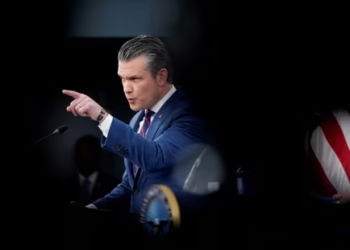 Pete Hegseth Iran War Remarks Spark Alarm
 Kasasa Island Dispute Fuels Japan-China Tensions