Published: 9 March 2026
The English Chronicle Desk
The English Chronicle Online — UK News
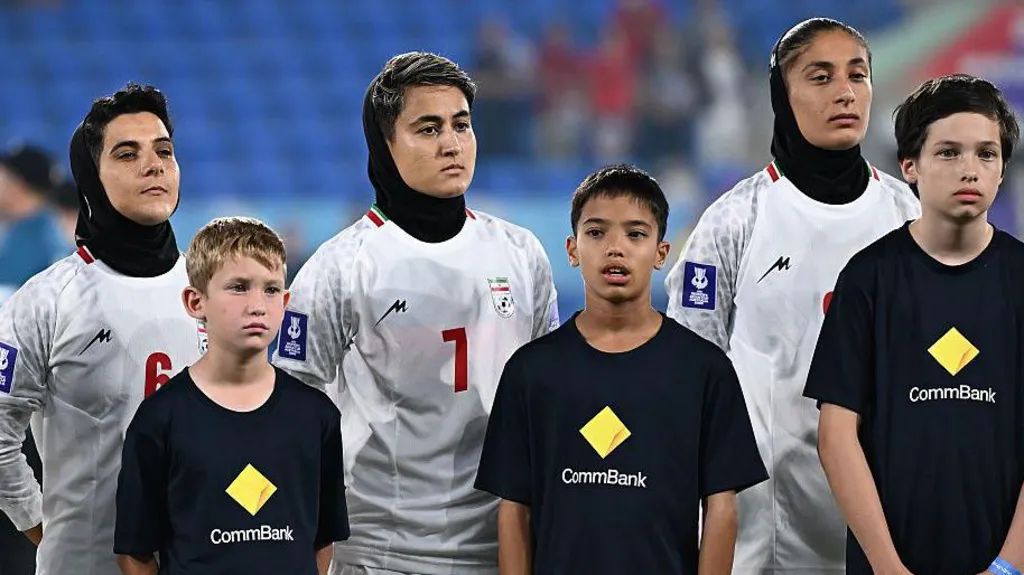
Calls are intensifying for Australia to ensure the safety of Iran’s women’s national football team after their elimination from the AFC Women’s Asian Cup, following a politically charged week in which the players refused to sing the Iranian national anthem. The gesture, widely interpreted as an act of defiance against Iran’s authorities, has triggered fierce backlash from conservative commentators inside the country and sparked fears that the squad could face reprisals upon returning home.

The Iranian team, known as the Lionesses, were knocked out of the tournament after a 3–0 defeat to the Philippines on the Gold Coast. But it was their earlier match against South Korea that ignited international concern. Ahead of kick‑off, the players stood silently during the national anthem, declining to sing — a symbolic act that resonated far beyond the stadium. Within hours, Iranian state‑aligned critics condemned the team, with one commentator branding them “wartime traitors,” a phrase that has since circulated widely on Iranian social media.
As the team prepared to leave the stadium on Sunday evening, hundreds of supporters gathered outside, surrounding the team bus and chanting “save our girls.” Many waved pre‑revolution Iranian flags, while others held signs urging Australia to intervene. The emotional scenes underscored the growing anxiety among members of the Iranian diaspora, who fear the players could face interrogation, detention, or worse upon their return.
Human rights advocates, political figures, and prominent Iranian exiles have joined the chorus of voices urging Australia to act. Reza Pahlavi, the US‑based son of Iran’s last shah, warned that the players’ refusal to sing the anthem could have “dire consequences” under the current regime. He called on Australia to offer protection or asylum to any team member who requests it, arguing that the international community has a moral obligation to shield athletes who take personal risks to express dissent.
The controversy has unfolded against the backdrop of heightened political tension within Iran, where women’s rights remain a flashpoint following years of protests and government crackdowns. The Lionesses’ silent protest has been interpreted by many as a continuation of the broader movement sparked by the death of Mahsa Amini in 2022, which led to widespread demonstrations demanding greater freedoms for women. Although the Iranian government has attempted to suppress such activism, symbolic acts of resistance continue to emerge — and athletes have increasingly found themselves at the centre of these struggles.
Australian officials have acknowledged the situation but have so far stopped short of confirming whether the players will be offered protection. Foreign Minister Penny Wong said Australia “stands in solidarity” with the Iranian women’s team and is monitoring the situation closely. She emphasised that Australia has a strong record of supporting individuals at risk of persecution, but noted that any asylum requests must follow established legal processes.
The Australian government is also facing pressure from within its own borders. Advocacy groups, including Women’s Rights Watch Australia and the Iranian‑Australian Alliance, have urged authorities to act swiftly, arguing that the players’ safety cannot be guaranteed if they return to Iran. They point to previous cases in which Iranian athletes who expressed dissent abroad faced severe consequences upon returning home, including travel bans, interrogations, and imprisonment.
The situation has also drawn attention from international sports bodies. FIFA and the Asian Football Confederation have been urged to intervene, with campaigners arguing that governing bodies have a responsibility to protect athletes who face political persecution. While neither organisation has issued a formal statement, officials are believed to be in communication with Australian authorities.
Inside Iran, the reaction has been sharply divided. State‑aligned media outlets have condemned the players, accusing them of politicising sport and undermining national unity. Conservative commentators have called for disciplinary action, with some demanding that the players be barred from future national team participation. However, many Iranians — particularly women and younger citizens — have expressed support for the team, praising their courage and framing the anthem protest as a powerful act of resistance.
The players themselves have remained largely silent since the incident, avoiding public comment and declining interview requests. Sources close to the team say they are anxious and uncertain about what awaits them. Some are reportedly considering seeking asylum, while others fear that doing so could endanger their families back home.
The atmosphere surrounding the team has grown increasingly tense. Security around their hotel has been strengthened, and team officials have been seen holding closed‑door meetings with Australian authorities. While the Iranian Football Federation has insisted that the players will return home as scheduled, it has not addressed concerns about their safety.
The broader Iranian community in Australia has mobilised quickly. Rallies have been held in Sydney, Melbourne, and Brisbane, with demonstrators calling on the government to protect the players. Many attendees carried signs reading “Let them stay” and “Their lives are at risk,” while speakers highlighted the dangers faced by women who challenge Iran’s political establishment.
Legal experts say the players could have strong grounds for asylum if they choose to apply. Under international refugee law, individuals who face persecution for political expression — including symbolic acts such as refusing to sing a national anthem — may qualify for protection. However, the process can be lengthy, and applicants must demonstrate a credible fear of harm.

The situation has also raised questions about the role of sport in political expression. Analysts note that athletes from authoritarian countries often face intense pressure to conform to state expectations, and acts of dissent can carry severe consequences. The Iranian women’s team, in particular, has long navigated a complex landscape, balancing their athletic ambitions with the realities of representing a nation where women’s rights are heavily restricted.
As the Lionesses prepare for their departure, uncertainty hangs over their future. Supporters continue to gather outside their hotel, holding vigils and urging the Australian government to intervene. Many fear that once the team boards a plane, the opportunity to protect them may be lost.
For now, the players remain in Australia, their fate undecided. Whether they return to Iran or seek refuge abroad, their silent protest has already reverberated far beyond the football pitch, becoming a symbol of resistance that has captured global attention.
Related News:
 England’s Euro Odyssey: A Tale of Grit, Glory and the Lionesses’ Miraculous March to the Final
 Raducanu’s Resurgence and Venus’s Record-Breaking Feat Highlight Washington Showdowns
 Tottenham Takes On Newcastle
 Manchester City Announce Their Return in Style with Haaland Double and Debut Goals at Wolves
 FIFA Eyes Biennial Club World Cup from 2029, Plans Possible Expansion
 Brazil Dominate Chile 3-0 to Secure Second Place in World Cup Qualifiers
 Serbia Humiliated 0-5 by England in World Cup Qualifier
 Haaland Hits Five as Norway Crush Moldova 11-1 in World Cup Qualifier
 Gabriel Martinelli’s Spark Ignites Arsenal’s Champions League Campaign with Victory at Athletic Bilbao
 Dembélé and Bonmatí Shine as Ballon d’Or Winners in Glittering Paris Ceremony
 Hannah Hampton Makes History as First Winner of Women’s Yashin Trophy at Ballon d’Or Awards
 Liverpool Vs outhampton Set for Carabao Cup Clash at Anfield
 Dramatic Derby: Sorloth Strikes as Atletico and Real Madrid Share the Spoils
 ICC Women’s World Cup 2025: India to Host as Pakistan Fixtures Moved to Neutral Venues
 Bournemouth Stun Fulham with Dramatic Comeback in Premier League Thriller
 Chaos at Ibrox as Martin’s Rangers Era Comes to an End
 Arsenal Showcase Depth and Flexibility as Arteta Eyes Title Challenge
 Ferguson Fires Scotland to Dramatic Comeback Win Over Greece
 Ruben Neves Strikes Late as Portugal Beat Ireland
 Tuchel Criticises ‘Silent Wembley’ After England Win
 Kane’s Double Seals England’s World Cup Qualification
 Barnes Inspires Newcastle to Champions League Triumph Over Benfica
City shine with PlayStation-style football to overwhelm Villarreal
Barnes Inspires Newcastle to Champions League Triumph Over Benfica
City shine with PlayStation-style football to overwhelm Villarreal
 Fabio Wardley stuns Joseph Parker to earn Usyk title shot
 Tension and Turmoil at Aston Villa v Maccabi Match
 Lando Norris Dominates Brazil GP to Strengthen F1 Title Bid
 Ronaldo Confirms Final World Cup and Plans Retirement
 England Maintain Perfect World Cup Qualifying Record with Win Over Serbia
 Irish Hero Parrott Says Goal Brought First Tears in Years
 Scotland Fans Reflect on France ’98 as World Cup Looms
 Nigeria Misses World Cup Again After Play-Off Loss
 Tiny Curacao Makes History as Smallest Nation to Reach World Cup
 Haiti Qualifies for World Cup Despite Coach Never Visiting Country
 Scotland Fans Celebrate Historic World Cup Qualification
 Barcelona Returns to Camp Nou vs Athletic Bilbao
 Mbappe Scores 4 as Real Madrid Edge Olympiakos
 Man City Lose, Champions League Risk
 Trump to attend 2026 FIFA World Cup draw in Washington
 Egypt and Iran urge Fifa to block Pride event at 2026 World Cup
 Sexually Explicit Letters Target Hong Kong Exiles in UK, Australia
 Britain Demands Israel Reverse Ban on Aid Groups
 Grief, Fear and Fury: Mothers Unite to End Israeli-Palestinian Violence
 Iran Leader Blames Protesters, Says They Serve Trump
 Emails Show Epstein Funded Mandelson’s Husband After Jail
 After the Landslide: Can India Reset Ties with BNP Bangladesh?
 China Strikes at Japan’s Core — Will PM Takaichi Back Down?
 Japan’s Lost “Tigers” Were Actually Lions, Study Reveals
 ‘I Would Scream in My Sleep’: Alawite Women from Syria Tell of Kidnap and Rape
Leave Chagos Now, Britain Tells Returning Islanders
‘I Would Scream in My Sleep’: Alawite Women from Syria Tell of Kidnap and Rape
Leave Chagos Now, Britain Tells Returning Islanders
 Gower, Waugh and Gavaskar Among Cricket Legends Calling for Imran Khan to Receive Proper Medical Care
 India Sentences Three Men to Death for Attack on Israeli Tourist and Hosts
 Japan Braces as Takaichi Begins New Term with Huge Mandate for Low‑Tax, Ultra‑Conservative Agenda
 South Korea’s Ex-President Faces Death Penalty in Insurrection Trial
 US and Indonesia Finalise Deal to Cut Tariffs to 19%
 Austrian Climber Found Guilty After Girlfriend Froze to Death on Mountain
 Kim Jong Un Reappointed as Ruling Party Chief
 Duterte Refuses to Attend ICC Pre-Trial Hearing Over ‘Drug War’ Case
Major 7.1 Earthquake Strikes Off Malaysian Tourist Coast
Duterte Refuses to Attend ICC Pre-Trial Hearing Over ‘Drug War’ Case
Major 7.1 Earthquake Strikes Off Malaysian Tourist Coast
 Brit Killed in Horror Bus Crash as 18 Others Die and 25 Injured
 ‘Anyone who runs is shot’: Russian soldiers describe killings of troops who refuse orders
 Japan to Deploy Missiles on Island Near Taiwan by 2031
 German Chancellor Lands in Beijing for Inaugural China Trip
 Hilary Knight speaks out on Trump’s recent hockey remarks
 Why Asian Firms Are Not Cheering Trump Tariff Ruling
 Why Asian Firms Are Not Cheering Trump Tariff Ruling
 Could Kim’s Teen Daughter Become North Korea’s Next Leader?
 Kosgei Wins Tokyo Marathon in Record Time
 Iran, the US, and a World Cup That Starts in Three Months
 Australian GP Confident Amid Travel Disruption
 Ski Duo Named GB’s Winter Paralympics Flagbearers
 Ireland Wary but Focused Before Wales Challenge
 The Beautiful Game Is Broken. This Is Our Plan to Fix It
 Nepal Holds First General Election Since Gen Z Protests Toppled Government
 Watershed Moment as Russia’s Sporting Exile Ends
 Dirty Laundry and Chocolate Bars: How Venezuelan Prisoners Smuggled Messages Out of Jail
 Nepal Election 2026: When Will We Get the Results?
 Alonso Fears ‘Permanent Nerve Damage’ From Aston Martin’s Disastrous Car
 Fuel and Remittances: How Iran Conflict Hits India At Home
 Sri Lanka Takes Control of Second Iranian Vessel a Day After US Sub Attack
 India T20 World Cup Triumph Seals Historic Title Defence