Published: 16 March 2026. The English Chronicle Desk. The English Chronicle Online.
Global markets opened the week under tension as oil prices climbed sharply after dramatic claims from Donald Trump about a major US strike against Iranian energy infrastructure. Traders reacted quickly to the remarks and renewed instability across the Middle East, sending the international benchmark higher during early Monday trading.
In London trading hours, Brent Crude rose by 1.8 percent to reach 104.98 dollars per barrel. The increase reflects deepening fears that ongoing conflict could disrupt global supplies moving through one of the world’s most vital energy corridors.
The surge in oil prices followed comments from Trump during an interview with NBC News on Saturday. The US president claimed American forces had “totally demolished” much of Iran’s key export hub located on Kharg Island. He suggested further attacks could occur if military planners believed additional strikes were necessary.
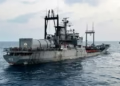
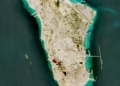
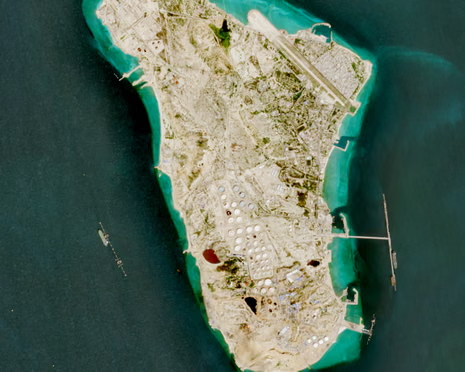
Kharg Island sits roughly twenty seven miles from mainland Iran inside the Persian Gulf. The narrow coral island serves as the country’s most critical oil processing and export centre. Analysts estimate that around ninety percent of Iranian crude shipments normally pass through facilities located there.
Because of this strategic importance, the attack instantly reverberated through global energy markets. Investors feared that damage to Kharg could sharply limit Iranian exports for months. Those concerns contributed to the sudden jump in oil prices seen across international trading desks on Monday morning.
 Trump later wrote on social media that American forces had deliberately avoided hitting certain energy facilities. He claimed military planners acted “for reasons of decency” while targeting what he described as Iranian military infrastructure. However, market analysts questioned that explanation given Kharg’s essential role in exporting crude.
Even limited damage could severely disrupt Iran’s shipping operations. Tanker routes and storage terminals on the island are closely interconnected. Experts believe repairing pipelines, jetties, and pumping stations could take weeks if critical infrastructure suffered significant destruction.
The uncertainty surrounding the scale of damage has compounded worries about the nearby Strait of Hormuz. This narrow waterway links the Persian Gulf with the Arabian Sea and remains one of the world’s most sensitive maritime passages.
Roughly one fifth of globally traded crude oil normally travels through the Strait of Hormuz each day. Any prolonged closure could restrict shipments from multiple Gulf producers simultaneously. Such a scenario would place intense pressure on global supplies and send oil prices sharply higher.
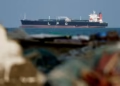
Shipping traffic through the strait has already slowed significantly since the conflict escalated. Reports from maritime tracking agencies suggest many tankers are waiting outside the region for improved security conditions. Insurance premiums for vessels entering the Gulf have also increased dramatically.
During the same interview, Trump claimed that several international partners would soon help reopen the passage. He urged allies including France, Japan, South Korea, the United Kingdom, and even China to participate in a coordinated naval effort.
The president described the potential mission as a “team effort” designed to protect commercial vessels. According to his remarks, allied ships would deter Iranian attacks against tankers passing through the strategic channel.
Yet official responses from those governments appeared cautious and measured throughout the weekend. Diplomats indicated that discussions remain ongoing regarding possible security measures. None immediately confirmed plans to deploy warships directly into the contested waterway.
Officials in Seoul acknowledged the seriousness of the situation affecting energy supplies. Representatives from Ministry of Foreign Affairs of South Korea said they were reviewing multiple options to help stabilise transport routes. The statement emphasised cooperation with partners while avoiding any commitment to military deployment.
British officials have also examined possible contributions to maritime security operations. Defence sources suggested the UK could send advanced minesweeping drones rather than large naval vessels. The approach aims to reduce risks of escalation while still assisting efforts to safeguard commercial shipping.
Energy traders remain highly sensitive to developments because global supply chains are already strained. Markets had stabilised earlier this year after disruptions caused by the Russian invasion of Ukraine began easing. However, the renewed Middle Eastern crisis has abruptly reversed that fragile stability.
Last week, Brent crude surpassed the 100 dollar mark for the first time since the early years of that conflict. The rally pushed energy stocks upward while increasing costs for consumers worldwide. Major oil companies recorded fresh share price highs as investors anticipated stronger profits.
The rapid escalation has also revived concerns about inflation in many developed economies. Fuel costs influence transportation, manufacturing, and food prices across global markets. As a result, sustained increases in oil prices could complicate economic recovery efforts in several countries.
Consumers in the United States have already noticed the immediate impact at petrol stations. Data from the American Automobile Association shows the national average price reached 3.70 dollars per gallon on Sunday. That figure represents an increase of sixty two cents compared with prices one month earlier.
For many households, the sudden jump has become a significant financial burden. Rising fuel costs often ripple through family budgets, affecting commuting expenses and everyday purchases.
In the city of Detroit, residents voiced frustration while filling vehicles during the weekend. One driver, an underemployed father named Kevin Dass, expressed anger about paying nearly three and a half dollars per gallon. His comments reflected a broader sentiment that ordinary families often bear the consequences of geopolitical conflicts.
Despite these concerns, Trump attempted to reassure the public about the long term outlook. He suggested that supply disruptions would eventually ease and that global production remained abundant. According to his remarks, current constraints simply represent temporary blockages in the supply chain.
“There’s so much oil and gas available around the world,” he told NBC News during the interview. Trump argued that once shipping lanes reopen, markets could stabilise quickly and prices might fall again.
Energy analysts, however, remain more cautious in their assessments. Even short interruptions in shipping through the Strait of Hormuz can trigger prolonged volatility. Oil markets respond quickly to perceived threats because global demand leaves little room for sudden supply shortages.
Countries across Asia have begun implementing emergency measures to cope with the situation. Governments worry that prolonged instability could harm industrial production and economic growth. Some have already introduced policies designed to soften the immediate impact on consumers.

Authorities in Thailand are considering expanded fuel subsidies aimed at limiting domestic price rises. Officials hope the financial support will protect households and transport businesses from sudden cost increases.
Meanwhile, the government of Bangladesh has examined fuel rationing strategies as precautionary measures. Energy planners fear that further disruptions in Middle Eastern supply chains could tighten imports and raise national energy expenses.
International observers say the coming days may determine whether the crisis escalates or stabilises. Diplomatic efforts continue quietly behind the scenes as governments weigh both economic risks and military consequences.
Markets will closely monitor any confirmation regarding damage at Kharg Island facilities. Satellite imagery and shipping data are expected to reveal the extent of disruption soon. Those details will likely influence trading patterns and investor sentiment throughout the week.
For now, uncertainty remains the dominant force shaping the global energy landscape. With geopolitical tensions still high and shipping routes under threat, traders expect volatility to continue dominating markets. As a result, oil prices may remain sensitive to every new development emerging from the region.
The situation illustrates how closely energy markets intertwine with global politics and security. A single strike on a remote island facility can send shockwaves through economies thousands of miles away. Until tensions ease and shipping routes reopen fully, governments and consumers alike will watch developments with growing concern.
Related News:
 British Woman in Iran ‘Losing Hope’ Amid Ongoing Detention
 BBC Journalist Held and Interrogated in Vietnam
 UK University Suspends Human Rights Research Following Pressure from China
 UK University Faces Counter-Terror Probe Over China Pressure
 BBC to Apologise Over Edited Trump Speech Amid Backlash
 Britain deploys RAF specialists to assist Belgium with drone threats
 Ukraine-Russia war latest: Putin’s troops exploit bad weather to force Kyiv withdrawal from multiple towns
 US Justice Department Files Lawsuit Against California Over Partisan Voting Maps
 Greene Pushes Epstein Files Amid Trump Fallout
 Trump Deploys DHS to Charlotte in Major Arrest Operation
 December Run-Off in Chile as Election Produces No Winner
 Canada Passes Carney’s First Budget in Tight Parliamentary Vote
 Shadow Fleet at Sea: Europe’s Battle Against Illicit Oil Shipping
 Rama Rebukes Mahmood for Targeting Albanian Families
 Pentagon Officials in Ukraine to Discuss War End
 Venezuela Threatens Nobel Winner Machado with Fugitive Status
 Trump Envoy to Discuss Ukraine Peace at Kremlin
 Georgians Defy Government Crackdown After Year of Protests
 India’s Labour Law Overhaul Sparks Fierce Debate
 Video shows Israeli troops kill Palestinians after surrender
 Chinese & Japanese Boats Clash Near Disputed Islands
 EU plans $105bn Ukraine aid using frozen Russian assets
 Global campaign launched to free Palestinian leader Barghouti
 Russia losses Ukraine war peace talks intensify amid rising deaths
 Zelenskyy Accuses Russia of Sabotaging Peace Talks
 Khaleda Zia Laid to Rest with State Honour in Dhaka
 Maduro Faces Court in New York Over Drugs and Weapons Case
 Albanese Opens Door to Bondi Royal Commission Amid Rising Pressure
 Trump Escalates Minnesota Immigration Surge Amid Rising Tensions
 Iran Protesters Defy Crackdown as Violent Clashes Intensify
 Trump Eyes Strong Military Options Amid Iran Protest Crackdown
 Trump Threatens Strong Action If Iran Executes Protesters
 Machado Trump medal gesture reshapes Venezuela power struggle
 Trump Receives Machado’s Nobel Medal in White House Meeting
 EU weighs response amid Greenland tariff crisis with Trump
 US Considers Asylum for British Jews Amid Rising Antisemitism
 ICE street raids expose a chilling future for public freedoms
 Trump Launches “Board of Peace” Amid Global Diplomacy Push
 EU Says US Ties Have Suffered ‘Big Blow’ After Greenland Crisis
 Andrew Hastie Emerges as Leadership Rival to Ley
 Starmer China visit underscores clear-eyed national security stance
 Starmer China visit raises human rights pressure on Beijing
 Israel Moves to Bar MSF From Gaza Operations
 Trump Praises ‘Terrific’ Petro After White House Talks
 Sydney Protest Escalates and Elderly Woman Suffers Severe Injury
 Tarique Rahman’s Rise Toward Bangladesh’s Top Job
 Glass Cliff Debate After Ley’s Ouster
 Japan Seizes Chinese Boat Amid Rising Tensions
 Australian Families Leave Syrian Camp for Home
 Trump Attacks UK-California Energy Pact
 Kim Jong-un Unveils Housing for War Families
 Trump and Chagos Deal Rift Over Iran Strikes
 Andrew Mountbatten-Windsor Arrest After FBI Radar
 Andrew Arrest Sparks Republic Debate in Australia
 Global corruption crisis: Who Washington shields
 Duterte ICC Hearing Begins Amid Defiance
 Farage Chagos Islands Row Sparks Fury
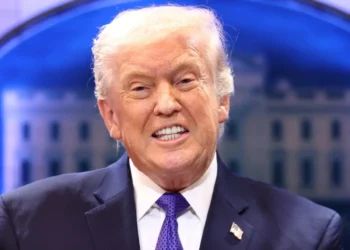 Trump Tariffs Threat Spark UK and EU Alarm
 The Dangerous Rise of Remigration Across Modern Europe
 Trump’s Marathon Speech Fails to Mask a Growing National Disconnect
 Trump Speech Sparks Intense Debate Across Divided America
 Jacinda Ardern Moves To Australia Following Her US Fellowships
 US to offer passport services in West Bank settlements
 Has Europe truly learned from the failures of 2022?
 Health Funding Row Rocks US‑Africa Relations
 Middle East Flights Halted After Iran Strikes
 Trump Faces Questions Over Iran Conflict Plan
 Nick Greiner Warns Over Election Review Fallout
 Herzog Asio meeting sparks security storm
 Trump Rebukes Starmer Over Iran Strikes Row
 Trump Iran Strikes Row Sparks Washington Storm
 UK Prepares Aircraft Carrier for Middle East Crisis
 Pete Hegseth Iran War Remarks Spark Alarm
 Kasasa Island Dispute Fuels Japan-China Tensions
 Trump Pressures Congress Over Save America Act
 Iranian Football Squad Asylum Drama Shocks Australia
 Queensland Protest Laws Spark Free Speech Backlash
 Oil Supply Disruption Shocks Global Energy Markets
 Eswatini Deal Sparks Global Outcry Over US Deportations
 Yvette Cooper: UK Must Follow Principles, Not US Pressure