Published: 17 March 2026. The English Chronicle Desk. The English Chronicle Online.
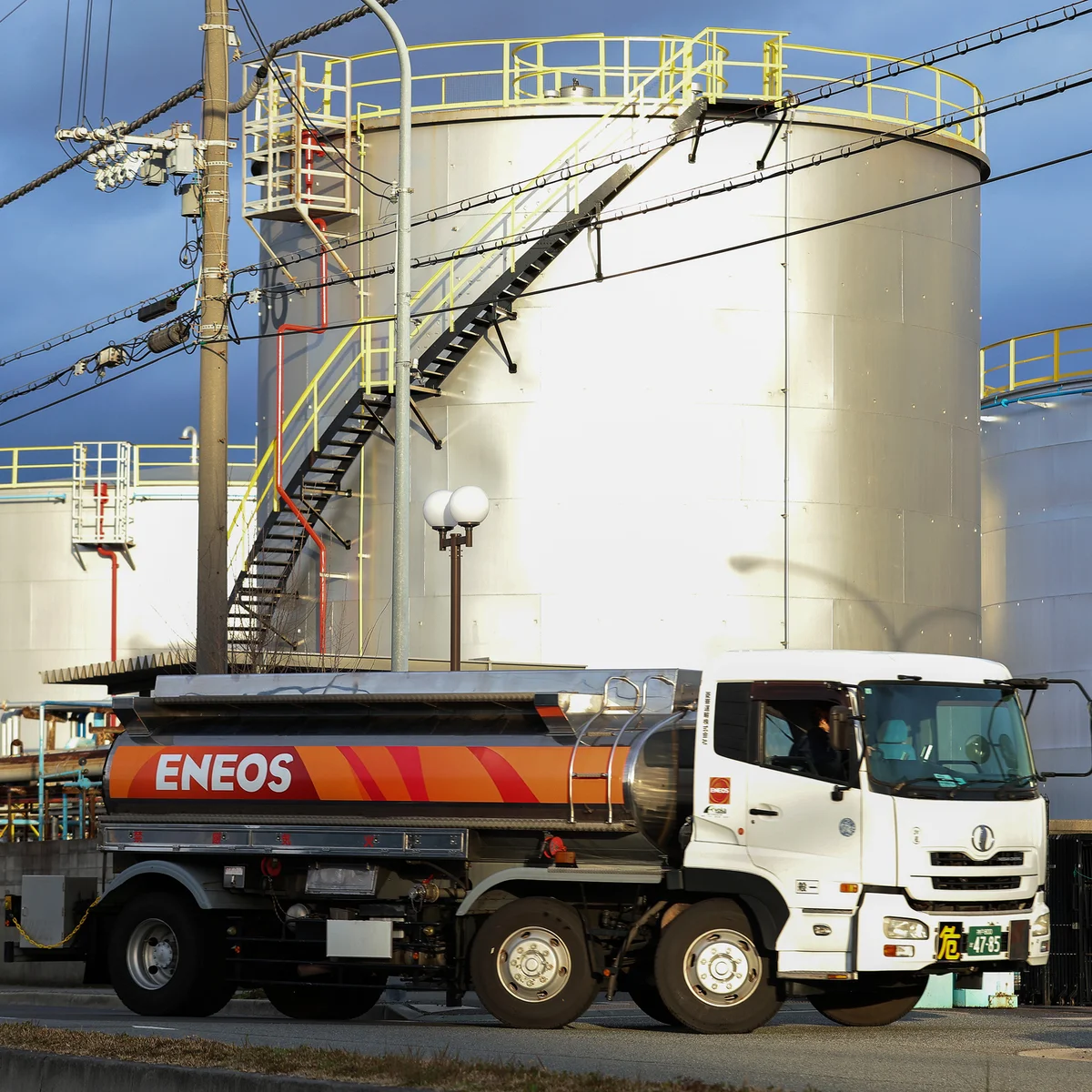
The global energy market remains under intense pressure as oil prices surge sharply amid escalating tensions in the Gulf region. The latest developments have prompted the International Energy Agency to consider further emergency stock releases. This move reflects growing concern that the ongoing disruption around the Strait of Hormuz could continue driving volatility. As traders react to supply fears, the phrase oil prices surge has become a defining theme across financial markets this week.
The head of the agency, Fatih Birol, confirmed that member countries still possess significant reserves despite recent historic interventions. Speaking to international media, he explained that only a portion of available emergency stocks has been utilised so far. This leaves room for further coordinated releases if the crisis deepens or market stability deteriorates further. His remarks signal that governments remain prepared to intervene aggressively if necessary.
Markets responded immediately to the uncertainty, with Brent crude prices jumping nearly three percent shortly after trading opened on Monday. Although prices later eased slightly, they remained above the psychologically significant one hundred dollar mark. Analysts say such movements reflect both short-term panic and longer-term structural concerns about supply disruptions in key producing regions.
The current crisis has already triggered one of the largest emergency oil releases in modern history. Around one hundred million barrels are being directed towards Asian markets this week. This initial tranche forms part of a much larger plan to inject approximately four hundred million barrels into global supply chains. The scale of this intervention highlights the seriousness of the disruption affecting global energy flows.

According to Birol, even after this massive release programme concludes, member nations will retain around eighty percent of their emergency reserves. This level of remaining capacity provides reassurance that further action remains possible if required. However, he stressed that stock releases are only a temporary solution and cannot replace normal market functioning indefinitely. The longer the disruption persists, the more complex recovery efforts will become.
At the heart of the crisis lies the continued closure of the Strait of Hormuz, a vital maritime corridor responsible for transporting roughly one fifth of the world’s seaborne crude. Its strategic importance makes any disruption particularly damaging to global supply chains. Shipping companies have already begun rerouting vessels, increasing costs and delaying deliveries across multiple regions. Insurance premiums for tankers operating near the Gulf have also surged dramatically.
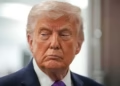
Political tensions escalated further following comments from Donald Trump, who urged international partners to take stronger action to reopen the waterway. He expressed frustration with what he described as uneven levels of support among allied nations. His remarks underline the geopolitical complexity surrounding any coordinated military or diplomatic response.
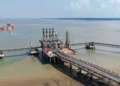
The United States recently carried out a targeted strike near Kharg Island, a critical infrastructure site responsible for the majority of Iran’s crude exports. Although the attack avoided direct damage to key facilities, it heightened fears of further escalation. Energy analysts warn that even limited military actions can have outsized impacts on market confidence and price stability.
Oil producers across the region are already feeling the strain of the ongoing conflict. Several operators have reduced output or temporarily shut down fields due to security concerns. These precautionary measures are contributing to a tightening supply environment that continues to push prices higher. Combined with shipping disruptions, the result is a highly fragile global energy system.
The phrase oil prices surge is now being repeated across financial reports, reflecting the scale of market reaction. Investors are closely monitoring developments, particularly any signs of diplomatic progress or further military escalation. The uncertainty has also led to increased volatility in related markets, including natural gas and refined petroleum products. Economists warn that sustained high energy costs could have wider implications for global inflation.
In Europe and Asia, governments are already considering contingency measures to protect consumers and industries from rising energy bills. Some countries are exploring subsidies or temporary tax reductions to cushion the economic impact. However, policymakers acknowledge that such measures can only offer limited relief if supply constraints persist. The situation highlights the interconnected nature of global energy systems and economic stability.
Birol emphasised that reopening the Strait of Hormuz remains the most effective way to restore market balance. Without the resumption of normal shipping flows, emergency stock releases can only provide short-term relief. He warned that rebuilding confidence in global energy markets could take considerable time, even after the conflict subsides. This reflects the lasting impact that geopolitical disruptions can have on investor sentiment and infrastructure planning.
The oil prices surge has also renewed discussions about energy security and diversification strategies. Many countries are reassessing their dependence on specific regions for critical supplies. Renewable energy investments and alternative sourcing strategies are once again being prioritised in policy discussions. While these transitions take time, the current crisis may accelerate long-term shifts in global energy dynamics.

Meanwhile, industry leaders are urging calm and coordination among major economies. They stress that unilateral actions could worsen volatility rather than stabilise markets. Collaborative approaches, such as coordinated stock releases and diplomatic engagement, are seen as more effective in addressing systemic risks. The role of international institutions like the IEA is therefore becoming increasingly central.
Financial markets remain highly sensitive to any new developments. Even minor updates related to military activity or diplomatic talks can trigger significant price swings. Traders are particularly focused on signals regarding the duration of the crisis and the likelihood of further disruptions. This environment has created both risks and opportunities for investors, depending on their exposure and strategies.
Despite the challenges, some analysts believe that the current oil prices surge could eventually stabilise if coordinated efforts succeed. Historical precedents show that markets can recover once supply routes are restored and confidence returns. However, the timeline for such recovery remains uncertain, especially given the complex geopolitical factors involved.
For now, the global energy system continues to operate under strain, with governments and industry players navigating an unpredictable landscape. The coming weeks will be critical in determining whether emergency measures can effectively bridge the gap until normal operations resume. As the situation evolves, the phrase oil prices surge is likely to remain a central theme in economic and political discussions worldwide.
Related News:
 British Woman in Iran ‘Losing Hope’ Amid Ongoing Detention
 BBC Journalist Held and Interrogated in Vietnam
 UK University Suspends Human Rights Research Following Pressure from China
 UK University Faces Counter-Terror Probe Over China Pressure
 BBC to Apologise Over Edited Trump Speech Amid Backlash
 Britain deploys RAF specialists to assist Belgium with drone threats
 Ukraine-Russia war latest: Putin’s troops exploit bad weather to force Kyiv withdrawal from multiple towns
 US Justice Department Files Lawsuit Against California Over Partisan Voting Maps
 Greene Pushes Epstein Files Amid Trump Fallout
 Trump Deploys DHS to Charlotte in Major Arrest Operation
 December Run-Off in Chile as Election Produces No Winner
 Canada Passes Carney’s First Budget in Tight Parliamentary Vote
 Shadow Fleet at Sea: Europe’s Battle Against Illicit Oil Shipping
 Rama Rebukes Mahmood for Targeting Albanian Families
 Pentagon Officials in Ukraine to Discuss War End
 Venezuela Threatens Nobel Winner Machado with Fugitive Status
 Trump Envoy to Discuss Ukraine Peace at Kremlin
 Georgians Defy Government Crackdown After Year of Protests
 India’s Labour Law Overhaul Sparks Fierce Debate
 Video shows Israeli troops kill Palestinians after surrender
 Chinese & Japanese Boats Clash Near Disputed Islands
 EU plans $105bn Ukraine aid using frozen Russian assets
 Global campaign launched to free Palestinian leader Barghouti
 Russia losses Ukraine war peace talks intensify amid rising deaths
 Zelenskyy Accuses Russia of Sabotaging Peace Talks
 Khaleda Zia Laid to Rest with State Honour in Dhaka
 Albanese Opens Door to Bondi Royal Commission Amid Rising Pressure
 Trump Escalates Minnesota Immigration Surge Amid Rising Tensions
 Iran Protesters Defy Crackdown as Violent Clashes Intensify
 Trump Threatens Strong Action If Iran Executes Protesters
 Machado Trump medal gesture reshapes Venezuela power struggle
 Trump Receives Machado’s Nobel Medal in White House Meeting
 EU weighs response amid Greenland tariff crisis with Trump
 US Considers Asylum for British Jews Amid Rising Antisemitism
 ICE street raids expose a chilling future for public freedoms
 EU Says US Ties Have Suffered ‘Big Blow’ After Greenland Crisis
 Andrew Hastie Emerges as Leadership Rival to Ley
 Starmer China visit underscores clear-eyed national security stance
 Starmer China visit raises human rights pressure on Beijing
 Israel Moves to Bar MSF From Gaza Operations
 Trump Praises ‘Terrific’ Petro After White House Talks
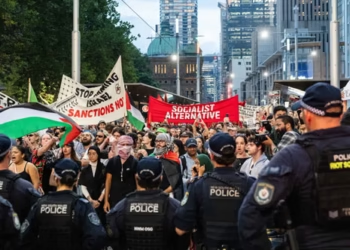 Sydney Protest Escalates and Elderly Woman Suffers Severe Injury
 Tarique Rahman’s Rise Toward Bangladesh’s Top Job
 Glass Cliff Debate After Ley’s Ouster
 Japan Seizes Chinese Boat Amid Rising Tensions
 Australian Families Leave Syrian Camp for Home
 Trump Attacks UK-California Energy Pact
 Kim Jong-un Unveils Housing for War Families
 Trump and Chagos Deal Rift Over Iran Strikes
 Andrew Mountbatten-Windsor Arrest After FBI Radar
 Andrew Arrest Sparks Republic Debate in Australia
 Global corruption crisis: Who Washington shields
 Duterte ICC Hearing Begins Amid Defiance
 Farage Chagos Islands Row Sparks Fury
 Trump Tariffs Threat Spark UK and EU Alarm
 The Dangerous Rise of Remigration Across Modern Europe
 Trump Speech Sparks Intense Debate Across Divided America
 Jacinda Ardern Moves To Australia Following Her US Fellowships
 US to offer passport services in West Bank settlements
 Has Europe truly learned from the failures of 2022?
 Health Funding Row Rocks US‑Africa Relations
 Middle East Flights Halted After Iran Strikes
 Trump Faces Questions Over Iran Conflict Plan
 Nick Greiner Warns Over Election Review Fallout
 Herzog Asio meeting sparks security storm
 Trump Rebukes Starmer Over Iran Strikes Row
 Trump Iran Strikes Row Sparks Washington Storm
 UK Prepares Aircraft Carrier for Middle East Crisis
 Pete Hegseth Iran War Remarks Spark Alarm
 Kasasa Island Dispute Fuels Japan-China Tensions
 Trump Pressures Congress Over Save America Act
 Iranian Football Squad Asylum Drama Shocks Australia
 Queensland Protest Laws Spark Free Speech Backlash
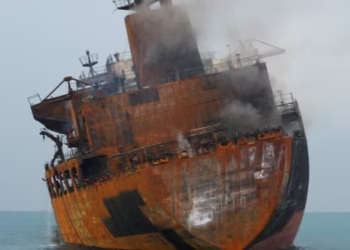 Oil Supply Disruption Shocks Global Energy Markets
 Eswatini Deal Sparks Global Outcry Over US Deportations
 Yvette Cooper: UK Must Follow Principles, Not US Pressure
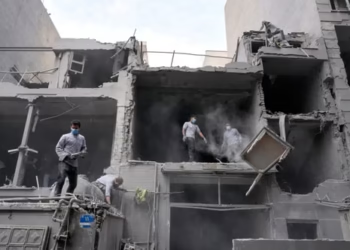 Trump Iran War Stance Hardens as Conflict Widens
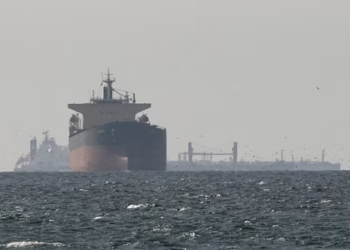 Hormuz Strait Crisis: Trump Pressures Allies to Act
 US Citizens Angry Over Lack of Middle East Backup Plan
 Nicolas Sarkozy Faces New Trial Over Libya Funding