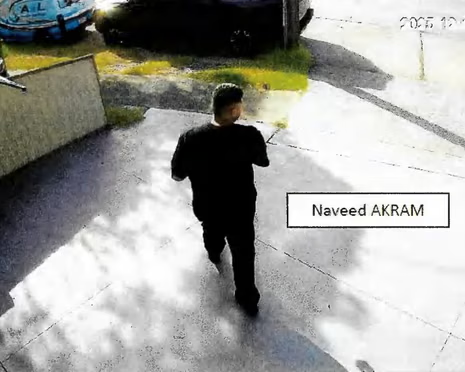
Published: 17 March 2026. The English Chronicle Desk. The English Chronicle Online.
Lawyers for Naveed Akram have requested suppression of his family’s names over fears they may be killed. The public defender Richard Wilson SC argued the order is necessary to protect Akram’s mother, brother, and sister after they allegedly received death threats following the Hanukah festival attack. Wilson told the Downing Centre local court that a permanent, narrowed version of the suppression order would mitigate risks to their mental and physical safety. The focus keyword “Naveed Akram” appears naturally throughout this report, reflecting the ongoing legal proceedings and public concern.
Akram, 24, appeared in court via video link from Goulburn supermax, where he remains remanded in custody. He and his father, Sajid Akram, are alleged to have killed 15 people at Bondi beach on 14 December. The attack, which authorities describe as inspired by Isis, left the community in shock and grief, prompting widespread media coverage and public outrage. Sajid Akram was shot dead by police at the scene while Naveed Akram survived to face 59 charges, including 15 counts of murder and one count of committing a terrorist act.
Wilson stressed to magistrate Hugh Donnelly that the family had no involvement in the attack and could not afford to relocate. He urged the court to consider the heightened vulnerability caused by the media attention, warning that continued publication of their details could inspire further violence. He said, “Continued publication of the details of the family and their home address provides a focus for misguided people tempted to commit harm.” Wilson acknowledged the existing media coverage, but argued a legal order could still prevent future escalation.

The court heard distressing incidents targeting the family in the aftermath of the attack. Akram’s mother reportedly received a threatening phone call asking, “Are you still alive?” and an offensive text using racial slurs. Her son allegedly received a text threatening his life three weeks later. Members of the public also drove past the family home shouting threats, while others attempted intimidation by blocking their driveway and knocking on doors late at night. Eggs were thrown at the house, and a pork chop was placed on the family car.
Wilson argued that even if the risk appeared low, the consequences could be catastrophic. He described the potential for stalking and victimisation as significant, emphasizing that suppression of names and addresses could avert irreversible harm. “At worst, one or more of them may be killed,” he said, urging the court to protect individuals uninvolved in the attack. The legal team requested that news organisations edit existing stories to remove identifying details to reduce the possibility of further attacks.
Representing media organisations, Matthew Lewis SC challenged the suppression request, arguing there was no evidence of imminent risk. Lewis noted that while incidents occurred immediately after the attack, reports of harassment had become less frequent in recent months. He described the public disclosure of the family’s address and images, including a leaked driver licence, as irreversible, stating, “The cat is well and truly out of the bag.” Lewis added that the mother’s media interviews, published internationally, had further amplified public knowledge of the family’s identities.
The legal debate focused on balancing public interest against potential harm. While the media argued transparency and accountability justified reporting, Wilson emphasised the vulnerability of the family due to the notoriety of the crimes. He highlighted that the mother, brother, and sister were peripheral to the criminal acts, yet exposure could make them targets for copycat attacks. The court was asked to differentiate between reporting on the defendant and protecting the uninvolved family.
Details presented in court underscored the severity of threats. One night, men were observed moving along the side of the house, prompting the family to alert police. On another occasion, the mother reported her car failed to start after hearing suspicious noises outside the property. These incidents, combined with verbal threats from bystanders and offensive messages, suggested a pattern of intimidation that could escalate if left unchecked. Wilson emphasised that the legal protections being sought were preventive, not punitive.
The magistrate was asked to consider a permanent order narrowing the interim suppression, focusing only on names and addresses. Wilson acknowledged that such an order would not apply to international media, but argued it would still serve as a safeguard against domestic threats. He stressed that the purpose was not to conceal evidence in the case or hinder reporting on Naveed Akram’s trial. Instead, the focus was on mitigating risk to family members who were entirely separate from the attack’s planning or execution.
The case has prompted discussion about the responsibilities of media organisations in reporting high-profile crimes. Advocates for the family argue that sensationalised coverage can inadvertently endanger uninvolved relatives. Legal experts highlighted that courts may need to balance freedom of the press with individual safety, particularly when threats are credible and ongoing. This case could set precedent for how courts handle suppression orders in the context of terrorism-related trials, where public interest and personal security collide.
The legal team also raised concerns about psychological impact. Wilson described the constant fear and stress endured by the family as a significant mental health risk. The exposure in the media, coupled with explicit threats, had disrupted daily life and created a pervasive sense of insecurity. The court was asked to weigh these factors alongside public interest, recognising that the family’s safety extends beyond immediate physical threats to include long-term mental well-being.
International attention has compounded the challenges. Media outlets across the United States, United Kingdom, India, Pakistan, and New Zealand had widely reported the family’s identities. Lewis argued that domestic suppression might have limited effect given global coverage, yet Wilson maintained that reducing domestic exposure remained critical. He highlighted that domestic attackers or copycats are more likely to be influenced by local media reports, reinforcing the argument for targeted protection measures.

The magistrate reserved judgment until 2 April, reflecting the complexity of the case. The court will consider both the need for transparency in reporting on a nationally significant criminal trial and the potential for catastrophic consequences to individuals uninvolved in criminal acts. Legal observers noted that the decision could influence future rulings on name suppression for families of accused terrorists, balancing public interest with personal safety.
As proceedings continue, the spotlight remains on the intricacies of legal protections in high-profile cases. The Akram family’s plight illustrates the intersection of media reporting, public curiosity, and security concerns. Lawyers emphasised that even peripheral figures connected to notorious events can face significant risk, highlighting the responsibility of courts and media to consider safety alongside freedom of expression. The outcome may shape the approach to sensitive reporting on terrorism and mass violence in Australia.
The case has already sparked public debate on the ethics of publishing details of families connected to high-profile crimes. Supporters of suppression argue that legal intervention is necessary to prevent vigilantism and further harm, while critics insist that transparency and accountability must remain paramount. The judgment, once delivered, will likely inform future policies on balancing media freedom with protective measures in cases involving terrorism.
Related News:
 Racist Attack on Imam Sparks Melbourne Police Action
 Craig Silvey faces charges over child exploitation material in Australia
 Melbourne Antisemitic Attack Targets Young Boys
 Deadly NSW Shooting Leaves Three Dead, Gunman Escapes
 Psychiatric failings linked to Bondi Junction stabbings, coroner finds
 Gus Lamont Case: Grandmothers ‘Devastated’ by Major Crime Status
 Peterborough Mosques Tighten Security After Attack
 Badenoch Warns Farage’s Grooming Gangs Plan Could Backfire
 FBI Director Kash Patel Defends Girlfriend Amid Government Jet Claims
 Police Probe Four Knife Incidents Linked to Cambridgeshire Train Attack
 Experts Warn on Home Birth Risks, Call for Skilled Midwives
 French Taxi Driver Cleared in David Lammy Theft Case After Fare Dispute
 UK Bans Fake Numbers: Scammers Lose Their Trick
 Just Stop Oil Protesters Convicted Amid Climate Defence Row
 Jailed UK climate protesters face extremist-style restrictions
 How to get help when a child goes missing – call 999 urgently
 ‘Reckless’ cuts to victims’ services will cost more than they save
 Ukraine-Russia war latest: Putin’s troops exploit bad weather to force Kyiv withdrawal from multiple towns
 Oklahoma Governor Grants Last-Minute Clemency to Death Row Inmate
 Rio Raid’s Death Toll Raises Questions About Gang Impact
 Israel Confirms Returned Hostage as Meny Godard
 Greene Pushes Epstein Files Amid Trump Fallout
 New Evidence Emerges in Haditha Family Killings
 Criminal Gangs Pose as Truckers to Hijack UK Supply Chains
 Mum Calls for New Licence Rules After Teen Road Death
 Mother Watches in Horror as Teen Daughter Dies on Tracks
 Agency Workers Vote to Join Picket Lines Amid Dispute
 Charlotte Raids: 130 Arrested in Major Immigration Sweep
 The Lasting Legacy of Seven: Crime, Morality, and Urban Decay
 Deadly Russian Strikes Hit Western Ukraine, 20 Killed in Ternopil
 Serial Rapist and Former Cop Found Guilty Again
 Man Charged Over Attempted Murder of Senior Officer
 Man Denies Stealing Bronze Age Gold from Museum
 Ex-Harvard President Pauses Teaching Over Epstein Emails
 Venezuela Threatens Nobel Winner Machado with Fugitive Status
 Inside the Helpline Protecting Missing Children in the UK
 Most Tories Expect to Support a Farage-Led Government
 Runaway Driver Caught by DNA Evidence
 Two National Guard Soldiers Critically Injured Near White House
 Southern Lebanon reels as Israeli strikes shatter communities
 Jordan Bardella: France’s Young Presidential Contender
 American Mother Extradited From UK to U.S. on Murder Charges
 UK Targets in New York Bomb Threat Hoax: Man Jailed
 Adelaide Festival Sparks Widespread Controversy Among Writers
 Hanson and Joyce Use Rinehart Jet to Tour Flooded Queensland
 India’s Failing Juvenile Justice System Denies Minors Reform
 New Documentary Examines Teen’s Zombie Knife Murder
 Portland man pleads not guilty after Border Patrol shooting
 Woman Jailed for Life After Killing E-Bike Rider in Tragic Mistaken Identity Case
 Sydney Shark Attack Surge Shocks Australia Beaches
 NSW Shark Attacks Surge, Authorities Urge Swimmers to Stay Out
 Thousands Flee Cambodia Scam Centres Amid Global Pressure
 Sussan Ley leadership milestone shakes Liberal future
 Andrew Hastie Emerges as Leadership Rival to Ley
 Record-Breaking Heat Looms Over South-East Australia as Catastrophic Fire Risk Escalates
 Police response times face strict new national limits
 Salford Attempted Robbery Sees 95-Year-Old Woman Tied Up
 Files Link Andrew to Epstein Dinner After Prison Release
 Police Doubt Fugitive Dezi Freeman Survived Bushland
 David Littleproud and Sussan Ley to Discuss Coalition Future
 Australia’s Opposition Coalition Reunites After Rift
 Teen Girl Chased in Broad Daylight in Ipswich
 Man Arrested After University of Lancashire Student Found Dead
 Christchurch gunman seeks to vacate guilty plea
 Children to Receive Early Support After Knife Incidents
 SA Police Intensify Search in Gus Lamont Case
 How Dark Web Agent Spotted Bedroom Wall Clue to Rescue Girl from Years of Harm
 NSW to Introduce Minimum Age for Ebike Riders
 El Mencho Killed as Mexico Faces Violence
 NSW Braces for Return of IS-Linked Women and Children
 Australian Prosecutors Consider Reopening British Girl’s Cold Case Disappearance
 Criminal Gangs Target UK Shops, Costing Retailers £400m
 Sydney kidnapping mystery deepens as grandfather’s remains found after mistaken abduction
 ‘It’s a horrible feeling’: Loma Bropho’s Struggle to Secure Housing
 Anthony Albanese Must Uphold Rights for All Australians
 Mother Says ‘I Hugged My Daughter’s Killer’ as They Cried Together in Prison
 Liberal Review Shelved After Historic Election Loss
 Insulin Evidence in Letby Trial Under Scrutiny After Expert’s GMC Probe Emerges
 Kelly Wilkinson Inquest Reveals Bail Failure
 Michigan Synagogue Attack Leaves Suspect Dead in Tragic Incident