
Published: March 31, 2026. The English Chronicle Desk.
The English Chronicle Online—Providing trusted news and professional analysis for the UK and World Affairs.
In a move that has drawn immediate global condemnation and a flurry of legal challenges, the Israeli Knesset passed a landmark law on Monday mandating the death penalty for Palestinians convicted of carrying out deadly attacks against Israelis. The legislation, approved by a 62–48 vote following nearly 12 hours of fierce debate, marks a historic shift in Israel’s judicial policy. Since 1954, Israel has largely avoided capital punishment, with the 1962 execution of Nazi architect Adolf Eichmann remaining the only instance of a civilian-court execution in the state’s history. The new law, championed by far-right National Security Minister Itamar Ben-Gvir, effectively makes death by hanging the “default sentence” for non-Israelis convicted in military courts of intentional, lethal acts of terrorism.

The law is designed with specific jurisdictional triggers that critics say create a “dual and discriminatory” legal system. It instructs the Minister of Defense to order military commanders in the West Bank to ensure that any resident—explicitly excluding Israeli citizens or residents—who causes the death of a person in an act of terrorism shall face the death penalty. While judges can opt for life imprisonment under “special circumstances,” the threshold for such a reprieve remains vaguely defined. Furthermore, the bill eliminates the requirement for a unanimous judicial panel, allowing a simple majority to hand down a death sentence, and strictly prohibits the military commander from pardoning or commuting the punishment.
The passage of the bill was met with celebratory scenes from the coalition. Ben-Gvir, who famously donned a golden noose-shaped lapel pin during the legislative process, distributed champagne to supporters, calling it a “day of justice for the murdered.” He argued that the measure provides a “clear deterrent” to enemies of the state, ensuring that terrorists no longer face a “revolving door” of prison and potential prisoner exchanges. However, the opposition has warned that the law will likely be used as a recruitment tool for militant groups and could endanger Israeli soldiers or Diaspora Jews. Palestinian President Mahmoud Abbas condemned the act as a “doomed bid to intimidate our people” and a grave breach of international law.

The international community has reacted with “deep concern.” In a joint statement issued just hours after the vote, the foreign ministers of Germany, France, Italy, and the United Kingdom urged Israel to abandon the plan, labeling the death penalty an “inhumane and degrading form of punishment.” Human rights organizations, led by the Association for Civil Rights in Israel (ACRI), have already filed petitions with the High Court of Justice to strike down the law, arguing it violates the Basic Law: Human Dignity and Liberty. With the oil price at $116 and the region already on edge due to the ongoing conflict with Iran, this domestic legislative explosion adds a volatile new layer to an already fractured geopolitical landscape.
Related News:
 Trump Administration Dismisses 17 Immigration Judges, Sparking Debate Over Judicial Independence
 Ministers Accused of Defamation Over Palestine Action Ban and Mass Arrests
 Father’s Tip Leads to Arrest in Charlie Kirk Murder Case
 Charlie Kirk Killing Used to Mobilise UK’s Largest Far-Right Rally in Decades
 Jailed Georgian Opposition Leaders Warn UK of Iranian Links to Ruling Party
 UK Extradition Law Change Sparks Fears Among Hong Kong Dissidents
 Shabana Mahmood Warns Border Failings Are Eroding Trust in States
 Johnson Approved China’s London ‘Super-Embassy’ in 2018
 China-critical UK academics face ‘extremely heavy’ pressure from Beijing
 Trump Urges Herzog to Grant Netanyahu Full Pardon
 US Justice Department Files Lawsuit Against California Over Partisan Voting Maps
 Trump Deploys DHS to Charlotte in Major Arrest Operation
 Congress Approves Release of Epstein Files, Trump Expected to Sign
 Texas Governor Faces Lawsuit From CAIR
 Chinese & Japanese Boats Clash Near Disputed Islands
 Putin Meets US Envoy Amid Key Ukraine Peace Talks
 Guterres Warns Global Cooperation Under Threat at UN’s 80th Year
 South Korea Jails Ex-President in Martial Law Ruling
 UK and EU Signal Fresh Push for Defence Cooperation Talks
 Emails Show Epstein Funded Mandelson’s Husband After Jail
 Thousands Protest ICE Operations in Nationwide US Day of Action
 Sydney Protest Clash Triggers Police Probe
 Nine Arrested in France Over Death of Far‑Right Student
 How Much Could Andrew’s Arrest Hurt the Royal Family?
 Ex‑Philippine President Duterte on Trial for Crimes Against Humanity: What You Need to Know
 Inside Kyiv’s resolve as conflict nears five‑year mark
 US Partially Evacuates Beirut Embassy Amid Rising Iran Tensions
 US Senate Vote Fails to Rein in Trump War Powers on Iran
 Trump Removes Kristi Noem From Homeland Security Role
 UK Must Obey International Law Over Iran, Says Thornberry
 Queensland Protest Laws Spark Free Speech Backlash
 China Approves ‘Ethnic Unity’ Law Requiring Minorities to Learn Mandarin
 Ecuador Deploys 75,000 Forces in Anti-Gang Drive
 Belarus Leader Gifts Rifle to Kim Jong Un

 Russia Expels British Diplomat for ‘Spying’ Amid Shadow Fleet Crackdown
 AfD Demands Full US Troop Withdrawal as ‘Project Veto’ Tensions Flare
 UK Must Act with Courage and Clarity on Israel-Palestine Conflict, Says Foreign Affairs Committee Report
 Hong Kong Summons UK and Australian Envoys Following Asylum Grants to Democracy Activists
 Is the UK Ready to Put Boots on the Ground in Ukraine? Assessing Military Capacity and Challenges
 Tanni Grey-Thompson Faces Abuse Over Opposition to Assisted Dying Bill
 Channel Crossings Surge: Over 1,000 People Arrive in the UK in Small Boats in a Single Day
 Yvette Cooper Signals Global Momentum Towards Gaza Peace Deal Amid Humanitarian Crisis
 Russia’s Latest Push to Win US Favors Shows Deep Desperation
 BBC to Apologise Over Edited Trump Speech Amid Backlash
 Britain deploys RAF specialists to assist Belgium with drone threats
 Major Rent Reform Ends No-Fault Evictions in England
 Indian authorities demolish Kashmir home linked to Red Fort blast
 Greene Pushes Epstein Files Amid Trump Fallout
 December Run-Off in Chile as Election Produces No Winner
 Shadow Fleet at Sea: Europe’s Battle Against Illicit Oil Shipping
 India’s COP30 Delay Raises Global Climate Concerns
 Georgians Defy Government Crackdown After Year of Protests
 ICC to Rule on Duterte’s Provisional Release
 EU Says US Ties Have Suffered ‘Big Blow’ After Greenland Crisis
 Australia’s Opposition Coalition Reunites After Rift
 Australian Families Leave Syrian Camp for Home
 Starmer Weighs Fast-Tracking Defence Boost
 Civil Service Pay: Union Urges Ministers to End ‘Barking Mad’ Limits
 Epstein Eyed Record Label Investment to Access Women, Files Suggest
 Australian PM Says Former Prince Andrew Has Suffered ‘Extraordinary Fall’ but That Won’t Prompt Republic Referendum
 Farage Chagos Islands Row Sparks Fury
 Ukraine Negotiator Reveals What It Feels Like Facing Russia
 Chad Shuts Border With Sudan in Bid to Stop Conflict Spreading
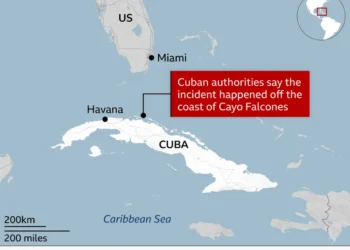 American Citizen Killed in Cuba Boat Shooting, U.S. Officials Say
 Iran’s Regime Still Intact — Coming Days Will Test Its Survival
 Herzog Asio meeting sparks security storm
 Police Scotland Pays £8m Compensation to Staff
 Finland Plans to Lift Decades‑Old Ban on Hosting Nuclear Weapons
 Minister Meets Crews Who Will ‘Take Out’ Iranian Drones
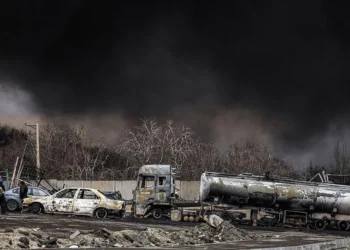 Nine Days of Strikes Reshape the Middle East
 Trump Pressures Congress Over Save America Act
 Iran War Puts Trump at Political Risk Amid Rising Prices
 Trump Nato threats expose Iran strategy vacuum
 Trump’s Confidence Undimmed — But Every Iran Option Carries Risk
 Israel Says Iran Security Chief Larijani ‘Killed’
 Trump Facing Backlash from Epstein Survivors Over Files
 UK Forces Ready to Seize Russian Shadow Fleet Vessels
 US Lawmaker Demands Testimony Over Sarah Ferguson’s ‘Close Epstein Ties’
 Trump Considers Military Operation to Seize Iran’s Uranium