Published: 17 April 2026. The English Chronicle Desk. The English Chronicle Online
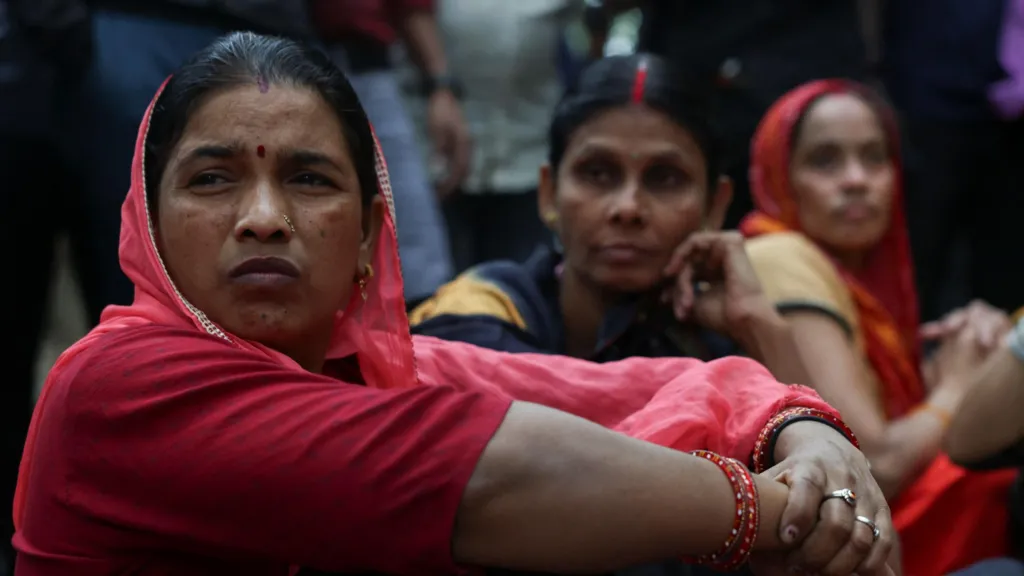
The industrial corridors of Noida and Greater Noida have transformed into a theater of civil unrest this week, as thousands of factory workers launched a series of violent protests that have brought India’s “manufacturing miracle” to a grinding halt. What began as a localized wage dispute in the Hosiery Complex has rapidly escalated into a regional crisis, with over 42,000 workers from more than 80 production units walking off the job. The central question echoing through the smoke-filled streets of Uttar Pradesh—”How does one survive?”—has become a rallying cry for a workforce increasingly squeezed between stagnant wages and the relentless pressure of double-digit inflation.

The unrest reached a boiling point on Monday and Tuesday when clashes between security forces and demonstrators led to vehicles being torched and several major arterial roads blocked. Protesters are demanding a significant overhaul of the minimum wage structure, rejecting a recent state-announced increase of 21% for unskilled workers as “a sham” and “well below survival levels.” Labor unions, including the Centre of Indian Trade Unions (CITU), argue that the current pay scales fail to account for the skyrocketing costs of housing and food in the National Capital Region (NCR), leaving many families in a state of perpetual debt. “We are the hands that build the world’s electronics and garments,” one striker told reporters, “but we cannot afford to feed our own children on what we are paid.”
This explosion of anger in Noida is not an isolated event but the latest tremor in a deepening fault line within India’s industrial system. Over the past year, the manufacturing sector has been rocked by high-profile labor disputes, including a landmark 38-day strike at Samsung’s Chennai plant that only saw a resolution in mid-2025. These conflicts highlight a fundamental tension in the “Make in India” initiative: the government’s push to position the country as a low-cost alternative to China is increasingly at odds with the rising aspirations and economic needs of its massive workforce. Industry analysts warn that if the “Noida model” of protest spreads to other hubs like Pune or Bengaluru, it could jeopardize India’s reputation as a stable destination for foreign direct investment.
The protests also come in the wake of a massive nationwide general strike on February 12, 2026, which saw an estimated 300 million workers and farmers mobilize against the government’s controversial four labor codes. Critics argue these codes weaken collective bargaining and strip away essential safety nets, effectively recasting the state as a facilitator for employers rather than a protector of workers. For many on the picket lines, the fight in Noida is a localized battle in a much larger war over the “Shram Shakti Niti” (Labor Power Policy) of 2025, which unions claim seeks to centralize power and further marginalize the unorganized sector.

As a “national day of action” was observed across India yesterday in solidarity with the Noida workers, the government finds itself in a delicate balancing act. Maintaining the low-cost manufacturing advantage is crucial for competing with regional rivals like Vietnam, yet the human cost of this strategy is becoming politically and socially unsustainable. For the thousands of men and women currently defying state repression to demand a living wage, the industrial system is no longer a path to prosperity, but a machine they can no longer afford to fuel. The outcome of the Noida standoff will likely set the tone for labor relations in India for the remainder of the decade, determining whether the nation’s growth will be inclusive or built on the foundations of deepening inequality.
Related News:
 Asos Co-Founder Dies After Thailand Balcony Fall
 Gold Fever Hits South Africa After Lucky Find in Cattle Pen
 The Rewilding Cash Grab Driving Farmers Off the Land
 PM Seeks to Reassure Australians Over Fuel Supply
 Michel Rolland: The ‘Spielberg of Wine’ Who Directed the Global Palate
 ‘The Great Reset’: Behind the Wheel of Jaguar’s Most Polarizing Move in 80 Years
 Silver Linings: Why Global Tourism is Finding “Positives” Amidst Iran War Uncertainty
 The ‘Svuota Londra’ Effect: Why the Super-Rich are Swapping Dubai for Milan
 Debt Relief or Drop in the Ocean? UK Caps Student Loan Interest at 6%
 The $100 Billion Peace: Trump’s ‘Grand Bargain’ Ends Iran Conflict at a Staggering Cost
 The ‘Golden Gates’ are Closing: Why Global Travelers are Rethinking the U.S. in 2026
 The ‘Shredder’ Syndrome: Why the 2026 Job Market is Breaking Entry-Level Spirits
 ‘No Gas, No Food’: LPG Shortage Triggers Reverse Migration in Indian Metros
 The Kitchen Table Crisis: How the 2026 Iran War Hits Your Wallet
 Hot in the City: Energy Crisis Tests Singapore’s Air-Con ‘Addiction’
 Relief at the Pump: Irish PM Unveils €505m Package to Stem Fuel Crisis
 Modi’s London Visit Seals Historic UK-India Trade Pact Amid Global Tensions
 China’s crackdown on civil servant perks sparks economic concerns
 Shein UK Faces Allegations of Shifting Majority of Profits to Singapore to Reduce UK Tax
 British AI Startup Outshines Human Forecasters in Global Prediction Contest
 China warns UK over delayed London mega embassy decision
 Canada Passes Carney’s First Budget in Tight Parliamentary Vote
 India’s Labour Law Overhaul Sparks Fierce Debate
 UK New Car Discounts Near £6,000 as Prices Are Slashed
 Royal Mail Blames Poor Weather and Sickness for Delayed Deliveries
 Snow and Rain Warnings as Cold Snap Continues in the UK
 The Chinese AI App Sending Hollywood Into a Panic
 Epstein Eyed Record Label Investment to Access Women, Files Suggest
 Store at Famous Shopping Village to Close After 18 Years Due to Rising Costs
 Australian Presenter Apologises for Drinking Before Slurred Olympics Report
 Live Nation Sees Strong Ticket Sales as Monopoly Lawsuit Looms
 ‘We’re Still on Edge’: Toy Firms Look to US Supreme Court as Tariffs Hit Profits
 US Will Not Back Out of Tariff Deals with UK and Others, Says Trump Trade Representative
 ‘We Pray for Peace’: Indian Filmmaker From Troubled State Who Won a BAFTA
 Man discovers £18k trading card stash in his loft
 Bill Gates ‘Took Responsibility’ Over Epstein Ties in Staff Meeting, Foundation Says
 Limited Flights Leave UAE But Disruption Continues Amid Iran Strikes
 ‘Every Day Feels Like a Month’: Iranians Describe Life Under ‘Constant’ US‑Israeli Strikes
 Tears and Cheers as Controversial Long‑Running Australian Breakfast Radio Show Implodes
 My One-Hour Flight Transfer Left Me Facing 10 Days Stuck in a City Under Attack
 Oil Prices Surge Above $100 Amid Iran War
 US Says 16 Iranian Mine Ships Destroyed in Hormuz
 Sarah Ferguson Loses Another £1.5m Amid Financial Struggles
 Courier Firm Bust After 14 Years as Evri Deliveries Face ‘Temporary Disruption’
 Oil Price Jumps Despite Deal to Release Record Amount of Reserves
 ‘Heating Oil Suppliers Are Holding Us to Ransom’ as Prices and Cancellations Surge
 UniCredit’s Bold Move to Reshape European Banking
 UK Wage Growth Slows as Jobs Market Holds Firm
 Missing Cuba-Bound Aid Ships Spark Urgent Search
 Trump Threatens Iran With Total Infrastructure Destruction
 ‘Better Off Not Planting’: UK Farmers Face 36% Fertiliser Spike as Gulf Crisis Bites
 ‘The Final Word’: Kathleen Stock’s Polemic Against Assisted Dying Reshapes the UK Debate
 The ‘Career Ceiling’: One in Five High Earners Say £100k Tax Trap is ‘Ruining’ Their Ambition
 ‘The Cost of Living’: Asia’s Migrant Workers Debate if Gulf Jobs are Worth the Risk of War
 ‘The 42-Day Rally’: Asian Markets Surge as Trump Signals ‘Rapid’ Iran Exit
 Russia: The Unforeseen Winner of the Iran Conflict
 British Businesses Braced as National Living Wage Hits £12.71 Published: 1 April 2026
 The Bitter Aftertaste: Iran War Threatens to Spike Prices for Indian Beer and Bottled Water
 National Treasure: Raja Ravi Varma Masterpiece Smashes Indian Art Record with $17.9m Sale
 US Senators Slam Ticketmaster Over Sneaky New Fee Hikes
 Pope Leo Urges Peace in First Easter Mass Address
 Oil and Diplomacy: Russian Refineries Burn as Zelenskyy Secures Middle East Shield
 “A Perfect Storm”: UK Small Businesses Face Doubling Energy Bills as Iran War Rattles Markets
 Electric Shock: Australians Buy Record Number of New EVs as Fuel Crisis Bites
 War, Windfalls, and the Carbon Trap: The Iran Conflict’s Brutal Energy Math
 ‘I Will Not Abandon Him’: Pauline Hanson Stands by Ben Roberts-Smith After War Crime Charges
 The Great Saddle-Up: Sydney Commuters Ditch the ‘Crazy’ Bowsers for the Bike Lane
 ‘The Soul of Spain’: Politicians Clash Over Renewed Push to Move Picasso’s Guernica
 ‘It Was an Accident’: Rohan Dennis Breaks Silence to Attack ‘False Narrative’ Over Wife’s Death
 The Suffocating Silhouette: Why Metal’s Mask Trend is Turning Deadly
 The Fallen Icon: Ben Roberts-Smith Charged with Five War-Crime Murders
 The Great Chokehold: Why the Strait of Hormuz is the Epicenter of the 2026 Crisis
 The Pre-School Lottery: Families Left in ‘Holding Pattern’ as Local Places Vanish
 The Prediction Prohibition: White House Staff Barred from Betting on Political Markets
 Moldova River Crisis Exposes War’s Hidden Cost
 California fireworks blast: murder charges filed in case
 The Waiting Ward: ‘Month of Worry’ as Doctor Strikes Trigger Seismic Surgery Delays
 Diplomatic Deadlock: Lebanon Enters High-Stakes Border Talks with ‘No Cards to Play’
 The Masked Frontier: Allegations of Greek Police Using Proxies for ‘Seismic’ Border Pushbacks
 Legacy of the Future: Prince Harry Argues Children Should Be an ‘Upgrade’ of Parents