Published: 14 May 2026. The English Chronicle Desk. The English Chronicle Online.
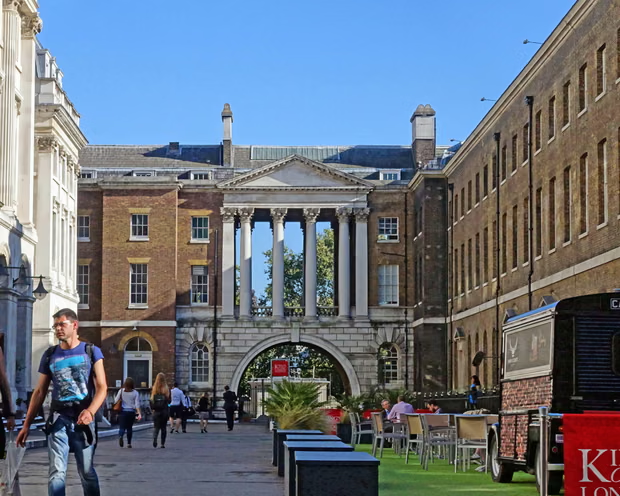
The landscape of British higher education is currently undergoing a massive and historic transformation today. King’s College London has officially agreed to a merger with the prestigious Cranfield University this morning. This bold move aims to create a new and powerful UK super university for all. Such a combined institution will likely rival many of its international competitors in research output. The scale of this merger signals a significant shift for the global academic ranking boards. It will also bolster the reputation of the United Kingdom as a leading knowledge economy. Students and faculty members across both campuses are now preparing for a very bright future. This partnership promises to blend traditional academic excellence with modern and highly advanced technical research.
The merger will result in the expanded institution taking on five thousand new postgraduate students. This influx will make King’s College London the second largest mainstream university in the country. With approximately forty-seven thousand students, it will soon overtake the popular University of Manchester in size. Only University College London will remain larger in terms of total student enrolment figures today. This growth represents a strategic effort to consolidate resources during a very difficult economic time. Many experts believe that larger institutions are better equipped to handle modern financial market pressures. By joining forces, both universities hope to secure a more stable and prosperous long-term future. The combined entity intends to attract more talent from every single corner of the globe.
Under the new agreement, the two institutions will merge fully by the summer of 2027. The unified body will continue to operate under the historic King’s College London brand name. This decision preserves a name that carries immense weight within the global academic community abroad. However, the influence of Cranfield University will remain deeply embedded in the new academic structure. Its specialized focus on engineering and management will provide a unique edge to the college. Current students at both sites have been told their qualifications will remain highly respected globally. The transition period is expected to be managed with great care and professional oversight. Officials are working hard to ensure that student services remain consistent during the upcoming change.
The government has already provided its preliminary approval for this ambitious merger to move forward. This support comes as the higher education sector in England faces significant and mounting challenges. Rising costs and shifting recruitment patterns have put many famous institutions under great financial strain. Just last year, the University of Greenwich announced a similar merger with the University of Kent. These consolidations suggest that the sector is entering a new era of radical structural change. Many administrators now believe that cooperation is the only way to ensure institutional survival today. The Office for Students has warned that the pressure on budgets remains extremely high now. This merger is seen as a proactive response to these difficult and complex circumstances.
Professor Shitij Kapur, the vice-chancellor of King’s, expressed great optimism regarding this historic partnership. He noted that the merger would bring exciting new educational possibilities for all current students. Academics will also benefit from new discoveries and enhanced collaboration across many different scientific fields. There is a clear focus on working with industry and government to support resilience. This step is a deliberate attempt to compete with the best universities in the world. Kapur will remain the vice-chancellor of the combined entity once the process is complete. His leadership is expected to provide stability during the complex integration of both staff groups. The vision is to create a hub for innovation that serves the entire nation.
Patrick Vallance, the science and innovation minister, praised the creation of this extraordinarily powerful university. He stated that bringing these two world-class institutions together creates a massive driver for growth. King’s will now have a presence at the heart of an important technology region. This move will capitalize on the complementary strengths and specialisms of both famous learning centres. It will also increase access and capacity across both teaching and high-level scientific research. The government believes this merger will help the UK maintain its lead in global science. Such a powerhouse institution can attract more investment from private sector partners and international donors. This is seen as a vital component of the national strategy for future growth.
Cranfield University was founded after the second world war as a specialized college of aeronautics. It is based in Bedfordshire and maintains another significant campus located within the Oxfordshire area. More than ninety percent of its students are postgraduates focusing on very technical subject matters. These subjects include technology, engineering, and various forms of high-level management studies and research. Its reputation for applied research is well known among industry leaders and government officials alike. Joining with King’s allows Cranfield to scale its impact across a much broader platform. The partnership will link technical expertise with the wide-reaching humanities and sciences of King’s. This combination is expected to produce graduates who are uniquely prepared for modern jobs.
Professor Karen Holford, the vice-chancellor of Cranfield, called the merger an incredibly exciting new proposition. She believes that aligning their deep specialisms within King’s creates enormous potential for future success. This is an intentional step to bring nationally important facilities into a larger academic framework. Cranfield brings sovereign capability and longstanding industry links to this new and formidable university partnership. These assets are vital for the continued development of the aerospace and defense sectors locally. The merger ensures that these specialized fields receive the funding and academic support they need. It also offers students a chance to learn within a more diverse academic environment. This move is being hailed as a win for both staff and students.
The Office for Students reported a small improvement in university finances for the past year. However, they also warned against persistent over-optimism as the sector continues to face high costs. Their annual health check found that fewer universities fell into deficit than was previously feared. Last year, forty-three percent of institutions were forecasting a deficit in their annual budget reports. The actual data showed that only around thirty-six percent of institutions recorded a financial loss. While this is better than expected, the outlook for next year remains quite cautious. Providers predict a further downturn before the market returns to a much stronger performance. Everyone is hoping that international student recruitment will increase as the global economy recovers.
Philippa Pickford, a director at the regulator, said that institutions must respond to warning signs. She noted that much of the current work is targeted at addressing short-term financial issues. Put bluntly, she warned that these temporary measures are simply not going to be enough. Universities must look toward long-term structural changes to remain viable in a competitive market. The financial performance of individual institutions continues to vary significantly across the entire United Kingdom. Many larger and research-intensive institutions are currently spending more on redundancies and internal restructuring. These costs are necessary to streamline operations and reduce the burden of aging infrastructure. The sector must adapt quickly to stay ahead of these mounting financial pressures.
Nearly a quarter of English institutions reported additional spending on restructuring over the last twelve months. This has led to mass redundancies and the closure of several courses across the country. Overall restructuring costs have risen by twenty-one percent to over two hundred million pounds recently. Looking ahead, the outlook remains uncertain as universities absorb a new international student levy. This levy is expected to cost the sector over five hundred million pounds annually. Furthermore, the impact of international crises on recruitment and operating costs remains very hard to predict. Universities are having to become more agile and efficient to navigate these choppy waters. The merger between King’s and Cranfield is a prime example of this trend.
Libby Hackett, the chief executive of the Russell Group, responded to these latest financial updates. She confirmed that large parts of the sector are under unprecedented and growing financial strain. There is a need for close collaboration and a joined-up policy approach from government. This will help put universities back on a stable footing for the foreseeable future. Stable universities are essential for delivering the workforce and public services that the UK requires. They also play a massive role in supporting local communities through jobs and local spending. Without a clear plan, many institutions may struggle to maintain their high standards of teaching. The group is calling for more support to protect the future of British education.
According to official reports, total sector income grew by nearly three percent this past year. This growth was mainly due to higher tuition fees and several new education contracts. However, improvements at the aggregate level mask a substantial variation in performance across the sector. Some institutions are doing very well while others are facing a very difficult time. Adjusted surpluses increased by nearly fifteen percent, which sounds like good news for many providers. This improvement was driven by medium and smaller institutions whose gains offset larger institutional losses. The merger between King’s and Cranfield aims to place them in the winning category. By combining their strengths, they hope to lead the way into a new era.
Related News:
 UK Banks Granted Reprieve as BoE Delays Basel III Capital Rules Until 2028
 Singapore Corruption Scandal: Details Emerge on Iswaran’s Luxury Flight and Ties to Tycoon Ong Beng Seng
 Corfu Beyond the Crowds: Discovering Serenity in Southern Villages and Hidden Taverns
 Zelenskyy Signs Fighter Jet Deal Amid Russian Drone Attacks
 Sundar Pichai Cautions on AI Hype and Market Risks
 Shadow Fleet at Sea: Europe’s Battle Against Illicit Oil Shipping
 Snow and Ice Cause Travel Chaos in North Yorkshire
 Director Michael Caton-Jones Reflects on Career and Beginnings
 Inside the Helpline Protecting Missing Children in the UK
 PlayStation PS5 Deals Hit Lowest Prices Ahead of Black Friday
 US Suspends Afghan Immigration After White House Shooting
 Five-Year-Old Dies After Rare Tonsil Surgery Complication
 Starmer Says Labour’s Economic Plan Needs Years to Deliver
 ‘Extinct’ Antelope Returns to Sahara, Bringing Hope
 IndiGo Cancels Hundreds of Flights Amid Pilot Shortages
 Young Britons Face Heaviest Burden from Ageing Population, Lords Warn
 U‑Turn on Farmers’ Inheritance Tax Sparks Political Firestorm
 Aston Villa Remain Arsenal’s Key Obstacle in Title Pursuit
 Irish Beach Tragedy: Irish Drown at Whitehaven Beach in Australia
 Starmer Faces Parliamentary Battles Over UK-EU ‘Reset’ Plan
 Met Police Vetting Failures Let Serial Rapists Remain
 Federal Immigration Shift: Officers Leave Louisiana for Minneapolis
 Fatal Bolton Taxi Crash Claims Three Teens and Driver
 Australia grants Asio powers to designate hate groups under new laws
 Friedman Uninvited From 2024 Adelaide Writers’ Week
 ScottishPower Tops List of Worst UK Energy Suppliers
 Judi Dench Champions Fight to Save London’s Green Spaces
 Crowborough Camp Welcomes First Asylum Seekers
 BBC Funding Crisis: Tim Davie Warns of Jeopardy Ahead
 ABC Facebook Page Briefly Hacked, Adult Photos Posted
 Artificial intelligence will cost jobs, admits Liz Kendall
 Older Women Vanish from BBC Screens, Review Confirms Bias
 Meta trial over child exploitation claims begins
 Streeting moves on doctor pay to end strike dispute
 Ben Stokes injury joke after brutal ball strike
 UK and US Drop in Global Corruption Index Rankings
 Send spending gap leaves deprived areas behind
 Hidden Crisis: Domestic Abuse Suicide Toll in UK
 UK Unemployment Rate Climbs to 5.2% Peak
 Canberra Poster Seizure Sparks Free Speech Row
 BBC World Cup Presenting Duties Shared Among Trio
 Wales Approves Assisted Dying Bill Consent
 CPS Updates Guidance on Honour-Based and Dowry Abuse
 Stewart Brand on Musk, Bezos and a Life of Long Thinking
 Wes Streeting faces narrow road to Labour members’ favour
 Keir Starmer Struggles to Secure His Grip on Downing Street
 Trump and Xi Convene in Beijing for Historic High-Stakes Summit
 Tensions Flare as Israeli Nationalists March in Jerusalem
 UK Firms Freeze Spending as Iran Conflict Bites
 UK Job Market Squeezed as Iran War Drives Jobless Rate to 5%
 Reeves to Fast-Track Clean Energy Amid Iran Crisis
 The Battle for Wembley Sparking Unprecedented Legal Warfare
 Tony Abbott Returns as New Liberal Party President
 Pope Meets Families in Italy Toxic Waste Zone
 Royal Ascot Allegation Sparks Wider Police Inquiry
 Secret Role of UK Security Services in Troubles Amnesty Law
 Tube Strike Brings Capital to a Standstill Over Shift Disputes
 Teaching Machines Right From Wrong in the Digital Age
 Is Ollie Robinson the Chaos English Cricket Needs Today?
 The Hidden Crisis Eroding Trust in British Communities
 Saving the Scalloped Hammerhead: The Pacific Battle
 Stolen Mobiles Could Soon Become Useless Bricks
 Clean Air Initiatives Spark Major Fall in London Hospital Admissions
 Fearless Pioneer of Investigative Journalism Dies Aged 83
 Trump Urged to Condemn UFC Fighter Over Obama Slurs
 The Fear Gap: Why Europe Feels Less Safe Than It Is
 US Military Pacific Boat Strike Kills Three People
 Dettol Apologises for ‘Toxic Men’ Advert Backlash in China
 UK Care Crisis: Row Explodes Over New Visa Settlement Rules
 Sainsbury’s Boss Optimistic As Grocery Inflation Eases
 US Advance Past Bosnia in World Cup Thriller
 Trump’s Mount Rushmore Speech: A Divisive Anniversary
 Trump’s Red-Card Intervention Hurts the US World Cup
 US Airman Avoids British Court in Indecent Exposure Case
 Britain’s Mini Fan Craze Sparks Major Waste Crisis
 Trump Swaps Planes Amid Iran Tensions
 Ann Widdecombe, Formidable Political Figure, Dies at 78
 UK Schools Struggle as Classrooms Top 40C
 Yemen Accuses Iran of Violating National Sovereignty
 Houthis Strike Saudi Arabia as Middle East Tensions Rise