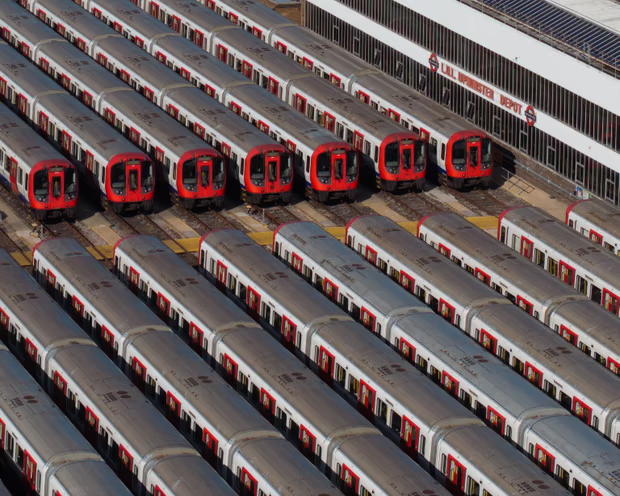
Published: 15 May 2026. The English Chronicle Desk. The English Chronicle Online.
The looming threat of major travel chaos across the capital has eased slightly this week. New hopes have emerged that the upcoming London Underground strikes could finally be called off. Sources close to the situation suggest that union leaders are seeking a fresh compromise. The National Union of Rail, Maritime and Transport Workers has reached out for talks. This unexpected development offers a glimmer of light for millions of frustrated London commuters.
Members of the union represent almost half of the drivers on the network. They have scheduled two disruptive twenty-four hour walkouts to begin next Tuesday at midday. Another full day of action is currently planned to take place on Thursday afternoon. These strikes threaten to close several key lines completely and cause widespread regional disruption. The travel chaos is expected to impact the city until the weekend arrives safely.
This current wave of industrial action follows a very similar dispute during April. More strikes are also being planned for June if no agreement is reached. The ongoing argument centres around proposed changes to standard working patterns across the network. Drivers are unhappy with the introduction of a new four-day working week structure.
Formal discussions between the two opposing sides have not yet taken place this week. Neither transport bosses nor union leaders had previously shown any willingness to alter course. Because of this stubborn deadlock, further major travel disruptions had appeared completely inevitable. Transport for London has already issued stark warnings about severe service reductions next week.
However, a source close to the dispute provided a more positive update today. They confirmed that union representatives have now actively put out feelers for a deal. This move gives transport bosses a crucial window of opportunity to prevent strikes. It allows both parties to return to the negotiating table before Tuesday arrives.
The same source indicated that tube drivers were fully prepared for long campaigns. They are willing to cause prolonged disruption to defend their current working conditions. The source stated that transport bosses must move from their uncompromising stance immediately. They need to create new proposals that do not impose unfair working conditions. Drivers will simply not accept changes that harm their current work-life balance routines. An excellent opportunity now exists for the employer to do the right thing. They must make a reasonable offer to the union to protect Londoners.
Despite this potential breakthrough, the planned strike action remains officially on the schedule. Transport for London continues to urge customers to plan all journeys well ahead. Passengers should expect significant disruption across the entire network during the strike days. Services will close much earlier than usual on both Tuesday and Thursday evenings. Trains will also start much later on Wednesday morning and Friday morning too.
The impact will be felt severely on several major underground lines next week. No trains at all will run on the popular Circle line circuit. The busy Piccadilly line will also be completely suspended during the strike periods. Furthermore, no services will operate in zone one on the Metropolitan line. The central sections of the Central line will remain entirely closed to passengers.
However, transport officials stressed that the city would not grind to a halt. Londoners and visitors will still be able to travel around the capital successfully. Other key rail lines and alternative transport modes will operate a normal service. A few tube trains may even run during the two strike periods.
The modern Elizabeth line will continue to operate a full and regular service. The London Overground network and the Docklands Light Railway will also run normally. London buses will operate across the city to help passengers reach their destinations. However, increased demand and heavy road traffic will likely slow down bus journeys.
Data collected from the previous strikes in April offers some comfort to commuters. The figures showed that a vast majority of people continued to travel regardless. Overall patronage across the entire transport network dropped by only fourteen per cent. Passenger numbers approached almost normal levels on the Friday following the previous action.
The popular bike hire company Lime reported a significant increase in daily rentals. They recorded about twenty per cent more trips than average on strike days. Their main rival Forest saw an even bigger boost in bicycle hires recently. Their rush hour rentals increased by between thirty-five and fifty per cent overall.
Ticket data showed that tube tap-ins dropped by nearly half mid-week last month. However, the reduction was only thirty-one per cent on the Friday morning period. Total travel across all transport services was down just six per cent that day. There is far less commuter traffic on Fridays in the post-pandemic era. Yet the numbers suggest that Londoners still returned to the tube for leisure. They were willing to navigate the minor disruptions to enjoy their weekend plans.
Transport for London insists it is not too late to withdraw strikes. They believe the objections raised by the union can be resolved quite easily. Officials claim that further detailed work will address all the specific driver concerns. Interestingly, the Aslef union has taken a very different view on the matter. Aslef represents a slight majority of London Underground drivers across the network. They have chosen to back the new four-day week proposals completely. Claire Mann serves as the chief operating officer for the transport authority. She expressed her deep disappointment regarding the persistent threat of union strike action. Management has made the best efforts to resolve this complicated dispute through discussion. She emphasized that the four-day week proposals aim to improve work-life balance. The new system is designed to be entirely voluntary for all drivers.
A significant number of drivers have supported the new pilot scheme enthusiastically. They want management to progress plans for the trial on the Bakerloo line. This change would deliver great benefits for both transport staff and customers alike. The transport authority strongly urges union leaders to engage in constructive dialogue now. Working together is the only way to resolve this dispute for the future. In the meantime, passengers must check their routes carefully before leaving home. Everyone should allow plenty of extra time to complete their essential journeys safely.
Related News:
 Reeves Faces Setback as Labour May Miss Homes Target
 Kate Winslet to Narrate Film Highlighting King’s Environmental Mission
 Trump’s UK Ambassador Urges North Sea Drilling to Strengthen US Ties
 UK Bans Fake Numbers: Scammers Lose Their Trick
 M&S Profits More Than Halve After Cyber-Attack
 Patients to Test Health at Home to Ease NHS Winter Pressure
 Millionaires group urge Reeves to introduce wealth tax to ‘lift kids out of poverty’
 Reeves rejects £1bn plea for NHS redundancy payouts
 Northern Lights may illuminate UK skies this week
 PM Condemns Leaks, Vows Loyalty to Ministers and Stability
 Major Rent Reform Ends No-Fault Evictions in England
 Stroke Patient Mistaken for Drunk, Care Delayed
 Inside the Helpline Protecting Missing Children in the UK
 Boots Showstopper Beauty Bundle Outshines Many Advent Calendars This Holiday Season
 PlayStation PS5 Deals Hit Lowest Prices Ahead of Black Friday
 Five-Year-Old Dies After Rare Tonsil Surgery Complication
 Starmer Says Labour’s Economic Plan Needs Years to Deliver
 UK unemployment rises to four-year high of 5.1% before budget
 Wiltshire Police Use Lasso to Catch Rampaging Village Goat
 Coasting Drinks: The Trend Redefining Alcohol Enjoyment This New Year
 Rising Hate Crimes Threaten Safety on UK Public Transport
 Starmer Faces Parliamentary Battles Over UK-EU ‘Reset’ Plan
 Met Police Vetting Failures Let Serial Rapists Remain
 Fatal Bolton Taxi Crash Claims Three Teens and Driver
 ScottishPower Tops List of Worst UK Energy Suppliers
 Judi Dench Champions Fight to Save London’s Green Spaces
 Crowborough Camp Welcomes First Asylum Seekers
 BBC Funding Crisis: Tim Davie Warns of Jeopardy Ahead
 Artificial intelligence will cost jobs, admits Liz Kendall
 Older Women Vanish from BBC Screens, Review Confirms Bias
 Streeting moves on doctor pay to end strike dispute
 Send spending gap leaves deprived areas behind
 Hidden Crisis: Domestic Abuse Suicide Toll in UK
 UK Unemployment Rate Climbs to 5.2% Peak
 BBC World Cup Presenting Duties Shared Among Trio
 Wales Approves Assisted Dying Bill Consent
 CPS Updates Guidance on Honour-Based and Dowry Abuse
 Asylum Seekers to Work After Year-Long Wait
 Inquiry into HMRC child benefit errors launched by NAO
 Rising Costs Force Families to Rethink Days Out
 Scott Mills Sacked by BBC Over Personal Conduct Claims
 Palantir Boss Defends NHS Deal Amid Government Break Clause
 Relationship with Trump may be beyond repair, Starmer warned
 UK Government Poised to Revive Stalled Hillsborough Law
 UK Staycations Rise as Travel Fears Grow
 Home Office Faces Legal Risks Over Asylum Hotel Living
 Official Admits Debate Over Mandelson Vetting Records
 Crisis in NHS Surgery Scheduling Hits Patients Hard
 Welsh Labour Faces Potential Historic Election Defeat
 Blue Badge Abuse: The Rising Tide of Public Hostility
 UK Faces Future Where Deaths Outnumber Births Yearly
 Scott Parker Leaves Burnley After Premier League Drop
 Silent Tracks: Rail Line Without Passengers
 RFU Backs Borthwick Despite England’s Poor Six Nations
 Major test for Labour as polls open in Great Britain
 Keir Starmer Struggles to Secure His Grip on Downing Street
 Fear and Betrayal: The Chilling Case of Kouri Richins
 Farage Faces Standards Probe Over Cash Property Purchase
 UK Firms Freeze Spending as Iran Conflict Bites
 Rugby Legend Scott Hastings Dies Aged 61
 Reeves to Fast-Track Clean Energy Amid Iran Crisis
 The Battle for Wembley Sparking Unprecedented Legal Warfare
 Record Spending Highlights Growing Crisis In National Health Service
 Secret Role of UK Security Services in Troubles Amnesty Law
 Tube Strike Brings Capital to a Standstill Over Shift Disputes
 BP Stands Firm on Amanda Blanc Amid Boardroom Storm
 Teaching Machines Right From Wrong in the Digital Age
 UK House Prices Drop For Third Month Due To War Fears
 The Hidden Crisis Eroding Trust in British Communities
 Deepfake Abuse on X Sparks Safety Concerns for Dissidents
 Stolen Mobiles Could Soon Become Useless Bricks
 Clean Air Initiatives Spark Major Fall in London Hospital Admissions
 United Kingdom Politics Worse Now Than Before Brexit, Warns MP
 Russian Tanker Captain Remanded in UK Court After Channel Seizure
 Shocking Zoo Incident Sparks Attempted Murder Probe
 UK Care Crisis: Row Explodes Over New Visa Settlement Rules
 Sainsbury’s Boss Optimistic As Grocery Inflation Eases
 US Airman Avoids British Court in Indecent Exposure Case
 Ann Widdecombe, Formidable Political Figure, Dies at 78
 UK Schools Struggle as Classrooms Top 40C