Published: 19 September ‘2025. The English Chronicle Desk
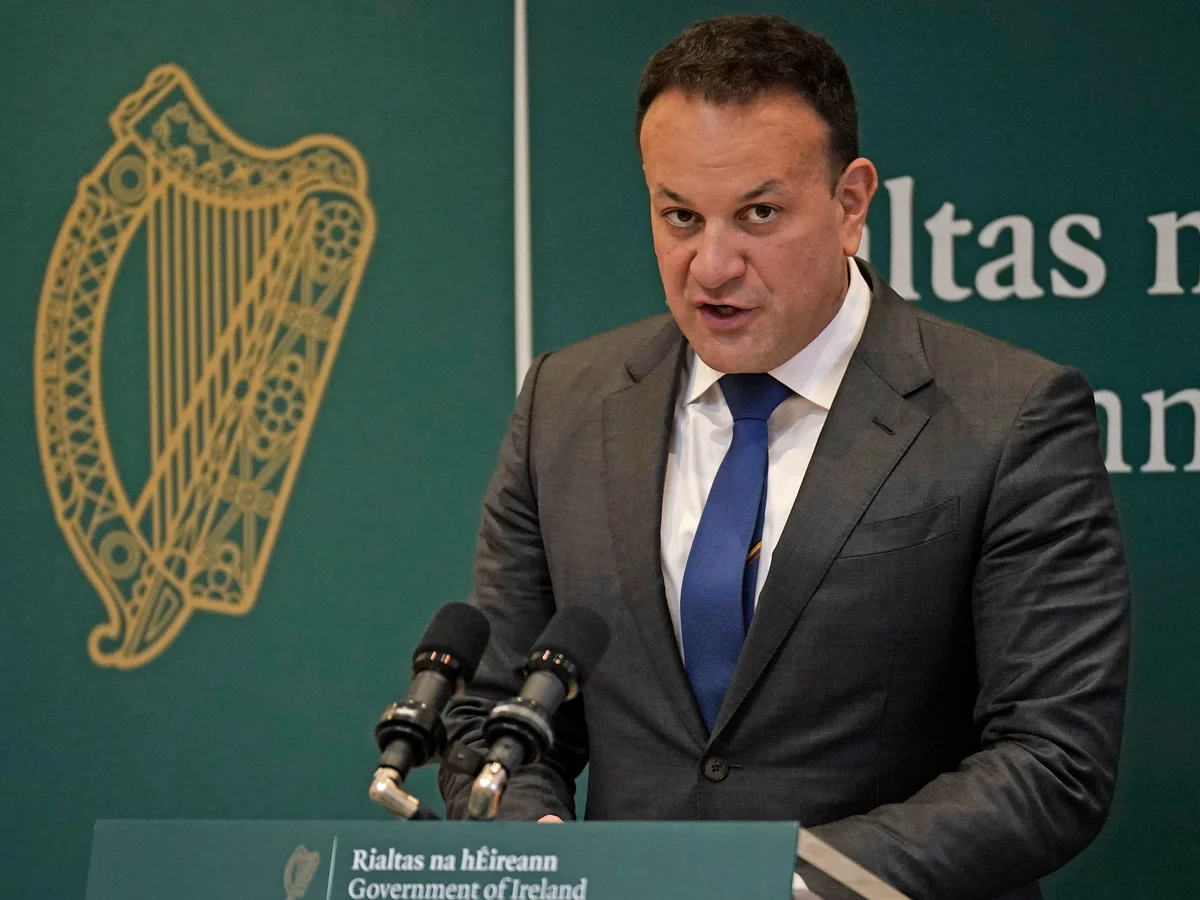
The British and Irish governments are preparing to introduce a comprehensive new framework aimed at tackling the long-standing legacy of Northern Ireland’s Troubles, a deeply polarising issue that has haunted regional politics and complicated relations between London and Dublin for decades. The proposals, expected to be formally announced on Friday by Hilary Benn, Northern Ireland Secretary, and Simon Harris, Ireland’s Foreign Minister, mark the culmination of a year of intensive negotiations and reflect a renewed commitment from both governments to find a lasting resolution to one of the most sensitive and contested elements of the post-conflict settlement.
At the heart of the initiative is a legislative overhaul of the controversial Legacy Act, passed by the Conservative government in 2023. That legislation had sought to streamline investigations into Troubles-era killings but provoked significant opposition from victims’ groups, nationalist and unionist communities, and the Irish government. Under the new framework, a reformed agency will replace the existing Independent Commission for Reconciliation and Information Recovery (ICRIR). The new body, expected to be called the Legacy Commission, will be endowed with expanded investigative powers, allowing it to examine unresolved crimes from the 30-year conflict with greater independence and transparency.
The proposals also envisage a separate agency dedicated to providing information retrieval services for families seeking clarity on the deaths of relatives. This dual approach seeks to balance the need for truth and justice with the practicalities of investigation, acknowledging the often-fragmented and decades-old evidence surrounding Troubles-era killings. Officials have emphasised that the reforms are designed to ensure victims’ families are at the centre of the process, with clear, accessible channels to obtain information, while maintaining due process for any ongoing or potential prosecutions.

Dublin has been clear that any new legacy arrangements must comply fully with the European Convention on Human Rights (ECHR). Ireland has a pending interstate case against the UK at the European Court of Human Rights, contending that the Legacy Act breached fundamental rights by halting inquests, civil cases, and criminal prosecutions. While the Irish government has indicated that it intends to continue pursuing the case, it has also signalled a willingness to engage constructively with the new framework as it progresses toward legislation.
The effort comes after years of strained relations between London and Dublin, worsened by the political turbulence surrounding Brexit and subsequent disagreements over legacy issues. Recent months have seen an easing of tensions, however, through intense behind-the-scenes diplomacy, including a high-profile meeting between UK Labour leader Keir Starmer and the Taoiseach, Micheál Martin. These interactions reportedly paved the way for a jointly agreed framework that both governments hope will be acceptable to the main political parties in Northern Ireland and to a wide spectrum of victims’ groups.
Despite progress, the proposals are likely to face scrutiny and debate. Many victims’ groups have long opposed legacy arrangements that offered broad immunity to former combatants, fearing that justice for the killings of civilians and security personnel alike would be indefinitely deferred. At the same time, British officials face pressure from army veterans’ organisations and their political allies, who argue that former soldiers must be shielded from prosecutions that some describe as “retrospective witch-hunts.” Navigating this delicate balance—ensuring accountability without appearing to punish individuals for actions taken during a complex conflict—is one of the central challenges facing the new framework.
The Good Friday Agreement of 1998, which largely brought an end to the Troubles, deliberately sidestepped the issue of legacy. While it laid the groundwork for power-sharing in Northern Ireland and established mechanisms for governance and policing, it left unresolved killings and allegations of state and paramilitary violence to be addressed through inquests, civil cases, and limited prosecutions. Over the years, these cases have strained police resources and contributed to ongoing political polarisation, underscoring the urgency for a coherent, transparent, and fair approach.
Previous attempts to resolve legacy issues have largely faltered. In 2014, both governments and Northern Ireland’s major political parties agreed on a joint approach, but the plan was never implemented. Later attempts by Boris Johnson and Rishi Sunak to address the matter unilaterally met with fierce opposition from unionists, nationalists, and the Irish government. The 2023 Legacy Act was intended to fill this gap but ended up provoking widespread controversy, particularly because of its perceived limitations on prosecutions and inquiries. Labour, now in government, had committed to repealing the legislation, and the new framework represents a significant step in fulfilling that promise.
Gerry Kelly, a Sinn Féin assembly member, emphasised the importance of victims and survivors in evaluating the proposals. “History shows us that we should judge this on what is passed into law, as opposed to what is promised,” he said. His remarks highlight the cautious optimism surrounding the announcement. Families of victims, who have for decades sought clarity, truth, and justice, are expected to scrutinise the framework closely, ensuring that any new mechanisms genuinely address their concerns.
The proposals also include mechanisms for cross-border cooperation. The Irish government has pledged to investigate crimes committed south of the border, responding to longstanding criticism that Dublin has previously avoided scrutiny of its own actions during the Troubles. This coordinated approach is seen as essential for ensuring that investigations are thorough, impartial, and respectful of human rights standards on both sides of the border.
Observers note that if successfully implemented, the framework could represent a historic moment in Northern Ireland’s post-conflict journey. By establishing robust investigative bodies, guaranteeing compliance with international human rights standards, and centring victims’ voices, the governments hope to resolve one of the most contentious aspects of Northern Irish politics. Additionally, a transparent and legally sound process may help repair trust between London and Dublin, while offering closure to families who have waited decades for answers.
The announcement is also symbolic of the current political climate. Labour’s commitment to repealing the Legacy Act, combined with the cross-party discussions in Ireland and renewed engagement between Dublin and London, suggests a readiness to prioritise reconciliation and accountability over short-term political expediency. This could help stabilise Northern Irish politics at a time when power-sharing arrangements remain fragile and sensitive to historical grievances.
In practical terms, the establishment of a new legacy commission and information retrieval agency will require careful legislative drafting, parliamentary approval in both the UK and Ireland, and close monitoring of implementation. Key stakeholders, including police forces, legal experts, and victims’ advocacy groups, will play a critical role in ensuring that the system functions as intended. International observers, including human rights organisations, are likely to follow the process closely, given the precedent it could set for dealing with unresolved conflicts elsewhere.

As the announcement approaches, the focus will be on whether the proposals strike a balance between the competing demands for truth, justice, and reconciliation. The next steps—legislative approval, operationalisation of the agencies, and engagement with affected communities—will determine whether this initiative can finally address one of the most enduring legacies of Northern Ireland’s Troubles.
While the road ahead remains challenging, the new proposals represent a rare moment of convergence between London and Dublin, and between government priorities and the demands of victims’ families. If implemented effectively, they could mark a transformative chapter in the ongoing effort to reconcile a divided society, offering both justice and a measure of closure to those whose lives were irreversibly altered by decades of conflict.
In announcing the proposals at Hillsborough Castle in County Down, Benn and Harris are expected to emphasise cooperation, transparency, and the centrality of victims’ voices. For the people of Northern Ireland and for families across the island, the coming months could be pivotal in finally addressing one of the most sensitive and painful legacies of the Troubles.
Related News:
 UK Home Office to Launch French Beach Signage to Warn Asylum Seekers of Risks
 Charlie Kirk Killing Used to Mobilise UK’s Largest Far-Right Rally in Decades
 UK Recognises State of Palestine in Push to Preserve Hope for Peace
 Jailed Georgian Opposition Leaders Warn UK of Iranian Links to Ruling Party
 China’s Mega Embassy in London Faces Further Delay
 Prince Andrew met alleged Chinese spies during Pitch@Palace China trips
 Kosovo agrees to host Britain’s refused asylum seekers
 Second world war veterans honoured as King leads Remembrance Sunday
 New review urges UK to repatriate Shamima Begum, others from Syria
 UK Must Act with Courage and Clarity on Israel-Palestine Conflict, Says Foreign Affairs Committee Report
 Tasers Introduced in UK Prisons to Combat Rising Violence and Protect Staff
 MPs Warn Thousands Still Face Poverty Despite Labour’s Welfare Reform Retreat
 MPs Call on UK Government to Delay Biometric Visa Checks for Gaza Students Amid Humanitarian Crisis
 Police Prepare for Potential Disorder as Far-Right Groups Promote Anti-Migrant Protests Across England
 Radioactive Leak at UK’s Nuclear Warhead Base Sparks Outcry Over Safety and Secrecy
 Mass Arrests in London as Protest Defies Ban on Palestine Action
 Mutual Inconvenience: Why Alaska Was Chosen for the Trump-Putin Summit on Ukraine
 “I Don’t Expect to Live a Normal Life”: How a Leeds Teenager Became the Target of a Chinese Bounty
 Police Advised to Disclose Ethnicity of Suspects in High-Profile Cases
 Is the UK Ready to Put Boots on the Ground in Ukraine? Assessing Military Capacity and Challenges
 UK Police Face ‘Chronic Pressure’ Amid Surge in Protests Over Asylum and Gaza
 Urgent Action Needed on Windrush Compensation as Survivors Speak of “Waiting to Die”
 Protests Expected as Israeli Arms Firms Join Global Defence Trade Fair in London
 Madeleine McCann Case: German Woman at Centre of Hit-and-Run Theory Speaks Out
 Peter Mandelson Referred to Jeffrey Epstein as ‘My Best Pal’ in 50th Birthday Letter
 UK Immigration Figures: Separating Facts from Perceptions
 Thousands Gather in London to Protest Donald Trump’s Second UK State Visit
 Trump Urges UK to “Call Out the Military” to Secure Borders Amid State Visit
 Zarah Sultana Seeks Legal Action After Bitter Clash with Jeremy Corbyn Over Party Membership Funds
 Anti-Immigration Protesters and Counter-Protesters Clash in Glasgow
Trump’s UN Speech Criticises London and UK Policies, Draws Far-Right Attention
Anti-Immigration Protesters and Counter-Protesters Clash in Glasgow
Trump’s UN Speech Criticises London and UK Policies, Draws Far-Right Attention
 UK Fighter Jet Purchase Could Breach Nuclear Treaty, Warns CND
 Far-Right Facebook Groups Fuel Radicalisation in the UK, Investigation Reveals
 Metropolitan Police Considers Requiring Officers to Declare Freemasonry Membership
 A Third of EU Citizens in UK Report Discrimination by Public Bodies Post-Brexit
 Russia repeatedly targets UK military satellites, warns Space Command chief
 Pro-Palestine March to Proceed in London Despite Calls to Cancel After Manchester Attack
 Stephen Lawrence’s Father Demands Justice Before Killer’s Parole
 UK Universities Warn Students Ahead of 7 October Pro-Palestine Protests
 Starmer Condemns 7 October Student Protests as ‘Un-British’
 Public Trust in SNP Hits Historic Low Amid NHS Concerns
 Cooper Unveils £4m Cyber Plan Against Russian Hackers
 Boris Johnson Breached Rules on Post-Office Business Contacts
 Zarah Sultana and Jeremy Corbyn Reunite Amid New Party Plans
 UK Charities Warn Rising Hate Threatens Staff Safety
 Johnson Suggests Mandelson Linked to China Spy Controversy
 Human Rights Groups Challenge UK-France “One in, One Out” Deal
 Witness statements reveal the CPS China spy row collapse in the UK
 Nigel Farage Calls Vladimir Putin ‘A Very Bad Dude’
 Rachel Reeves signals welfare reform ahead of key budget
 Sex offenders to lose parental rights for children born of rape
 Plaid Cymru Triumphs in Caerphilly, Ending Labour Century-Long Hold
 Rachel Reeves to lead UK trade push in Saudi Arabia amid rights debate
 British Woman in Iran ‘Losing Hope’ Amid Ongoing Detention
Johnson Approved China’s London ‘Super-Embassy’ in 2018
British Woman in Iran ‘Losing Hope’ Amid Ongoing Detention
Johnson Approved China’s London ‘Super-Embassy’ in 2018
 BBC Journalist Held and Interrogated in Vietnam
 FBI Director Kash Patel Defends Girlfriend Amid Government Jet Claims
 Trump Speaks on Prince Andrew’s Royal Scandal Fallout
 UK University Faces Counter-Terror Probe Over China Pressure
 Just Stop Oil Protesters Convicted Amid Climate Defence Row
 Met Police Culture Makes Racial Harm ‘Inevitable’
 British Grandmother to Return Home After Death Sentence in Bali
 Eleven Arrested After Pro-Palestine Protest at Villa Match
Boris Johnson accused of undermining BBC leadership
Eleven Arrested After Pro-Palestine Protest at Villa Match
Boris Johnson accused of undermining BBC leadership
 Remaining rebel Labour MPs have whip restored
 ‘Reckless’ cuts to victims’ services will cost more than they save
 BBC director-general and news chief resign amid bias row
 BBC Faces Backlash as Reform UK Withdraws from Film
 Ukraine-Russia war latest: Putin’s troops exploit bad weather to force Kyiv withdrawal from multiple towns
 New Epstein Files Spark Political Clash in Washington
 Victims’ commissioner Baroness Newlove dies aged 63
 Navy cuts scrap key landing upgrade for UK F-35B jets
 UK Candidate Moved to Safe House After Election Threats
 Rama Rebukes Mahmood for Targeting Albanian Families
 Russian Vessel Used Lasers on RAF Pilots, UK Claims
 WhatsApp Messages Expose Nathan Gill’s Bribery
 Venezuela Threatens Nobel Winner Machado with Fugitive Status
 Most Tories Expect to Support a Farage-Led Government
 Trump Envoy to Discuss Ukraine Peace at Kremlin
 Video shows Israeli troops kill Palestinians after surrender