Published: 21 September ‘2025. the English Chronicle Desk. English Chronicle Online
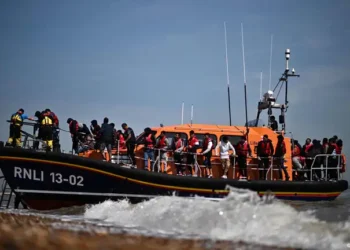
More than 1,000 people made the perilous journey across the English Channel in small boats on Friday, marking a dramatic resumption in migrant crossings after a week-long pause. According to official Home Office figures, 13 separate vessels carried a total of 1,072 individuals to the UK, averaging more than 80 people per boat. This figure is the third time this year that daily arrivals have exceeded the 1,000 mark and contributes to an unprecedented annual total of 32,103 migrants reaching the country via the Channel.
The surge comes after eight consecutive days with no recorded arrivals in Dover, Kent, largely due to adverse weather and turbulent sea conditions that had temporarily slowed the flow of migrants. Experts note that the lull had raised hopes that stricter border measures and improved deterrent strategies might be having an effect, but Friday’s numbers underscore the enduring challenges faced by UK authorities in controlling maritime migration.

The Channel crossing, which spans roughly 21 miles at its narrowest point, has become a major flashpoint in UK immigration policy. Each boat carries individuals fleeing conflict, economic hardship, or persecution, many of whom take extraordinary risks in often unseaworthy vessels. In recent years, crossings have escalated as traffickers exploit both the demand for asylum and the limitations of coastal patrol capabilities. Friday’s arrivals, the largest single-day total since early September, serve as a stark reminder of the ongoing humanitarian and security dilemmas confronting the government.
In response, the UK government has sought to implement a “one in, one out” plan in collaboration with France, designed to deter would-be asylum seekers by ensuring that those arriving illegally may be swiftly returned to the continent. Under the scheme, individuals who cross the Channel without authorization can be detained immediately and, within approximately two weeks, arrangements can be made with French authorities for their return. For every person returned to France, the plan allows for one individual with a credible asylum claim in the UK to enter, establishing a controlled exchange system.
Home Office sources confirmed that three people have already been removed from the UK under this new protocol. On Friday alone, an Iranian national was deported following the removal of an Eritrean man who had lost a High Court appeal seeking to block his removal. Earlier, on Thursday, an Indian national was sent back to France under the same arrangement. Officials say these initial removals represent a testing phase of the pilot program, with additional flights planned in the coming week to expand the scheme.
Deputy Prime Minister David Lammy praised the initiative, stating that the returns provide an “immediate deterrent” to those considering the dangerous Channel crossing. According to government assessments, quick repatriation of migrants is intended to signal that illegal maritime entries will not guarantee asylum in the UK and that risks—both legal and physical—are significant. “We are making it clear that while those with legitimate claims will be assessed fairly, illegal crossings carry serious consequences,” a Home Office spokesperson said.
However, critics have raised questions about the effectiveness and fairness of the policy. Conservative shadow home secretary Chris Philp argued that the current returns had “no deterrent effect whatsoever” and described the number of individuals deported so far as “pathetic” compared to the scale of arrivals. Opposition figures and human rights advocates warn that the approach risks focusing on punitive measures rather than addressing the root causes of migration, including ongoing conflict, poverty, and human rights violations in the countries of origin. They also caution that overcrowded small boats and rushed deportations could exacerbate humanitarian risks, particularly for vulnerable groups such as children and families.
The Channel crossing has long been emblematic of the complex intersection of humanitarian responsibility, border security, and international cooperation. Each arrival highlights not only the determination of migrants seeking safety or economic opportunity but also the ongoing logistical, legal, and diplomatic challenges faced by the UK. For authorities, monitoring and managing such a high volume of arrivals in a short span requires coordination among the Coast Guard, local law enforcement, border agencies, and international partners, particularly France.
French authorities have played a central role in the “one in, one out” initiative, agreeing to accept returned migrants in exchange for UK recognition of individuals with verified claims. While this cooperation has been described as a step toward managing irregular migration more systematically, logistical hurdles remain. Authorities must ensure that returned migrants are processed humanely and that legitimate asylum claims are respected. For many observers, the key to long-term success lies in balancing deterrence with a fair, transparent, and humanitarian approach to asylum.
The humanitarian aspect of the crossings cannot be understated. Many of the individuals arriving in small boats have endured harrowing journeys through multiple countries before reaching the Channel. They often face smuggling networks, exploitative intermediaries, and life-threatening conditions at sea. According to maritime safety organizations, even with relatively calm weather, overcrowded boats are susceptible to capsizing, hypothermia, and other medical emergencies. Local rescue teams frequently respond to distress calls, pulling hundreds of individuals from the water each month, highlighting the ongoing dangers involved in these crossings.
On Friday, despite calmer seas that allowed for more successful crossings, emergency responders remained on high alert. Multiple reports from Kent-based authorities indicate that border patrols and search-and-rescue teams worked in coordination with French maritime units to manage the arrivals efficiently. Nevertheless, the scale of the crossings continues to stretch resources, particularly in Dover and surrounding coastal towns, which are increasingly seen as frontline points of entry.
The spike in arrivals has reignited debate in Parliament over immigration policy and the UK’s obligations under international law. Proponents of stricter border controls argue that the Channel crossings demonstrate the need for stronger deterrence and more rapid removals, while opponents highlight the ethical and legal imperatives to protect asylum seekers and address the conditions driving migration. Legal experts have noted that the “one in, one out” scheme raises questions regarding due process, particularly when migrants are returned in absentia or before receiving full hearings on their claims.
Looking forward, officials anticipate that the volume of crossings may fluctuate with weather conditions and enforcement measures. Historically, numbers have risen sharply during periods of calm seas and favorable weather, while storms and rough waters temporarily reduce arrivals. The Home Office continues to emphasize the dual focus on securing the border and ensuring safety at sea, with ministers asserting that the pilot program in partnership with France will expand in the coming months to address the unprecedented levels of migration.

The events of Friday underscore the ongoing tension between policy, enforcement, and humanitarian responsibility. With over 1,000 people risking life and limb to cross the Channel in a single day, the UK faces a complex challenge: ensuring border security while simultaneously upholding international obligations to protect vulnerable populations. As ministers, local authorities, and international partners grapple with these issues, the Channel crossings remain a vivid illustration of the human stories behind immigration statistics—stories marked by resilience, desperation, and hope.
In conclusion, the record number of arrivals on Friday serves as a sobering reminder of both the determination of those seeking a new life and the scale of the challenge facing UK authorities. The “one in, one out” plan represents a bold attempt at managing the crisis, but its ultimate efficacy, fairness, and humanitarian impact will continue to be scrutinized as the situation evolves. The coming weeks and months are likely to reveal whether the strategy can effectively deter dangerous crossings, uphold the rights of asylum seekers, and maintain the delicate balance between security and compassion.
Related News:
 UK Home Office to Launch French Beach Signage to Warn Asylum Seekers of Risks
 Father’s Tip Leads to Arrest in Charlie Kirk Murder Case
 Charlie Kirk Killing Used to Mobilise UK’s Largest Far-Right Rally in Decades
 UK and Ireland Set to Unveil New Proposals to Address Northern Ireland’s Troubles Legacy
 UK Recognises State of Palestine in Push to Preserve Hope for Peace
 Jailed Georgian Opposition Leaders Warn UK of Iranian Links to Ruling Party
 China’s Mega Embassy in London Faces Further Delay
 Prince Andrew met alleged Chinese spies during Pitch@Palace China trips
 Kosovo agrees to host Britain’s refused asylum seekers
 UK University Faces Counter-Terror Probe Over China Pressure
 Second world war veterans honoured as King leads Remembrance Sunday
 Ukraine-Russia war latest: Putin’s troops exploit bad weather to force Kyiv withdrawal from multiple towns
 New Epstein Files Spark Political Clash in Washington
 Ukraine Energy Corruption Scandal Hits Zelensky’s Inner Circle
 New review urges UK to repatriate Shamima Begum, others from Syria
 Hasina Rejects Allegations Ahead of Bangladesh Tribunal Verdict
 Indian authorities demolish Kashmir home linked to Red Fort blast
 Greene Pushes Epstein Files Amid Trump Fallout
 UN Security Council Approves Trump’s Gaza Peace Plan
 WhatsApp Messages Expose Nathan Gill’s Bribery
 Venezuela Threatens Nobel Winner Machado with Fugitive Status
 Trump Envoy to Discuss Ukraine Peace at Kremlin
 Video shows Israeli troops kill Palestinians after surrender
 Guinea-Bissau President Flees After Military Coup
 Kinnock’s Rebuke Echoes Loudly as Corbyn Allies Launch Left-Wing Breakaway: “A Gift to Farage”
 UK and Norway Forge Stronger Ties Through Joint Sanctions and Enhanced Defence Cooperation
 Trump Administration Dismisses 17 Immigration Judges, Sparking Debate Over Judicial Independence
 Modi’s London Visit Seals Historic UK-India Trade Pact Amid Global Tensions
 UK Must Act with Courage and Clarity on Israel-Palestine Conflict, Says Foreign Affairs Committee Report
 Tasers Introduced in UK Prisons to Combat Rising Violence and Protect Staff
 Northern Ireland Family of Three Shot Dead in Maguiresbridge Home Incident
 Seventeen Dead as Russia Targets Ukrainian Prison in Devastating Airstrike
 Trump Threatens 100% Tariff on Nations Importing Russian Oil Amid India Standoff Over Ukraine War
 Netanyahu Announces Plan to Take Over Gaza City, Escalating Conflict Further
 Radioactive Leak at UK’s Nuclear Warhead Base Sparks Outcry Over Safety and Secrecy
 Mass Arrests in London as Protest Defies Ban on Palestine Action
 Lammy and Vance Meet in Britain to Advance US-Brokered Ukraine Peace Talks
 Mutual Inconvenience: Why Alaska Was Chosen for the Trump-Putin Summit on Ukraine
 Hong Kong Summons UK and Australian Envoys Following Asylum Grants to Democracy Activists
 Is the UK Ready to Put Boots on the Ground in Ukraine? Assessing Military Capacity and Challenges
 Urgent Action Needed on Windrush Compensation as Survivors Speak of “Waiting to Die”
 Protests Expected as Israeli Arms Firms Join Global Defence Trade Fair in London
 Trump Appears Sidelined as Israel’s Unprecedented Strikes Hit Qatar
 Conservative Influencer Charlie Kirk Fatally Shot During University Debate
 Thousands Gather in London to Protest Donald Trump’s Second UK State Visit
 Zarah Sultana Seeks Legal Action After Bitter Clash with Jeremy Corbyn Over Party Membership Funds
 Denmark Investigates Professional Drone Incursions Across Multiple Airports, No Evidence of Russian Involvement
 UK Fighter Jet Purchase Could Breach Nuclear Treaty, Warns CND
 A Third of EU Citizens in UK Report Discrimination by Public Bodies Post-Brexit
 Misinformation and Political Pressure Force Weston-super-Mare to Abandon Refugee Sanctuary Plan
 Public Trust in SNP Hits Historic Low Amid NHS Concerns
 Cooper Unveils £4m Cyber Plan Against Russian Hackers
 Johnson Suggests Mandelson Linked to China Spy Controversy
 Witness statements reveal the CPS China spy row collapse in the UK
 Rachel Reeves signals welfare reform ahead of key budget
 Sex offenders to lose parental rights for children born of rape
 Ireland Votes as Two Women Compete for Presidency
 WW2 Pilot’s Long-Lost Crash Site Unearthed in Essex
 Experts Warn Russia’s Burevestnik Missile Could Destabilise Arms Control
 British Woman in Iran ‘Losing Hope’ Amid Ongoing Detention
 Johnson Approved China’s London ‘Super-Embassy’ in 2018
 BBC Journalist Held and Interrogated in Vietnam
 FBI Director Kash Patel Defends Girlfriend Amid Government Jet Claims
 UK University Suspends Human Rights Research Following Pressure from China
 Just Stop Oil Protesters Convicted Amid Climate Defence Row
 ‘Reckless’ cuts to victims’ services will cost more than they save
 US Justice Department Files Lawsuit Against California Over Partisan Voting Maps
 Oklahoma Governor Grants Last-Minute Clemency to Death Row Inmate
 Israel Confirms Returned Hostage as Meny Godard
 Navy cuts scrap key landing upgrade for UK F-35B jets
 Trump Deploys DHS to Charlotte in Major Arrest Operation
 UK Candidate Moved to Safe House After Election Threats
 Pentagon Officials in Ukraine to Discuss War End
 Most Tories Expect to Support a Farage-Led Government
 Two National Guard Soldiers Critically Injured Near White House
 Southern Lebanon reels as Israeli strikes shatter communities
 India’s Labour Law Overhaul Sparks Fierce Debate
 Jordan Bardella: France’s Young Presidential Contender
 EU plans $105bn Ukraine aid using frozen Russian assets
 Global campaign launched to free Palestinian leader Barghouti